
Middle ear infection and speech problems
Do you know that if your child frequently gets middle ear infection, you need
There is a possibility of ear infection in all people from children to adults; But some evidence shows that this condition is more common in children and adolescents. In many cases, the ear infection goes away on its own, but sometimes the doctor may suggest medicine for the ear infection.
Middle ear infection in a child occurs when a virus or bacteria infects the back of the eardrum. This condition is more common in children. According to reports, eighty percent of children who reach the age of three years suffer from this condition. According to other reports, this age is 6 to 15 months. It is estimated that one out of every 4 children experiences this infection at least once. Most often, middle ear infections occur in the winter and early spring and often go away without any treatment, although medication should be given when the pain does not go away, or when there is a fever.symptoms of the disease

Symptoms of acute inflammation are usually absent in children. The main symptom is hearing loss, but children rarely express it. Delay in the development of speech and language and perception disorder may occur in bilateral cases. You should make an appointment with speech therapy and audiometry centers for evaluation and examination.
Since children who did not reach the age of speaking also suffer from this condition and it is even common in them, it is very important to pay attention to the symptoms at this age. Common symptoms are:
- -earache
- - Mood swing and irritability
- -fever
- -Clear yellow or bloody discharge from the ear Difficulty sleeping and restlessness at night
- -Cough or runny nose in a child
-Loss of balance (in addition to hearing, the ear is also responsible for body balance. - -Hearing problems
- -nausea
- -diarrhea
- -Loss of appetite
- - Congestion or collection of phlegm and blood
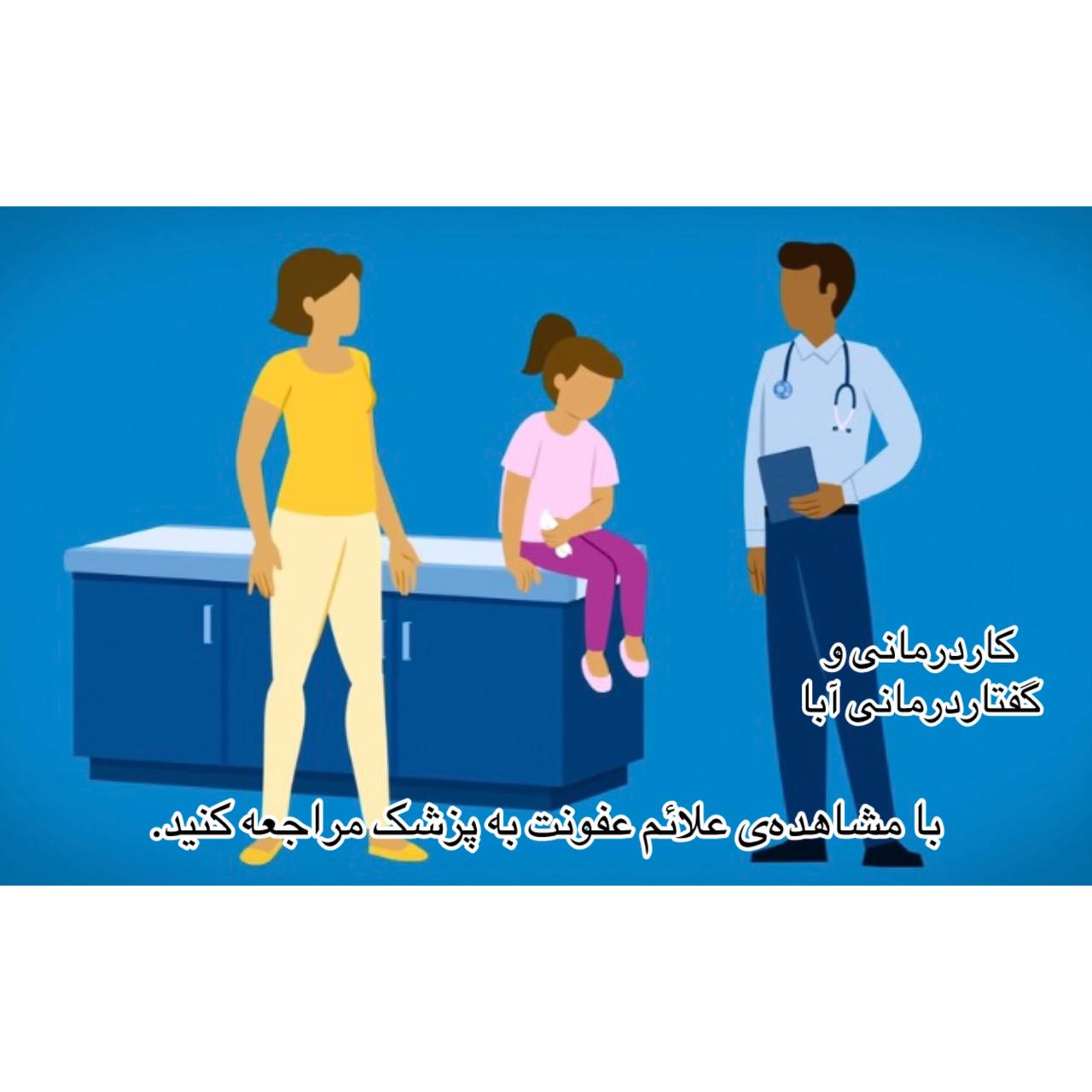
So please, if you see these symptoms in your child, don't hesitate and call a pediatrician, don't forget speech therapy as the complication was prolonged. Visiting a speech therapy center will prevent speech and pronunciation problems in the child's future.
types of middle ear infection
In children, we have two types of middle ear infections:
- -Acute earache
- -earache with discharge

Acute earache:
Acute earache appears suddenly and is accompanied by redness and swelling behind the eardrum and around it. Hearing loss often occurs due to the accumulation of fluid and mucus in the middle ear.
Earache with discharge:
Other classification of middle ear infections includes:
Acute otitis media
When the eustachian tube - located between the back of the throat and the middle of the ear - becomes inflamed, it traps fluid inside the tube. This liquid has the ability to cause infection and cause swelling and pain, which sometimes can cause hearing impairment.
Otitis media with fusion
Mucus or fluid can collect in the eustachian tube, even after the infection has cleared, this fluid accumulation can interfere with the ability to hear.
Chronic purulent otitis media
This type of infection usually continues as a result of the complications of acute otitis media. Its characteristic is the frequent discharge of fluid from the middle ear, which is due to the perforation of the eardrum.
adhesive otitis media
In this type of middle ear infection, the collapse of the eardrum causes it to stick to the walls and structure of the middle ear. This complication usually occurs when the Eustachian tube does not work properly for a long time.
In the audiometric test, the tympanogram is a graphic record of the movement of the tympanic membrane, which may have a flat curve (type (B)) or sometimes a negative pressure peak type (C) in mild or acute cases.
The most common complication of acute middle ear infection is hearing loss. The treatment of acute or subacute form is significantly aimed at improving breathing through the nose and improving the function of the Eustachian tube, and may include short-term use of nasal drops and diagnosis with otoscopy. Topical steroids are sometimes helpful.
Middle ear ventilation can be improved by forcing the patient to blow balloons through the nose. Otitis media risk factors should be eliminated as much as possible. Treatment of chronic form of middle ear infection when there is significant hearing loss is surgery. Paracentesis (cutting the tympanic membrane allows access to the effusion for aspiration, which quickly restores normal hearing
Middle ear infection in children should be cured within 3 months at most. As long as the speech is not disturbed, the problem is solved through drug therapy. Finding air in the middle ear, fluid-air bubble is a sign of a good prognosis because it confirms the relative function of the Eustachian tube, a perforated tympanic membrane that has thickened and symptoms that last more than 3 months indicate a long course of the disease. In these cases, quick treatment is unlikely, and surgery should be considered, and visit the speech therapy center immediately after surgery.
Researchers recently reported that temporary hearing loss caused by a middle ear infection in a child can lead to delays in language development and sound processing years later.
Susan Nietroer, senior researcher and professor of speech, language and hearing sciences at the University of Florida, believes: "Ear infections are so common that they are often overlooked. But we must take all ear infections seriously."
Researchers found that children who had multiple ear infections before age 3 had smaller vocabularies and had trouble matching similar words.
Children prone to ear infections also had trouble recognizing changes in sounds, which is a sign of problems in their brain's auditory processing centers.
Ear infections impair hearing because fluid builds up behind the eardrum. Fluid build-up can affect hearing even if an ear infection isn't painful. This means that parents, doctors, and educators need to pay close attention to children who are prone to ear infections, even if they don't seem to have anything wrong. Treating ear infections early can help prevent fluid build-up. Children with chronic ear infections can also be treated through temporary tubes that help drain fluid. According to the researchers, these children should be monitored throughout their school years for potential developmental delays, as some language deficits may show up in later grades. does.
prevention of middle ear infection

Middle ear infections are more common in boys than girls.
Of course, middle ear infections cannot always be prevented, but there are ways to reduce the risk of your child getting a middle ear infection:
-Wash your hands and your baby regularly.
-If you feed your baby with a bottle, always hold it yourself and feed them while they are sitting and not lying down.
-When they reach the age of one year, stop feeding them with a bottle.
-When your child reaches the age of one year, take the pacifier from them.
-According to some sources, breastfeeding a child with breast milk makes middle ear infection less likely to happen.
-No contact with sick and sick children.
If your child frequently suffers from middle ear infections, the possibility of speech disorders in the child increases. Speech disorders show themselves in pronunciation problems, auditory processing problems, difficulty in dictation, etc. Remember that the evaluation of the child by a speech therapist and audiometer will help you to be aware of any problems or problems in the child and take the necessary measures. Aba speech therapy in the west and north of Tehran with A specialized team is ready to evaluate your child. A specialized team evaluates your child and, according to the results of the evaluation, the required sessions are suggested in person or at home. Your child's future is important.
Key words: middle ear infection in children, speech therapy, audiometry, children
Source:
Dr. Shahrokh Khossirt, otolaryngologist, medical journal number 23.
https://www.asriran.com/fa/amp/news/934179
Middle Ear Infections (Otitis Media) (for Parents) – Nemours KidsHealth (https://kidshealth.org/en/parents/otitis-media.html)
Cleveland Clinichttps://my.clevelandclinic.org › healthEar Infection (Otitis Media): Symptoms, Causes & Treatment (https://my.clevelandclinic.org/health/diseases/8613-ear-infection-otitis-media)
Book introduction
Middle ear infection in children
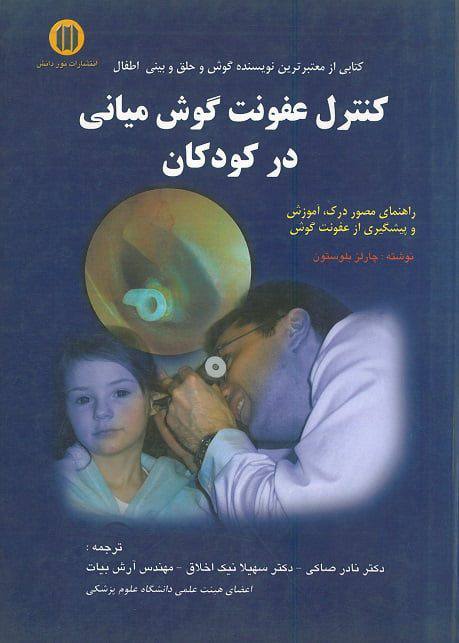
Control of middle ear infection in children