
Child developmental psychology from Piaget's point of view
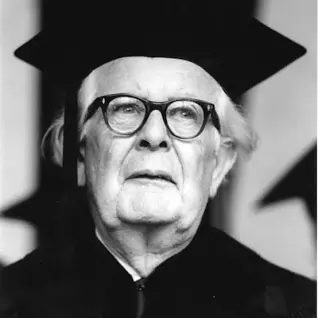
In the studies of psychology, Jean Piaget raised an important issue through his experiments. He addressed the issue of the relationship between thought and action and its visualization in the environment and examined this issue in the framework of psychological evolution. His research in the field of child psychology gave him great fame and, interestingly, he was recognized as a famous child psychologist despite not having a regular university education in the field of child psychology.
Compilation of biography has scientific value only when it can highlight the explanatory elements of the author's work.
Jean Piaget is one of the unique figures in the field of human knowledge who was able to invent the most comprehensive and solid theory of intellectual evolution. His thoughts have inspired researchers more than any other theorist, and his views on human evolution changed the way everyone thinks about children and their behavior.
Piaget was born in Neuchâtel, Switzerland, and since childhood he was interested in science, especially biology and animal behavior, and tried to understand how the organism adapts to the environment through experience.
In 1907, when he was only 11 years old, his first report on a house sparrow was published in the Journal of Natural History of Neuchâtel, and after that he worked for four years as an assistant to Paul Goudet, director of the Museum of Natural History in Neuchâtel. At 15, he was a well-known specialist in the realm of molluscs, with scientists talking about his collections and wanting to meet him. But because he was still a school student, he did not dare to accept their invitation. Piaget could not escape from the social and philosophical crises of his adolescence, and the conflict between religious beliefs and scientific education motivated him to insatiably read the works of Bergsen, Kant, Spencer, Comte, Durkheim, William James, and others, and finally wrote his philosophical crises in the form of a short story (Piaget, 1918), which is the core of his later positions. included in the field of writing. Piaget continued to write about a variety of philosophical issues, noting, "I write even if only for myself because I cannot think without writing" (Piaget, 1952).
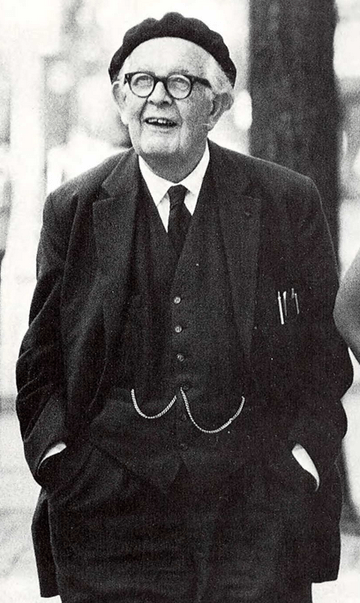
Between 1915 and 1918, Piaget continued his studies in the field of natural sciences in his hometown, and in parallel with his studies and researches on molluscs, he followed Arnold Raymond's philosophy classes with great interest, wrote some philosophical reports and wrote poems. At the age of 21, he received a doctorate in science.
Until now, he had published more than twenty articles, but he did not want to dedicate his life to zoology and believed that he had found his main mission, the foundations of a biological theory of knowledge. But since he believed that the theory of cognition should not be pure speculation, but should be based on the examination of data, he decided to study information in the field of scientific psychology. For this purpose, he went to Zurich, where he learned about statistical methods in psychology and pathological psychology. He followed the lessons of Jung and other psychoanalysts and studied the works of Freud. In 1919, he left Zurich for Paris to continue his studies in the fields of psychology and logic. He followed the psychology courses of Pierre Jeanne, Dumas, Henri Peyron and Henri Delacroix, and at the same time he studied logic with Lalande and philosophy of science with Honey Choy; Brunswick's critical idealism had a wide influence on Piaget. At that time, Harris wrote about the scientific atmosphere of Paris at that time: "When Piaget arrived in Paris, despite Binet's death in 1911, his influence remained and his focus on research on children's intelligence continued. Freud's activities at the end of the 19th century in Paris had caused the theory of psychoanalysis to be accepted in the scientific community, and Baldwin, the famous figure of that time, also lived in this city. It seems that the thoughts of these three famous faces - Freud and Baldwin - have been effective in expanding Piaget's theory about how children develop intellectually. In Paris, Piaget met Simon, one of the pioneers of testsHe was intelligent and had Binet's laboratory at his disposal. At his suggestion, he started to standardize Brett's reasoning tests in France. This activity was his first real experience in the field of transformation. However, unlike Simon Piaget, he did not pay much attention to the number of correct answers of children to test materials, but he considered it important to find the causes of incorrect answers. It is a thinking process. In his interviews with children, Piaget benefited from the techniques of interviewing mental patients, and he concluded in Zurich that examining children can clarify the issues of cognitive theory.
Piaget expresses his experience during this period as follows: "Finally, my goal was to discover a kind of embryology of intelligence that is compatible with my knowledge in the field of biology. From the beginning of my thoughts in the theoretical realm, I was sure that the problem of the relationship between the organism would expand and in the form of the problem of the relationship and the environment could also be manifested in the field of knowledge between the action or thought of the subject and the subjects of his experience.
The publication of three articles based on the research conducted in Binet's laboratory caused him to be offered the presidency of the research center at the Jean-Jacques Rousseau Institute in 1921, and Piaget decided to spend only five years researching in the field of child psychology, a plan that fortunately never materialized. His freedom and research facilities in this new position strengthened his creative tendencies and led to the publication of five works: Piaget became famous as a child psychologist while he had no formal university education in this field. Piaget in the middle of the field: environmentalism or innateism Piaget discovered or invented his scientific system during the standardization of intelligence tests in Binet's laboratory and came to the conclusion that conducting psychological tests can respond to his interest in biology and philosophy. Because the child, in addition to being growing and all the principles of biological development apply to him, is a thinking organism that at successive age levels gets to know the physical and social reality of the environment he lives in. In this way, understanding the process of children's transformation gives the key to solving the puzzle. Piaget always hoped to answer one question: How is knowledge obtained? To answer this question, Philosopher created an experimental philosophy based on scientific tests and called this new branch genetic epistemology.
Understanding Piaget's system requires knowledge of the scientific climate of his time. In the second decade and the beginning of the third decade of the 20th century in the United States of America and England, social sciences were dominated by environmentalism, and this emphasis on environmental factors in America was reflected in the form of almost exclusive attention to learning - in the sense of changing behavior as a result of experience. All psychological works at this point in time looked at innate patterns of behavior or instincts as ghosts that were buried under the lines of books. Students were taught that animals have instincts, but humans almost lack them. Even the concept of development (internal) which considered at least part of behavior patterns to be the result of genetic factors was not considered scientific. Therefore, it was not surprising that a scientist like Gazelle, whose detailed observations provided a complete model of descriptive psychology, gained little credit in scientific circles. However, unlike the environmentalism of social sciences in America, European psychology was based on naturalism, defended the heredity of disorders such as mental disability or criminal behavior, and by accepting the principles of Gestalt psychology, considered the personal and social characteristics of humans subject to heredity. When these psychologists immigrated to America to escape "Nazism", they encountered a worried environment and the conflict between nature and culture reached its peak. Piaget refused to take a position, because he saw himself between these two fronts and saw nature and culture interacting with each other. His first experiences with molluscs had taught him that the influence of the environment and heredity are mutual and that none of them is absolute. His observations and experiments with children had led him to believe that the relativity of the nature of culture is also true in the realm of human intelligence. He observed concepts about nature and the physical world in children that they had neither inherited nor learned in the usual sense of the word. For example, he discovered that young children imagined that the moon follows them during night walks, or that dreamers enter through the window when they sleep, and that everything that moves, even waves or curtains that move with the wind, is alive. Where do these thoughts come from? Undoubtedly, they are not hereditary, because what is there from birth cannot be changed, and most children abandon such thoughts with the passage of time. They have not learned this way of thinking from adults either, because adults do not believe in such things and they certainly do not teach them to children either. In addition, such thoughts are observed in children all over the world. Piaget's answer to this puzzle is that children's thoughts about the world are subject to their psychological constructions and experience. By accepting the position of Gestalt psychologists, Piaget also accepted that the perception of the external world is not achieved as it is, but is organized by our intelligence.
. Some psychologists consider Piaget a pragmatist or even a lightist, because he believes that knowledge begins with action about the object; While Piaget does not consider the impression on the object to be equivalent to the direct extraction of knowledge from the object. Others consider him to be a fan of nervous and physical development and even a naturalist
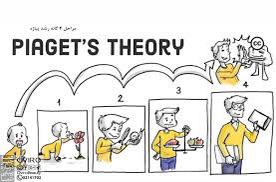
Again, because it appeals to individual actions; But they forget that the person's action about the object is an interaction and not a one-way action. Piaget says: "I am neither pragmatic nor instinctive, but constructivist. Because I believe that permanent knowledge is created through interaction with reality, so knowledge is not preformed or predictable, it is neither in objects nor in people; Rather, it is a creation or a creation and re-creation in the work. Before Piaget, it was thought that children's brains are smaller and weaker versions of adults' brains, and they did not distinguish between the way children and adults think. But Piaget showed that this is not the case. Through years of clinical study, interviews, and playing with children, he discovered that their brains function in different ways at different ages. He showed that children are not less intelligent than adults, they just think differently. The importance of his discovery was so great that Albert Einstein said in his description: "His discovery is so simple that only a genius could achieve it." Piaget was the first scientist who researched the process of cognitive development of children. This is his most important work in the history of child developmental psychology. Piaget argued that children's cognitive development is a process that occurs in 4 stages. Each stage can also have its own sub-branches. When a child enters a cognitive stage from one stage to another, not only his way of thinking but also his behavior changes. These steps are:
In the following, we will examine each of these steps.Five works of Jean Piaget
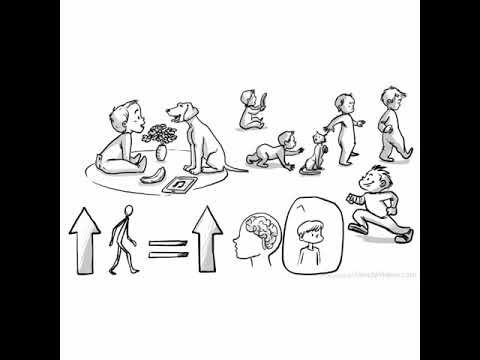
Piaget's perspective finally led to the differentiation of four factors of psychological development, which include:
1.. heredity or internal development
2. Physical and logical experience - math
3. Social transfer
4. Finding balance
Piaget's theory of cognitive development
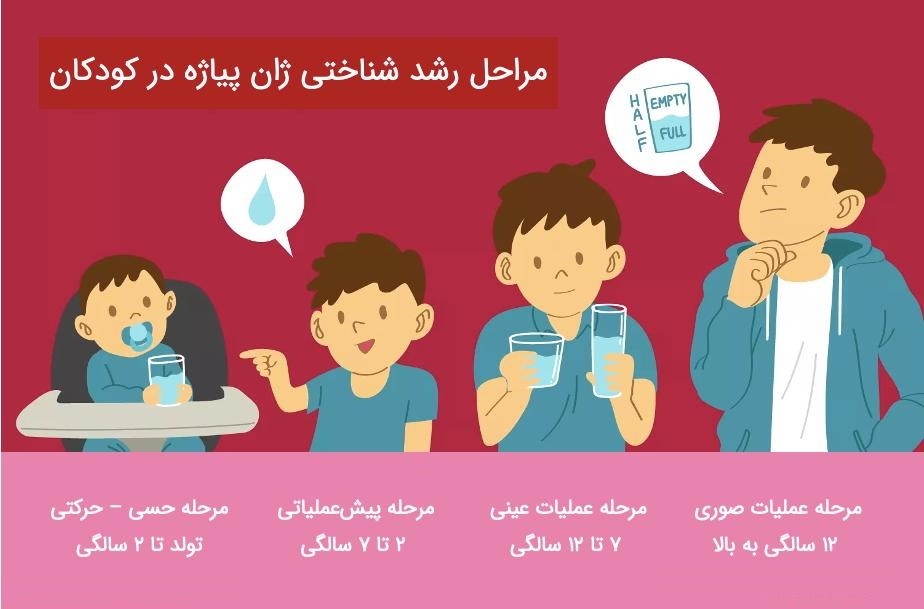
1. Step
The last sub-stage, which is a prelude to entering the next main stage, takes place in this period. The child can now visualize things in his mind and express his wishes with words. In this period, the child tries different methods to solve the puzzle instead of repeating an action in vain. This is the beginning of mental understanding and takes the child to the next stages of cognitive development.
2. Pre-operational stage
At 2 years old, the child enters the preoperational stage. At this stage, the child acquires the ability to visualize. For example, he can imagine himself in the place of fictional characters in a game and talk about things that happened in the past.
Also, the child understands causality and the concept of identity. For example, he understands that changing the face of things or people does not mean changing their identity. In this stage of cognitive development, the child gradually learns to categorize. He can categorize things based on appearance criteria such as smallness and largeness.Of course, abstract thinking is at the beginning of its evolution at this stage. The child cannot yet demonstrate an advanced form of abstract thinking. For example, he is unable to look at the phenomena from the eyes of others. Therefore, he emphasizes his opinion and is sometimes stubborn.
3. Objective operation stage
In the third stage, which lasts from 7 to 11 years old, the child's cognitive abilities grow more. The child can now learn mathematical operations. He categorizes better and notices subcategories. That is, it understands that any set may have subsets. In addition to these, the child's ability to understand space has also improved a lot and now he can read maps and navigate.
One of the most important cognitive abilities develops in this stage, that is, the ability to understand stability or mental maintenance according to Piaget. In the previous stage, children are unable to understand that "things can remain the same even if their appearance changes". As a result, they do not understand the concept of density and volume. But in the stage of objective operation, the child finds the ability to understand these concepts. For example, he understands that the volume of water in 2 glasses can be the same in different ways. At this stage, the child can focus on other dimensions of the problem instead of 1 dimension. Therefore, the child understands that by returning the water of 2 glasses to 1 fixed glass, you can realize that their volume is the same.
4. Abstract operation step
After the age of 11, the child has entered the last cognitive development stage. This stage is the beginning of abstract thinking and the child develops the ability of abstract thinking gradually and at the same time as he studies in school. Now the child can think about mental concepts that do not exist externally. For example, let him imagine, write a poem and write a fictional story.
At this stage, the child can make hypotheses and guess when faced with problems and phenomena and test them in various ways. These are contrary to the previous steps where the child used trial and error to solve the problem.
Key words in Jean Piaget's theory
Jean Piaget has used specific words such as "schema" to describe his theory.
1. Schema and structuralism
Piaget's theory of cognitive development is based on the principle that the child learns and grows in interaction with the environment. This principle puts his theory in the category of a school called structuralism.
When interacting with the world, the child creates schemas and patterns in his mind about how the world works. These mental structures (schemas) are the tools with which the child understands the world. Jean Piaget says that the child repeats, tests and updates these schemas. In other words, as the child grows and goes through different stages, the child's schemas become more advanced and efficient. It is as if the child is building a structure of schemas in his mind, based on which he understands the world. This is why Piaget's theory is considered a structuralist theory.
2. Compatibility
The process by which children incorporate new data into their mental schemas is called adaptation. A growing child acquires new knowledge and uses 2 methods of integration and adaptation to transfer this new knowledge to his mind. Consider this example:
Suppose a child meets a dog for the first time. To describe the dog, he uses barking to build a schema of the dog. Now, if a child sees a cat for the first time, he also describes it by barking. This is an example of integration. But when the child grows up, he understands that dogs and cats are different. So by updating its schema, it creates a new schema to describe the cat. Now the child describes dogs by barking and cats by meowing.3. Balance
According to Piaget's theory, the balance of the child's schemas is disturbed when encountering new phenomena. Therefore, the child must use different methods such as integration, adaptation or construction of new schemas to restore balance. When balance is restored, the child has learned something new. This concept in Piaget's theory was influenced by his studies in the field of biology.
Functions of Piaget's theory
Piaget's theory of cognitive development is an important theory in educational psychology among learning theories. The most important effect of this theory has been to change educational methods. Before this theory, children were considered an empty container that adults should fill (literate) by learning many things. But Piaget's theory introduces children not as receivers of knowledge, but as creators of it. Therefore, educational methods should be designed in such a way that children have the possibility to interact with the environment and the subject of learning. For example, if we are going to teach children something about insects, we should bring some insects to the classroom so that children can interact with them closely.Source: a selection of evolutionary psychology. Prosecutor's Office
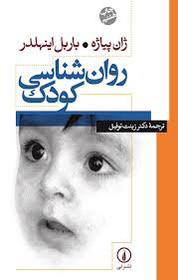
Book introduction
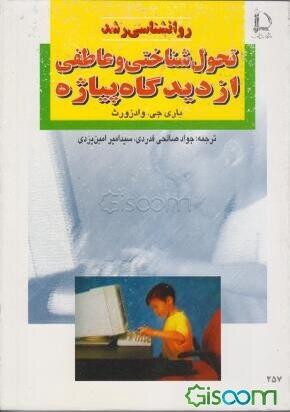
Developmental psychology of cognitive and emotional transformation from the point of view of Jean Pierre
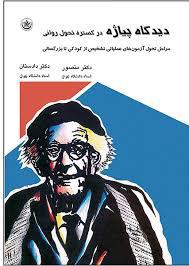
Jean Piaret's point of view

An analysis of Jean Piaret's cognitive development