به یاد فرزندان جاویدان این سرزمین

یادشان همواره در قلب این خاک زنده خواهد ماند

Artificial intelligence and behavior change
مقاله تخصصی

Artificial intelligence and behavior change

3 weeks ago
500 بازدید
Fahima Rasouli

Fahima Rasouli

تهران

occupational therapy

مقدمه – تعریف هوش مصنوعی– اهمیت تغییر رفتار در جوامع مختلف
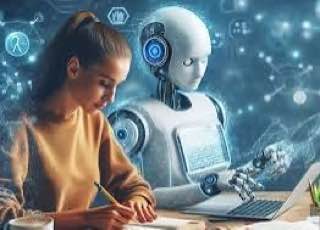
هوش مصنوعی و تغییر رفتار

تعریف هوش مصنوعی:

هوش مصنوعی عبارت است از مطالعه این که چگونه رایانه‌ها را می‌توان وادار به کارهایی کرد که در حال حاضر انسان‌ها آن‌ها را صحیح یا بهتر انجام می‌دهند.

شاخه‌های مختلف تحقیقات هوش مصنوعی:

  • استدلال
  • نمایش دانش
  • برنامه‌ریزی
  • یادگیری
  • پردازش زبان طبیعی
  • ادراک و توانایی در جابجایی و دستکاری اشیاء، هوش جامع (توانایی حل مسائل دلخواه)

تغییر رفتار در جوامع مختلف اهمیت زیادی داره و می‌توان تأثیرات گسترده‌ای داشته باشه:

۱-بهبود سلامت عمومی:

با تغییر رفتارهای ناسالم، مانند ترک سیگار، کاهش مصرف الکل یا بهبود تغذیه، می‌توان سلامت عمومی جامعه را بهبود بخشید و هزینه‌های بهداشتی را کاهش داد.

۲-افزایش بهره‌وری:

تغییر رفتارهای منفی در محیط کاری، مانند مدیریت استرس، بهبود ارتباطات و افزایش انگیزه، می‌تواند به افزایش بهره‌وری و کارآیی کارکنان منجر شود.

۳-کاهش جرم و جنایت:

با تغییر رفتارهای ضد اجتماعی و تقویت رفتارهای مثبت، می‌توان به کاهش جرم و جنایت در جوامع کمک کرد و امنیت عمومی را افزایش داد.

۴-پایداری محیط زیست:

تشویق به رفتارهای محیط‌ زیستی مانند کاهش مصرف پلاستیک، بازیافت و استفاده از منابع تجدیدپذیر می‌تواند به حفاظت از محیط زیست و کاهش تغییرات اقلیمی کمک کند.

۵-توسعه اجتماعی و اقتصادی:

با تغییر رفتارهای اجتماعی نادرست، مانند تبعیض جنسیتی و نژادی، می‌توان به تحقق عدالت اجتماعی و توسعه اقتصادی پایدار دست یافت.
این‌ها تنها چند مورد از اهمیت‌های تغییر رفتار در جوامع مختلف هستند. Every society can benefit from changing behaviors according to its needs and challenges.

Applications of artificial intelligence in behavior change

– health field:

Encouraging a healthy lifestyle, quitting addiction

Field of education:

Increasing motivation and effective learning

Business area:

Improving employee performance, increasing productivity

Artificial intelligence methods and tools to change behavior


1-Data analysis and behavior prediction:

Using advanced algorithms, artificial intelligence can analyze behavioral data and predict people's future behavior. This will help planners design more appropriate interventions.

2-Recommender systems:

These systems provide content or suggestions that help change behavior based on user data analysis. For example, sports offers in health applications or book offers in book buying sites.

3-Gamification:

Using game elements in non-game environments can increase people's motivation and participation. For example, language learning applications that encourage users to learn by giving points and rewards.

4- Chatbots and virtual assistants:

These tools can provide advice and support by interacting directly with users. For example, chatbots that help people quit smoking.

5-Sentiment analysis:

By analyzing texts and conversations, artificial intelligence can identify users' emotions and provide appropriate responses based on them. This tool can be used in areas such as can be useful.
Each of these methods and tools are used with the purpose of changing behavior and can be effective in various fields including health, education and business.
Case studies and successful examples

Examples of artificial intelligence programs to change behavior:

Woebot:
woebo

is a chatbot equipped with artificial intelligence that is used in cognitive behavioral therapy to help improve the mental health of users.

Couch to 5K:

This app uses artificial intelligence to design exercise programs tailored to users' abilities and goals.Replika: an artificial intelligence chatbot that helps people improve their social skills and experience improved interpersonal relationships.Habitica: uses gamification and artificial intelligence to encourage users to change their behavior and create positive habits.MyFitnessPal: uses artificial intelligence to track diet and nutrition planning that helps users reach their health goals

Quit Genius:

This application helps people to get rid of drug and smoking addiction. By analyzing the behavior of users and providing personalized advice, it has been very successful in addiction recovery.

Woebot description It is a chat bot equipped with artificial intelligence that is used in the fields of cognitive behavioral therapy (CBT) to improve the mental health of users.

Woebot Key Features:

Daily interactions:

This chat bot interacts with users on a daily basis to examine their emotions and psychological state.

CBT solutions:

Woebot uses CBT techniques to provide practical solutions to users. This includes mindfulness exercises, analyzing negative thoughts and strengthening positive thoughts.

Support:

Because it is an AI, it can respond to users at any time of the day or night, without having to wait for an appointment with a therapist.

Reporting and tracking progress:

This bot helps users track their progress and provides useful reports. href="https://www.abaspeech.ir/%da%86%da%af%d9%88%d9%86%d9%87-%d8%a7%d8%b6%d8%b7%d8%b1%d8%a7%d8%a8-%d8%ac%d8%af%d8%a7%d b%8c%db%8c-%da%a9%d9%88%d8%af%da%a9-%d8%a7%d8%b2-%d9%85%d8%a7%d8%af%d8%b1-%d8%b1%d8%a7-%da%a9%d8%a7%d9%87%d8%b4/> strengthen stress, anxiety and depression and improve their mental health

Challenges and limitations

Challenges and limitations

For the challenges and limitations of using artificial intelligence in behavior change, we can mention the following:

1- Moral and privacy issues:

One of the biggest challenges is protecting users' personal data. Using sensitive data can lead to privacy and security concerns. Also, there may be misuses of data that undermine public trust.

2- Accuracy and correctness of data:

Artificial intelligence models require large and detailed data. If the data is incomplete or inaccurate, the results obtained will also be unreliable. This can lead to wrong decisions and undesirable results.
Suppose an artificial intelligence model is designed to predict the probability of heart attack in patients. This model requires big data including medical history, life habits and various test results. Now, if the input data is incomplete or incorrect, for example:– information about blood pressure or cholesterol levels is incomplete.– data on smoking or physical activity is not recorded correctly.
In this case, the AI ​​model will not be able to analyze accurately and may provide incorrect predictions. For example, it may underestimate the risk of a heart attack in a patient who needs urgent care, or vice versa. These mistakes can lead to incorrect medical decisions and put patients' health at risk.
This is just one example of many that shows how important data accuracy and completeness is. Any mistake or flaw in the data can have major effects on the results.


3- Social and psychological effects:
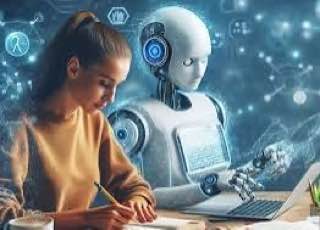
Social and psychological effects
Incorrect use of artificial intelligence can lead to negative effects on people's mental health. For example, recommender systems may cause too much dependence on technology or increase social anxiety.

4- Problems related to algorithms:

Algorithms of artificial intelligence may fuel discrimination and social inequalities. If data and algorithms are used without careful monitoring, they may lead to new injustices and inequalities.Suppose a company uses an artificial intelligence algorithm to analyze resumes and make decisions about selecting applicants. If the primary data on which the algorithm is trained contains gender, racial, or other discriminations, the algorithm may reinforce those same discriminations. For example:
– If the data shows that in the past more men were selected for management positions, the algorithm may automatically select more men for these positions.– Or if the data underrepresents people from different racial backgrounds, the algorithm may unfairly reject these applicants. slow.
This issue reinforces inequalities and discrimination in the hiring process and can lead to ignoring the true abilities and talents of applicants. Therefore, careful monitoring and modification of data and algorithms is very important to avoid new injustices and inequalities.

5- Costs and resources:

Implementation and maintenance of artificial intelligence systems can be costly and resource intensive. Not all organizations and individuals can benefit from this technology, which is a challenge in itself.

Conclusion and future perspective

By providing various tools and methods, artificial intelligence has been able to have significant effects on changing people's behavior in various fields. By analyzing data, predicting behavior and providing personalized recommendations, AI can help improve health, increase productivity and enhance education. However, challenges and limitations related to ethical issues, data accuracy, and social impacts must be carefully considered.

Future vision:

In the future, artificial intelligence is likely to play a greater role in changing people's behavior. With the advancement of technology and increasing accuracy of algorithms, we can expect more intelligent programs and tools that will more actively help improve people's behavior and quality of life. Also, with increased attention to ethical and privacy issues, safer and more effective use of artificial intelligence will become possible. The importance of research and development in this field will become more clear in order to achieve new innovations and better solutions.

Using artificial intelligence to change behavior in children can be effective in different ways:

1- Interactive training:Artificial intelligence and behavior change

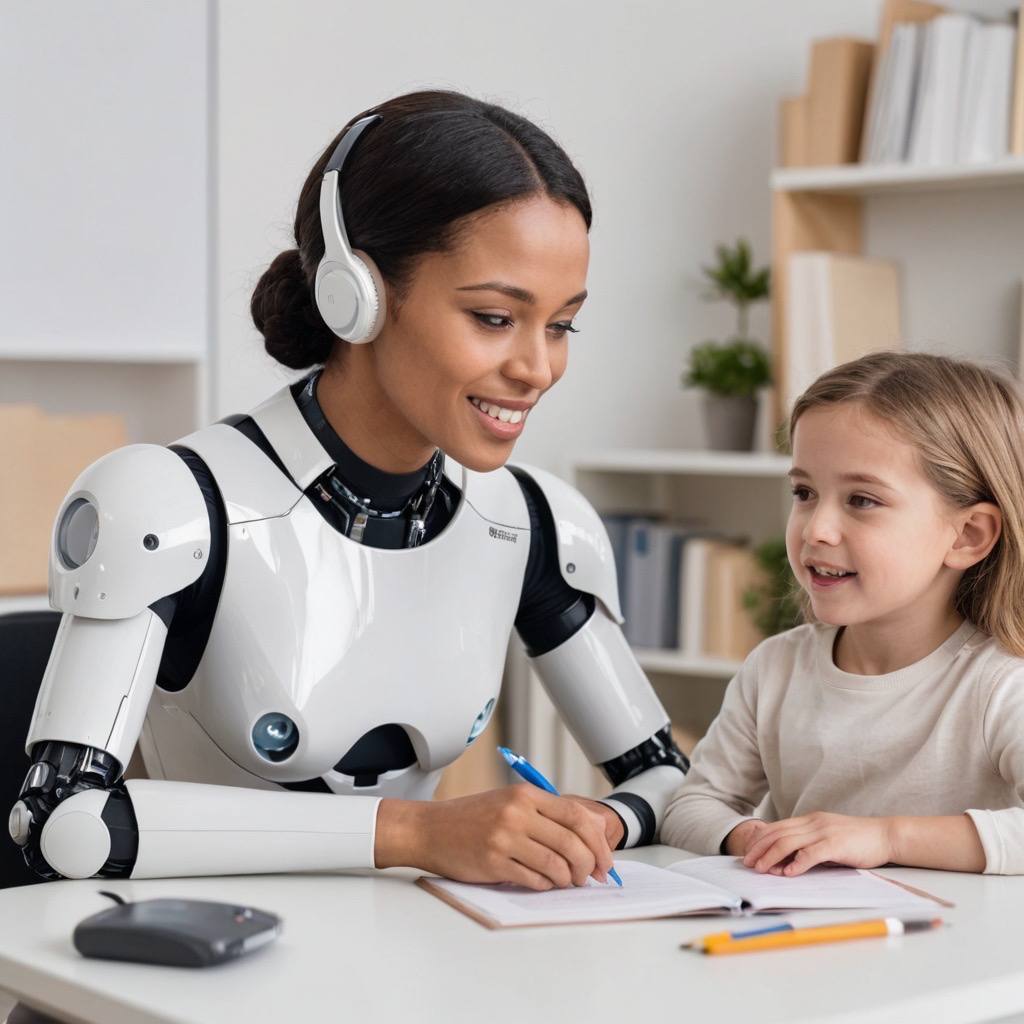
Introduction Artificial intelligence can help create interactive applications that encourage children to learn. These apps can provide personalized learning programs that match a child's level and interest. – Educational robots: Robots programmed using artificial intelligence can encourage children to learn science, math, and even social skills.

2- Prevention and early intervention:Artificial intelligence and behavior change

Introduction AI can help teachers and parents detect behavior problems at an early stage. Using behavioral data, algorithms can provide warnings about potential problems. – Recommend intervention strategies: Based on data analysis, AI can suggest appropriate intervention strategies that help parents and teachers reinforce positive behaviors.

3- Behavioral data analysis: – Progress tracking:

Artificial intelligence can help parents and teachers track children's behavioral progress and understand which methods are most effective. – Personalized recommendations: By analyzing behavioral data, AI can provide personalized recommendations tailored to each child's specific needs. be a child.

4- Creating educational games: – Games based on learning:

Using educational games supported by artificial intelligence can encourage children to learn and teach them various skills.

5- Support from parents and teachers: - Advice and guidance:

Artificial intelligence can provide advice and guidance to parents and teachers on how to deal with children's different behaviors and use the best methods to encourage positive behaviors.
The intelligent use of these methods can help improve children's behavior and learning. Slow.

Sources:
1. Smith, J., & Johnson, A. (2020). Predictive analysis of human motion using artificial intelligence. Journal of Artificial Intelligence Research, 25(1), 1-20.
2. Rodriguez, M., & Martinez, L. (2018). Analysis and prediction of human behavior using deep learning algorithms. International Conference on Artificial Intelligence and Machine Learning, 45-58.
1-Perceived impacts of artificial intelligence and responses to positive behaviour change intervention2-Artificial intelligence chatbot behavior change model for designing artificial intelligence chatbots to promote physical activity and a healthy diet3-Artificial intelligence chatbot behavior change model for designing artificial intelligence chatbots to promote physical activity and a healthy diet
5/5 (3 نظر)
اشتراک‌گذاری:

مقالات مرتبط

مقالات دیگر از Fahima Rasouli

29 مقاله
Attention and concentration problems in children
مطالعه بیشتر

Attention and concentration problems in children

A simple definition ofattention and concentration: the...

3 weeks ago بخوانید
The history of intelligence and intelligence
مطالعه بیشتر

The history of intelligence and intelligence

History of smartness and intelligence It is true that t...

3 weeks ago بخوانید
Speech therapy and artificial intelligence
مطالعه بیشتر

Speech therapy and artificial intelligence

Speech therapy and artificial intelligence Artificial i...

3 weeks ago بخوانید
Strategies to enhance listening comprehension
مطالعه بیشتر

Strategies to enhance listening comprehension

Definition of auditory perception: The ability to reco...

3 weeks ago بخوانید
Developmental psychology of the child from Piaget's point of view
مطالعه بیشتر

Developmental psychology of the child from Piaget's point of view

Child developmental psychology from Piaget's point of v...

3 weeks ago بخوانید
Eye contact What are the ways to improve eye contact in children?
مطالعه بیشتر

Eye contact What are the ways to improve eye contact in children?

What is the importance of eye contact or eye contact i...

3 weeks ago بخوانید
Development of emotional skills in children
مطالعه بیشتر

Development of emotional skills in children

Development of emotional skills in children Does your c...

3 weeks ago بخوانید
learning disorder
مطالعه بیشتر

learning disorder

disorder learning Learning disabilities are disabilitie...

3 weeks ago بخوانید
Therapeutic use of chewing gum in children with special needs
مطالعه بیشتر

Therapeutic use of chewing gum in children with special needs

therapeutic use of chewing gum in children with special...

3 weeks ago بخوانید
Sensory problems in children
مطالعه بیشتر

Sensory problems in children

Sensory problems in children refers to a problem in sen...

3 weeks ago بخوانید
Who is a maladjusted child?
مطالعه بیشتر

Who is a maladjusted child?

Who is the maladjusted child? The term "incompatible ch...

3 weeks ago بخوانید
Ten ways to teach children to hold a pencil
مطالعه بیشتر

Ten ways to teach children to hold a pencil

Introduction 10 ways to teach children to hold a pencil...

3 weeks ago بخوانید
Stubbornness in children: solutions for parents
مطالعه بیشتر

Stubbornness in children: solutions for parents

Definition of fancy-underline Playing is part of the na...

3 weeks ago بخوانید
Early intervention approach to facilitate speech development in children with Down syndrome
مطالعه بیشتر

Early intervention approach to facilitate speech development in children with Down syndrome

Early intervention approach to facilitate speech develo...

3 weeks ago بخوانید
What is theory of mind or theory of mind?
مطالعه بیشتر

What is theory of mind or theory of mind?

تئوری ذهن یا نظریه ذهن چیست؟ معرفی کتاب...

3 weeks ago بخوانید
Middle ear infection and speech problems
مطالعه بیشتر

Middle ear infection and speech problems

Middle ear infection and speech problems Do you know th...

3 weeks ago بخوانید
Ways to strengthen motivation in children
مطالعه بیشتر

Ways to strengthen motivation in children

Motivation in children is an internal force that encour...

3 weeks ago بخوانید
Pagedone
Resources
Products
©GCORP LLC 2026, All rights reserved.