

مقدمه – تعریف هوش مصنوعی– اهمیت تغییر رفتار در جوامع مختلف
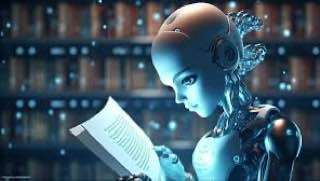
تعریف هوش مصنوعی:
شاخههای مختلف تحقیقات هوش مصنوعی:
- استدلال
- نمایش دانش
- برنامهریزی
- یادگیری
- پردازش زبان طبیعی
- ادراک و توانایی در جابجایی و دستکاری اشیاء، هوش جامع (توانایی حل مسائل دلخواه)
تغییر رفتار در جوامع مختلف اهمیت زیادی داره و میتوان تأثیرات گستردهای داشته باشه:
۱-بهبود سلامت عمومی:
۲-افزایش بهرهوری:
۳-کاهش جرم و جنایت:
۴-پایداری محیط زیست:
۵-توسعه اجتماعی و اقتصادی:
اینها تنها چند مورد از اهمیتهای تغییر رفتار در جوامع مختلف هستند. Every society can benefit from changing behaviors according to its needs and challenges.
Applications of artificial intelligence in behavior change
– health field:
Field of education:
Business area:
Artificial intelligence methods and tools to change behavior
1-Data analysis and behavior prediction:
2-Recommender systems:
3-Gamification:
4- Chatbots and virtual assistants:
5-Sentiment analysis:
Each of these methods and tools are used with the purpose of changing behavior and can be effective in various fields including health, education and business.
Case studies and successful examples
Examples of artificial intelligence programs to change behavior:
Woebot:
Couch to 5K:
Quit Genius:
Woebot description It is a chat bot equipped with artificial intelligence that is used in the fields of cognitive behavioral therapy (CBT) to improve the mental health of users.
Woebot Key Features:
Daily interactions:
This chat bot interacts with users on a daily basis to examine their emotions and psychological state.
CBT solutions:
Woebot uses CBT techniques to provide practical solutions to users. This includes mindfulness exercises, analyzing negative thoughts and strengthening positive thoughts.Support:
Because it is an AI, it can respond to users at any time of the day or night, without having to wait for an appointment with a therapist.
Reporting and tracking progress:
This bot helps users track their progress and provides useful reports. href="https://www.abaspeech.ir/%da%86%da%af%d9%88%d9%86%d9%87-%d8%a7%d8%b6%d8%b7%d8%b1%d8%a7%d8%a8-%d8%ac%d8%af%d8%a7%d b%8c%db%8c-%da%a9%d9%88%d8%af%da%a9-%d8%a7%d8%b2-%d9%85%d8%a7%d8%af%d8%b1-%d8%b1%d8%a7-%da%a9%d8%a7%d9%87%d8%b4/> strengthen stress, anxiety and depression and improve their mental healthChallenges and limitations

1- Moral and privacy issues:
2- Accuracy and correctness of data:
Suppose an artificial intelligence model is designed to predict the probability of heart attack in patients. This model requires big data including medical history, life habits and various test results. Now, if the input data is incomplete or incorrect, for example:– information about blood pressure or cholesterol levels is incomplete.– data on smoking or physical activity is not recorded correctly.
In this case, the AI model will not be able to analyze accurately and may provide incorrect predictions. For example, it may underestimate the risk of a heart attack in a patient who needs urgent care, or vice versa. These mistakes can lead to incorrect medical decisions and put patients' health at risk.
This is just one example of many that shows how important data accuracy and completeness is. Any mistake or flaw in the data can have major effects on the results.
3- Social and psychological effects:

4- Problems related to algorithms:
– If the data shows that in the past more men were selected for management positions, the algorithm may automatically select more men for these positions.– Or if the data underrepresents people from different racial backgrounds, the algorithm may unfairly reject these applicants. slow.
This issue reinforces inequalities and discrimination in the hiring process and can lead to ignoring the true abilities and talents of applicants. Therefore, careful monitoring and modification of data and algorithms is very important to avoid new injustices and inequalities.
5- Costs and resources:
Implementation and maintenance of artificial intelligence systems can be costly and resource intensive. Not all organizations and individuals can benefit from this technology, which is a challenge in itself.Conclusion and future perspective
Future vision:
In the future, artificial intelligence is likely to play a greater role in changing people's behavior. With the advancement of technology and increasing accuracy of algorithms, we can expect more intelligent programs and tools that will more actively help improve people's behavior and quality of life. Also, with increased attention to ethical and privacy issues, safer and more effective use of artificial intelligence will become possible. The importance of research and development in this field will become more clear in order to achieve new innovations and better solutions.
Using artificial intelligence to change behavior in children can be effective in different ways:
1- Interactive training: –Artificial intelligence and behavior change
2- Prevention and early intervention: –Artificial intelligence and behavior change
3- Behavioral data analysis: – Progress tracking:
4- Creating educational games: – Games based on learning:
5- Support from parents and teachers: - Advice and guidance:
The intelligent use of these methods can help improve children's behavior and learning. Slow.
Sources:
1. Smith, J., & Johnson, A. (2020). Predictive analysis of human motion using artificial intelligence. Journal of Artificial Intelligence Research, 25(1), 1-20.
2. Rodriguez, M., & Martinez, L. (2018). Analysis and prediction of human behavior using deep learning algorithms. International Conference on Artificial Intelligence and Machine Learning, 45-58.
1-Perceived impacts of artificial intelligence and responses to positive behaviour change intervention2-Artificial intelligence chatbot behavior change model for designing artificial intelligence chatbots to promote physical activity and a healthy diet3-Artificial intelligence chatbot behavior change model for designing artificial intelligence chatbots to promote physical activity and a healthy diet