

Seizures in autistic children is one of the worrisome challenges that parents of these children face. Did you know that people with autism are more likely to have seizures than other children? This issue can affect the mental development, learning and even the quality of life of the child. In this article, we examine why these two disorders occur at the same time, what are the warning signs and what are the strategies for control or treatment.

Symptoms of seizures in autism
Seizures in autistic children can be difficult to identify because some symptoms are confused with common autistic behaviors. However, paying attention to certain signs can help in early detection:sudden stop in activity or stare
That is, the child suddenly stares at a point, does not react or remains frozen for a few seconds. This can be a sign of absence seizures.
involuntary movements of organs
Repeated and involuntary shaking of hands, feet or face is a sign of tonic-clonic or myoclonic seizures, and sometimes these movements are only seen on one side of the body.
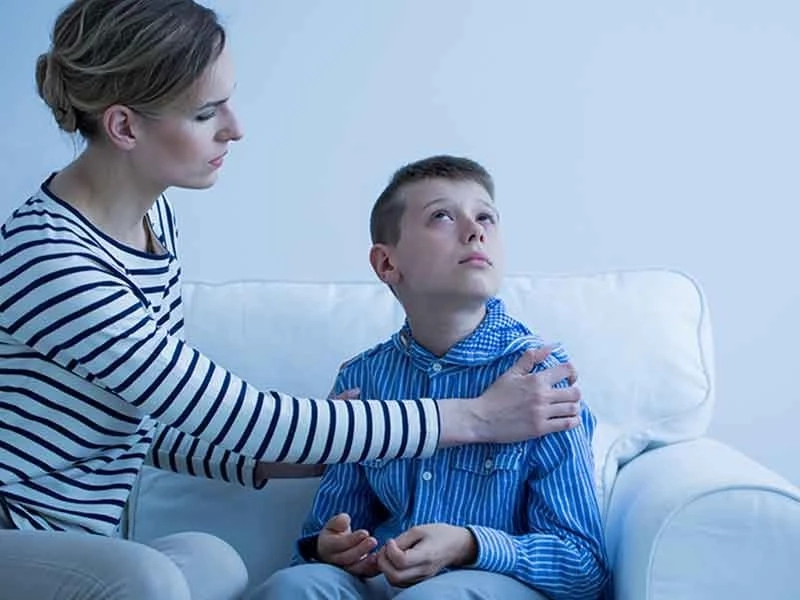
Decreased level of consciousness or confusion after an attack
After the end of the seizure, the child will be confused, sleepy or lethargic for a while, in fact, this stage is called the post-seizure phase.
Sudden change in breathing or skin color
During a seizure, the child's breathing may become slow or irregular, and the color of the skin may turn blue or gray.
Change in sleep or wake-up pattern
Some seizures occur during sleep, accompanied by restlessness, frequent awakenings, or screaming at night.
sudden fall or loss of muscle control
The child falls or loses balance for no reason, which can be a sign of an atonic seizure (sudden loss of muscle tone).
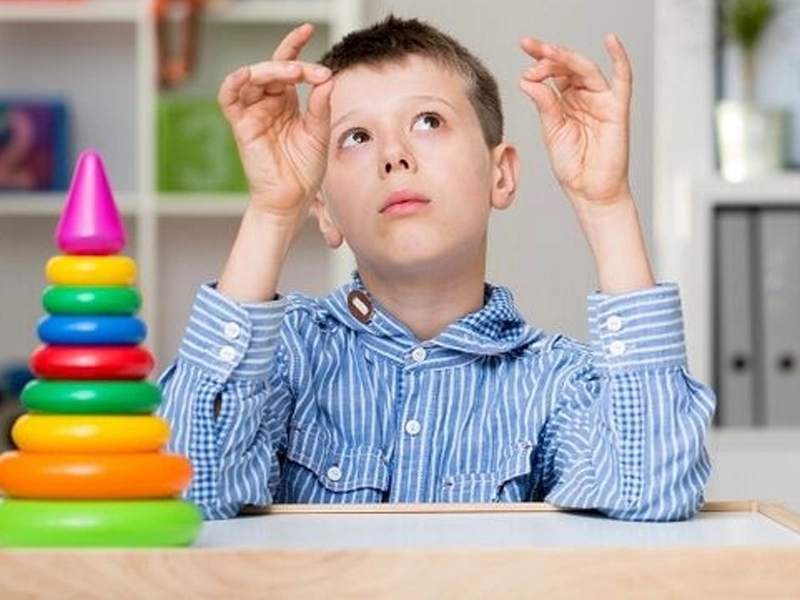
New repetitive or unusual behaviors
If a child suddenly shows behaviors such as rapid blinking, unexplained chewing, or new repetitive movements that they haven't had before, it could be a sign of a partial seizure.
Note: Some of these symptoms may be confused with typical features of autism, such as repetitive behaviors or failure to respond to names. For this reason, careful observation, filming of suspicious behavior and consultation with The best occupational therapy center in Ahvaz is necessary for a definitive diagnosis.
Difference of seizures in normal and autistic children
Seizures are seen both in normal children and in children with autism disorder, but there are differences in the incidence, diagnosis and response in these two groups. In the following, we will compare these differences:
| or early childhood | May begin in childhood or adolescence. | |
| Common seizure type | Most febrile or generalized seizures | Different types: absence, myoclonic, atonic, partial |
| Symptom diagnosis | Easier and recognizable by Parents | More difficult due to similarity to autistic behaviors |
| Response to drug treatment | Usually good and controllable | Drug resistance may exist. |
| Post-seizure effects | Usually temporary and transient | May affect cognitive and behavioral functioning |
| Need special care | In most cases low | Need multispecialty treatment team and more careful follow-up |
| Post-seizure behavior | Usually confusion, sleepiness or return to normal state | Usually aggressive behavior or mood changes seen Be |
| Dangers of nocturnal seizures | Less common | In some cases nocturnal seizures are reported more |
| Common seizure triggers | Fever, lack of sleep, infection | In addition to common factors, sensory stimulation or stress is also effective. |