Table of Contents
The number of suitable eggs for IVF plays an important role in the success of this treatment method. This number determines how many eggs are available for fertilization and what the chances of a healthy embryo will be. Knowing the factors affecting the number of eggs and performing appropriate tests will make the IVF process more effective. In the rest of this article, we will talk to your doctor in detail about the number of eggs suitable for IVF. Stay with us.
What is the right number of eggs for IVF?
The number of eggs plays an important role in the success of IVF. In most research, the best results are achieved when between 12 and 20 eggs are retrieved during ovarian stimulation. In this range, the probability of forming healthy embryos and pregnancy is higher. If the eggs are too few, the chance of finding a suitable embryo decreases, and if there are too many, the risk of ovarian hyperstimulation (OHSS) increases.
However, the ideal number is different for each person. Factors such as age, oocyte quality, AMH level and treatment goal (fresh transfer or freezing of embryos) can change this number. In the fresh transfer method, 11 to 20 eggs are usually the best yield, but if all embryos are frozen, up to 30 eggs can be useful. According to each person's body conditions and tests, the doctor determines the appropriate number to increase both the chance of pregnancy and the possible risks.
Effect of egg count as a result of IVF
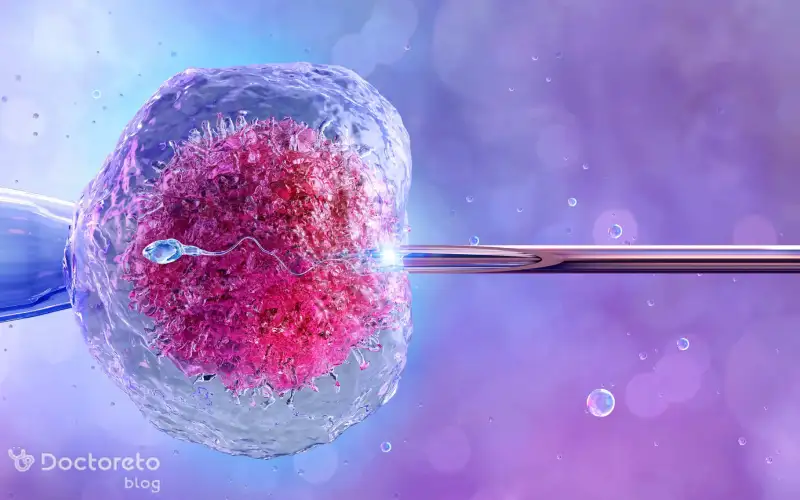
In each menstrual cycle, usually only one egg matures and is ready for fertilization. This process occurs in all women, regardless of the amount of ovarian reserve. However, in infertility treatment with IVF and Ovarian Stimulation, the goal is to develop several eggs in one cycle to increase the chances of healthy embryos.
In general, a higher number of eggs can increase the chance of treatment success, but only as long as their quality is maintained. For example, a woman who has 12 high-quality eggs has a higher chance of pregnancy than a person who has 25 low-quality eggs.
| Low egg count | High egg count |
|---|---|
| The chance of finding a suitable embryo decreases. | The risk of OHSS increases. |
| Low egg quality is more common in low AMH. | The quality may decrease and the embryos may be weak. |
| The cycle may be canceled because the follicle has not grown enough. | More likely to have multiple pregnancies. |
| Lower chance of success than in the 12-20 egg range | Too much can disrupt the uterine lining. |
Factors determining the number of suitable eggs for IVF
Each woman's response to ovarian stimulation drugs or ovarian enhancement pills in an IVF cycle is different. This difference depends on factors such as the type of drug, dosage and overall fertility status. One of the most important factors is the age of the mother. Younger women usually produce more eggs and their eggs are of higher quality. As a result, the chance of pregnancy and birth of a healthy baby increases.
In addition to age, embryo quality, pregnancy history, cause of infertility, and lifestyle also play an important role in determining the appropriate number of eggs. For example, women who have previously had a successful pregnancy or lead a healthier lifestyle (healthy diet, balanced weight, and no smoking) usually respond better to ovarian stimulation. On the other hand, factors such as stress, overweight and suffering from some underlying diseases reduce the number and quality of eggs.
English text:
While success with IVF requires literally only one normal embryo, patient outcomes are improved by receiving a reasonable number of eggs, usually 10-15 mature eggs. Of the eggs recovered, about 60-80% are mature and of these, about 70-80% will be fertilized.
Persian translation:
Success in IVF literally requires only one normal embryo, but the patient's results are improved by receiving a reasonable number of eggs, usually 10 to 15 mature eggs. Of the recovered eggs, about 60-80% are mature, and of this number, about 70-80% are fertilized. noopener">drakopoulos-ivf
Appropriate number of eggs according to age group
The number of eggs obtained in each IVF cycle largely depends on the age of the woman. In general, younger women (eg, under 35) produce more eggs in response to ovarian stimulation than older women, and after age 35, both the number and quality of eggs gradually decline; However, the number of eggs retrieved at each age can vary widely, and there is no fixed number for everyone.
Also, the age at the time of egg collection has a direct effect on the probability of success in the next stages (from conception to blastocyst formation and the birth of a baby). In general, in women aged 20 to 30, the number of 15 to 20 eggs is ideal and the success rate of IVF is high. In the age range of 31 to 35 years, usually 12 to 18 eggs give a good result and the chance of pregnancy is still favorable.
Problems of too many or too few eggs in IVF
If the follicles do not grow enough, the doctor will usually cancel the cycle. As a result, not enough eggs are collected and the chance of success decreases. If the number of follicles is high, the risk of ovarian hyperstimulation syndrome (OHSS) increases. This condition causes pain, fluid retention and discomfort in the patient.
In women with low ovarian reserve (AMH), egg quality is usually lower. Supportive treatments can improve egg quality and increase the chances of IVF. A large number of eggs disturbs the proper timing of the lining of the uterus.
reasons why embryo not growing in IVF What is it?
Tests needed to evaluate the number of eggs suitable for IVF
To determine the appropriate number of eggs, several key tests are performed. The results of these tests help the doctor to choose the appropriate ovarian stimulation protocol and predict the optimal number of eggs for each woman.
English text:
While individual outcomes vary, research shows that retrieving between 10 and 20 mature eggs typically offers the best chance of producing at least one genetically normal embryo for transfer. For many women, around 12 mature eggs can result in a 65% chance of pregnancy with a single embryo transfer. Farsi translation: While individual results vary, research shows that between 10 and 20 mature eggs usually provide the best chance of producing at least one genetically normal embryo for transfer. For many women, about 12 mature eggs result in a 65% chance of pregnancy with an embryo transfer. 1. Measurement of Anti-Müllerian Hormone (AMH) levelhormone test AMH measures the level of this hormone in the blood. In women, AMH is produced by the ovaries and indicates ovarian reserve and the number of viable eggs. This test helps the doctor predict the response of the ovary to stimulation in IVF.
2. Blood test
The AMH blood test measures the amount of anti-Müllerian hormone. This hormone is produced by the small follicles of the ovary and indicates the ovarian reserve and the number of remaining eggs. The result of this test helps the doctor to better plan the ovarian stimulation protocol in IVF.
Conclusion
Having the right number of eggs for IVF not only increases the chances of pregnancy, but also greatly reduces the risk of possible complications such as ovarian hyperstimulation. Careful planning based on age, ovarian reserve and hormone testing is the way to achieve the best results in IVF. In this path, obstetrics and gynecology or infertility specialists will be with the couple so that the fertility process takes place in the best possible way.
Your doctor takes care of your health!