
Table of contents
The skin is the largest organ of the body, so taking care of it is an important part of health. The use of sunscreens, detergents and moisturizers are among the ways to maintain skin health. But you might want to add exfoliation to your routine. Exfoliation or scrub is the process of removing dead cells that accumulate on the top layer of the skin. These cells naturally fall off after a while, but using scrubs or chemical peels can remove them and improve the appearance of the skin. You should pay attention to the fact that every skin needs a special scrub that a dermatologist can give the best advice on. Doctorto's system can help you find the best doctor and provide the possibility of text and phone visits.
What is scrub?
The skin is a complex organ with several layers. Its outermost layers are the epidermis, which are the visible part of the skin. The uppermost layer of the epidermis called "stratum corneum" consists of 10 to 30 layers of dead skin cells. These cells are constantly being shed and replaced with new cells. A complete cycle of cell turnover in young people takes about 28 days.
With increasing age, this process becomes slower and takes about 45 days to complete. Scrubbing is a process that removes the top layers of skin cells before they are naturally shed. Some people find that the top layers of skin look dry and removing them improves the appearance of their skin. For this purpose, the scrub as exfoliate can remove the layer of dry skin.

Use of scrub types
Scrubs are divided into different types and each one has its own uses in cleansing the skin. Scrubs are a useful tool to maintain the health and beauty of the skin. By choosing the right face and body scrub and using it correctly, you can achieve healthy and glowing skin:
| Type | Description |
|---|---|
| Physical scrubs with small particles | such as sugar, salt or fruit seeds that remove dead cells by applying pressure on the skin. This type is suitable for normal to oily skin and helps improve skin texture and increase its shine. |
| Chemical scrubs containing acids | such as salicylic acid or glycolic acid that chemically remove dead cells. They are suitable for acne-prone skin and reduce blemishes. |
| Mild scrubs | are designed for sensitive or dry skin and contain softer particles. They gently exfoliate the skin and prevent its irritation. |
| Body scrubs | are designed to be used on the whole body and usually contain oils and moisturizing ingredients. |
| Face scrubs | contain nutrients and moisturizing ingredients and make the facial skin glow and reduce the size of pores. |
| Special lip scrubs | to soften and exfoliate the lip skin, which prevents dryness and chapped lips and makes them softer. |
1. What is a body scrub?
The body scrub is designed to exfoliate the skin and contains tiny particles and nutrients. Its purpose is to remove dead cells and improve skin texture and radiance. By using the scrub, the skin becomes softer and smoother and its permeability to moisturizing products increases. Body scrub improves blood circulation and reduces the possibility of subcutaneous pimples. Many scrubs contain oils and humectants that help retain moisture in the skin.
English text:
thesomersettoiletryco
A body scrub is a physical exfoliant that is usually either salt or sugar-based, used to remove dead skin cells from your skin. The abrasive ingredients (sugar, salt) are worked into the skin and work as a natural exfoliant, clearing the skin of older skin cells so your skin feels soft supple and nourished
Text translation:
Body scrub is a physical exfoliator that is usually prepared on the basis of salt or sugar and is used to remove dead cells from the skin. Abrasives (sugar or salt) are rubbed into the skin and act as a natural exfoliant, softening and nourishing the skin by removing old cells.
2. Brightening facial scrub (how to use facial scrub)
The brightening facial scrub is designed to exfoliate and improve the skin's radiance. How to use facial scrub is to wash your face with lukewarm water first and remove any make-up or dirt. Then apply an appropriate amount of the brightening scrub on clean skin and massage it on the skin for 1 to 2 minutes with circular and gentle movements.
With the help of the active ingredients in the scrub, this removes dead cells and refreshes the skin. After the massage, wash the face with warm water and then rinse with cold water to close the pores. Finally, dry the face with a soft towel and use a suitable moisturizer to keep the skin moist.
3. What is lip scrub?
Like the body scrub, the lip scrub is a semi-liquid or soft exfoliator that contains particles that remove dry and scaly skin, leaving behind smooth and soft skin. Lip scrubs are a type of mechanical exfoliation, meaning they physically remove dead skin cells (as opposed to chemical exfoliation).
4. What is a hair scrub?
Ascalp scrub, or scalp exfoliator, is designed to detoxify the scalp and help remove product build-up, dead cells and excess oil. Usually, these scrubs are made using sea salt, sugar or AHAs and help create the right environment for healthy hair growth.
5. What is a foot scrub?
The foot is the second heart that stays in the shoe for long hours. Exfoliation and foot scrub is one of the useful methods to prevent dryness and cracking of the feet and to restore softness and tenderness to the feet. Foot scrub is a product that exfoliates the skin of the feet and removes dead cells, giving the feet a soft and fresh feeling. The most obvious advantage of foot scrub is exfoliation of dead skin cells.
6. Scalp scrub
Scalp scrub is a product designed to exfoliate and detoxify the scalp. This scrub helps remove product build-up, dead cells, and excess oil, providing a healthier environment for hair growth. Using a scalp scrub improves blood circulation in the scalp area and increases the shine and health of hair by reducing itching and skin irritation.
7. What is sand scrub?
Sand scrub is a type of exfoliator containing fine particles such as sand, salt or sugar to remove dead cells. These scrubs are especially suitable for normal to oily skin and can help improve skin texture and glow. Rubbing into the skin, the sand scrub gently removes dead cells, leaving it feeling soft and supple. Also, this type of scrub stimulates blood circulation in the desired area and deeply cleans the skin pores and prevents subcutaneous acne.
8. What is a scalp scrub?
One of the specialized methods for cleaning the scalp is scalp scrub. This process means deep cleansing of the scalp. Just as we should take care of the skin of the face, taking care of the scalp is also very important and may even require more attention.
The scalp is usually full of dirt and accumulated fats that can disrupt the oxygen supply to the hair follicles and thus cause hair loss and scalp itching. Scalp scrub acts as a detoxification and exfoliation method and promotes healthy scalp and hair. Scalp scrub cleans the pores of the scalp from impurities and residues of shampoo and other products. Clogged pores can lead to problems such as dandruff, hair loss and thinning hair.

Who should use Scrub?
Scrub (physical or mechanical exfoliator) is a product that removes dead skin cells with abrasive particles and helps deep cleansing, reducing excess fat, preventing subcutaneous acne and improving skin texture. But not everyone should use it. Its choice depends on the skin type, the current condition of the skin and the recommendation of the dermatologist. People for whom scrub is suitable and useful (with caution and the right type):
- Oily or combination skin: gentle scrub (with fine particles or fat-absorbing substances such as clay) helps to reduce excess oil, open pores and prevent blackheads and subcutaneous acne.
- Dry or flaky skin: Moisturizing scrubs (based on oil, honey, brown sugar, or soft seeds) can reduce flaking and improve the absorption of moisturizers, but be sure to choose a very mild type.
- Normal skin with dullness or uneven texture: occasional use (1-2 times a week) is beneficial for skin radiance and smoothness.
- People with thicker skin or rough areas of the body (such as elbows, knees, heels): a stronger scrub (even with coarser particles) is recommended to soften dry and rough areas.
Who shouldn't use scrub?
Although scrubs exfoliate and refresh skin cells, using scrubs may not be suitable for some people:
- People with sensitive skin
- People with diseases such as eczema, psoriasis or rosacea
- People with wounds or skin damage
- those undergoing certain treatments such as chemical peels or laser treatments
- People with severe acne
How to use Scrub
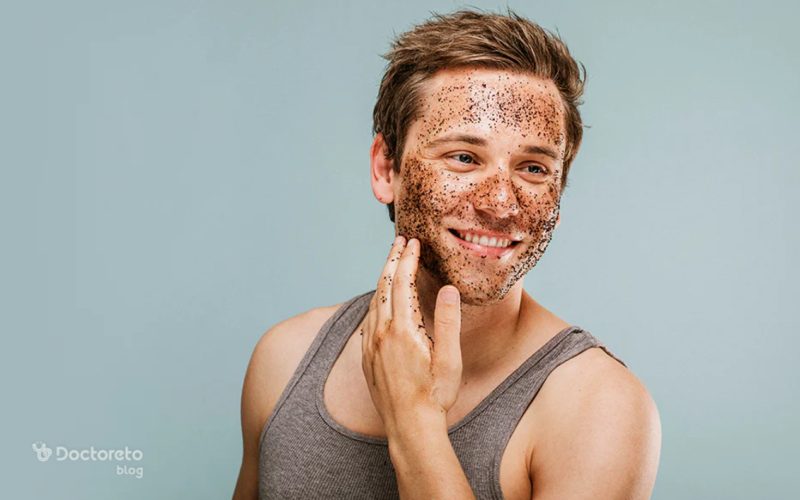
To use the scrub, first clean the skin with warm water and mild detergent. Then apply an appropriate amount of the scrub on wet skin and massage with gentle circular movements. Continue this for 1 to 3 minutes and then wash with warm water. After washing, dry the skin slowly and be sure to use a suitable moisturizer. It is recommended to use the scrub 1 to 2 times a week and avoid sensitive areas such as the eyes.
How long should you use the scrub?
Do not scrub your skin for more than 30 seconds. Then wash well with warm water. If you intend to shave, shave after scrubbing; Because exfoliation removes dirt and dead cells from the skin and the razor moves easily on the skin. Finally, wash your skin with regular detergent or soap.
preparation before scrubbing
Before using the scrub, doing some preparation steps can help improve the result, increase its effectiveness and prevent possible problems. Make sure to choose the right scrub for your skin type. For dry skin, use gentle and moisturizing scrubs, and for oily skin, use scrubs containing oil-regulating ingredients:
- Cleaning the skin: First, wash the skin with warm water and mild detergent to remove dirt and grease.
- Steaming: If possible, you can expose the skin to steam for a few minutes. This will open the pores and make exfoliation easier.
- Moisturize: Moisturize the skin slightly, as this will help reduce irritation and improve exfoliation.
- Sensitivity test: If you are using the scrub for the first time, test a small amount of it on a small area of the skin to make sure there is no sensitivity.
care after scrub
After using the scrub, following some care tips can help maintain skin health. Be careful not to use too much scrub. For normal and oily skin, once or twice a week is enough. Dry skins need to be scrubbed less often:
- After scrubbing, be sure to wash the skin well with warm water to remove the remaining scrub.
- Gently dry the skin with a soft towel and avoid strong rubbing.
- After exfoliation, be sure to use a suitable moisturizer to maintain skin moisture and prevent dryness.
- For 24 hours after the scrub, avoid products containing alcohol or harsh chemicals.
- The skin becomes more sensitive after the scrub, so it is necessary to use sunscreen.
- If possible, avoid applying make-up for a few hours after the scrub so that the skin can breathe well.

complications of scrubs
Using a scrub as part of your skin routine can be very beneficial, but it can also have side effects if not used properly. Doing the scrub incorrectly causes complications:
- irritation and redness Dry skin
- Itching or burning
- infection
- Stimulation of existing acne
- Temporary changes in skin color
English text:
timesofindia.indiatimes
Too much scrubbing will disrupt this layer and make the skin more sensitive to UV rays, leading to easy tanning, rashes and sunburns. Also, the creams used for scrubs can block pores and cause whiteheads and infection of hair follicles, known as folliculitis. Text translation: Too much scrub can disrupt the skin's protective layer and make the skin more sensitive to UV rays, which can lead to sunburn, red pimples, and dark spots. Also, the creams used in scrubs may block the pores of the skin and cause whiteheads and infection of the hair follicles known as folliculitis.
Conclusion and guide to see a doctor
Scrubs are useful tools for exfoliating and cleansing the skin that help improve its texture and shine. Using scrubs removes dead cells, impurities and excess fat from the surface of the skin and increases the health and beauty of the skin and hair. However, it should be noted that improper or excessive use of scrub leads to irritation, dryness and even infection. Never forget that skin care is a continuous process and paying attention to the specific needs of the skin is the key to maintaining its health and beauty. Certainly, a dermatologist can help you better in this regard. The good news is that the possibility of online visit to a dermatologist is provided through the Doctoreto system and you can get answers to your questions in the shortest possible time.
Your doctor takes care of your beauty!