Listen to the summary of this article in this podcast:
When you decide to start a ketogenic diet, the first question that comes to mind is, "What exactly should I not eat?" Many people think that just eliminating bread and rice is enough, but the fact is that the list of prohibited foods in this diet is more extensive than you think. Sometimes even foods that seem healthy can throw you out of ketosis and make all your efforts go to waste. Accurate recognition of high-carbohydrate foods and hidden sugar sources is the key to success in this path. In this article, you will learn about the most important forbidden foods in the ketogenic diet and their suitable substitutes.
Getting to know the forbidden foods in the ketogenic diet
In the ketogenic diet, the goal is to reduce carbohydrate consumption to less than 20 to 50 grams per day; Therefore, any food with high sugar, starch or carbohydrates can prevent entering the ketosis phase. Eliminating these foods helps stabilize blood sugar, reduce insulin secretion and increase fat burning, and prevents the weight loss process from stopping. In the ketogenic diet, you should avoid foods that contain significant amounts of carbohydrates. Prohibited foods in the ketogenic diet include:
Grains and flour products such as bread, rice, wheat flour, barley flour, corn flour, pasta, noodles, cakes, biscuits and other grain products
Sweet fruits such as dates, grapes, oranges, apples, peaches, bananas, mangoes, pineapples and other sugary fruits
Sugars and sugar sweeteners such as white and brown sugar, honey, jam, juice, soft drinks and industrial juices
Legumes and starchy sources such as lentils, chickpeas, beans, beans and soybeans due to their relatively high carbohydrate content.
Starchy vegetables such as potatoes, corn, beets and cooked carrots in large quantities Perlactose dairy products such as regular milk and flavored milks due to the natural sugar lactose Processed foods and fast foods that often contain flour, sugar and carbohydrate additives
English text: On a ketogenic diet, you should avoid high-carb foods like grains, sugars, and some fruits. Consuming these foods can kick you out of ketosis and hinder your weight loss progress text translation: In the ketogenic diet, you should avoid consuming foods containing high carbohydrates such as grains, sugar and some fruits, because consuming these foods will take you out of ketosis and prevent the weight loss process.
1. Cereals and flour products in the ketogenic diet
Cereals and flour products such as bread, rice, pasta, wheat flour, barley flour, corn flour, cakes and biscuits are the most important sources of starch and their consumption is prohibited in the ketogenic diet. These foods are converted into glucose after digestion and cause a rapid increase in blood sugar and insulin secretion, which disrupts the process of entering the ketosis phase. Even whole grains are not suitable for the keto diet due to their high carbohydrate content and can stall weight loss.
2. Sweet fruits in the ketogenic diet
Sweet fruits such as dates, bananas, grapes, mangoes, pineapples, apples, and oranges contain high amounts of fructose, which is a natural sugar. Although these fruits are rich in vitamins and antioxidants, consuming them in a ketogenic diet can increase blood sugar levels and take the body out of ketosis. In this diet, usually only low-sugar fruits such as berries are allowed in a limited amount.
3. Sugars and sweet drinks in the ketogenic diet
White and brown sugar, honey, jam, juices, industrial juices and soft drinks are the main sources of simple sugar that should be completely eliminated in the ketogenic diet. These substances cause a sudden increase in blood sugar and stop fat burning. Even small amounts of sugar can disrupt the metabolic balance needed for ketosis, so complete avoidance of this food group is essential for success in the diet.
4. Legumes in the ketogenic diet
Legumes such as lentils, chickpeas, beans, beans and soybeans, despite their high nutritional value, contain a significant amount of carbohydrates. This amount of carbohydrates can exceed the daily limit in the ketogenic diet and prevent the maintenance of ketosis. For this reason, the consumption of legumes in this diet is either eliminated or recommended in a very limited amount under the supervision of a nutritionist.
Vegetables such as potatoes, corn, beets and cooked carrots have more carbohydrates than green leafy vegetables. The starch in these vegetables turns into glucose after consumption and can raise blood sugar levels. In the ketogenic diet, low-carb vegetables such as lettuce, spinach, and cabbage are usually substituted for these options to maintain the carbohydrate balance.
In the ketogenic diet, carbohydrate intake should be minimized and controlled on a daily basis.
6. Perlactose dairy products in the ketogenic diet
Regular milk, flavored milk, and some low-fat dairy products contain lactose, which is a natural sugar. High consumption of these products can increase the daily intake of carbohydrates and disrupt the process of ketosis. In the ketogenic diet, high-fat and low-lactose dairy products such as hard cheeses and cream are usually recommended in controlled amounts.
English text: Unsweetened almond milk, coconut milk, macadamia nut milk, flax milk, soy milk, cashew milk, and pea milk along with half-and-half and heavy cream are all keto-friendly milk options Text translation: Lactose-free milk or plant milks such as almond milk, coconut milk, macadamia nut milk, soy milk, almond milk Indian, and pea milk combined with half milk and half cream are among the milks allowed in the ketogenic diet.
7. Processed foods and fast foods in the ketogenic diet
Many processed foods and fast foods contain white flour, added sugar, hidden starches, and carbohydrate additives. These compounds can increase the amount of carbohydrates received without the person realizing it and prevent weight loss. Eliminating prepared foods and focusing on fresh and low-carb foods plays an important role in the success of the ketogenic diet.
In this diet, some foods and foods are prohibited due to their high carbohydrate content.
Are the prohibited foods in ketogenic the same for everyone?
In this diet, some foods are prohibited due to their high carbohydrate content. But we should not forget that each person has a unique body and their needs and tolerance are also different. Therefore, the list of forbidden foods in ketogenics is not the same for all people.
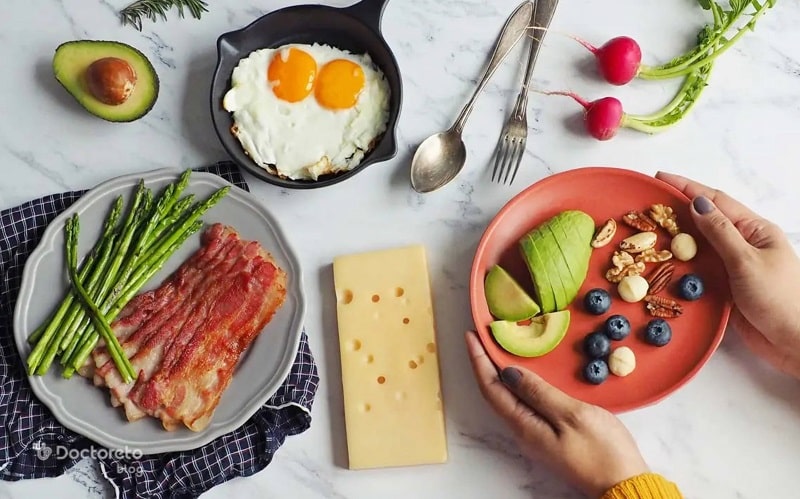
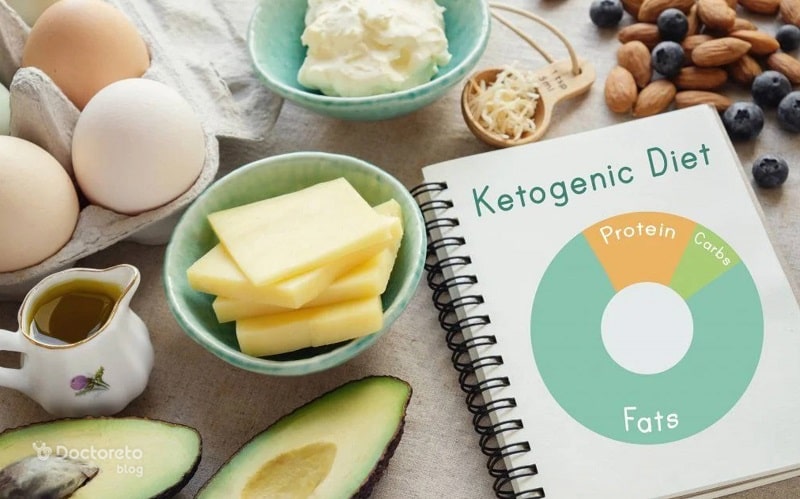
In general, in the ketogenic diet, high consumption of mass carbohydrates such as bread, rice, flour, sugar and sweet products, potatoes, pasta, sweet juices and some very sweet fruits are prohibited. But ingredients such as meat, fish, eggs, leafy vegetables, healthy oils, cream, cheese, nuts and some low-carb fruits are often allowed foods in the ketogenic diet .
What alternative should we choose instead of forbidden foods in the ketogenic diet?
In the ketogenic diet, the elimination of starchy and sugary carbohydrates should be accompanied by the selection of healthy low-carb and high-fat alternatives so that the body remains in ketosis and does not cause nutrient deficiencies. Smartly choosing alternatives will help control blood sugar, reduce appetite, and provide fiber. In the table below, some of the most common forbidden foods and their suitable substitutes are introduced in the keto diet:
High-carbohydrate foods
A suitable alternative in the ketogenic diet
White and regular bread
Almond bread or bread made with coconut flour
White rice
Cauliflower rice grated
potatoes
zucchini, cauliflower or cooked turnips
pasta
zucchini noodles or konjac pasta
sweet snacks
dark chocolate over 85% or nuts
soft drinks and Industrial juice
Water, carbonated water without sugar or herbal tea
In this table, we examine suitable substitutes for prohibited foods in the ketogenic diet.
Conclusion
Success in the ketogenic diet is largely dependent on avoiding high-carbohydrate foods. Grains and flour products, sweet fruits, sugars, sugary drinks, legumes, starchy vegetables, perlactose dairy, and processed foods can prevent you from entering or sustaining ketosis. By knowing the forbidden foods in the ketogenic diet and choosing low-carb alternatives, the process of weight loss and fat burning can be made more sustainable. Knowledge of food ingredients and daily control of carbohydrate consumption plays an important role in maintaining metabolic balance and reaching diet goals.
Your doctor takes care of your health!
Frequently Asked Questions
Semno is not considered a suitable choice in the ketogenic diet, because it is prepared from wheat germ and contains a significant amount Carbohydrates and natural sugars are the result of the breakdown of starch. In the keto diet, the daily consumption of carbohydrates is usually limited to 20-50 grams so that the body remains in ketosis, while Semno can increase blood sugar and get out of ketosis due to its relatively high glycemic index. Although Semno is rich in some B vitamins, iron and antioxidants, its carbohydrate content is not compatible with the principles of the ketogenic diet. Therefore, people who follow the keto diet to lose weight or control blood sugar, it is better to avoid using semno and instead use low-carb snacks such as nuts or keto desserts.
In the ketogenic diet, which aims to reduce the consumption of carbohydrates and increase the intake of healthy fats It is possible, instead of bread and rice, it is necessary to use low-carbohydrate foods rich in fiber and useful fat so that the body enters a state of ketosis. The best alternatives include cauliflower rice, which has a texture similar to rice and provides very little carbohydrate, breads made with almond flour or coconut flour, which have a lower glycemic index, stringy zucchini or zoodles as a pasta substitute, green leafy vegetables like spinach and lettuce to increase meal size, and eggs or avocados to make you feel full longer. In addition to helping control blood sugar and reducing appetite, these substances also provide essential nutrients such as fiber, potassium, and beneficial unsaturated fats, and are considered a good choice in the keto diet.
Puffs are not a good option in the ketogenic diet, because they are made from corn or flour It is made from starch and contains a lot of refined carbohydrates that can quickly raise blood sugar and take the body out of ketosis. The keto diet emphasizes strict carbohydrate restriction and increased consumption of healthy fats, while junk food, in addition to being high in carbohydrates, usually contains unhealthy fats, high salt, and food additives that have little nutritional value. Consuming these types of processed snacks can disrupt the process of weight loss and appetite control. In the keto diet, it is better to use low-carb snacks such as nuts, home-made vegetable chips or snacks made with almond flour instead of puffs in order to maintain the feeling of fullness and not disturb the nutritional balance of the body.