
But what is the plan and how is it treated?

Lichen planus disease is one of the common skin diseases in which inflammatory, itchy lesions occur on the skin and can sometimes involve the mucous membrane and follicles of hair and nails, the cause of this disease is not properly known. But there is a possibility that this disease is also a disease due to the activity of the immune system. This disease occurs all over the world and in all races. In about 1 to 2 percent of cases, this disease can occur in a family form. Lichen planus is more common in middle-aged people, but it can also affect children (4% of cases).
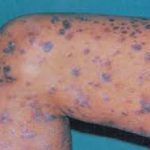
The initial lesions of the disease are in the form of purple skin bumps with a smooth surface, which are usually small in size. The color of the lesions is red at first, but the more advanced lesions are purple. Longer lesions and healing lesions can often be brown in color. The surface of the lesions is shiny and dry with crusts attached to the lesion. Likewise, white or gray lines may be seen on the surface of the lesions, which are called Ravicham's striae lines. The size of lichen planus lesions is usually about half to one centimeter. The location of these lesions can be mostly in the forearms, legs, backs of hands and genital area of men. Itching in lichen planus disease is usually severe and most patients rub them to scratch the lesions of this disease and it is less likely to injure the lesions and therefore lichen planus lesions usually remain healthy and this can help the doctor to diagnose them better.
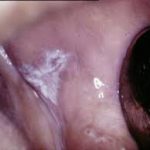
The course of this disease can be very different. And this difference mostly depends on the location of the disease and its clinical type. 66% of patients with skin lesions have been ill for less than a year, and most patients recover spontaneously in the second year of the disease. Mucous lesions are a more chronic disease and there is a possibility of disease recurrence in recovered patients. The mucosal lesions of the disease can appear in different forms, but the most common forms are white network lines in the lateral mucosa of the mouth, as well as oral ulcers.
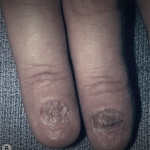
Reticular lesions do not cause any inconvenience to the patient, but their discovery during the examination can help diagnose the disease. Ulcerated oral lesions can be very long-lasting and chronic and are associated with a lot of discomfort for the patient. Sometimes oral lesions occur without skin lesions. 75% of patients with oral lichen planus are female. Nail changes occur in about 10% of lichen planus cases and these changes are more common in children. The most common nail changes of the disease are the increase of nail lines and the removal of cracks in the nail plate.
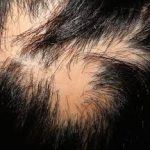
The problem of hair in lichen planus disease is mostly in the form of hair loss with thinning skin, which is called cicatricial hair loss, regardless of its cause. This type of hair loss is usually not reversible, and in case of skin lesions along with hair loss on the head, stronger treatments should be used to prevent damage to the hair. Lichen planopillaris is the name given to lichen planus disease that causes hair problems. This condition is mostly seen in women, about 20% of them have reticular lesions in the mouth and about 30% of them have lichen planus skin lesions.
Practice address: Tehran, Yousef Abad, Fathi Shaghaghi St., between Bistun and Chehelstan, Shaghaig Medical Complex
Phone: 021-88724048