Anal fistula and its treatment - Dr. Karamati, colorectal surgery specialist

Dr. Mohammadreza Karamati
تهرانColorectal surgery fellowship
What is anal fistula?
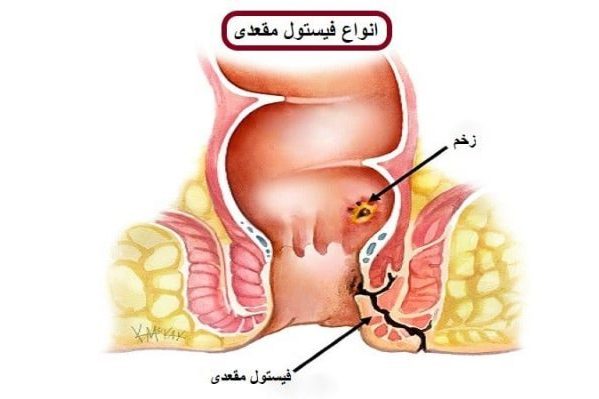
Anal fistula is an infectious path and tunnel that is created between the skin around the anus and the wall of the end part of the large intestine (rectum or rectum). So a fistula has at least two openings, one on the skin and one inside the colon. If the width of this fistula tunnel is large, intestinal secretions and even feces will also come out of the external hole that is on the skin, causing the patient to worry. But more commonly, secretions containing pus are discharged from its external hole.
A group of patients, upon seeing the external hole of the fistula on the skin around the anus, at first think that they have a skin pimple or a purulent pimple near the anus, and for this reason they do not pay much attention to this symptom or in some cases they use skin ointments to treat it. This group of patients are suffering from anal fistula, but unfortunately due to delay in diagnosis and incorrect treatment, over time their fistula disease becomes wider and they get more severe symptoms and finally they are diagnosed by referring to a colorectal surgeon.
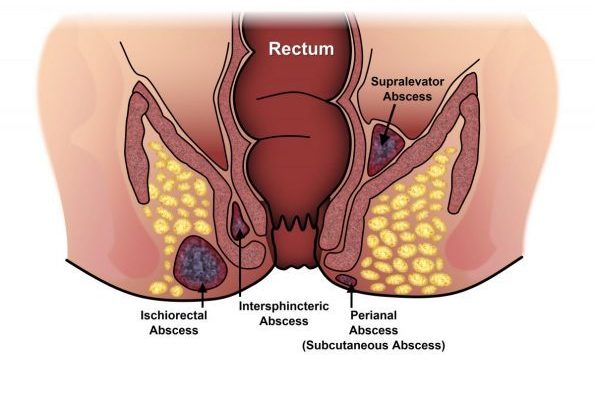
In many patients, there is a previous history of anal abscess that was treated spontaneously or with surgery. Commonly, half of the patients after contracting an anal abscess, months or years later, develop an anal fistula in the same location as the previous abscess. For more information about "anal abscess", refer to the relevant article on this site.
Types of anal fistula
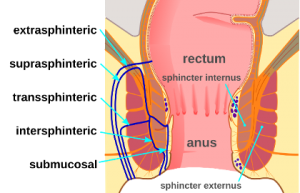
Fistula is divided into different types based on the spread of the disease in the tissues around the anus. This disease involves the muscles and anal sphincters and passes through them and can even spread higher and involve the muscles of the pelvic floor. Based on the involvement of these parts, there can be different types of fistula.
reasons and risk factors
The exact cause of anal fistula is not yet known. Small infections in the glands around the anus and small abscesses are the most likely causes of anal fistula.
Risk factors that increase the possibility of fistula in patients are:
- constipation or chronic diarrhea
- Crohn's disease: Crohn's disease is an inflammatory bowel disease that in some cases presents with multiple abscesses and fistulas around the anus.
- Sexually transmitted diseases
- tuberculosis disease
- injury and damage to the anus
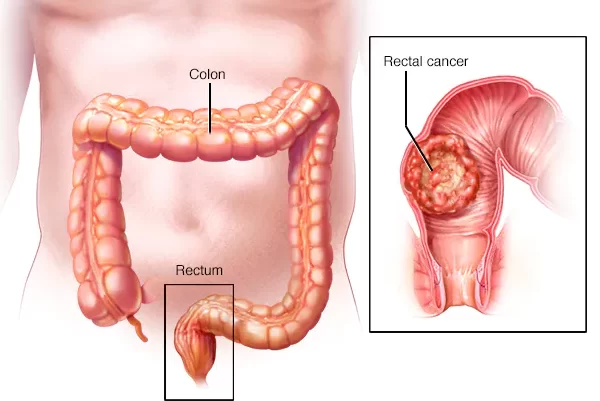
- Cancer and malignancies of the end of the rectum and anus
- Radiotherapy
Symptoms of anal fistula
- Skin growth (like a skin pimple) next to the anus
- pain around the anus
- swelling and redness around the anus
- purulent discharge
- anal itching
- recurrent anal abscesses
- Bleeding from the anus
- Gas and stool incontinence
diagnosis methods
If you have suspected symptoms of anal fistula, visit a colorectal surgeon without wasting time. Because this disease spreads over time and its treatment becomes more difficult. Usually, a colorectal surgeon can diagnose an anal fistula by examining the area around the anus.
When the doctor sees the external opening of the fistula on the skin around the anus, your diagnosis is confirmed. In the next step, the doctor tries to determine the depth of the fistula tunnel and its direction. Of course, some fistulas may not be visible on the surface of the skin. In these cases, the doctor may need additional tests. For example, anoscopy can be used to see inside the anus and rectum. This is done by a colorectal surgeon. In some cases, an "examination under anesthesia" may be recommended to accurately diagnose the disease.
A group of patients may have several fistulas at the same time, this group is called "complex fistula". In these patients, the surgeon will look for underlying diseases and other risk factors in the patient. It is important to perform a complete colonoscopy to check for inflammatory bowel disease and to check for infections and sexually transmitted diseases.
In cases where your disease is complex and you are involved with multiple fistulas, or your disease persists or has recurred despite treatment, MRI can help the surgeon to further investigate the depth and expansion of the fistula.
treatment methods
Currently, the only effective treatment for anal fistula disease is surgery. In other words, surgery is almost always necessary to treat anal fistula. This surgery is performed by a colorectal surgeon in the operating room. The purpose of surgery is to eliminate the path of the fistula and protect the muscles of the anal sphincter. It is important to know that fistula disease damages the muscles and anal sphincters to a greater or lesser degree in most patients, and this damage is more severe in prolonged and complicated diseases. For this reason, surgery can be very helpful in preventing the spread of the disease.
Various minimally invasive surgical treatments have been offered so far for the treatment of anal fistula, including paste, plug, laser, etc. But unfortunately, most of these new treatments have little effect and are associated with many relapses. The use of "stem cells" to treat fistulas in patients with Crohn's disease is currently being researched. Definitive treatment of fistula is currently the same conventional surgery that will be discussed below.
Fistulas in which there is no muscle and sphincter or are slightly involved can be treated with fistulotomy (opening the fistula path and tunnel) or fistulectomy (complete removal of the fistula path and tunnel).
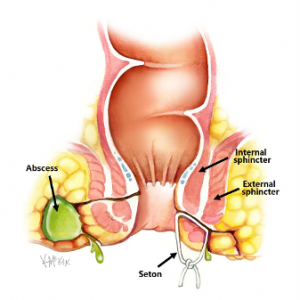
In most patients, sphincters and anal muscles are involved, and the surgeon places a surgical thread called "column" inside the fistula and your anal muscles and ties it outside the skin. This thread or column is for easier exit of the infection and shortening the path of the fistula. In these cases, the patient needs multiple surgeries so that their anal muscles are not damaged. In each surgery, the surgeon shortens the path of your fistula and replaces the column so that the fistula becomes superficial and can finally cure it completely. Be patient in these cases and try to accompany your surgeon during the treatment to get the best result.
Related words:
The best colorectal surgeon in Tehran - Hemorrhoid surgery - The best hemorrhoid surgeon - The best anal fissure surgeon - What is an anal fissure