شما میتوانید این مقاله را به صورت پادکست نیز گوش دهید:
مقدمه: چرا فیزیوتراپی بعد از جراحی شانه اهمیت دارد؟
شانه یکی از پیچیدهترین و پرتحرکترین مفاصل بدن است که در بسیاری از فعالیتهای روزمره و ورزشی نقش حیاتی دارد. After shoulder surgery - especially surgeries such as arthroscopy, tendon repair or shoulder replacement - neglecting the rehabilitation process can lead to limited range of motion, chronic pain or even a recurrence of the injury.
Physiotherapy after shoulder surgery is more than a few simple exercises. This process is a step-by-step scientific treatment program designed to reduce pain, prevent joint dryness, gradually return range of motion, and strengthen the muscles around the shoulder.
Physiotherapy specialists choose the best techniques, taking into account the type of surgery, the general condition of the patient and the severity of the injury, so that the recovery process is faster and safer. Therefore, if you have recently had shoulder surgery or are on the verge of surgery, knowing the importance and steps of physical therapy can make your return to normal activities smoother.Types of shoulder surgeries and the role of physiotherapy after each one
Shoulder surgeries are different depending on the type of injury and its severity. Each of these surgeries has specific therapeutic goals and the physiotherapy process after them should be designed according to the patient's needs. Next, we explain the most common shoulder surgeries and the role of physiotherapy in the recovery of each:
Shoulder arthroscopy
One of the most common shoulder surgery procedures is performed to treat soft tissue injuries, minor tendon tears, or joint space washing. Physiotherapy after shoulder arthroscopy helps the patient to recover the basic movements of the joint without additional pressure, reduce swelling and inflammation, and strengthen the muscles around the joint.
Rotator cuff tendon repair
Rotator cuff tear (a group of tendons and muscles around the shoulder) is one of the most common causes of shoulder pain and limited range of motion. After surgery to repair these tendons, physical therapy plays a vital role in preventing tissue adhesion, restoring range of motion, and rehabilitating muscles.
Shoulder joint replacement
In some cases, especially in elderly patients or patients with severe arthritis, a complete or partial replacement of the shoulder joint is performed. In this case, physical therapy helps the patient to learn to use the new joint safely and gradually, strengthen the weakened muscles and restore his quality of life.
Surgery for shoulder dislocation or instability
People with frequent shoulder dislocations may need joint stabilization surgery. In these cases, physical therapy helps to strengthen the supporting structures of the shoulder and prevent re-injury.
Overall, the type of surgery determines how the physical therapy program should be designed and implemented. In all cases, the patient's regular cooperation with the treatment team will be the key to a successful return to daily activities and sports.Read more: "The Best Physiotherapy Doctor Karaj"
Main objectives of physiotherapy after shoulder arthroscopy operation
Shoulder arthroscopy is one of the least invasive surgical methods for treating shoulder injuries, but this simple surgery, if not accompanied by a proper physical therapy program, can lead to limited movement or the return of the injury.
The main goals of physiotherapy after shoulder arthroscopy include several key areas:
Pain and inflammation reduction: The first goal is to control pain and reduce swelling with the help of therapeutic techniques such as cold therapy, electrical stimulation or manual methods.
Restoring the range of motion: In the first weeks, the physiotherapist focuses on gradually opening the range of motion of the joint without causing excess pressure.
Strengthening the muscles around the shoulder: Shoulder muscles are weakened after surgery due to immobility. Physiotherapy helps to strengthen these muscles gradually and safely.
Return to normal function: The ultimate goal is to return the patient to the level of normal daily activities or sports, without re-injuring the joint.
A basic physiotherapy program helps the patient avoid complications such as tissue adhesion or joint dryness and the shoulder regains its normal function.
Physiotherapy stages after shoulder surgery (week-by-week)
Physiotherapy process after shoulder surgery usually has a few distinct steps, which may change slightly depending on the type of operation, physical condition and doctor's opinion. In this section, a general map of recovery steps is presented.
First stage: weeks 1 to 4
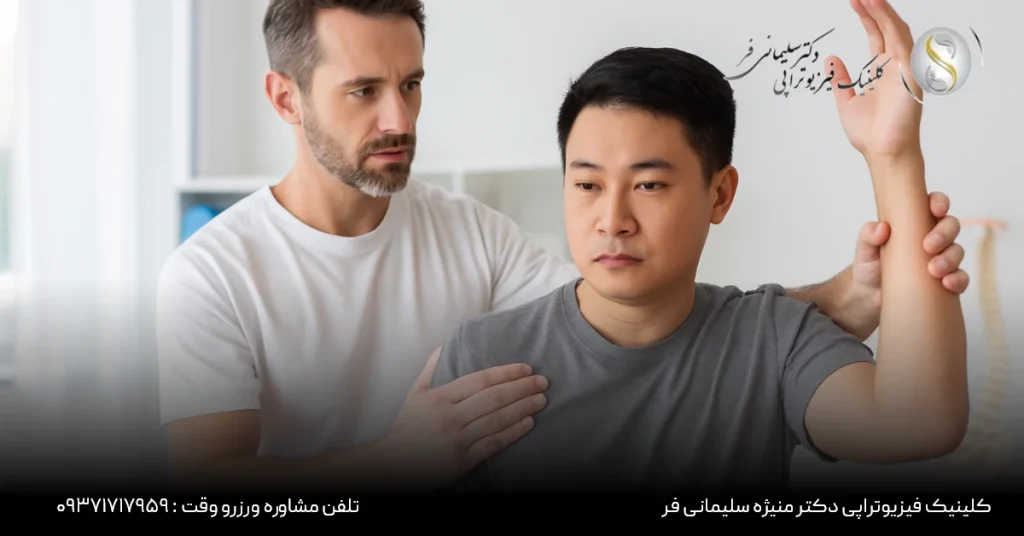
In this period, the main focus is on reducing pain, controlling inflammation and preventing joint dryness. Passive movements are performed by the physiotherapist to gradually open the shoulder joint without excessive pressure.
Second stage: weeks 4 to 8
Active movements start slowly. The patient learns to increase the range of motion and do light exercises for the muscles around the shoulder. During this period, care should be taken not to put too much pressure on the tendons, especially if the reason for the surgery was shoulder tendon tear.
Third stage: weeks 8 to 12
The main focus of this stage is to strengthen the muscles and stabilize the shoulder joint. Light resistance exercises are added with exercise bands or light weights to increase muscle strength.
Fourth stage: after 12 weeks
At this stage, the patient can gradually start sports or work activities with the opinion of the physiotherapist and surgeon. The goal is to restore the normal function of the shoulder and minimize the possibility of the injury returning.
The exact program of exercises and the progress of the steps must be done under the supervision of a specialist, especially in cases where the cause of shoulder tendon rupture was surgery, because this type of injury is more sensitive and requires special care.
Read more: "female physiotherapist in Karaj"
common techniques used in physiotherapy after shoulder surgery
In physiotherapy after shoulder surgery, a combination of treatment techniques is used to complete the recovery process. The choice of treatment methods depends on the type of surgery, the general condition of the patient, and the degree of injury.
Movement and stretching exercises
One of the most basic methods is controlled movement exercises that help increase joint range of motion. These exercises start with passive movements in the first weeks and gradually progress to active and resistance movements.
manual therapy (manual therapy)
In many cases, physical therapists use manual techniques to reduce muscle spasms, release soft tissue, and improve joint motion. This method helps to prevent tissue adhesion and make the movement of the joint smoother.
electrotherapy
Electrical stimulation of muscles or use of special devices is useful for reducing pain and inflammation in some patients. This method helps reduce pain after surgery and provides the conditions for starting active exercises.
Techniques of strengthening exercises
After the initial period, the main focus is on strengthening the muscles around the shoulder. The use of resistance bands, therapy balls or light weights is done under the supervision of a physiotherapist so that the weakened muscles regain sufficient strength.
training correct body positions
Teaching how to properly sit, sleep and perform daily activities is an important part of the treatment plan. This issue is especially important for patients who have undergone surgery due to shoulder tendon rupture, in order to avoid putting extra pressure on the tendons.
The correct combination of these techniques with a regular and dedicated program will make the shoulder joint recover its best function and minimize the possibility of injury recurrence.
Read more: "Shoulder Physiotherapy"
Home care and important tips during treatment
Following simple tips at home plays a big role in the success of physical therapy after shoulder surgery. Many patients think that only physical therapy sessions are enough, but an important part of the recovery process depends on home care.
Correct use of splint or sling
In the first weeks after the operation, it is necessary to use a sling or a splint to keep the shoulder stable. But you should use it according to the doctor's and physiotherapist's instructions to prevent joint dryness or excessive muscle weakness.
Observe movement restrictions
Many patients tend to move their hand too soon, but performing movements outside of the program can disrupt the healing process; Especially in cases where the cause of the operation was shoulder tendon rupture.
Ice therapy and inflammation control
Using a cold compress in the first days after surgery helps a lot to reduce swelling and pain. Be sure to put ice on the surgical site with a thin cloth and do not use it for more than 15 minutes.
Perform recommended home exercises
Exercises that the physiotherapist teaches must be done exactly as instructed. Continuity in daily exercises has a great effect on restoring shoulder movement.
Observe the principles of sleeping and sitting
During the recovery period, it is better to place the operated shoulder a little higher on an extra pillow when sleeping. It is also recommended to use a chair with a suitable support.
If you experience pain, unusual swelling, or unexpected movement restriction during treatment, be sure to consult your doctor or physical therapist.
Long delay in starting physiotherapy may lead to joint stiffness and reduced range of motion. For this reason, it is very important to start on time, under the supervision of a specialist. Especially in patients who have been operated due to shoulder tendon rupture, careful management of the time of starting the initial movements is of vital importance so that the tendon repair is done properly and no damage is caused to the new tissue.
Also, during the treatment process, if the patient experiences symptoms such as severe persistent pain, excessive swelling or abnormal muscle strength reduction, it is necessary to immediately consult a physiotherapist or surgeon.
Summary and final recommendations
Complete recovery after shoulder surgery is almost impossible without a regular and scientific physical therapy program. Basic physiotherapy makes the range of motion of the joint gradually return, pain and inflammation are controlled, and the muscles around the shoulder gain enough strength to support the joint.
Note that the type and severity of an injury, such as a torn shoulder tendon, will determine what program is right for each patient. Therefore, never do exercises and care without consulting a doctor or physiotherapist.
If you have had shoulder surgery or are on the verge of surgery, by choosing a professional treatment team and following a physical therapy program carefully, you can return to your daily activities and even sports. My goal, Dr Soleimani Far, is to help you walk this path safely and painlessly.