
Table of Contents
Listen to the summary of this article in this podcast:
Human personality is the result of a complex interaction of genetics, environment, culture and life experiences, and each person has his own behavioral and emotional characteristics. However, the important question is, can these characteristics be changed? Some people tend to control their impulsive behaviors or strengthen their social skills. Changing personality, especially in adulthood, is a gradual process that requires constant awareness and practice. Methods such as cognitive behavioral psychotherapy and learning emotion regulation skills can play an important role in correcting thought patterns and behavior. Personality change, although challenging, is possible with persistent effort. In this article from your doctor, you will get to know the factors affecting personality change.
Is it possible to change the personality?
Changing personality is possible, but this process is gradual and requires awareness, practice and targeted psychological interventions. According to scientific research in the field of personality psychology, characteristics such as extroversion, conscientiousness or neuroticism are stable to some extent, but they can change under the influence of life experiences, environment, education and psychotherapy. Cognitive behavioral therapies, practicing emotion regulation skills and modifying thought patterns can help reduce negative traits and strengthen adaptive traits. Also, increasing self-awareness, setting specific behavioral goals and continuously practicing new habits play an important role in the gradual change of personality. Therefore, although the main structure of personality is relatively stable in adulthood, positive and stable changes are possible with scientific interventions and continuous effort.What are the factors that shape character?
Human personality is the result of the interaction of several biological, psychological and social factors that affect a person's thinking, emotional and behavioral patterns from childhood to adulthood. Scientific research shows that personality traits are not only influenced by genetics, but also the growth environment, the quality of emotional relationships, culture and life experiences play a decisive role in their formation. Brain structure and neurotransmitter balance can influence a person's mood and reactivity, while education, learning, and social interactions reinforce or moderate these traits. Although the personality is relatively stable, it can gradually change during life and under the influence of new experiences. The most important factors that shape personality are:
- Genetics and heredity: determining a part of mood, level of excitability and readiness of some behavioral traits
- Family environment: the influence of parenting style, emotional security and behavioral patterns of parents
- Culture and society: the role of social norms, values and expectations in the formation of attitudes
- Life experiences: the effect of important events such as stress, success or psychological trauma
- Biological factors: the effect of brain function and the balance of hormones and neurotransmitters
What are the factors of human personality change?
Although human personality is relatively stable, psychological research shows that it can change during life under the influence of various factors. These changes are usually gradual and occur in response to new experiences, environmental conditions or therapeutic interventions. Personal growth, learning new skills, changing social roles and even some medical conditions can affect personality traits. The intensity and speed of personality change depends on a person's age, psychological flexibility and life conditions. The most important factors of personality change are:- Important life experiences: events such as marriage, divorce, migration or bereavement that change attitudes and behavior.
- Psychological treatments: psychotherapy and cognitive behavioral skills training that correct thought patterns.
- Types of personality disorders, mental or physical: certain diseases or brain injuries that affect mood and behavior.
- Increasing age and mental maturity: changing priorities and attitudes in different stages of life
- New social environment: a change in job, friends or culture that changes a person's interaction style.
1. Important life experiences and its role in personality change
Important life experiences such as marriage, divorce, migration, bereavement of loved ones or great successes can significantly affect human personality. These events often cause a review of a person's values, attitudes and priorities and change his way of thinking and emotional reactions. Psychological research shows that facing serious challenges or new responsibilities can strengthen or weaken traits such as responsibility, resilience, or even anxiety. The severity of the impact of these factors depends on the amount of social support, coping skills and psychological conditions of the person, and the changes are usually formed gradually and over time.
| Personality dimension (five-factor model) | The degree of variability based on researches | Effective methods to create change |
|---|---|---|
| Extraversion | Moderate to significant; especially at a young age | gradual behavioral exercises, increasing social interactions, strengthening communication skills |
| emotional stability / neuroticism | high; Among the most changeable dimensions of personality | cognitive behavioral psychotherapy, mindfulness exercises, stress management |
| Conscientiousness | medium; Growable with continuous practice | Structured goal setting, planning, creating stable habits |
| Agreeableness | Medium; Dependent on self-awareness and interpersonal experiences | Empathy training, conflict resolution skills, reconstruction of communication beliefs |
| Openness to experience | Relatively stable but changeable in the long term | Experience new activities, creativity training, exposure to diverse perspectives |
2. Psychological treatments and its effect on personality
Psychotherapy, especially cognitive behavioral approaches, is an important tool for changing personality traits. These methods enable the gradual change of behaviors and attitudes by identifying and correcting ineffective thought patterns, teaching emotional skills and improving impulse control. Studies show that people who undergo regular psychotherapy can improve traits such as extroversion, empathy, and emotional stability over time. The effectiveness of these interventions varies depending on the level of commitment of the individual, the quality of the therapist's communication and the type of techniques used, and the changes are usually continuous and stable.

3. Mental or physical disorders and their effect on personality
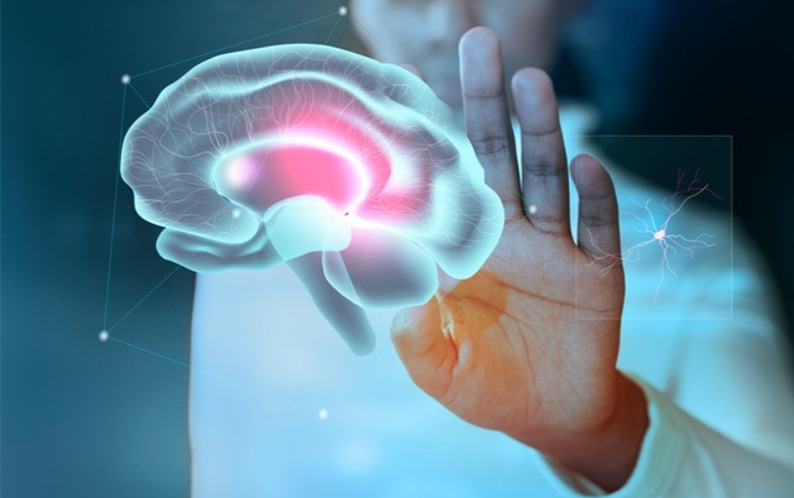
Some mental disorders such as depression, anxiety or personality disorders as well as physical and brain injuries can change personality patterns. These disorders may affect a person's mood, impulsivity, motivation, and social interactions and cause changes in daily behaviors. For example, damage to the frontal lobe of the brain can impair impulse control and decision-making. The intensity and type of changes depend on the type and duration of the disorder, treatments received and environmental support, and some of these changes may be reversible or permanent.
What is personality ? Familiarity with personality psychology
4. Aging and mental maturity and its effect on personality
With the passage of time and age, a person gains more experience and psychological maturity, which can affect his personality. Cognitive and emotional maturity usually increases responsibility, self-control and emotional stability, and priorities and attitudes change in life. Studies show that traits such as resilience, patience, and problem-solving skills increase with age, while certain impulsive behaviors decrease. This process of personality changes is usually gradual and is formed under the influence of environmental conditions and the person's lifestyle.
5. Changing the social environment and its effect on personality
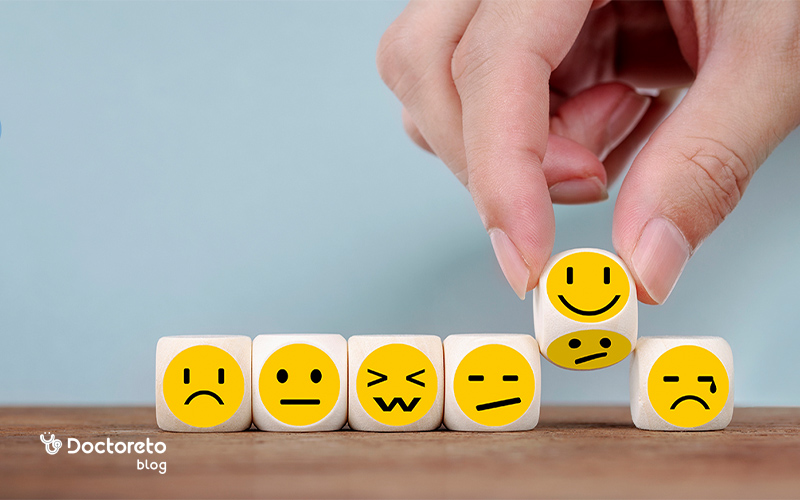
Entering a new social environment such as a new job, changing friends or living in a different culture can change a person's behavior and personality. Interaction with new people, encountering different norms and values, and learning new social skills causes adjustment of behaviors and attitudes. Research shows that people who are placed in diverse and challenging environments can strengthen their communication skills, empathy and flexibility. The intensity and direction of personality changes depends on the duration of being in the new environment, the amount of social support and the ability of the person to adapt to the conditions.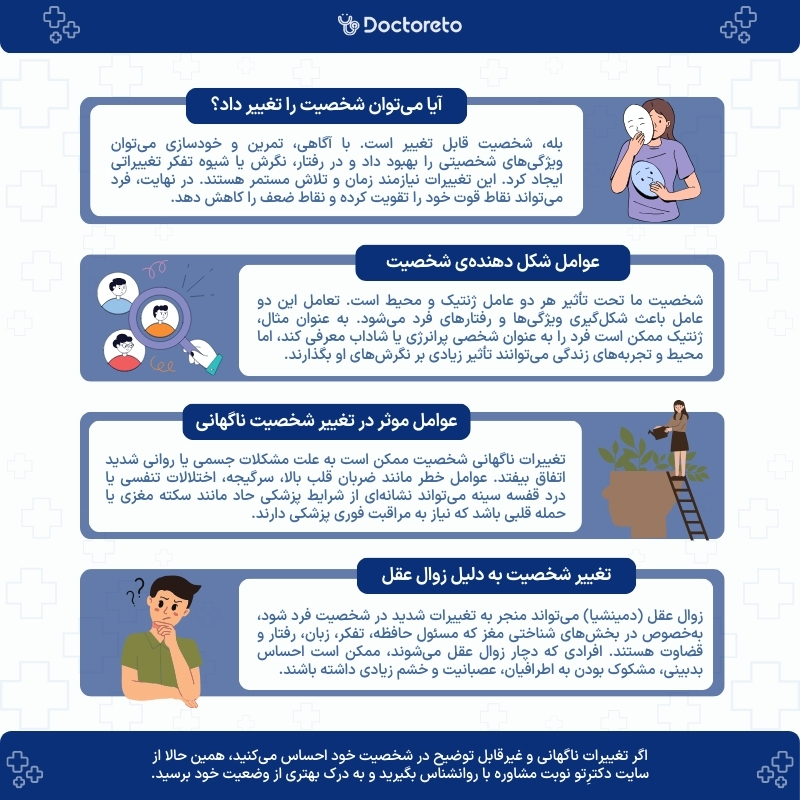
What factors cause sudden personality change?
Sudden changes in personality are usually caused by extreme and unexpected events or conditions that immediately affect a person's ability to control their emotions and behaviors. These changes can be temporary or permanent, and their intensity depends on the type of event, physical and mental health, social support and the ability of the person to deal with the crisis. Identifying and managing these factors is very important to prevent long-term psychological and social damage. The most important factors of sudden personality change are:
- Stressful incidents and severe crises: accidents, loss of loved ones or natural disasters that cause anxiety and immediate behavior change.
- Sudden brain injuries: head trauma, stroke, or nerve damage that disrupts impulse control and mood.
- Suffering from acute mental disorders: psychosis, acute depression or bipolar disorder that change mood and behavior suddenly.
- Sudden use or withdrawal of drugs and medicines: they cause emotional instability, impulsive behavior and decreased motivation.
- Sudden changes in biological and hormonal status: thyroid disorders, acute illnesses or infections that rapidly change a person's mood and energy.

What is the psychology of personality change?
Personality change is a complex psychological process that is influenced by internal and external factors and can occur gradually or suddenly. These changes may be caused by life experiences, emotional crises, environmental changes or psychotherapy interventions. Research shows that personality resilience declines with age, but with purposeful practice and self-awareness, people can strengthen positive personality traits such as self-control, empathy, and emotional stability. Factors that facilitate personality change include:
- Targeted psychotherapy: using methods such as cognitive behavioral therapy to correct thought and behavioral patterns
- Meaningful life experiences: facing personal challenges and successes that change perspective and values. Practicing self-awareness: learning meditation skills to better understand reactions and emotions
- Social support: presence in supportive environments that reinforce positive behaviors.
Conclusion
According to psychological research, human personality is relatively stable in adulthood, but positive and gradual changes can be achieved. Important life experiences, new social interactions, psychological maturity and targeted psychological treatments can reduce negative traits and strengthen adaptive traits. Practicing self-awareness and learning emotional skills help people modify their behaviors and increase their psychological flexibility. Therefore, although personality change requires time, persistence and support, with scientific methods and continuous effort, improvement of personality traits and sustainable personal growth can be achieved.
Your doctor takes care of your health!