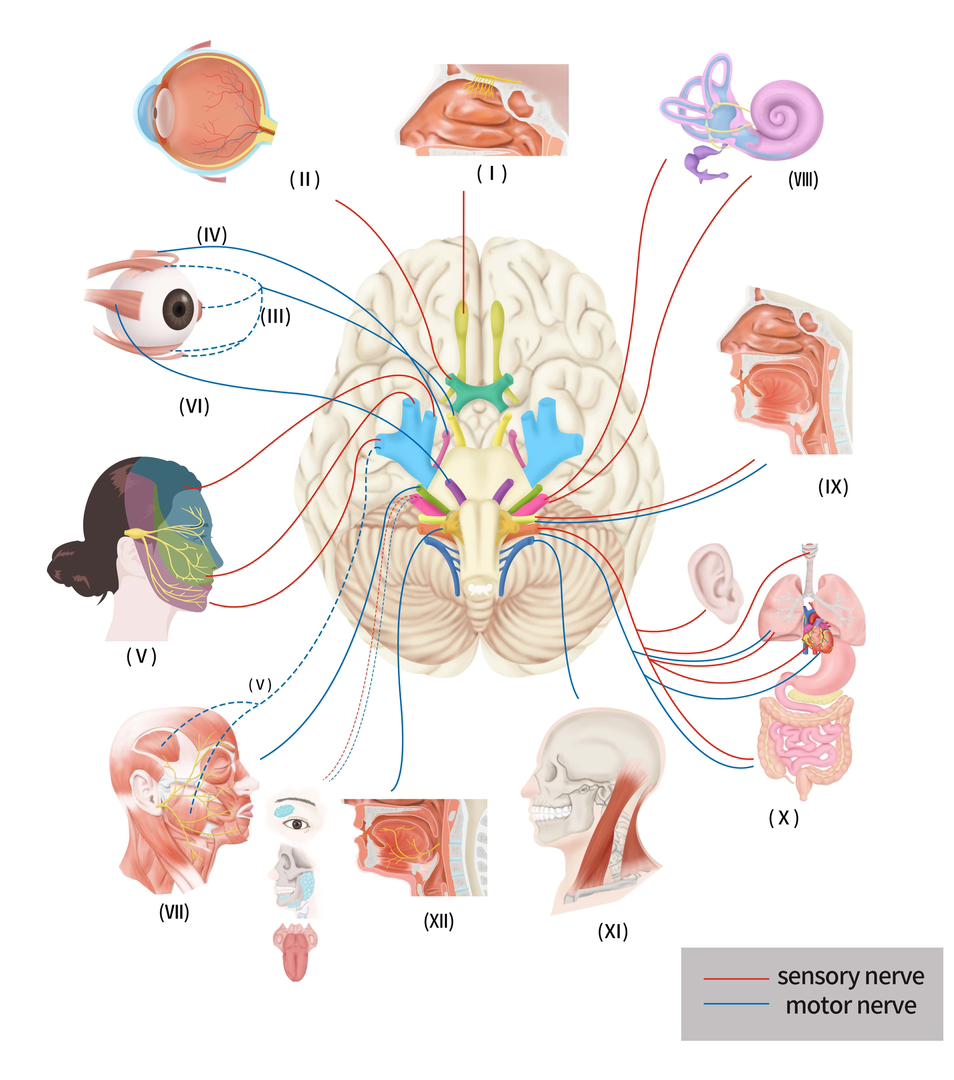

Early intervention approach to facilitate speech development in children with Down syndrome with emphasis on stimulation and correction of cranial nerve function
Down syndrome is a genetic disorder that is caused by trisomy of chromosome 21 in children. The effect of this extra chromosome on the entire body system and especially on the central nervous system (CNS) causes major disorders in these children, the most important of which is undoubtedly the delay in motor and mental development of the child. (7)
One of the most important mental and motor abilities of humans, which is the result of the natural functioning of the cortex, is "language and speech".
The functional unit of the brain is the "synapse" (3), so the CNS function is based on synaptogenesis, the creation of synapses between neurons, and as a result, extensive and complex connections between cortex and subcortex neurons (7). Many parts of the brain produce a large amount of neurons during the first weeks, months, or even about the first 2-3 years of life, and the neurons create numerous branching branches of axon that communicate with other neurons through the creation of synapses.
If the new axons cannot communicate with the next suitable neurons, muscle cells or glandular cells, they will decay within a few weeks, moreover, if sufficient connections are not established, the entire neuron that sent the axon branches will be destroyed, so shortly after the birth of a human baby, the principle governing the number of neurons and their connections in the relevant parts of the brain is that if they are not used, they will be destroyed.
Therefore, 50% or more of the primary neurons will be lost in many areas of the cerebral cortex (3). Therefore, if this axonal and synaptic growth in the baby's brain does not take place well for some reason, as a result, the CNS will suffer a functional decline and learning will not take place in a normal way.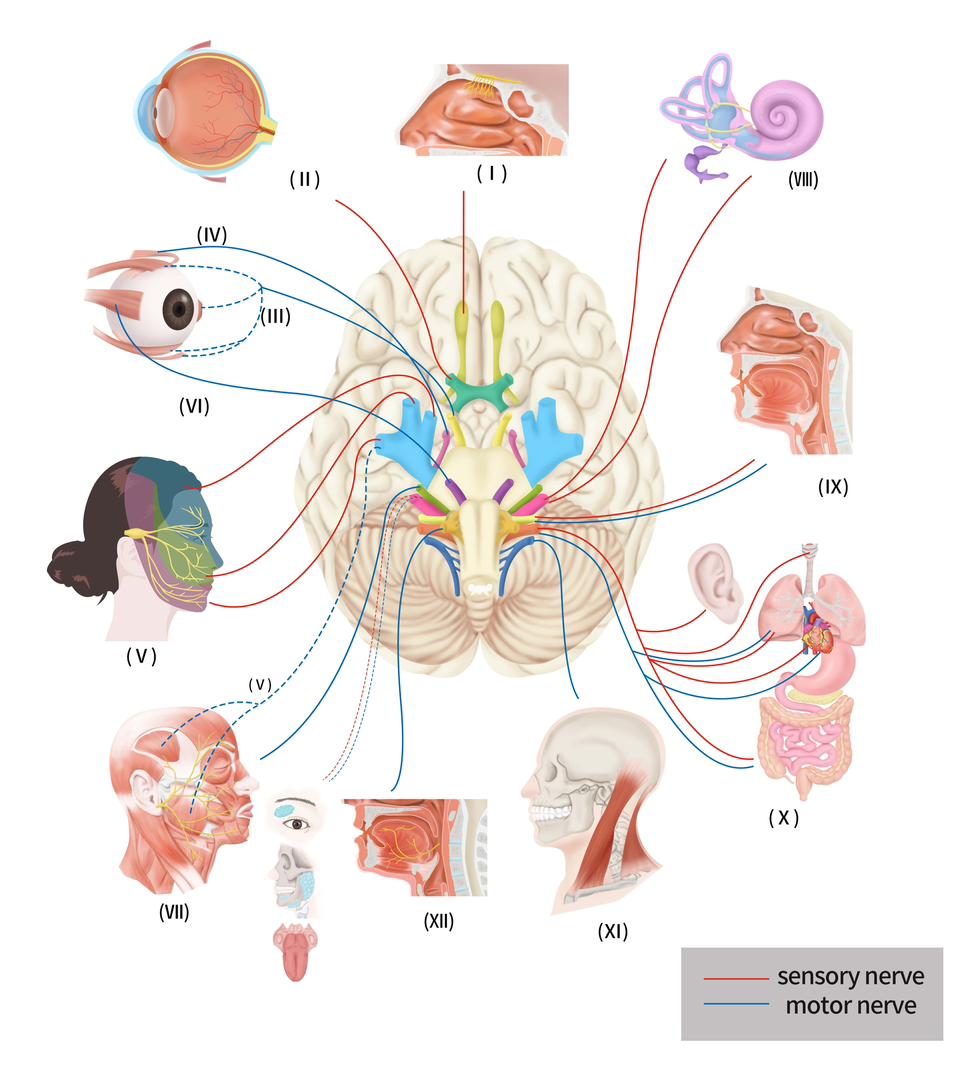
In the investigation of Down syndrome, two basic and important factors that are involved in the growth and development of the brain are:
1-Genetic Code
2-External Stimulation
In children with Down syndrome, disruption in the genetic code leaves 3 major negative effects (8), 9) and (10), which are:
-reduction of dendritic branches
-decreased synapse formation
-Disturbance in myelination
These problems occur throughout the CNS, especially in the cerebellar cortex and brainstem. There are documented evidences of the mentioned effects in the entire level of the brain stem, especially the basal ganglia of the vestibular system (equilibrium and pons) (8, 9, 10, 23, 24, and 25)

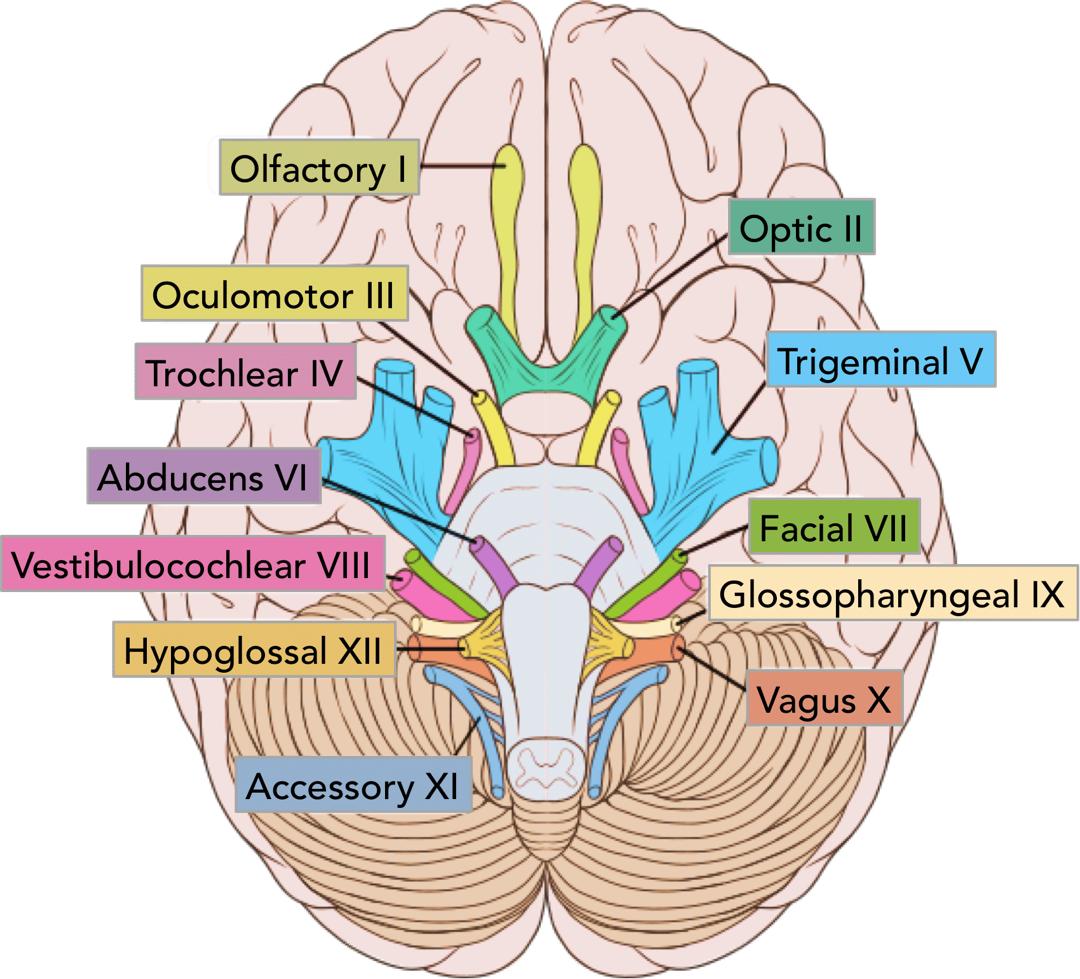
Our assumption is that by using timely, accurate and continuous external stimulations on the cranial nerves, with the cognitive perspective and the effect we have on the cerebellum and cortex, we are able to facilitate the process of myelination of axons, branching of dendrites and finally synaptogenesis, which is the main cause of the neuropathology of Down syndrome.
Therefore, our goal in this research is to correct the function of the brain stem and the function of the cerebellum and cortex in the first step through the cranial nerves on the CNS with external stimulations with the above-mentioned characteristics (6) and in this way bring the Down syndrome child to the level of normal children in terms of language and speech development. Of course, it should be noted that in this intervention program, we will also use the pre-lingual and language intervention program indirectly (consultative) in addition to correcting the cranial nerve function.Considering that the human brain doubles in the first 6 months of life and reaches 3 to 4 times the size of birth by the age of 3 (7) Therefore, the human brain has the highest flexibility ability in the first years of life, and this confirms the importance of exposing young children to wide and numerous learning experiences, and in this case, the child has the best possible basis for further education in (3) On this basis and according to extensive studies that have shown the importance of early intervention 4 and 11 to 22, we are of the opinion that as soon as a child's genetic disorder is diagnosed, treatment intervention should be started and delay in this field even for one day can cause the child's lack of growth and optimal brain development.
Therefore, it is recommended to start direct therapeutic intervention on Down children under 6 months.
Author:
Dr. Majid Oriyadi Zanjani, supervisor Dr. Hossein Karimi
Resources:
1- Language and knowledge, translated by Ghasemzadeh, Habib A..., second edition, Farhangan Publishing House, Tehran, 1376.
2- Smith, Neil; Wilson D. ((Modern Linguistics)) translated by Nilipour, Reza and others, second edition, Aghah Publications, Tehran, 1374.
3-Professor Guyton, Arthur, ((Medical Neurophysiology) (Translated by Shadan, Farrokh and Motamedi, Ferishte, Timurzadeh Publishing House, Tehran, 1996.)
4- Lamber, Gel Randall Zha and others () Language disorders in mental retardation) translated by Sazmand Ali Hossein, 1st edition, Organization of Exceptional Education, Tehran, 1376.
5. Menkes, John H.: "Textbook of child neurology". Lea & Febiger, USA, 1996. 6. U.S.A, 1996. Kandel Eric R. "Principles of neural science" 3ed. USA, 1991. 7. Schaefer Bardley G. & others. "Cerebral dysgenesis". Pediatric Neurogenesis, 773-785, 1994. 8. Becker L. & others. “Growth and development of the brain in Down syndrome” Prog. Clin. Biol. Res., 373: 133-52, 1991.9. Koo BK & others. “Magnetic resonance imaging evaluation of delayed myelination in Down syndrome: a case report and review of
the literature” J. Child Neurol, 7: 417-21, 1992.
10. Golden JA, Hyman BT. “Development of the superior temporal neocortex is anomalous in trisomy 21” J. Neuropathol. Exp. Neurol., 53: 513-20, 1994.
11. Connolly B., Russell F. “Interdisciplinary early intervention program” Phys. Ther., 56: 155-158, 1976.
12. Ludlow JR. Allen MR. “The effect of early intervention and pre-school stimulus on the development of the Down’s syndrome child” J. of Mental Deficiency Research, 23: 29-44, 1979.
13. Piper MC & others. “Developmental profile of Down’s syndrome infants receiving early intervention” Child Care Health Dev., 12: 183- 194, 1986.
14 -Naganuma G.M. “Early intervention for infants with Down syndrome: Efficacy Research” Physical & Ooccupational Therapy in Pediatrics, 7: 81- 92
15. Dmitriev, Valentine. “Cognition and the acceleration and of evelopmental gains among children with Down Longitudinal data” Down’s Syndrome: papers and professionals, 11: 6-11, 1988. maintena syndrom abstracts
16. Louw B. Kritzinger A. “infants with Down syndrome: description of an early intervention approach” S. Afr. J. Common Disord., 38: 25-31, 1991.
17. Fewell, Rebecca R.; Oelwein, Patricia L. “Effective early intervention; Resuls from the model preschool program for children with Down syndrome and Other developmental delays” Topics in Early Childhood Special Education, 11: 56-68, 1991.
18. Connolly BH, Morgan S, Russell FF. “Evaluation of children with Down syndrome who participated in an early intervention program. Second follow-up study” Phys. Ther., 10: 1515-1519, 1984.
19. Connolly BH & others. “A longitudinal study of children with Down syndrome who experienced early intervention programming” Phys. Ther., 73: 170-179, 1993.
20. Hines, Stefani; Bennett, Forrest. “Effectiveness of early intervention for children with Down syndrome” M. R. and Dev. Disabilities, 2:96-101, 1996.
21. Roizen, Nancy J, “New advancements in medical treatment of young children with Down syndrome: Implications for early intervention” Infants and Young Children, 9: 36-42, 1997.
22. Spiker, Donna; Hopmann, Marita R.In: “The effectiveness of early intervention for children with Down syndrome” Paul H. Brookes Publishing Company, 1997.
23. Raz N & others. “Selective neuroanatomic abnormalities in Down’s syndrome and their cognitive correlates: evidence from MRI morphometry” Neurology, 45: 356-66, 1995.
24. Chang YC, Huang CC, Huang SC. “Volumetric neuroimaging in children with neurodevelopmental disorders-mapping the brain and behavior” Chung Hua Min Kuo Hsiao Erh Ko I Hsueh Hui Tsa Chih, 39: 285-92, 1998.
25. Komaki H, Hamaguchi H, Hashimoto T. “Assessment of the brainstem and the cerebellar lesions myelination using magnetic resonance images in children with Down synd
معرفی کتاب
مهارتهای ارتباطی اولیه برای کودکان مبتلا به سندرم داون

نوانبخشی کودکان مبتلا به سندرم داون
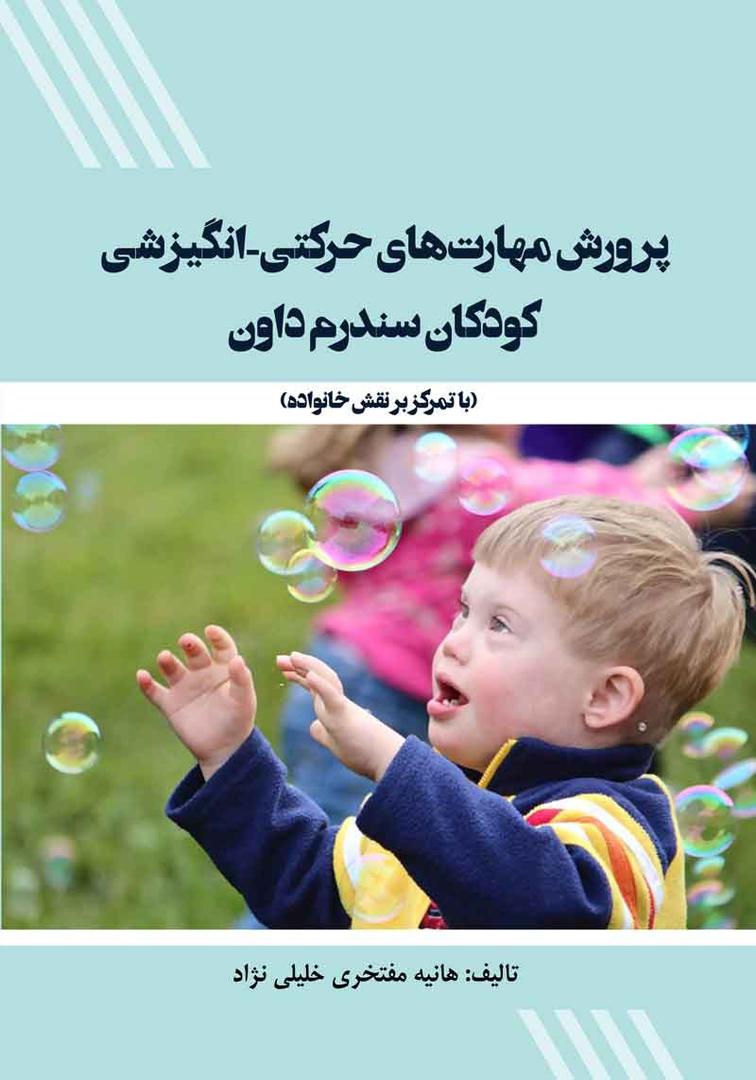
پرورش مهارت های حرکتی-انگیزشی کودکان سندرم داون
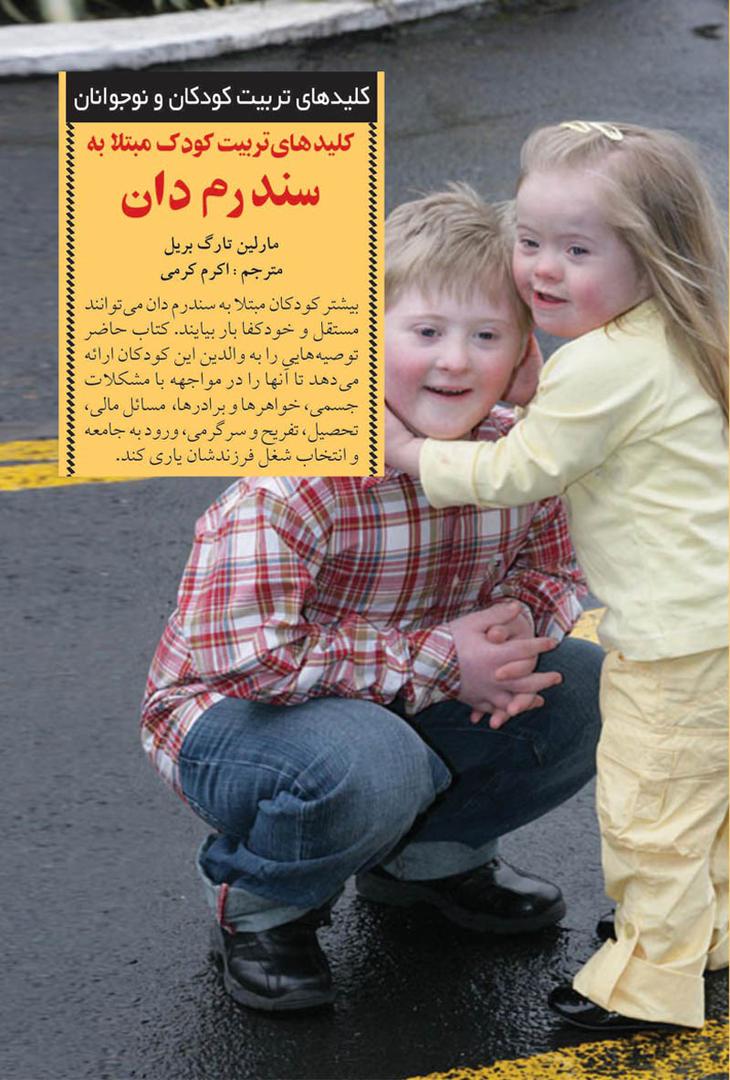
کلیدهای تربیت کودک مبتلا به سندرم داون