

دکتر صابر سادات امینی فوق تخصص بیماریهای غدد و متابولیسم و متخصص داخلی از دانشگاه علوم پزشکی شهید بهشتی – عضو هیات علمی دانشگاه ادرس مطب : تهران ، خیابان شریعتی،بالاتر ازایستگاه مترو قلهک،کوچه سجاد، پلاک ۶۶، طبقه پنجم،واحد ۴ تلفن مطب ۰۹۱۹۸۰۴۸۷۸۲
ندول تیروئید: راهنمای کامل برای بیماران
۱. What is a thyroid nodule?
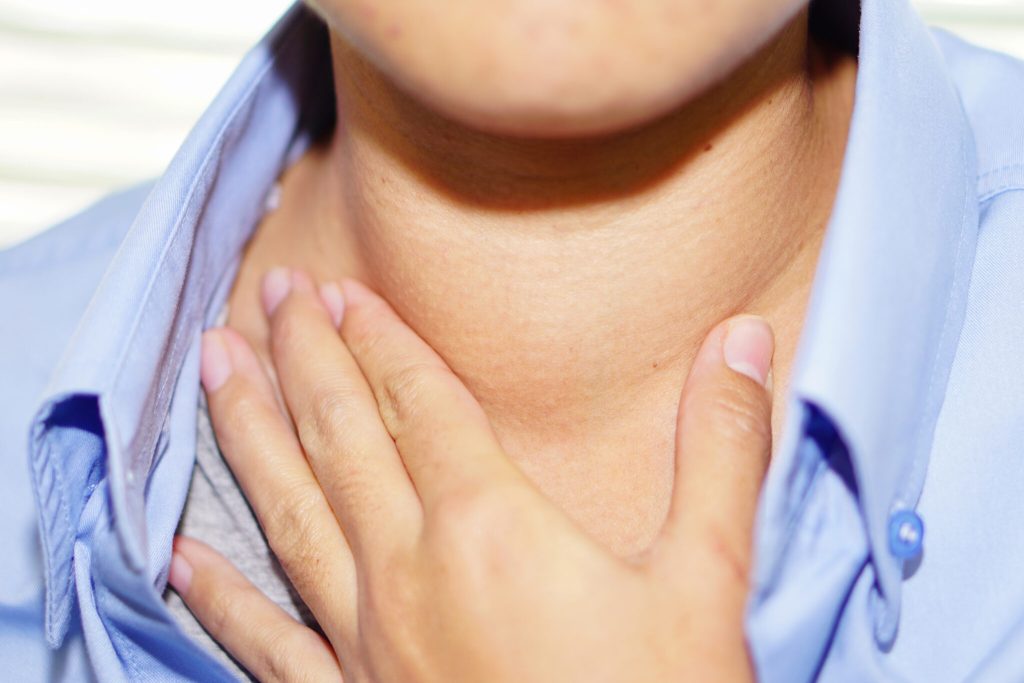
Thyroid nodule (or thyroid nodule) is a bump or lump inside the thyroid gland. The thyroid is a butterfly-shaped gland that is located in front of the neck and plays an important role in regulating metabolism, energy and many body functions.
These masses are possible:
-
be solid
-
be filled with fluid (cystic)
-
or have a combination of solid and liquid part
Most thyroid nodules are benign (non-cancerous) and do not cause any serious problems in many people.

2. Who gets thyroid nodule?
Thyroid nodules are very common and are often discovered incidentally in:
-
Routine medical examinations
-
Neck ultrasound performed for other reasons
In most cases, the person himself does not notice the presence of a nodule.
With increasing age, the probability of seeing a thyroid nodule increases, and in some populations even up to half of people may have at least one thyroid nodule; Of course, many of these nodules are so small that they cannot be touched.
Key point: By the age of 60, more than half of the population has at least one thyroid nodule, which often does not require immediate treatment
3. Does thyroid nodule have symptoms?
❗ Usually no
Most thyroid nodules:
-
are unmarked
-
Do not cause pain or discomfort
❗ But in certain circumstances, symptoms may appear
📍 If the nodule grows:
-
A visible or palpable bump on the neck
-
difficulty swallowing food or breathing
-
Feeling of something stuck in the throat
-
Voice change or hoarseness (rare)
📍 If the nodule produces extra hormones:
Some nodules can oversecrete thyroid hormone and cause symptoms of hyperthyroidism, such as:
-
Unexpected weight loss
-
Heartbeat
-
Trembling hands
-
Anxiety
-
Profuse perspiration
📍 in cases with hypothyroidism:
Sometimes nodules are seen in the context of autoimmune thyroid diseases and there may be symptoms such as:
-
Fatigue
-
Weight gain
-
Sensitivity to cold
Be created.
4. What factors cause thyroid nodules?
The exact cause of many nodules is unknown, but the following factors may play a role:
-
Overgrowth of thyroid tissue (adenoma)
-
Thyroid cysts (accumulation of fluid inside the gland)
-
Chandendoli goiter
-
Thyroid inflammation such as Hashimoto's thyroiditis
-
Iodine deficiency in some geographical areas
5. How is thyroid nodule diagnosed?
1) Clinical examination
The doctor performs the initial evaluation by touching the neck and examining the clinical symptoms.
2) blood test
To check thyroid function and measure hormones such as TSH and T4.
3) thyroid ultrasound
The most important and accurate imaging method to review:
-
Nodule size
-
Number of nodules
-
Suspicious or benign features
4) Fine needle biopsy (FNA)
If malignancy is suspected, a fine-needle biopsy is performed to examine the cells under a microscope.
5) thyroid scan
In some cases, it is used to check whether the nodule is active or inactive.

6. Is thyroid nodule dangerous?
-
Most thyroid nodules are benign.
-
Only a small percentage of nodules are diagnosed as malignant or cancerous.
Warning signs that require closer investigation:
-
Rapid nodule growth
-
Stiffness and stability of mass
-
Voice change
-
Enlargement of neck lymph nodes
Of course, sometimes even without these symptoms, there may be malignancy, which is why regular follow-up is important.
7. Thyroid nodule treatment
📌 when the nodule is safe
If the nodule is small and does not cause symptoms:
-
No special treatment is required
-
periodic follow-up with ultrasound and examination is sufficient
📌 If it causes physical problems
If the nodule is large and causes difficulty in swallowing or breathing:
-
Surgery may be recommended
📌 if it causes hyperthyroidism
Treatment can include:
-
radioactive iodine
-
Antithyroid drugs
-
or in some cases surgery
📌 If the nodule is malignant
In this case:
-
Thyroid surgery is performed with detailed and specialized planning
8. The importance of follow-up
Even benign nodules should be checked regularly because over time they may:
-
Get bigger
-
or change their features
Regular monitoring allows early detection of possible problems.

Frequently asked questions of patients
1. What is a thyroid nodule and how common is it?
Thyroid nodule is a lump inside the thyroid gland and is very common; Many people have it without symptoms.
2. Does thyroid nodule mean cancer?
No. More than 90% of nodules are benign and thyroid cancer is relatively rare.
3. Does the thyroid nodule hurt?
In most cases it is painless. Pain is usually seen only in large nodules or with inflammation.
4. Why is ultrasound important?
Ultrasound is the best method to check the size, number and possibility of nodules being dangerous.
5. What is FNA biopsy and is it dangerous?
A fine-needle biopsy is a low-risk and accurate method to check the possibility of malignancy and is usually performed without anesthesia.
6. When is surgery necessary?
In case of malignancy, suspicious biopsy results or severe pressure symptoms.
7. Is thyroid nodule curable?
Yes. With correct diagnosis and appropriate treatment, even many malignant nodules can be treated.
8. Do all thyroid nodules require a biopsy?
No. Only nodules that are of a certain size or show suspicious features on ultrasound require a biopsy. Many small and benign nodules are only monitored.
9. If the biopsy results are normal, is there still a possibility of cancer?
The probability is very low, but not completely zero. For this reason, periodic follow-up with ultrasound is recommended even after a benign biopsy.
10. Can a thyroid nodule disappear by itself?
Some small or cystic nodules may shrink or even disappear over time, but many nodules remain unchanged for years.
11. Does stress cause thyroid nodule to develop or enlarge?
Stress does not directly cause nodules, but it can aggravate the symptoms of thyroid diseases or increase a person's sensitivity to neck symptoms.
12. Is thyroid nodule dangerous during pregnancy?
No in most cases. Most nodules do not cause problems during pregnancy, but it is important to check the thyroid function and monitor the size of the nodule during this period.
13. Can thyroid nodule cause infertility?
The nodule itself usually does not cause infertility, but if it is associated with hypothyroidism or hyperthyroidism, it may affect fertility.
14. Can children also have thyroid nodules?
Yes, although its prevalence is lower in children than in adults. However, in children, the percentage of malignancy is relatively higher and there is a need for a more detailed investigation.
15. Is the size of the nodule more important than its appearance?
In many cases, the appearance of the nodule on ultrasound (such as margins, internal structure, and calcifications) is more important than size alone.
16. Can small nodules be cancerous?
Yes, although it is rare. For this reason, the decision is not made only based on size and other imaging criteria are also considered.

17. Does touching or pressing the nodule make it bigger?
No. Touching or pressing the neck does not cause the nodule to grow, but it may cause local sensitivity or discomfort.
18. Does thyroid nodule cause hair loss?
The nodule itself usually does not cause hair loss, but thyroid hormone disorders that may accompany it can cause hair loss.
19. Does the use of iodine cause thyroid nodules to shrink?
If iodine deficiency is present, correcting it can be helpful, but excessive iodine intake may worsen the thyroid condition.
20. Can thyroid nodule recur after treatment?
Yes, especially in multinodular goiter or some underlying diseases, it is possible to develop new nodules and long-term follow-up is recommended.
21. Can herbal medicines treat thyroid nodule?
There is no valid scientific evidence for definitive treatment of thyroid nodule with herbal medicines, and their arbitrary use is not recommended.
22. Is exercise harmful for people with thyroid nodules?
No. Regular exercise is good for general health, except in cases of severe hyperthyroidism where strenuous activity should be limited.
23. Can a thyroid nodule cause shortness of breath or suffocation in sleep?
Very large nodules or voluminous goiters may cause a feeling of pressure or shortness of breath in certain sleeping positions.
24. Does a thyroid nodule affect the voice?
In rare cases, if the nodule is large or puts pressure on the laryngeal nerves, it may cause a change or hoarseness in the voice.
25. Is it necessary to take medicine for the rest of your life after thyroid surgery?
If all or most of the thyroid is removed, lifelong thyroid hormone is usually necessary.
26. How often should thyroid ultrasound be repeated?
Depending on the type and size of the nodule, it is usually done every 6 to 12 months initially and then at longer intervals.
27. Can a thyroid nodule cause anxiety and heart palpitations?
If the nodule is active and the thyroid hormone is over-secreted, yes. Otherwise, anxiety is more related to the patient's worry.
28. Does thyroid nodule affect body weight?
Only if it causes thyroid dysfunction. Nodules without hormonal disorders usually do not affect weight.
29. Can a thyroid nodule be controlled with a special diet?
A healthy diet is important, but there is no specific diet that directly causes nodules to disappear.
30. Can a thyroid nodule cause ear or jaw pain?
Rarely, but in some people, neck pain can spread to the ear or jaw.
31. Does smoking affect thyroid nodules?
Smoking can affect thyroid function and aggravate thyroid problems in some people.
32. Does thyroid nodule need lifelong follow-up?
In many cases yes. Even benign nodules should be monitored regularly.
33. What is the prevalence of thyroid nodule in the elderly?
With increasing age, the possibility of developing thyroid nodule increases significantly. In people over 60 years of age, in neck ultrasound examinations, more than half of people may have at least one thyroid nodule. However, most of these nodules are benign and only a small percentage require serious diagnostic or therapeutic measures.
34. Can sadness, grief or emotional pressures cause thyroid nodules?
Sadness, grief and severe stress do not directly cause thyroid nodules, but they can affect thyroid health in indirect ways. Long-term mental stress may cause the exacerbation of underlying thyroid diseases, changes in hormonal function, or increased attention to physical symptoms. For this reason, in some patients, the simultaneous onset of thyroid symptoms with periods of extreme stress or sadness is reported, although a direct cause and effect relationship between them has not been proven.
If you are looking for a thyroid doctor in Tehran, referring to a thyroid specialist and endocrinologist in Tehran can play an important role in the accurate diagnosis and correct treatment of thyroid diseases, including thyroid nodules. Expert evaluation, accurate interpretation of ultrasound and choosing the best treatment method are possible only with the opinion of an experienced doctor in the field of endocrinology.
Note: The above content is for increasing public awareness and is not a substitute for seeing a doctor
Dr. Saber Sadat Amini, subspecialist in endocrine and metabolic diseases and internist from Shahid Beheshti University of Medical Sciences - member of the academic staff of Motab University Address: Tehran, Shariati St., above Qolhak Metro Station, Sajjad Street, No. 66, 5th floor, Motab Phone Unit 4 09198048782
all Things you should know about thyroid test conditions and common mistakes





