
What is a wart?

What are the types of warts?
There are different types of warts, which include:
- Common warts
Warts on the soles of the feet
- Smooth warts
- Genital warts
Common warts:
This type of wart usually occurs around the nail, on the fingers and on the back of the hand. These types of warts mostly occur in the parts where the skin has been scratched (for example, after biting the nails or pulling the corners of the nails).
Warts on the soles of the feet:
A type of wart that usually occurs on the soles of the feet and occurs in large numbers is called "mosaic warts". Unlike normal warts, most warts on the soles of the feet do not stand out on the outside of the skin because the pressure from walking on the soles of the feet makes them smooth and wide and pushes them into the skin. Black spots are mostly seen on the surface of these types of warts, which are the same blood vessels that feed the wart. Plantar warts can be painful, like a stone in a shoe.
Flat warts:
These warts are smaller than other warts, have a smoother surface and are mostly created in large numbers (20 to 100). They may affect any part of the body, but in children, they occur mostly on the face. These warts are mostly found in men in the areas where the beard grows and on the legs. There is a possibility of getting hurt when shaving the hair of these parts.
Genital warts:
These warts are a common and worrisome problem in adults and are mostly small and flat, but they can also be narrow and long. Their surface is soft and unlike other warts, they are not rough or scaly. Genital warts in women may affect the inside of the vagina or cervix, around the anus, or inside the rectum. Viruses that cause genital warts rarely cause hand or foot warts, but they can cause warts in the mouth. It seems that genital warts or cancers of the genital area are related.
What is the cause of warts?
Warts can be transmitted from one person to another and sometimes indirectly through contaminated objects. It usually takes several months from the time of the first contact with the virus until the wart becomes large enough to be visible to the eye. The risk of contracting hand, foot and flat warts is low if genital warts are more contagious. Therefore, it is necessary to take measures to prevent the transmission of genital warts from the patient to his wife. to be
Some, due to weak immunity to the wart virus, get new lesions every time they come in contact with this virus. If the skin is damaged in any way, the virus creates warts more easily, for this reason, children who bite their nails or pick the corners of their nails, are more likely to get warts. Just as some people catch a cold very early, some also get warts more than others. Also, patients who have a weak immune system are more prone to infection with wart viruses.
Types of warts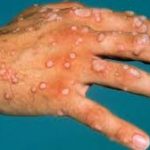
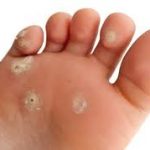
Should warts be treated?
In children, warts usually disappear without treatment and after a period of several months to several years. However, since there is a possibility of spreading the wart to other parts of the affected person's body or transferring it to other people, it seems logical to treat the wart. Especially when warts cause discomfort or pain, treatment becomes necessary. In chronic genital warts, the possibility of skin cancer increases somewhat. Also, women with genital warts are more likely to get cervical cancer. For these reasons, all adults with genital warts should be treated. All women with genital warts should have regular pap smear tests even after treatment.
How can warts be treated?
Dermatologists use different treatments depending on the age of the patient and the type of wart. In children, common warts can be treated with daily use of compounds containing weak salicylic acid. Usually, this method does not cause much discomfort, but it may take weeks to get acceptable results. If the wart becomes painful and sore, the treatment should be temporarily stopped. Another method of treatment is the topical application of kantar iodine by a dermatologist, which after a few days causes a blister to form under the wart, and the doctor can remove the roof of this blister, which contains the killed wart viruses.
In adults and adolescents, freezing with liquid nitrogen is the treatment of choice. This method of treatment is not very painful and the appearance of boils due to it is rare. However, repeating this treatment after one to three weeks is usually necessary for the complete recovery of all warts. Burning with electricity (cauterization) is another method that removes the wart in one step in the office. The possibility of causing boils and pain during this method is more than freezing. Treatment of floor warts is difficult because most of the wart is under the surface of the skin.
The different methods of its treatment are:
Using salicylic acid adhesives, using other chemicals, using surgical methods such as laser or freezing or cautery (burning). It may be necessary for the patient to wear medical shoes to reduce the pressure on the warts or to take medicine to reduce foot sweating. The number of smooth warts is usually more than can be treated with the above mentioned methods. Therefore, it is recommended to use skin exfoliation methods with the daily use of salicylic acid or tretinoin. In some adults, periodic and frequent treatments in the office are necessary and necessary.
Genital warts are usually the most difficult to treat. First, the location of all the warts must be determined. This requires an examination of the vagina and cervix in women and the rectum in both sexes. Regular and repeated treatment in the office may be necessary with the use of some irons or freezing. Sometimes the drug "Podophyllin" is prescribed for weekly use at home. Very resistant or very large genital warts should be treated with one of the surgical methods.
The wife of the patient should also be examined for the presence of genital warts. The treatment of genital warts is sometimes very difficult and even multiple and repeated treatments do not guarantee its success. Laser is used to destroy some types of warts, but laser treatment is expensive. Another way to treat warts is to inject an anti-cancer drug called bleomycin into each wart. Of course, its injection is painful and sometimes has other side effects. Another treatment method is immunotherapy, by which the body's defense system is strengthened to destroy the wart virus. Various immunotherapy methods have been used to treat warts.
In one of these methods, the patient's immune system is first sensitized to a specific chemical substance. Then this substance is applied with the appropriate concentration on the warts in such a way that a mild allergic reaction occurs around the treated wart. This allergic reaction can cause warts to disappear. It is also possible to inject the drug "interferon" into the wart, which stimulates and increases the reaction of the immune system of the person, and then the wart disappears. Another drug that has recently been successfully used in the treatment of warts, especially genital warts, is "Imiquimod".
This drug is in the form of a cream that is rubbed on the wart and by stimulating the immune system, it destroys the warts. Never treat your warts on your own. You may confuse another type of skin lesions with warts and mistakenly use wart treatment for a more serious disease. Regarding the diagnosis and determination of the correct way to treat warts, you should pay attention to the recommendations of a dermatologist. Many people believe that folk remedies or hypnosis are effective in treating warts. Since warts, especially in children, may disappear on their own, it is difficult to determine whether the treatment was effective or whether the warts have healed over time.
What is the cause of recurrence of warts?
Sometimes it seems that as fast as the old warts disappear, new warts appear. The reason for this is that the old warts have spread the virus to the skin of the surrounding areas before they are treated. In fact, "new" warts grow around the original warts. The best way to limit warts is to treat new warts as quickly as they grow so they have less opportunity to spread the virus to the surrounding skin.
On the other hand, there is no definitive treatment method for warts and there is a possibility of recurrence of warts after any type of treatment. Examination by a specialist doctor can assure you that the warts are completely cured. Warts are actually benign tumors of the skin and mucous membranes. HPV seeds are the result of small, hard human papilloma viruses that are found on the body's skin, but are painless.
The prevalence of warts is more common in 7-20% of the population and in early adolescence. Virus transmission occurs through direct contact with wart tissue or secretions and contaminated tools. The incidence of warts is higher in some people who have a history of allergies. Warts are also common in butchers and people who deal with meat industries and products.
The difference between warts and corns:
Skin lines and furrows extend to the lesion, but in warts they do not reach the lesion.
According to some studies, the wart virus regresses by itself after two years in more than two thirds of cases, so that it cannot be detected even with a sensitive PCR test.
Office address: Fathi Shaghaghi St., between Bistun and Chehelstan, Shaghaig Medical Complex, Youssef Abad, Tehran. Phone: 021-88724048