
آنچه در این مقاله خواهید خواند:
رادیوفرکوئنسی تیروئید چگونه عمل میکند؟
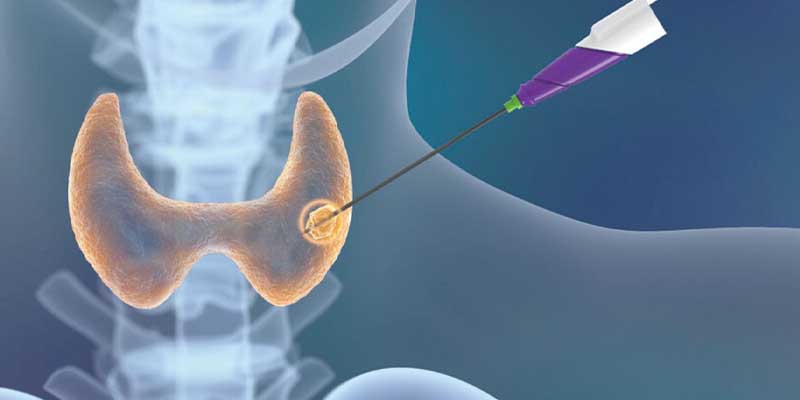
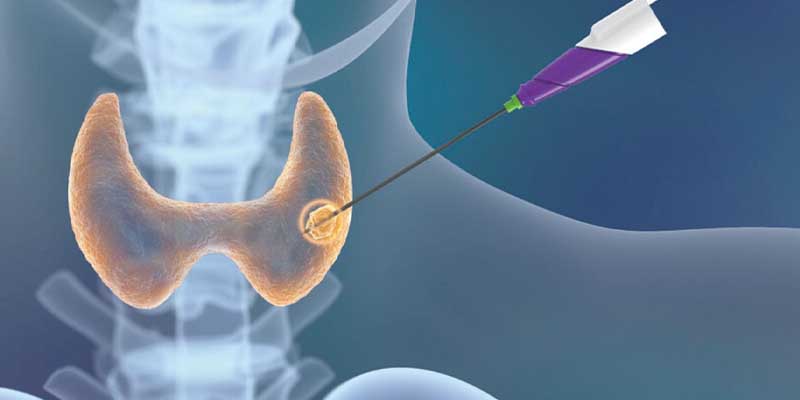
RF تیروئید یک روش درمانی کم تهاجمی برای درمان ندول تیروئید در صورتی که خوش خیم باشد است. This method should not be used for treatment of thyroid cancer of follicular type. This technique destroys abnormal tissues by using heat caused by radio waves. The doctor uses ultrasound guidance to do this. This high accuracy makes only the thyroid nodule to be targeted. As a result, damage to adjacent healthy tissues will be prevented. The heat from these waves destroys the knot tissue. As a result, the size of the nodule gradually shrinks over several months. Research shows that the volume of the node after RFA will decrease between 50 and 80%. This decrease in volume remains stable in the long term. Radiofrequency is performed on an outpatient basis with local anesthesia. And the whole RF process takes about an hour. The patient is discharged on the same day and no scars remain on his neck. Mild pains or bruises after the operation can also be solved with simple painkillers.
Benefits RF Thyroid
RF has several potential advantages for the treatment of benign thyroid nodules and has been accepted as a minimally invasive alternative to thyroid surgery in recent years. The most important strengths of thyroid radiofrequency are:
- Short recovery period: Most patients return to normal life within 24 hours after the operation.
- Completely outpatient: This procedure is performed without hospitalization and in the clinic environment.
- Keeping the health of the thyroid gland: Radiofrequency targets only the damaged tissue; Therefore, there will be no need to take hormonal drugs (prescribed in surgery).
- No need for anesthesia: Because the procedure is performed under local anesthesia, the patient is protected from the risks and complications of general anesthesia.
- Preservation of appearance: No cuts or stitches are made on the neck. This prevents the creation of extra flesh (keloid).
- Preservation of the parathyroid glands: The risk of damage to the calcium-regulating glands (parathyroids) is minimized in this method compared to open surgery.
- Minimally invasive: Radiofrequency is performed without the need for cutting and only through a very small opening (the size of a needle tip).
- No bleeding: Due to not using a surgical blade, the patient will not have any active bleeding.
- Prevention of infection: Since there is no wound or cut on the skin, the risk of bacteria entering and causing infection is minimized.
- Vascular safety: The heat of the RF needle causes simultaneous closure of very fine blood vessels at the edges of the mass, which prevents internal bleeding.
DisadvantagesRF Thyroid class="ez-toc-section-end">
Thyroid radiofrequency, despite its significant benefits, also comes with limitations and disadvantages; Including:
Need to repeat treatment: Very large nodules require more than one treatment session. To achieve the desired result, the patient must undergo radiofrequency several times.
Diagnostic limitation: Unlike surgery, in the RF method, the mass is not removed from the body. For this reason, it is not possible to fully examine the cells under the microscope. This issue is considered a serious diagnostic limitation; Therefore, in suspicious cases (such as follicular), the risk of malignancy remains hidden.
Limitation in lump size: This technique is often effective for nodules smaller than 4 cm. For larger masses, surgery is usually considered a more appropriate option.
Number of nodules: The highest success rate of RF is observed in the simultaneous treatment of one to three nodules. If there are multiple nodes in different lobes of the thyroid, the effectiveness of this method decreases.
Possibility of recurrence: In some cases, the thyroid nodule grows again after treatment. In this situation, the patient may need repeated RF sessions.
Strong dependence on the doctor's skill: The final result and the prevention of damage to the neck nerves completely depends on the experience of the radiologist.
Radiofrequency RF
Thyroid radiofrequency is a very safe procedure if performed by an experienced specialist. However, like any other medical procedure, it may have side effects that are usually mild and temporary; Including:
- Bruising around the treated area
- Slight pain at the needle entry site
- Feeling discomfort, swelling or pain in the neck for a few days after the operation
- temporary difficulty in swallowing due to swelling of the treated tissues
- Voice change and hoarseness due to vocal nerve stimulation (temporary)
- Rare side effects such as possible skin burns or numbness in the neck area
Thyroid RF is a safe, effective and advanced alternative to surgery for benign thyroid nodules. However, its use is not recommended in some situations and should be done under the close supervision of a thyroid surgeon:
Pregnancy period:
Radiofrequency is not considered safe during pregnancy; Because there is a possibility of unpleasant side effects for the fetus.
use of heart pacemaker :(Pacemaker)
Patients who use a pacemaker or electronic cardiac devices are not good candidates for thyroid RF method due to radio wave interference.
Proximity to life structures
If the thyroid nodule is located in the vicinity of sensitive structures such as the esophagus or main blood vessels, the use of RF is not recommended due to the possibility of unwanted heat transfer to these tissues and causing irreparable complications.
Adjacent to the nerve of the vocal cords:
If the location of the node is too close to the nerves controlling the vocal cords, there is a risk of damage to the voice and RF is not performed.
Follicular adenoma thyroid cancer:
Radiofrequency is not recommended for thyroid follicular tumors; Because benign and malignant follicular cells are the same. When the follicular cell passes through the sheet, it is diagnosed as malignant. This means that first the entire mass must be surgically removed, and after a thorough examination, its benign or malignant will be determined. In fact, burning the tissue destroys the opportunity to accurately diagnose the pathology.One of the serious limitations in the use of radiofrequency is the exposure to follicular type thyroid nodules. The main challenge in this category of nodes is that none of the methods of FNA (needle sampling) and RFA can determine the benignity or malignancy of follicular adenoma.
Diagnosing the malignancy of this type of nodule requires careful examination of the nodule capsule under the microscope after its complete removal. Therefore, if a patient with a follicular diagnosis is to undergo radiofrequency, this should be done in the presence of a multispecialty treatment team consisting of an endocrinologist, a radiologist, and a thyroid surgeon.
It should be noted that follicular tumors are located in the thyroid tissue, but in the case of malignancy, they have a strong tendency to spread through the bloodstream and create distant metastases (especially in the lungs and bones). Therefore, the formation of a treatment team consisting of surgeons and endocrinologists prevents late diagnosis of possible malignancies and metastasis of cancer cells to other parts of the body; Because in case of incomplete tissue destruction with RFA, the golden opportunity of treatment in the early stages may be lost.
Radiofrequency is an advanced and minimally invasive alternative to surgery for benign thyroid masses, which is performed without the need for anesthesia and on an outpatient basis. But this technique is not suitable for all types of thyroid nodules and is not recommended for follicular adenoma. In this type of thyroid nodule, definitive diagnosis of malignancy is only possible by removing the mass completely and examining it under the microscope; Therefore, the use of RF can destroy the opportunity for accurate diagnosis. Therefore, despite the many advantages of radiofrequency, the final decision should be made by carefully examining the type of cells and under the supervision of a combined team including an endocrinologist and a thyroid surgeon.
Next, you will see a video of Dr. Ahmad Fanai, a thyroid and parathyroid surgeon, explaining the challenges of using this method. He, who is known as the Golden Paw thyroid surgeon, recommends that thyroid surgery should always be performed by an expert and experienced thyroid surgeon because using the wrong method can cause the patient to face serious complications.