
History of smartness and intelligence
It is true that tests have a very recent historical origin, but the fact that people differ in terms of aptitude, personality, and behavior and that these differences can be assessed is probably as old as the history of human life.
For example, in the ancient Chinese empire in 22 years before Christ, the employees of the organizations were evaluated every three years by some kind of oral exams, and the results of these exams were considered as a criterion for evaluating their performance and promoting them. Also, in ancient Greece, and especially in the works of Plato and Aristotle, importance was given to individual differences. Plato was the first person who classified people in terms of individual differences and placed them in three groups of gold, silver and iron and mentioned characteristics for each group.
The important point is that the tests and classification done at that time were mostly based on experience and scientific methods were not followed. From the 19th century onwards, with the expansion of human needs and scientific advances, people were found who were able to provide accurate and perfect tools and pave the way for the use of tests in psychology. The movement of psychological tests first started in England, then in France and Germany, and later continued in America. Galton Francis is one of the first to study and measure individual differences. He believed that there is a relationship between intelligence and sensory purity, and the higher the level of intelligence, the higher the level of sensory purity. It was for this reason that various tests and devices were invented to measure the power of sensory purity, which can be mentioned as Galton's color meter, Galton's weights, etc. He wrote a book entitled anthropometry or measurement of different human abilities, and in it he emphasized the use of statistical methods such as the natural curve and the mean. McCain Kettle James, an American psychologist, like Englishman Galton, was interested in measuring individual differences and was strongly influenced by him. In 1890, Kettle used the term "psychological test" for the first time in the article titled "Psychological tests and measurement" and introduced it into the culture of psychology. Kettle, who was Wundt's student, under his guidance and influenced by Galton, compiled ten tests to measure individual differences in reaction time. His tests lacked norms and their ultimate goal was not to measure superior mental abilities.
In 1895, all existing tests, including Galton's and Kettle's works, were criticized by Alfred Binet. By publishing an article in France, he criticized tests that emphasized sensory and motor skills and stated that there is no correlation between Galton and Kettle tests and high mental ability (intelligence). He suggested that intelligence should be measured based on higher mental abilities such as memory, attention, perception, imagination, and reasoning. This view made Binet and a psychiatrist named Theodore Simon to be commissioned by the French Ministry of Public Education in 1904 to prepare a variety of mental tasks to identify mentally retarded children, and in 1905 they published the first intelligence test (actually the first psychological test) which had 30 questions and was arranged in order of difficulty level from easy to difficult. This test measured three cognitive functions, i.e. judgment, understanding and reasoning.
The test made by Binet was revised many times in the following years, one of the most famous of which was conducted by Lewis Terman (Lewis Terman) at Stanford University in the United States, which was called People are either intelligent or not, either they are born with intelligence or they are not, and nothing can be done in this regard, and intelligence tests can tell whether you are intelligent or not. The SAT test, which is a college entrance exam, is based on this idea. It has been explained that it is only a special type of intelligence and talent that determines a person's future.
World War I had an impact on the creation of the first group intelligence tests.
With the brain test, only one person can be tested at a time, and this is the fact that in World War I, the US Army felt the need for an intelligence test that could be used to test a large group at the same time. Robert Yerks, president of the American Psychological Association, prepared such a test at the head of a committee of 40 psychologists. He modeled the test compiled by Arthur Otis, which used multiple-choice questions. In this way, Alpha and Beta tests were made.
Alpha test
Alpha test was a verbal test for English literate people
Beta test
The beta test was a non-verbal test for illiterate and non-English speaking people.
The creation of the first personality questionnaire in the First World War was also considered because the US Army needed a personality test to diagnose military personnel suffering from neurosis. In this regard, Robert Wood Worth worked hard to prepare a test called Personal Information Sheet. Although this questionnaire was not implemented during the war, it became a model for building a personality test.
In the curve of distribution intelligence in statistical studies and experimental research, it can be seen that people are not divided into two categories of intelligent and low intelligence. The distribution of intelligence, like the height or weight of people, is located on a curve known as the normal curve; In such a way that the majority of people are in the middle of the curve and a smaller number are on both sides of it. The majority located in the middle of the natural curve are called 'normal' and the people located on both sides of it are called less privileged and more privileged. In the intelligence distribution curve, people with an IQ between 90 and 110 are considered normal, those with an average intelligence, those below that are considered slow, mentally retarded or retarded, and those above 110 are considered highly intelligent, gifted or genius. The number of people who are placed in the two wings of the curve is less than the number of people who are placed in the two wings of the curve is less than "normal" people. About 64% of people in any society have average intelligence, and only 2% of people can be considered extremely intelligent, and 2% very low intelligence. Therefore, fortunately, in any society, the majority of people do not have to compete with a large group of geniuses.

Smart or intelligent people have always attracted a lot of attention throughout history. Confucius in China and Plato in Greece paid special attention to this class. Plato believed that elite or intelligent people should be taught philosophy and government responsibilities should be given to them.
Attention to elite or intelligent people and the beginning of separation and special education for gifted and gifted children in the current era goes back almost a century ago, as according to historical documents, the first gifted school was officially founded in the early 20th century in America and then developed in other countries.
It is interesting. You know, in the same years, many studies and researches were conducted in relation to the performance and influence of these people. For example, in a research project that lasted for about 40 years and followed up the survey of 1500 10-year-old smart people in 40 years, it left valuable results of the effects of this group in the progress of science, industry and technology in America, and since then the type of attention to them has become much more nuanced. They know that they are smart. Currently, in most developed countries, they consider a special budget for the education of elite or smart children.
The history of intelligence in Iran
In our country, the history of the establishment of gifted talents dates back to before 1357, and it was limited to Tehran, then Mashhad and Kerman, but after 1357, due to more attention to the important issue of gifted people, due to the efforts of the authorities at the time, these centers under the name "National Organization for the Development of Gifted Talents" (Sampad) expanded slightly, as in addition to the centers of the provinces, currently in some provinces These centers have been developed in the cities that have the necessary conditions. Currently, in our country, a high grade point average in the fourth and second grades of middle school, respectively, is considered a prerequisite for participating in the middle school and high school entrance exams.
The interesting point is that the criteria for admission to Sampad centers in Iran is the criterion of advanced education! This is worthy of consideration, as in the criterion of advanced education, we should keep in mind that: although most of the smart people are advanced academically, not every advanced student is necessarily smart!
However, the high volume of applicants and the limited capacity of these centers should not be overlooked in choosing this type of assessment.
It is also worth mentioning that, unfortunately, currently there are no gifted talent centers in our country at the elementary level.
A point worth pondering...
One of the important things that are considered in the modern educational systems of the world today is to pay attention to the dimension of "creative thinking" of children. Based on this, for many years, creating peace and de-stressing children in educational environments has been one of the significant criteria of children's education.
Hopefully, God willing, this thinking will be implemented as much as possible in our country.
The word smart or intelligent has different meanings and concepts in the eyes of different people. In fact, there is no complete consensus on the definition of a gifted child, and this is mostly due to the diversity of talents and different aspects of intelligence.
The first condition that is considered for intelligence or intelligence is an IQ of more than 130. Along with such intelligence, the creativity and ability of a person to reason as well as his initiative in doing things should be taken into consideration. Anticipation of talent and the desire to compete with older children are also among the indicators that can be seen in gifted children.
In defining a gifted and intelligent child, it should be noted that a gifted child is first a child and then a gifted child. Intelligence has many aspects, and under certain conditions and requirements, specific manifestations of it appear. There are obvious differences between gifted children in different fields. So that one child may be outstanding in a series of tasks and another child in completely different tasks, while both children excel but in different fields.

A group of experts refer to the term brilliant or intelligent to a group that has extraordinary power in various aspects of mental abilities.
That is, they don't consider a child's superiority in one or two fields to mean intelligence, and they believe that a genius is someone who is ahead of his age in almost all aspects of development and acquiring skills, such a child is more advanced than other children in every way.
While another group believes that a smart and intelligent person is someone who has extraordinary competence in only one mental aspect.
Some scientists consider intelligence to be high Intelligence (IQ) or in the power of abstract thinking and understanding meanings, and some others consider it in speed and ease in www.history.ox.ac.uk › a-h...A history of 'gifted children' shows how social difference was remade beyond …
(https://www.history.ox.ac.uk/article/a-history-of-gifted-children-shows-how-social-difference-was-remade-beyond-class-in-the-late)
University of North Carolina Wilmingtonhttps://people.uncw.edu › caropresoeNAGC – History of g/t (https://people.uncw.edu/caropresoe/giftedfoundations/EDN%20552/NAGC%20-%20History%20of%20g-t.htm)
Springerhttps://link.springer.com › chapterHistory of Giftedness: Perspectives from the Past Presage Modern Scholarship (https://link.springer.com/chapter/10.1007/978-0-387-74401-8_2)
Handbook of giftedness in children.
Psycho-education, theory research, and best practices.
Steven I. Pfeiffer
- Afrooz, Gholam Ali, An Introduction to the Psychology and Education of Exceptional Children, p. 124, University of Tehran, 1377.
- Ahmadvand, Mohammad Ali, Psychology of Exceptional Children, p. 222, Tehran, Payam Noor University, 1375.
-Stoppard, Miriam, All children are smart if..., translated by Sohrab Suri and Amir Sadeghi Bablan, Nasr Danesh Iran, 2002.
Book introduction
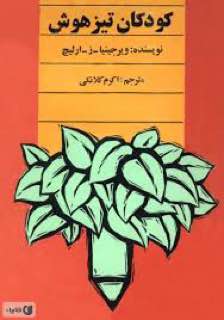
Gifted children
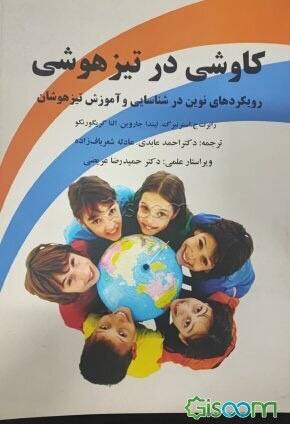
An exploration of genius
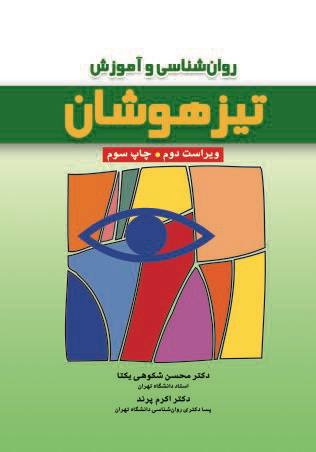
Psychology and gifted education
From smart to smart