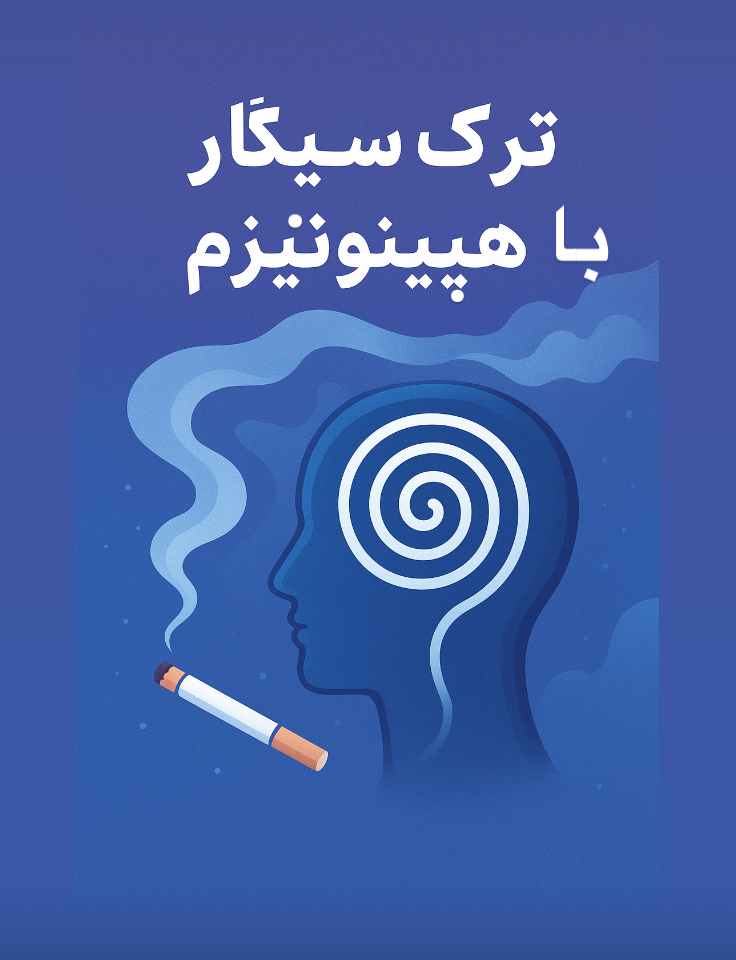

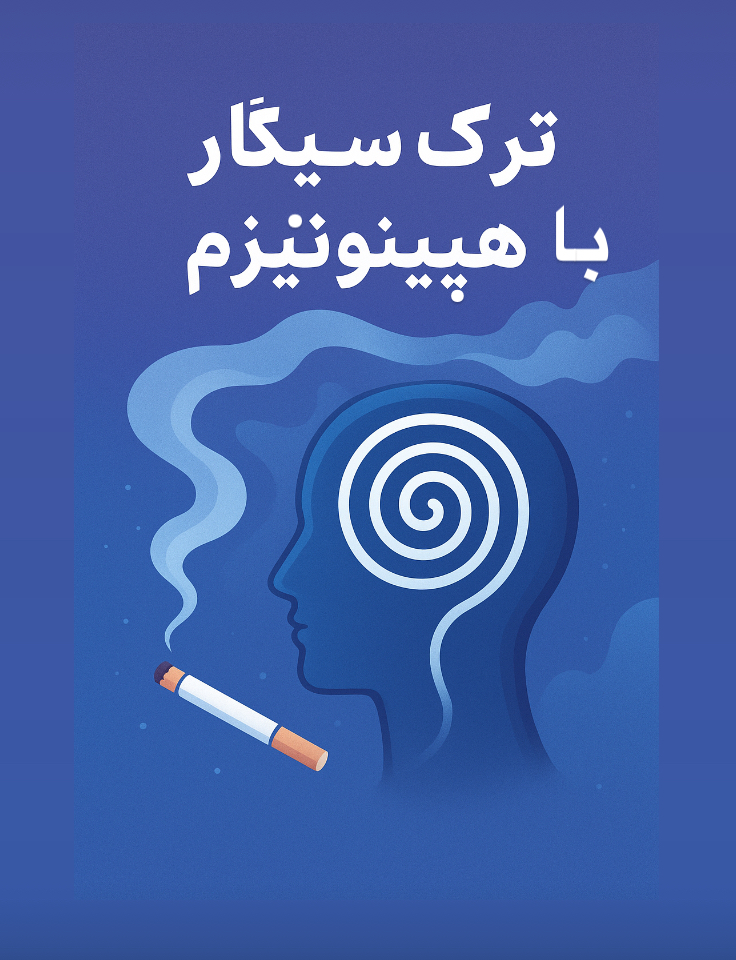
ترک سیگار با هیپنوتیزم;
راهی علمی برای رهایی از وابستگی نیکوتین
سرآغاز
اگر شما به دنبال راهی مؤثر برای ترک سیگار هستید، یکی از گزینه هایی که در سالهای اخیر توجه یافته است، ترک سیگار با هیپنوتیزم است. In this article, we will review its concept, scientific evidence, practice, important points, advantages, and limitations. The aim is to provide comprehensive guidance for people looking to quit smoking.

Why is it important to quit smoking?
Smoking is one of the main causes of preventable deaths in the world (World Health Organization, 2023). Quitting smoking not only helps physical health (reducing the risk of heart disease, lung, cancer) but is also related to mental health (increasing energy, reducing anxiety, improving sleep quality, etc.) (National Institutes of Health, 2022). Therefore, choosing an effective method to quit smoking is of particular importance.
Read more: What is hypnotherapy and how does it work?
What is hypnosis?
Hypnotic therapy or hypnotherapy is a process in which a person enters a focused state, while his awareness is maintained, and using suggestions, changes are made in his mental patterns, behaviors or habits (Elkins & Barabasz, 2020). This method is used in psychotherapy and changing behavioral habits. In the context of smoking cessation, the goal is to identify the smoking habit, its motivations, and the mental patterns behind it and change it through hypnotic suggestions.
What scientific evidence is there for "quit smoking with hypnosis"?
In this section, we examine the scientific evidence:
- A systematic review showed that in 33 studies, about 66.7% of the studies reported a positive effect of hypnotherapy on smoking cessation (Abbot et al., 2020).
- However, a Cochrane review concluded that “there is insufficient evidence to show that hypnotherapy is more effective than other methods” (Cochrane Library, 2021).
- A report from the US National Center for Complementary and Integrative Health states that “hypnotherapy may help with smoking cessation, but data are inconclusive” (National Center for Complementary and Integrative Health [NCCIH], 2023).
Therefore, it can be concluded that hypnotherapy is "an option to consider" but should not be considered the "definitive method" of quitting smoking - especially if it is not under the supervision of a specialist and combined with other methods.
Read more:Treatment of types of phobias with hypnosis
What is the practical process of "quitting smoking with hypnosis"?
The process of "quitting smoking with hypnosis" can be designed in this way:
- Initial assessment: checking the amount of smoking, motivation of the person to quit, medical records, mental and physical health.
- Mental preparation: preliminary training on hypnosis, explanation of the process and clearing of ambiguities.
- Hypnotherapy session:
- Bringing the person into a state of deep relaxation,
- Using cues focused on quitting smoking (for example, that cigarette smoke has become meaningless to you, the urge to smoke has decreased, you are liberated).
- Strengthening the mental image of a person free from smoking, with a better quality of life.
- Follow-up and strengthening sessions: It is recommended to have several sessions (for example, 2 to 5 sessions) with the support of removing obstacles and strengthening motivation. Evidence shows that more sessions increase the likelihood of success (Abbot et al., 2020).
- Reflection assessment: review after 3 months, 6 months (or more) to assess actual withdrawal or reduction in use.
Read more: Hypnoanalysis An advanced technique for identifying unconscious problems
Besides hypnotherapy, one of the deeper and more radical methods to treat smoking addiction is hypnoanalysis. Hypnoanalysis is a combination of hypnosis and psychoanalytic analysis, which aims to discover the unconscious roots of the desire to smoke. Unlike classical hypnotherapy, which focuses more on direct suggestion to quit, in hypnoanalysis the therapist tries to identify and release hidden causes, suppressed emotions, and psychological needs behind smoking behavior (Ekanayake & Elkins, 2024). For example, many people unconsciously use cigarettes to control anxiety, feel independent, or fill an emotional void. Hypnoanalysis with the help of Age Regression techniques and analysis of free associations reveals these internal patterns and helps a person "treat the true source of addiction, not just the symptoms" (Barnes et al., 2019; Alladin, 2016). Recent studies have shown that using hypnoanalysis along with behavioral hypnotherapy can increase the success rate of smoking cessation because it rewrites the psychological underpinnings of the urge to smoke instead of just suppressing it (Ekanayake & Elkins, 2024; Elkins & Barabasz, 2020). Read more:Hypnosis for Athletes and Medalists: A Path to Peak Performance Quit smoking with hypnosis and hypnoanalysis can be effective, safe, and mind-centered options for people seeking to break free from nicotine addiction. By focusing on the subconscious mind and rewriting thought patterns, these methods help a person not only reduce the desire to smoke, but also treat the psychological root of this habit. With expert guidance and personalized program design, you can move step by step towards the freedom of the mind and the health of the body. If you are ready to take a fresh breath and experience a smoke-free life, today is the best time to start. By taking advantage of specialized hypnotherapy and hypnoanalysis at Mohsen Derakhshan Nasab's psychology office in Shahryar and Tehran, you can free your mind from dependence and regain full control. Call now to schedule your "exclusive evaluation session" and take the first step towards freedom, peace and true health. Abbot, D. M., Elkins, G. R., & Rajab, M. H. (2020). Hypnotherapy for smoking cessation: A systematic review. Journal of Alternative and Complementary Medicine, 26(4), 295–306
Alladin, A. (2016). Cognitive hypnotherapy: An integrated approach to the treatment of emotional disorders. Routledge Barnes, S. M., Elkins, G. R., & Rajab, M. H. (2019). Hypnoanalysis in clinical practice: Exploring unconscious motivations in behavioral addictions. International Journal of Clinical and Experimental Hypnosis, 67 (4), 389–403 Centre for Addiction and Mental Health (CAMH). (2023). Hypnotherapy for addiction recovery Cochrane Library. (2021). Hypnotherapy for smoking cessation (Review) Ekanayake, R., & Elkins, G. R. (2024). The efficacy of hypnoanalysis combined with behavioral hypnotherapy in smoking cessation: A randomized controlled trial. American Journal of Clinical Hypnosis, 67 (1), 55–72 Elkins, G. R., & Barabasz, A. (2020). Advances in evidence-based hypnotherapy: Clinical applications and outcomes. Psychology of Consciousness: Theory, Research, and Practice, 7 (2), 190–205 National Center for Complementary and Integrative Health (NCCIH). (2023). Hypnosis and health: What the science says National Institutes of Health (NIH). (2022). Cigarette smoking: Health risks and quitting ResearchGate. (2023). Variability of hypnotherapy protocols in smoking cessation studies World Health Organization (WHO). (2023). Tobacco fact sheet Read more: Book of Hypnosis and Creativity: Unlocking Mental Locks author article Mohsen Derakhshan Nasb; Clinical Psychologist href="https://mohsenderakhshannasab.ir/my-services/%d9%87%db%8c%d9%be%d9%86%d9%88%d8%aa%db%8c%d8%b2%d9%85-%d8%af%d8%b1%d9%85%d8%a7%d9%86%db%8c/">Hypnotherapist
Hypnoanalysis and smoking cessation
Points to know before starting
Advantages and limitations
Advantages
Limitations
A few last words
Call to action
Resources
Author and Psychotherapist in Shahryar and Tehran.