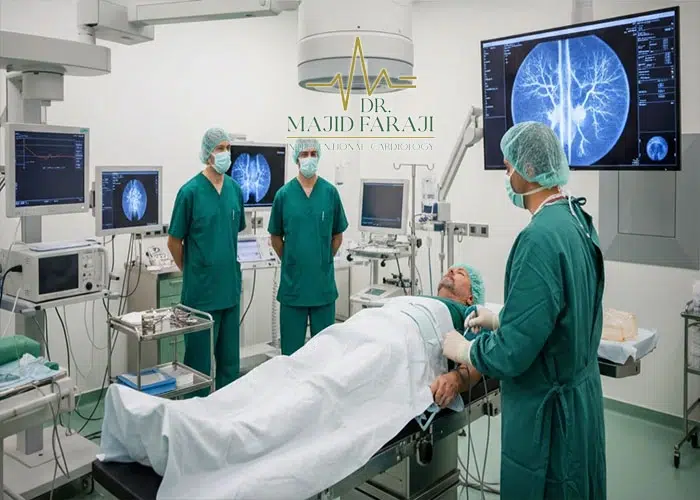


بزرگ شدن خوشخیم پروستات یا BPH یکی از شایعترین اختلالات مردان میانسال و سالمند میباشد؛ اختلالی که میتواند کیفیت زندگی، خواب، عملکرد جنسی و حتی سلامت کلی فرد را تحت تأثیر قرار دهد. در سالهای اخیر، ورود روشهای جدید، توانسته جایگزین موثری برای جراحیهای کلاسیک مانند تورپ (TURP) باشد. یکی از مهمترین این روشها، آمبولیزاسیون شریانی پروستات یا همان آنژیوگرافی پروستات میباشد که با هدف کاهش حجم پروستات از طریق مسدودکردن جریان خون اضافی انجام میشود. But what is prostate angiography, what are its stages, what is its success rate and which patients are the best candidates for it?
In this article, we comprehensively examine the steps, uses, complications of prostate angiography, the cost of prostate embolization and important points that you should know before making a decision.
In a simple definition, prostate angiography is an imaging and treatment method based on the introduction of a fine catheter into the pelvic vessels. In this procedure, the interventional radiologist, guided by digital imaging, finds the arteries feeding the prostate and blocks them with tiny particles. This process causes the volume of the prostate to decrease within a few weeks to a few months.
The method of prostate angiography is scientifically based on the international sciences of cardiology and radiology. A field in which Dr. Majid Faraji has also been active for many years in the field of diagnostic angiography and non-invasive treatment in the heart.
The process of doing this method is very precise and standard. The key steps are as follows:
1. Patient evaluation and selection
First of all, the patient should be examined for the severity of symptoms, prostate size, presence of bladder stones, PSA status and general health.
2. Entering the artery
The femoral or radial artery is usually used for entry. After local anesthesia, a thin catheter is inserted into the vein.
3. Mapping of prostate vessels
By injecting a contrast material, the arteries of the prostate are accurately imaged and the blood supply routes are determined.
4. Targeted occlusion (arterial embolization of the prostate)
Very small, standardized particles enter the arteries of the prostate to block excess blood flow. This stage is the basis of treatment.
5. Finish without stitches
Because no incision is made, the patient is discharged a few hours later and usually only needs a few days of relative rest.
- Prostate volume reduction in patients with prostate larger than 40 to 50 grams
- Improving urinary symptoms including frequency, burning, weak flow and night awakenings
- Suitable for patients whose medicines are not enough or have caused complications
- Suitable for high-risk people for surgery or anesthesia
Today, most of the valid guidelines present this method as an approved treatment option. According to reliable studies, the success rate of prostate embolization has been reported between 85 and 92%. Improvement in symptoms usually begins within the first few weeks and peaks within three to six months. The important advantage of this method is maintaining sexual function and not causing ejaculation disorders, which many men pay special attention to when choosing a treatment method.

effects Prostate embolization and prostate angiography complications
This method is among the safest treatment techniques; But it is necessary to be aware of possible complications. The most common possible complications are:
- Mild to moderate pelvic pain over several days
- Temporary urinary frequency
- mild hematuria
- Burning sensation when urinating
Rare but important complications include infection, damage to other pelvic vessels, or problems with the contrast material. Fortunately, the percentage of these complications is lower than many open and semi-open surgeries.
Costs vary depending on the following factors:
- Type of medical center and digital equipment
- Salary of international specialist
- type of embolization materials and particles
- Inpatient period (usually short)
In Iran, the cost of prostate angiography is usually lower than classic surgeries, and considering the reduction of hospitalization and the lack of need for anesthesia, it is economically viable.
The following people are the best candidates for prostate angiography:
- Men with moderate to severe urinary symptoms
- those who don't want to undergo classical surgery
- Patients with cardiac risk or other systemic problems
- People whose medicines did not have enough effect
Summary
Prostate angiography is a new, minimally invasive and scientific approach to treating prostate enlargement. This method reduces the volume of the gland and improves symptoms dramatically by blocking the prostate arteries. This technique is performed by international radiologists; But its principles are similar to cardiac procedures, and the advancement of catheter-based technologies has made these treatments safer, more precise, and more effective than before. Finally, choosing the right method should be done based on individual conditions and consultation with a specialist in order to achieve the best treatment result.
Source:





