

ماساژ رحم یکی از تکنیکهای کلیدی و اساسی در مراقبتهای پس از زایمان است که نقشی حیاتی در حفظ سلامت مادر ایفا میکند. این روش که با هدف تحریک انقباضات میومتر (عضله رحم) انجام میشود، به طور مستقیم بر کاهش خطر خونریزی پسزایمان (Postpartum Hemorrhage یا PPH) و تسریع روند طبیعی بازگشت رحم به اندازه قبل از بارداری (Involution) تأثیر میگذارد. با توجه به اینکه خونریزی شدید پس از زایمان یکی از علل اصلی مرگومیر مادران در سراسر جهان است، اهمیت یک مداخله ساده، کمهزینه و علمی مانند ماساژ فوندال (Fundal Massage) دوچندان میشود.
این مقاله به صورت تخصصی، علمی و تألیفی به بررسی جامع این روش میپردازد. We will describe the mechanism of action, the exact steps to perform, the appropriate timing, as well as its differentiation with other abdominal massage techniques to provide a complete understanding of the role of this intervention in postpartum care protocols.
Section 1: What is uterine massage? (Definition and Objectives)
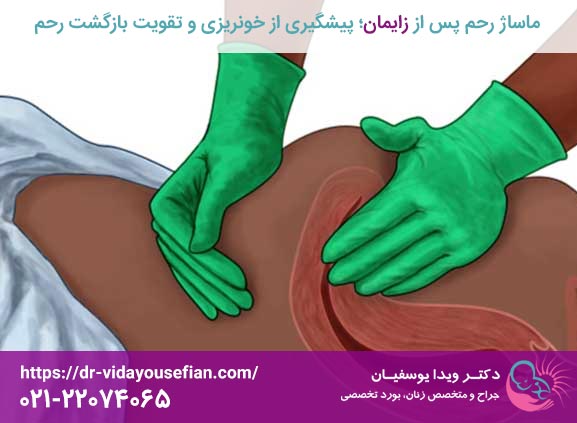
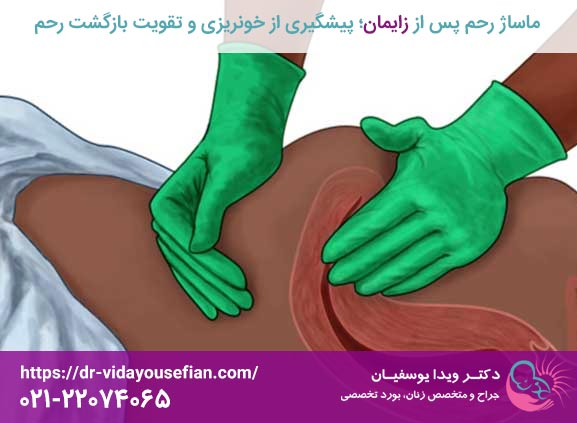
Uterine massage, scientifically known as fundal massage, is a physical intervention that involves the application of controlled and regular pressure on the uterine fundus (the upper, dome-shaped part of the uterus) immediately after the placenta is expelled.
Mechanism of action MainThe main purpose of uterine massage is the mechanical stimulation of nerve receptors in the uterine wall. This stimulation causes the release of neurotransmitters and hormones, the result of which is the induction of strong and continuous contractions of the uterine muscle (myometrium).
Uterine fundus After childbirth, due to the sudden relaxation of muscle fibers, it is prone to atony (lack of contraction). Uterine atony is the most common cause of postpartum hemorrhage. By causing contraction, massage puts pressure on the open blood vessels at the junction of the placenta and limits the flow of bleeding.
Key Benefits Uterine massage
- Prevention of Uterine Atony: This is the most important goal. By maintaining the muscle tone of the uterus, the risk of excessive dilation of blood vessels is reduced.
- Significant reduction in the risk of severe bleeding (PPH): Studies have shown that routine and timely massage can significantly reduce the rate of acute bleeding.
- Stimulation of natural oxytocin secretion: Mechanical stimulation of the fundus causes the pituitary gland to release the hormone oxytocin. Oxytocin itself is a strong factor in inducing sustained uterine contractions.
- Removal of blood clots and possible debris: The contractions created help to effectively remove blood clots that may interfere with the contraction of the uterus. This leads to better cleaning of the uterine cavity.
- Rapid assessment of uterine condition: During massage, the care provider can quickly assess the firmness, position and size of the uterus.
section 2: Why is uterine massage necessary? (clinical significance)
Postpartum hemorrhage (PPH) is defined as the loss of more than 500 ml of blood after vaginal delivery or more than 1000 ml after cesarean section. PPH is one of the four main causes of maternal death worldwide and has a significant contribution to mortality from obstetric complications.
Statistics and importance of prevention
- Uterine atony: In about 70 to 80% of PPH cases, the main cause is the inability of the uterus to contract (uterine atony).
- Preventive effect: Regular and correct uterine massage as a routine action in the first minute after delivery can reduce the risk of needing medical or surgical interventions and reduce bleeding by 40% in some studies.
Risks that increase the need for massage
Some underlying conditions greatly increase the risk of atony and PPH, and in these mothers, massage should be done with more care and follow-up:
- Multiple Gestations: Excessive stretching of the uterus by twins or multiples reduces the natural ability to contract.
- Large fetus (Macrosomia): A baby weighing more than 4000 grams puts more mechanical pressure on the uterus.
- Long and stressful births: Prolonging the second phase of labor or prolonged use of force can lead to uterine muscle fatigue.
- History of previous bleeding: Women who have had a history of PPH in previous deliveries have a higher risk.
- Using strong inducing drugs (such as high oxytocin): Long-term use of oxytocin during labor can lead to the lack of proper response of the receptors in the postpartum phase.
- Retained Placenta Fragments: The presence of any remaining placental tissue prevents the full contraction of the uterus.
- Polyhydramnios: Excessive stretching of the uterine wall due to the high volume of amniotic fluid.
section 3: Stages of uterine massage (exact execution technique)
Uterine massage should be performed by a trained person (doctor, midwife or specialist nurse) and requires precision in the technique in order to have the maximum effectiveness and at the same time cause the least discomfort to the mother.
Required equipment:
- Sterile gloves (if simultaneous internal examination is required).
- Clean pad or cloth to absorb the bleeding.
Steps Implementation (step by step):
Step 1: Preparing and identifying the position of the uterus
- Position of the mother: The mother should be lying on her back (supine) with slightly bent knees.
- Finding the fundus: The care provider places his non-dominant (usually left) hand on the mother's abdomen, just below the navel, to stabilize the uterus in place.
- Determining the location of the fundus: Using the fingers of the dominant hand (usually the right), the location of the highest part of the uterus (fundus) is touched. At the moment of placental discharge, the fundus is usually at the level of the navel or a little lower.
Step 2: Applying controlled pressure (The Push)
- With the palm and fingers of the dominant hand, strong, steady, downward pressure is applied to the fundus. This pressure should be enough to cause local and strong contraction.
- Critical point: The stabilizing hand plays an important role so that the uterus is not pushed down and the pressure is applied directly to the uterine muscle.
Step 3: Making circular or vertical movements (The Massage)
- After applying the initial pressure, the massage is performed with rubbing movements:
- Circular movements: The massage is performed in a circular and gentle way around the fundus.
- Vertical movements (up and down): Pressure is applied alternately in the vertical direction.
- The goal is to repeatedly stimulate the uterus during the first 2 to 3 minutes to return to a firm state.
Step 4: Assess and remove clots
- When the uterus hardens, blood clots may come out of the vagina. This process is normal and desirable, because it shows that the uterus is emptying the excess contents.
- Evaluation of the amount of bleeding is also done at the same time (the amount of bleeding should be gradually reduced).
Step 5: Repeat and monitor
-
After the initial session (about 3 to 5 minutes), the uterus should be monitored for a few minutes. If loosening or increased bleeding is observed, the massage should be repeated immediately. This work may be needed every 15 minutes in the first hour after delivery.
Experience Mother during massage
Many mothers report discomfort or pain similar to severe menstrual cramps during intense uterine massage. This pain is caused by contractions. Usually, the procedure is only challenging for the first few minutes, and then the pain subsides as the bleeding subsides. Effective communication between the treatment team and the mother is very important to manage expectations and reduce anxiety.
section 4: Optimal timing for performing uterine massage
Precise timing greatly affects the effectiveness of uterine massage. This intervention is not a reactive measure, but should be part of the prevention protocol.
Times Vital for massage:
- Immediately after mating: This is the golden moment. After making sure that the placenta is fully expelled, the massage should start within the first 60 seconds. In this case, the uterus has the greatest potential to respond to stimulation.
- In the first 24 hours after delivery (critical period): In this period, mothers have the highest risk of PPH. Massage should be repeated periodically (eg, every 15 to 30 minutes) for the first few hours to ensure that the uterus remains contracted.
- In case of unexpected excessive bleeding: If the flow of bleeding suddenly increases or the pads become wet quickly in a short period of time, uterine massage should be performed immediately and without delay.
- After filling or emptying the bladder: A full bladder can displace the uterine fundus and prevent effective contractions. After each bladder emptying, evaluation and re-massage if necessary are recommended.
section 5: The effect of uterine massage on uterine involution
Uterus return or involution is a physiological process during which the uterus gradually returns to its original size and weight after childbirth. This process takes several weeks, but most of it occurs in the first days and weeks after delivery.
- Size: The uterus is located above the navel at the time of birth. Within 24 hours, its size should decrease by approximately 1 cm per day.
- Weight: The uterus weighs about 1000 grams after birth. At the end of the first week, its weight will decrease to about 500 grams and at the end of 6 weeks to about 60 grams.
- Role of massage: By ensuring continuous and strong contractions (supported by oxytocin), massage ensures that the placental wound is effectively closed and the muscles quickly return to physiological relaxation. If the uterus becomes atony, the process of involution is disturbed and the risk of infection (endometritis) increases.
Oxytocin effect
Oxytocin, a key hormone in this process, is released through fundal stimulation. The general formula that shows the muscle contraction under the influence of the hormone can be understood in a simple way:
[ \text{uterine wall tension} \propto \text{density of oxytocin receptors} \times [\text{oxytocin}] ]
Massage optimizes these parameters by increasing local and natural oxytocin.
Some mothers are more prone to uterine atony due to their childbirth conditions or physical characteristics and need special attention in massage.
- Multiparous women: Pre-stretched uteri may have a slower muscle response than primiparous uteri.
- Mothers with a large fetus (Macrosomia): Excessive stretching of muscles in pregnancies with high fetal weight reduces the ability of muscle rebound.
- Difficult, long or interventional births: Long births of more than 24 hours or the use of forceps or vacuum, due to the applied pressure and muscle fatigue, increase the risk of atony.
- Mothers with large or abnormal placentas: In cases such as maternal diabetes, placentas can be abnormally large.
- Overuse of uterine relaxants: during labor to reduce uterine spasms (although rare).
- Mothers with a history of uterine rupture or repeated miscarriages: These conditions may indicate structural weakness in the myometrium.
Section 7: Possible complications of uterine massage
Uterine massage, if performed according to the protocol and with appropriate intensity, is considered a very safe method and its serious complications are rare.
Common and expected:
- Feeling severe pain or cramping: As mentioned earlier, this reaction is common and usually subsides after a few minutes. Pain management and reassuring the mother is very important.
- Discharge of large blood clots: This is an indication that the massage was successful in emptying the uterus and should not be alarming, unless the bleeding is still heavy after the clots have been removed.
- Temporary increase in abdominal pressure: While applying pressure, the mother may feel pressure in the abdomen and pelvis.
- Tissue damage (very rare): Applying excessive and persistent pressure, especially in women with very thin abdominal walls, can lead to local damage, although this is almost never reported in natural deliveries.
- Exacerbation of pain in pathological cases: If the bleeding due to rupture of the uterus or remaining placenta is severe, massage alone is not enough and may delay other actions; Therefore, it is vital to diagnose the cause of bleeding at the same time as massage.
Short answer: No, fundal therapy massage should be done by a specialist.
Uterus massage is a therapeutic action that must be performed by the treatment staff (midwife or doctor) due to the need to apply controlled pressure and diagnose the condition of the fundus. A mother's attempt to apply strong pressure without adequate knowledge may be ineffective or may be stopped due to severe pain.
Although the mother cannot perform "fundal massage", she can perform actions that help maintain the contraction of the uterus and facilitate the process of its return:
- Early and continuous breastfeeding: Breast and nipple sucking is naturally the most powerful non-drug stimulator for the release of oxytocin in the mother's body. This hormone causes the contraction of the uterus.
- Keeping the bladder empty: The mother should urinate regularly. A full bladder creates a physical barrier against the full contraction of the uterus.
- Gentle movement: After stabilization, getting up and walking gently (with your doctor's permission) can help improve contractions.
- Using a warm compress (with prescription): In some post-discharge protocols, the use of a warm compress on the abdominal area can be recommended to relieve pain and increase local blood circulation.
section 9: Common misconceptions about uterine massage
In non-clinical settings, there are misconceptions about this procedure that can lead to hesitation in performing it:
- False belief 1: "Massage of the uterus is dangerous and damages the uterus."
- Fact: This method is a global standard intervention designed to prevent maternal life threatening (PPH). Serious injury can only occur if unreasonable and excessive pressure is applied, which has no place in standard protocols.
- False belief 2: "Massage of the uterus is not performed after cesarean section."
- Fact: This is completely false. Even in a cesarean delivery, the uterus after the delivery of the baby and placenta and before closing the abdominal incision (or immediately after), requires fundal massage to ensure hemostasis. Oxytocin and massage after caesarean section are vital to prevent heavy bleeding in the incision area.
- False belief 3: "Blood clots coming out after massage is bad and indicates a problem."
- FACT: Passing clots indicates that the massage has been successful and that the uterus is emptying excess contents that can prevent full contractions. As long as the amount of bleeding gradually decreases, this is considered a positive sign.
Recognizing the difference between these two types of massage is very important for the mother's health:
Features of fundal massage, abdominal massage (Abdominal Massage/Relaxation)main therapeutic/preventive purpose: uterine muscle contraction and bleeding control.Relaxing: reducing muscle tension, improving digestion and reducing stress. timeimmediately after delivery and in critical hours. Usually a few days or weeks after delivery, when the uterus It has tightened.How to apply pressureStrong, steady, focused pressure on the fundus.Gentle, massaging, broad pressure over the entire abdominal area.PerformerA doctor, midwife, or trained nurse.Mother, wife, or licensed massage therapist.
section 11: Uterine massage with medicine (PPH management)
In many cases, especially in mothers with high risk factors, uterine massage is used as the first line of defense, but it must be quickly combined with oxytocic drugs to ensure effectiveness.
If the bleeding continues or the fundus remains loose, massage is performed simultaneously with the administration of the following drugs:
- Oxytocin: The most common first-line drug that is injected intravenously to strengthen uterine contractions.
- Methylergonovine – Methergine: A strong ergot alkaloid that causes sustained contractions. (It should not be used in mothers with high blood pressure).
- Carboprost (Carboprost – Hemabate): A strong prostaglandin that causes severe contractions. (should not be used in mothers with asthma).
- Misoprostol: A synthetic prostaglandin that can be administered rectally, sublingually or orally and has become popular in modern treatment protocols due to its easy access.
The combination of mechanical massage and pharmacological stimulation provides the highest level of effectiveness in controlling and stopping postpartum bleeding.
Summary
Postpartum uterine massage, beyond a traditional habit, is a vital intervention based on scientific evidence that directly affects the safety of the mother after delivery. This simple method, by mechanically stimulating the uterine fundus, ensures that myometrial contractions are initiated and continued. These contractions, in turn, prevent the most common cause of maternal death, namely uterine atony, and accelerate the natural process of uterine involution.
Treatment teams should be trained to properly perform the technique (concentrated and intermittent pressure) and implement it immediately after placental discharge as part of routine care. The mother's cooperation (through breastfeeding) and careful monitoring of the uterine condition will be the key to success in securing the postpartum period and ensuring the mother's speedy recovery. Finally, uterine massage creates a solid bridge between the moment of birth and the stability of the mother's homeostasis.