Imagine your brain is like a complex orchestra, whose musicians sometimes go out of rhythm and disturb the music of life. Electric brain stimulation is a new and precise tool of medical science that restores this rhythm by sending electrical signals. From the treatment of Parkinson's tremors to the reduction of depression symptoms, this method has opened a window to the control of neurological and mental disorders. Inspired by the electrical nature of neurons, scientists have developed devices that regulate brain activity. If you are curious to know how this method works, stay with us in the rest of this article from your doctor. In this article, we will talk about the electrical stimulation of the brain, how to do it and the different types of this method.
What is electrical stimulation of the brain?
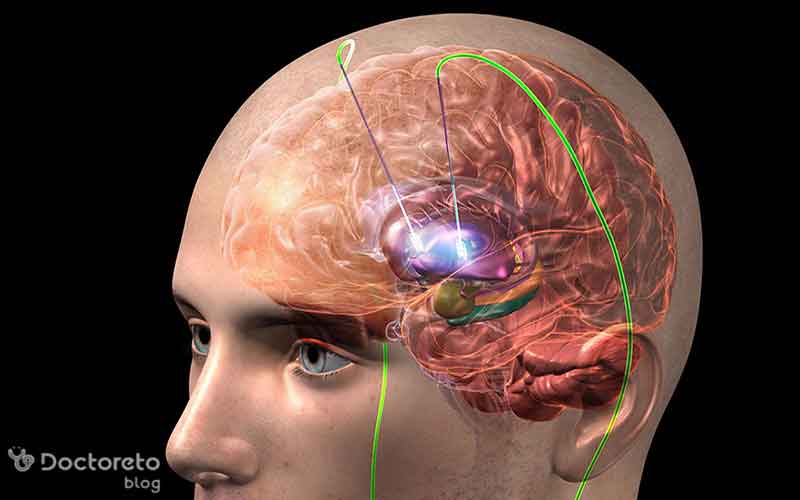
Electric brain stimulation is a set of advanced medical methods that regulate the activity of brain neurons using controlled electrical pulses. Some of these methods include deep brain stimulation (DBS), where electrodes are implanted deep in the brain, and transcranial direct current stimulation (tDCS), which is non-invasive and applied from the surface of the scalp.
The main goal is to correct abnormal neural patterns. DBS is ideal for movement disorders such as Parkinson's, essential tremor, and dystonia, while tDCS may be used as an adjunct to improve mood, learning, and psychiatric disorders such as OCD and depression.
Indications
Description
Uses
Treatment of Parkinson's, dystonia, OCD, resistant depression, epilepsy
Complications
Headache, itchy head, rare mood changes
Performance method
alternating current (tACS) pulse current (tPCS) direct current (tDCS) electrical stimulation CES random current (tRNS)
Preparation
Medical imaging, discontinuation of some drugs with doctor's diagnosis, psychological counseling, need to fast if Necessity
Aftercare
Monthly medical examination, recording mood changes and reporting to the doctor
Read the important points about electrical stimulation of the brain in this table.
What is the difference between electrical stimulation of the brain and electrical shock of the brain?
Electrical brain stimulation and electrical shock (ECT) both use electricity to affect the brain, but they differ in mechanism, intensity, invasiveness, and goals. Electrical stimulation sends weak, continuous pulses to selectively regulate nerve activity. This method is non-invasive (tDCS) or semi-invasive (DBS) and is used to control chronic symptoms such as Parkinson's or mild electrical brain stimulation for depression treatment.
But ECT electric shocks apply a strong current to induce controlled seizures and restore brain chemistry. ECT is a non-surgical procedure that is performed under general anesthesia, and some cases require temporary hospitalization.
Brain stimulation in some psychiatric disorders, such as obsessive compulsive disorder, can also help improve symptoms.
What diseases is electrical stimulation of the brain used to treat?
Electric brain stimulation is effective in controlling and improving a wide range of neurological and mental disorders. This method reduces drug-resistant symptoms by targeting specific areas of the brain. According to the type of treatment method, its applications are wide:
Parkinson's disease
Basic tremor
Dystonia
Obsessive compulsive disorder (OCD)
Resistant depression
Epilepsy
Chronic nerve pains
Types of electrical stimulation of the brain
Electrical stimulation of the brain is performed with various methods, each of which is selected according to the type of disease, the severity of symptoms and the patient's condition. These methods can be invasive or non-invasive; From deep brain stimulation (DBS), which is performed with surgery and electrode implantation in certain areas of the brain, to milder methods such as direct cranial electrical stimulation (tDCS), which are performed without the need for surgery.
The main goal of all these methods is to regulate abnormal nerve activity, reduce disease symptoms and improve brain function and quality of life of patients. In the following, we have explained the different methods of electrical stimulation of the brain separately;
alternating current (tACS)
pulse current (tPCS)
direct current (tDCS)
CES electrical stimulation
Random current (tRNS)
Electrical stimulation with alternating current (tACS)
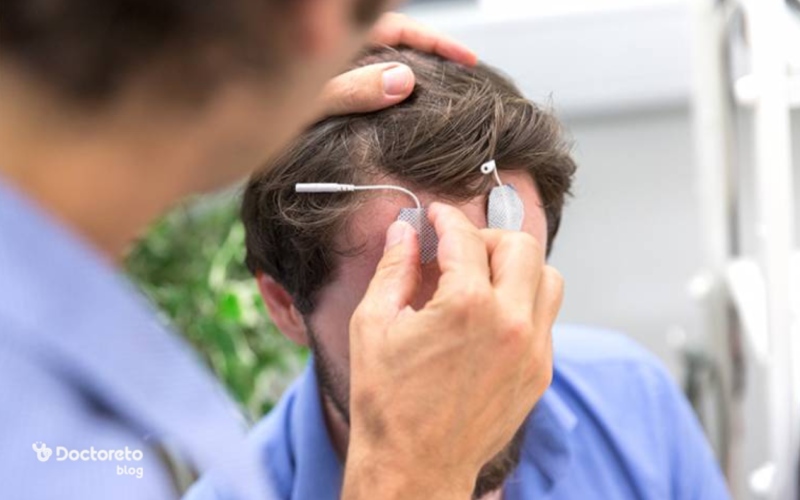
Transcranial alternating current stimulation or tACS is a non-invasive method in which a low-intensity sinusoidal electric current is transmitted to the brain through electrodes placed on the scalp. This method is usually painless and by synchronizing brain oscillations, it helps improve cognitive functions or help treat some neurological and mental disorders.
Electrical stimulation with pulse current (tPCS)
Transcranial pulse current stimulation (tPCS) is one of the new non-invasive methods that works by sending short and weak electrical pulses to the brain.
electrical stimulation with direct current (tDCS)
Transcranial direct current stimulation (tDCS) is one of the most widely used non-invasive brain stimulation methods that changes the activity of the cerebral cortex by applying weak direct current through electrodes on the scalp. According to the intensity and polarity of the current, tdcs brain electrical stimulation can facilitate or inhibit neural activity and be effective in cases such as motor rehabilitation, memory improvement and depression treatment.
tDCS is being researched in depression and some fields, and it is not the first line treatment for OCD or depression; Its use is currently in auxiliary or experimental form.
English text: Brain stimulation therapies can play an important role in treating mental disorders. These therapies work by activating or inhibiting the brain with electricity. The electricity can be given directly through electrodes implanted in the brain or indirectly through electrodes placed on the scalp. Persian translation: Brain stimulation treatments can play an important role in the treatment of mental disorders. These treatments work by activating or inhibiting the brain with electricity. Electricity can be delivered directly through electrodes implanted in the brain or indirectly through electrodes placed on the scalp.
CES electrical stimulation
Cranial electrotherapeutic stimulation (CES) is a non-invasive method of applying a very weak electrical current to the head. This technique is known as a neuromodulation tool (stimulation to change the activity of neurons) and has shown promising results in the treatment of some clinical problems such as insomnia, anxiety and depression.
Electrical stimulation with random current (tRNS)
Transcranial random stimulation (tRNS) is a method in which weak currents with random frequencies are delivered to the brain through electrodes. This method increases neural flexibility and is used in fields such as learning and neurorehabilitation.
How is the electrical stimulation of the brain done?
Electrical stimulation of the brain is done in 2 main ways, either directly through electrodes implanted in the brain (invasive methods such as deep brain stimulation) or indirectly through electrodes placed on the scalp (non-invasive methods such as tDCS and tACS).
Preparation before brain electrical stimulation
Before performing this treatment, the doctor gives recommendations to the patient for better preparation. Among the things that you should know as a preparation before the electrical stimulation of the brain are:
Medications you are taking: Your doctor may want to temporarily stop taking some medications.
Usually, the doctor provides instructions for bathing and using specific products to prepare the skin for the operation.
It may be necessary for the patient to refrain from eating before brain stimulation.
What is the number of brain stimulation sessions?
The number of brain stimulation sessions varies depending on the type of disease, the severity of symptoms and the body's response. The doctor determines the exact number of sessions based on the patient's condition.
English text: Most brain stimulation therapies are new or still being tested. But researchers think they may be helpful tools for people with treatment-resistant depression. Let's look at three of them. Farsi translation: Most of these treatments are relatively new or are still in the testing and research stage. However, researchers believe that these methods can be useful and effective tools for people with depression that is resistant to conventional treatments.
care after brain electrical stimulation
After electrical stimulation of the brain, proper care plays an important role in recovery and prevention of complications. According to the procedure, the patient must monitor the symptoms and strictly follow the doctor's instructions. These cares include regular follow-up and lifestyle adjustments to maintain the effectiveness of treatment and reduce the risk of complications:
Medical follow-up
Avoid exposure to strong magnetic fields such as uncoordinated MRI
Infection control by keeping the surgical site clean
Register mood changes and report to specialist
In the method of electrical stimulation of the brain, electrodes are implanted in certain parts of the brain that produce weak electrical currents.
What are the side effects of electrical brain stimulation?
Electrical brain stimulation is usually safe, but like any treatment, there may be side effects, which are often mild and manageable. The severity of side effects varies according to the procedure and is reduced with medical supervision. These complications are usually temporary, but it is necessary to be aware of them:
Surgery complications such as infection, bleeding or swelling
Neurological changes: headache, confusion, mood changes or temporary speech disorder
Skin effects: itching or redness under the electrodes
Seizures or exacerbation of initial symptoms are rare
Conclusion
Electrical stimulation of the brain can help regulate Parkinson's tremors or improve some mental disorders such as depression. This method not only controls the symptoms, but also increases the quality of life. Despite the side effects, it also has many benefits for treatment-resistant patients. However, its success depends on careful selection and expert supervision. Before performing brain stimulation, consult a neurologist or psychiatrist.
Your doctor takes care of your health!
Frequently Asked Questions
Brain stimulation is more useful for patients with movement diseases such as Parkinson's, essential tremor and dystonia. goes In addition, in some psychiatric disorders such as obsessive-compulsive disorder, it can help improve symptoms.
Electrical stimulation directly activates nerve fibers and even causes muscle contraction. While magnetic stimulation (TMS) indirectly activates neurons and has a slower response.
Electrical brain stimulation does not cause permanent changes in the brain and controls most of the symptoms of the disease does Although there is improvement, the progression of the disease does not stop. Also, immobility problems may reappear after a few years.
For migraine, the eTNS device is proposed as a confirmed option.
In this method, electrodes are implanted in certain parts of the brain that generate electrical currents. They produce poorly. These currents modulate the activity of nerve cells and chemical transmitters in the brain and help reduce the symptoms of the disease.