

Before the implant surgery, the surgeon carefully examines the condition of your jaw bone to choose the most suitable dental implant for you. Now, if your jawbone has weakened for various reasons and cannot provide enough support to maintain the implant, the dentist may suggest you to implant a special implant called zygomatic implant. Zygomatic or zygoma implants are longer than normal implants and are well fixed in the bone. If you are curious to know what zygomatic implant is and for whom it is suitable, stay with us until the end of this article.
What is a zygomatic implant?
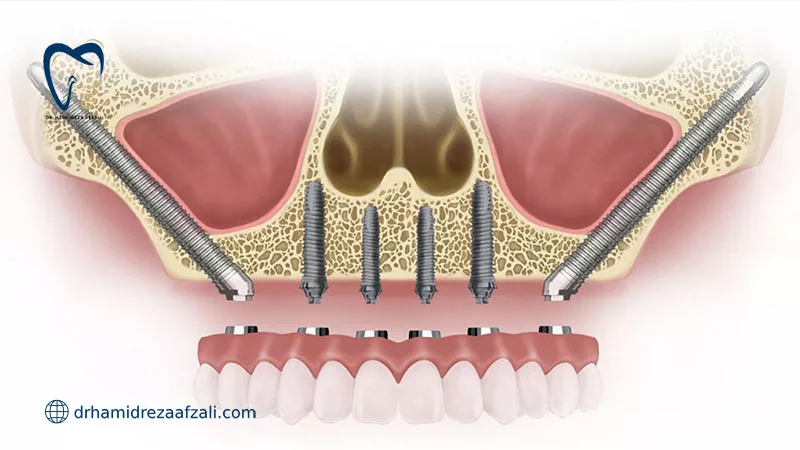
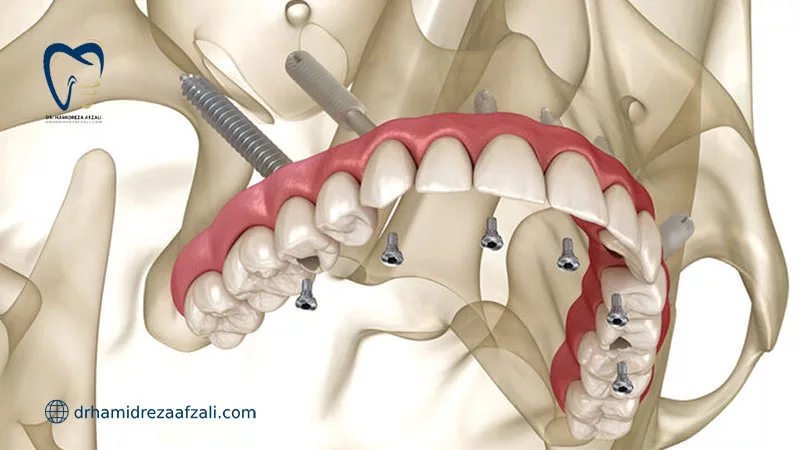
Zygomatic implant is a long implant that is implanted in the upper jaw and its end is placed in the cheekbone. This implant is suitable for people who have severe bone loss. With the help of this implant, the base of the implant is placed in the denser bone of the cheek instead of the weak and degenerated bone. Then a prosthesis or a dental bridge is connected to it.
What is the zygomatic bone?
Zygomatic bone is the cheek bone. This bone is a tetrahedral bone that forms the ridge and most of the arch of the cheek, as well as the side wall and the edge of the eye socket.
What is the difference between normal implant and zygomatic implant?
Typical implant has a shorter base and is placed in the jawbone. While the zygomatic implant has a much longer base and is placed in the cheek bone and jaw. Zygomatic implant provides a stronger support for dental prostheses and is more stable. Also, unlike the normal implant, the zygomatic implant does not require a bone graft.
One of the other differences between these two types of implants is that the normal implant is placed in both the upper jaw bone and the lower jaw bone, while the zygomatic implant is placed only in the upper jaw bone.
Finally, it should be noted that each zygomatic implant can replace between three and four teeth, while a normal implant replaces one or two teeth.
Zygomatic implant is suitable for which people?
- Persons whose upper jaw bone has weakened due to various reasons and is not thick enough to place a normal implant.
- Patients who have bone loss; But for various reasons, they can't wait to do a bone graft and then start implanting. Because there should be a gap of 3 to 9 months between bone graft surgery and implant surgery.
- Patients for whom bone grafting has not been successful and the low thickness or poor quality of the jaw bone has made them not suitable candidates for conventional implant implantation.
- Patients for whom conventional implant implantation has not been successful.
They are good candidates for zygomatic dental implants.
How is the zygomatic tooth implant performed? (How to perform zygomatic implant)
Zygomatic tooth implant procedures are:
- Consultation: The first step for implant surgery is consultation with a skilled and experienced surgeon. During the consultation, the doctor evaluates the patient's oral and dental health and recommends the best implant according to the patient's condition. اگر بیمار کاندید مناسبی برای ایمپلنت زیگوما باشد، برای انجام این جراحی برنامهریزی میشود.
- برنامهریزی: در مرحله بعد، از روشهای مدرن تصویربرداری برای تعیین برنامه درمانی، ابعاد مناسب ایمپلنت و محل مناسب برای قراردادن آن استفاده میشود.
- بی حسکردن محل جراحی: در روز جراحی، قبل از شروع عمل، از بیحسی موضعی یا آرامبخش IV برای بیمار استفاده میشود.
- برش لثه و قراردادن ایمپلنت: بعد از بیحسی، جراحی برش کوچکی در لثه ایجاد میکند و سپس پایه ایمپلنت را در استخوان فک بالا و استخوان زیگوماتیک قرار میدهد.
- اتصال اباتمنت: بعد از قراردادن پایه ایمپلنت، نوبت آن است که جراح اباتمنت ایمپلنت را به پایه آن متصل کند.
- دوران بهبودی: بعد از قراردادن پایه ایمپلنت در استخوان، بیمار باید چند ماه صبر کند تا استخوان بتواند بهخوبی به این پایه متصل شود.
- قراردادن بریج یا دندانمصنوعی: بعد از بهبودی کامل و برقراری پیوند بین استخوان و ایمپلنت زیگوماتیک، دندانپزشک دندان مصنوعی یا بریج را روی آن نصب میکند.
طول درمان ایمپلنت زیگوماتیک چقدر است؟
مدتزمان بهبودی بعد از جراحی ایمپلنت زیگوماتیک برای هر بیمار متفاوت است. In general, usually one week after surgery, patients can return to their normal and daily activities; But complete recovery and bone grafting with the implant takes up to several months.
Why are zygoma implants placed behind the jaw?
If the patient's jaw bone erosion is very severe, the zygomatic implant is placed behind the jaw and thus connects to the cheek bone. Basically, this implant provides enough support to support the implant without the need to pass through the degenerated and weak bone.
Can a zygomatic implant be combined with a natural tooth implant?
Yes. In some cases, a zygomatic implant may be used in combination with a regular dental implant.
What are the advantages of zygomatic implant?
The advantages of this implant are:
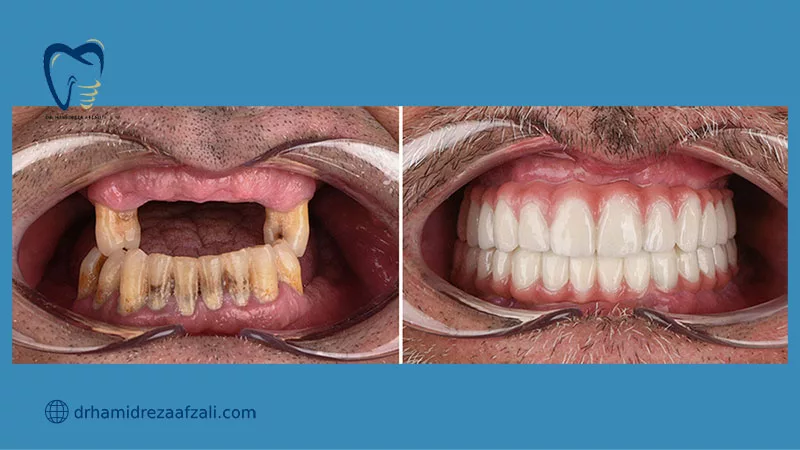
- No need for bone graft: zygomatic implant is suitable for people who have severe bone loss. In this way, these people no longer need bone grafting surgery.
- Long durability and high success rate: If properly cared for and followed, zygomatic implants can last for years and provide a long-term solution for replacing a missing tooth.
- A strong base to replace missing teeth: This implant provides a strong base and support to which a bridge or denture can be attached and the patient regains the ability to chew and speak.
- Quick recovery: this implant surgery has a shorter recovery period than the usual implant surgery after bone grafting.
- Beauty: This implant is a beautiful and natural solution to replace teeth and brings a beautiful smile to patients.
- Number of replaced teeth: With a normal implant, only 1 or 2 teeth can be replaced. While with zygomatic implant, we can replace 3 to 4 missing teeth.
- Quick installation of a bridge: a dental bridge may be installed on the zygomatic implant on the same day of surgery.
What is the success rate of zygomatic implant?
According to a study conducted at europeanreview.org, zygomatic implants have a success rate of 96-97% and are a safe solution for replacing missing teeth.
What are the disadvantages of zygomatic implants?
Every surgical operation is associated with certain risks. Zygomatic dental implant surgery is no exception to this rule. Possible disadvantages and risks of this surgery include:
- occurrence of infection
- nerve damage
- sinus damage
- Implant failure
Of course, the possibility of these risks will be minimized if the surgery is performed by a skilled and skilled surgeon and with the necessary care.
Zygomatic implant price
Zygomatic implant has a higher price than a normal implant, and its surgical cost is also higher due to the greater sensitivity of this surgery. The surgery to place this implant requires a lot of skill and knowledge, which is why it is generally performed by skilled and experienced dentists, which requires a higher salary. The brand of this type of implant and the surgeon's salary are the main determining factors. href="https://drhamidrezaafzali.com/dental-implant-cost/" target="_blank" rel="noopener">implant cost are zygomatic.
Conclusion and guide to see a doctor
As we discussed in this article, zygomatic implant is a special type of implant that eliminates the need for bone graft surgery. This implant has a high success rate and is considered a safe solution for replacing lost teeth. However, zygomatic implant implantation requires great care and skill to be successful and not to damage the facial nerve or sinus. Dr. Hamidreza Afzali is one of the experienced and skilled dentists in Tehran that you can visit for this type of implant.
Dental clinic of Dr. Hamidreza Afzali

Frequently Asked Questions
Next, pay attention to the most common questions from users about zygomatic implants.
What is the difference between a zygomatic tooth implant and a normal implant?
Both conventional and zygomatic implants are used to replace lost teeth, however, these two implants differ in terms of the number of teeth they replace, the complexity of the surgery, the length of the implant, the location, dimensions, and the need for bone grafting. Zygomatic implant surgery is performed for people whose upper jaw bone has been eroded.
How long is the recovery period of zygomatic implant?
Since this implant does not require bone grafting, its treatment length is shorter compared to bone graft surgery and then implant surgery. This period may take several months for the bone to bond well with the implant.
How long does a zygomatic implant last?
Zygomatic dental implants are made of high-quality materials and can last a lifetime if properly cared for. Of course, we should not forget that oral and dental hygiene, general health and taking necessary care play a decisive and important role in the longevity of these implants.
When should the zygomatic implant method be used?
Zygomatic implant is recommended when the patient's upper jaw bone does not have enough thickness and density to implant a normal implant and bone graft surgery has not been performed for him or has not been successful.