What is Holter heart rhythm? Full review of 24-hour heart monitoring - Dr. Majid Faraji

Dr. Fatemeh Nouri
TehranNeurologist and psychotherapist - psychiatrist and psychotherapist


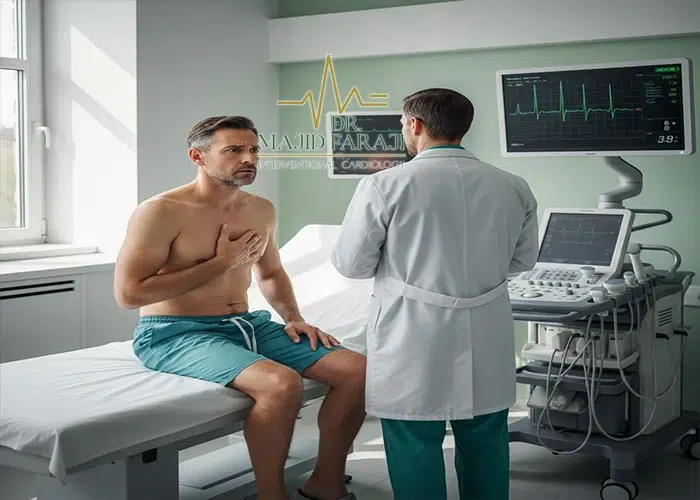
IntroductionSome heart problems, such as irregular heartbeat or sudden palpitations, may appear in a few short minutes, and when you go to the doctor, there is no longer a trace of them. This is where Holter heart rhythm comes into action as a precise and practical tool. Holter is a small and portable device that is attached to the patient for 24 to 48 hours and continuously records the heart rhythm. During this time, the patient continues with normal daily activities so that the real life conditions are recorded.
How does the Holter heart rhythm monitor work?
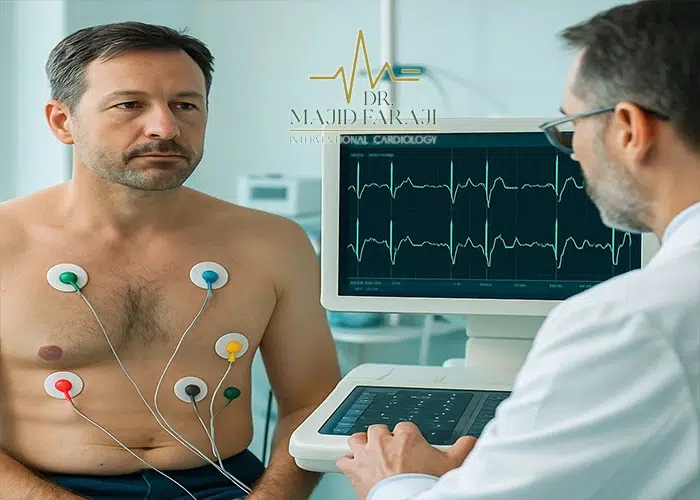
Holter is a device consisting of several electrodes (small sticks) and a portable recorder. Electrodes are attached to the skin of the chest and transmit electrical signals from the heart to the recorder. This information is stored 24 hours a day and at the end, it is analyzed by a cardiologist.
When is Holter rhythm used?
The doctor may prescribe Holter in the following conditions:
- Irregular heartbeat or arrhythmia
- Dizziness or fainting for no reason
- Sense of pause in heartbeat
- Checking the effectiveness of cardiac drugs
- Monitoring the performance of cardiac devices such as batteries (pacemaker)
Advantages of Holter heart rhythm
- More accurate diagnosis of transient problems: Some disorders occur only at certain times and may not be detected in a typical 5-minute ECG.
- Examination of heart function in real conditions: Recording of heart activity during sleep, walking, daily work or even stress.
- Painless and non-invasive: Its installation is quick and simple, and the patient can carry out his daily activities without problems.
- Possibility of doing it at home: The patient does not need to be hospitalized and can go home with the device.
How to use Holter?
- First, small electrodes are attached to specific areas of the chest.
- These electrodes are connected to the recording device with a wire.
- The small device is usually hung on the belt or neck.
- The patient must carry the device continuously until the end of the specified time (24 or 48 hours).
The patient may also be asked to write down activities, sleep time, feelings or symptoms such as dizziness or palpitations in a notebook so that the doctor can match them with the cardiac data.
What points should be considered when using Holter?
- The device should not get wet, so bathing is prohibited.
- Use loose clothes so that the wires do not disturb.
- Keep away from strong magnetic fields (such as microwaves or mobile phones) as much as possible.
- Do not disconnect or turn off the device in any way except with the doctor's order.
What happens after the Holter ends?
After returning to the treatment center, the device will be removed from you and the recorded data will be transferred to the computer system. By examining these data, the cardiologist can determine whether the heartbeat is normal or if there is a problem such as arrhythmia, interruption or premature beats.
What is the difference between Holter rhythm and EKG?
FeaturesHeart strip (ECG)Holter heart rhythmExamination time only a few minutes 24 to 48 hours Usage Quick diagnosis of obvious problems Diagnosis of transient or unstable problems Portability Only in medical center Portable and home use High accuracy in real conditionsIs Holter rhythm suitable for everyone?
Yes, this device is safe for most patients and has no restrictions for certain people. It can be used even in children or the elderly. If the doctor suspects a heart rhythm disorder, Holter is one of the most reliable diagnostic tools.
Different types of Holter heart rhythm
Heart rhythm Holters are produced in various types, each of which has its own use and features. Conventional Holters are the most common type, which are usually active for 24 to 48 hours. But in some situations, the doctor may use long-term Holters, which are able to record the heart rhythm for several days or even weeks. These types of devices are especially suitable for patients who have very irregular and rare symptoms and provide more accurate information. Also, some new and smaller wireless holters have come to the market that are easy to install and can send data online to the treatment center.
The use of Holter rhythm in the diagnosis of arrhythmias
Arrhythmias or heart rhythm irregularities have a wide spectrum; From very fast beats (tachycardia) to slow beats (bradycardia) and irregular beats such as atrial fibrillation. Holter heart rhythm can detect these cases with high accuracy. For example, atrial fibrillation is one of the most important risk factors for strokes, which sometimes occur without specific symptoms. With the use of Holter, even short and symptomless attacks of this disease can be detected and the doctor can start the necessary preventive measures.
The importance of simultaneously recording clinical symptoms
One of the important features of using Holter rhythm is the simultaneous recording of clinical symptoms by the patient. When the patient records in a special notebook when symptoms such as palpitations, dizziness or weakness occur, the doctor can match this information with the data recorded by the Holter. This method helps to identify the cause of the symptoms and better understand their relationship with heart rhythm disorders. Without accurate recording of these symptoms, Holter data analysis can be difficult or incomplete.
Expert tips in Holter data analysis
Holter data analysis is performed by a cardiologist who diagnoses the type of disorder by examining the heart rate patterns, interruptions, changes in speed and regularity of the heart rate. Sometimes it is necessary to extract more detailed reports and use advanced electrical signal analysis software. This specialized stage is very important because key treatment decisions are made from it, including the adjustment of medications, the need to perform additional tests or even heart surgeries.
Safety tips and limitations of Holter rhythm
Although Holter is a safe and non-invasive device, its use requires some precautions. For example, contact with water and moisture can make the device vulnerable and cause data loss. Also, in patients with sensitive skin, the place where the electrodes are attached may become inflamed or sensitive, which requires special care. On the other hand, Holter is not able to diagnose all types of heart diseases, and in cases where there is a structural or anatomical problem of the heart, additional diagnostic methods such as echocardiography may be needed.
The future of heart rhythm holters and new technologies
As medical technology advances, heart rhythm holters are becoming smarter and more capable. Today, devices are being developed that not only record the heart rhythm, but with artificial intelligence algorithms are able to automatically detect abnormal changes and send immediate warnings to the patient and the doctor. Also, the wireless connection and remote monitoring capability have made cardiac care to be performed 24 hours a day without the need to be constantly present in medical centers, which is of particular importance in improving the quality of life of heart patients.

Summary
Holter heart rhythm is a simple, non-invasive and accurate method for continuous monitoring of heart activity. In situations where short-term electrocardiography cannot detect the problem, Holter rhythm helps the doctor to check suspicious symptoms and make appropriate treatment decisions by recording the heart rate 24 hours a day. If you have heart palpitations, dizziness, or a feeling of irregularity in the pulse, a Holter examination can be a diagnostic tool.
Holter heart rhythm is a vital and advanced tool for diagnosing problems related to heart rhythm irregularities, which often occur transiently and in short periods of time. In many patients, these types of disturbances may last only a few seconds to a few minutes and may not be visible when visiting a doctor or performing a routine ECG.
Therefore, Holter rhythm fills this gap by continuously recording the electrical signals of the heart during 24 to 48 hours and enables a more accurate and comprehensive examination of the heart's activity. This small and portable device allows the patient to remain in their natural environment and record cardiac data while performing daily activities, exercising or resting. This unique feature distinguishes Holter from other diagnostic methods and increases the accuracy of diagnosis.
Continuous and accurate recording of heart rate allows doctors to detect momentary and unpredictable changes in heart rate. For example, cardiac arrhythmias such as atrial fibrillation, paroxysmal tachycardia, or bradycardia may appear only under certain conditions or as a result of stress, physical activity, or a change in body position.
Without Holter, it is very likely that these transient changes will not be seen and accurate diagnosis will be delayed. Also, in some patients, there are unclear symptoms such as dizziness, a sudden feeling of weakness or extreme fatigue, which may be due to heart rhythm problems, but the cause cannot be found with a routine ECG. Holter rhythm fills this gap and by recording symptoms during the day and night, it helps the doctor to examine the cause of these problems more carefully.
One of the other important advantages of Holter rhythm is the ability to check the effectiveness of drug treatments and cardiac assistive devices such as pacemakers. In patients who are receiving medication to control arrhythmias, or who have electronic devices implanted in their heart, the use of a Holter allows the doctor to continuously monitor the heart's response to treatment. This information can be vital for adjusting the dosage of drugs or planning additional treatments. Also, in those who have recently had heart surgery or pacemaker implantation, the Holter can be used as a close monitoring tool to ensure that the heart and devices are working properly.
The method of using Holter is very simple and painless. After preparing the skin of the chest, the doctor or technician installs sticky electrodes at specific points and connects the wires to the recording device. Then the device, which has a small and light size, is hung on the belt or neck so that the patient can easily continue with his daily activities. Patients usually do not go to the bathroom during this time and prevent the device from getting wet. In addition, the patient is asked to note any specific symptoms such as palpitations, dizziness or changes in activity in the notebook so that the doctor can match the recorded data with the reported symptoms and provide a detailed analysis.
Holter's high sensitivity and accuracy in recording the heart rhythm has made it a unique tool that enables the diagnosis of more complex problems compared to traditional electrocardiogram methods. In addition, as a non-invasive device with no side effects, Holter is very popular from the patients' point of view, and due to its portability and use at home, it reduces the need for hospitalization or frequent visits to medical centers. Today's technology in these devices continues to improve, and more advanced types have the ability to transmit data wirelessly and online, which allows for continuous and faster monitoring by the medical team.
Finally, Holter heart rhythm as an accurate, non-invasive and efficient diagnostic tool plays a very important role in cardiac care. This device allows doctors to make diagnoses that are not possible in other conventional methods and to design an optimal treatment plan for each patient. Therefore, in the event of symptoms such as sudden palpitations, interruptions in heartbeat or dizziness without a clear cause, the use of Holter rhythm is suggested as a golden method of diagnosis in order to evaluate the health of the heart more accurately and take appropriate treatment measures in time.
Sources:https://www.mayoclinic.org/tests-procedures/holter-monitor/about/pac-20385039
https://www.hopkinsmedicine.org/health/treatment-tests-and-therapies/holter-monitor
Was this article useful for you?
yes 0 no 0 Dr. Majid Faraji
#Holter Rhythm
Dr. Majid Faraji
#Holter Rhythm