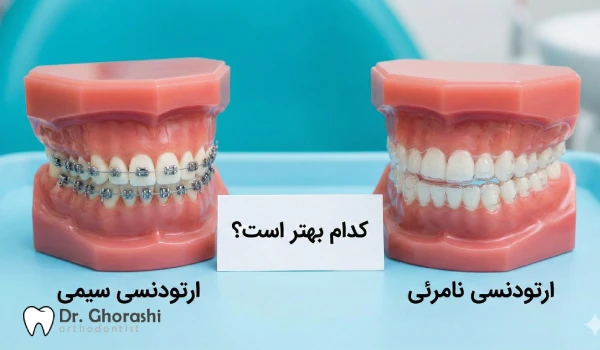
When many people decide to have their teeth orthodontic, their first question is Is wired orthodontics better or invisible? The answer to this question depends on the severity of the misalignment of your teeth and your goals. Wired orthodontics is a more reliable and faster option for complex problems and precise tooth movements, while invisible orthodontics is more suitable for mild misalignments and those for whom the appearance of the treatment is important, but usually takes more time and money.
In this article, we compared these two methods in a comprehensive and practical way for you so that you can choose the better option between fixed and invisible orthodontics.
| attribute | wire orthodontics (fixed) | Invisible orthodontics (transparent) |
| device type | Fixed bracket and wire | Movable clear plate |
| Transportability | Immovable | Removable |
| application | Correction of moderate to severe anomalies | Fix minor glitches |
| treatment time | 1.5 to 3 years | 1 to 2 years (for limited problems) |
| cost | Cheaper | More expensive (lab cost) |
| Appearance | Identified and seen | Less seen |
| age restriction | children and adults | More suitable for adults |
| complicated stuff | curable | Usually not curable |
Orthodontics What is invisible?
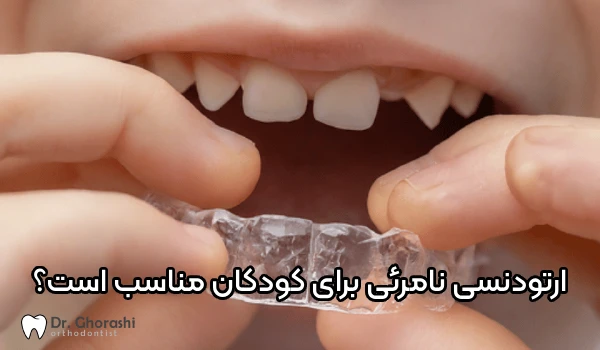
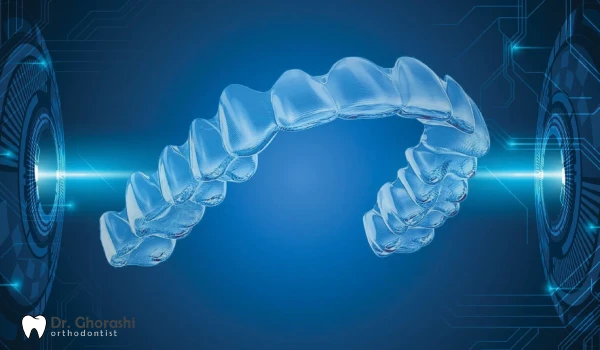
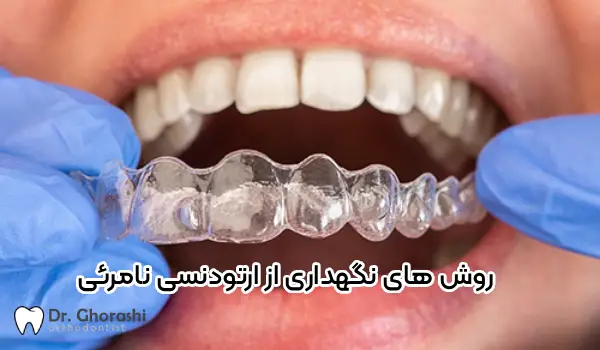
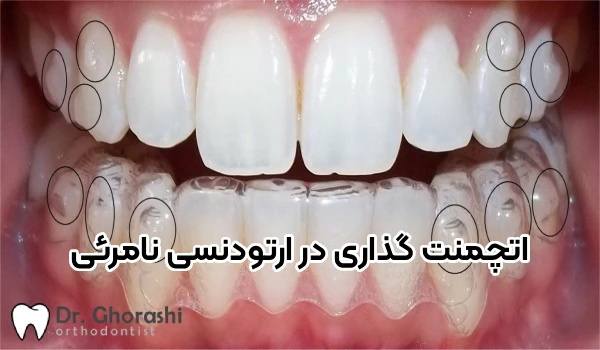
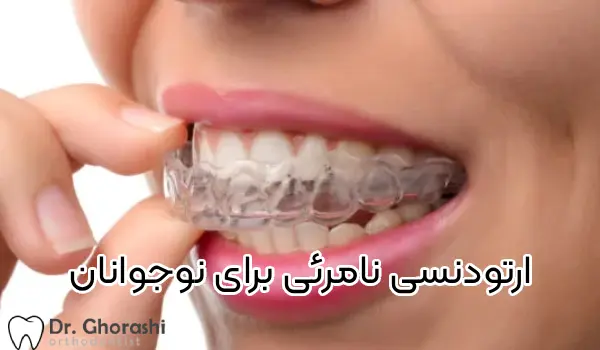
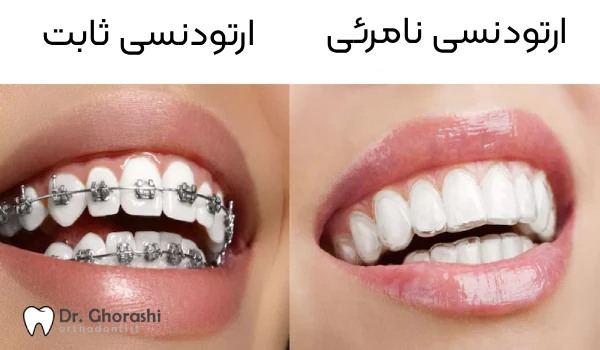
Invisible orthodontics is one of the modern and popular methods of straightening teeth, which uses transparent and removable plates instead of traditional metal brackets and wires. These plaques are completely customized for each person and guide the teeth to the correct position by applying gentle and controlled pressure.
This method is very attractive for people who care about the appearance of the treatment, because the plaques are almost invisible and can be easily applied or removed during the day. Invisible orthodontics is usually suitable for mild to moderate irregularities and is less effective in more complex cases.
Useful article: Full introduction to invisible orthodontics
Invisible orthodontics is becoming more popular day by day due to its convenience and elegance in use, and it has several advantages that we will discuss below:
- Invisible appearance: Transparent plaques are almost invisible and allow the patient to continue dental treatment without worrying about the appearance of wires and brackets.
- Portability: These plaques are removable, so there is no restriction when eating, brushing or flossing, and it helps with oral hygiene.
- Comfort and pain reduction: Plaques apply gentle and controlled pressure to the teeth, so there is less pain and gum irritation than wire orthodontics.
- Reduction of damage to the mouth and gums: Without brackets and metal wire, the possibility of cuts on the lips, gums and inside of the cheeks is reduced.
- Ability to accurately plan the movement of the teeth: Using 3D software, the movements of the teeth are simulated before the start of the treatment, and the treatment process will be more accurate and predictable.
- Flexible lifestyle: Patients can remove or change the plaque at certain times and still the treatment process continues.
- Suitable for mild to moderate irregularities: This method is especially effective for people who do not have severe teeth and jaw problems.
Although invisible orthodontics has many advantages, there are also limitations and disadvantages that you should know before choosing:
- Limited effectiveness for severe problems: If the misalignment of the teeth or jaw deformity is severe, invisible orthodontics is usually not a suitable option and the treatment result will not be reliable.
- Need for careful patient cooperation: For the treatment to be effective, the plaques must be worn approximately 20 to 22 hours a day. Non-adherence can prolong the treatment.
- Higher cost: Due to advanced technology, 3D design and custom fabrication of plaques, invisible orthodontics usually cost more than wire.
- Longer treatment period: Compared to wire orthodontics, teeth correction with clear plaque usually takes more time.
- Limitations in some corrections: Some complex movements of the teeth or large jaw changes cannot be done with this method and may require combined or wired orthodontics.
- Need for regular replacement of plaques: For treatment to progress, plaques must be replaced every few weeks and this requires careful follow-up of the patient.
What is wire orthodontics?
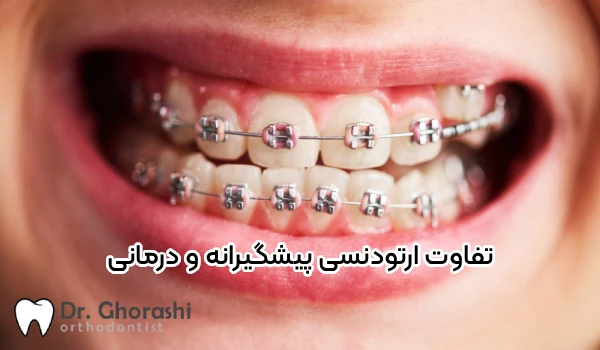
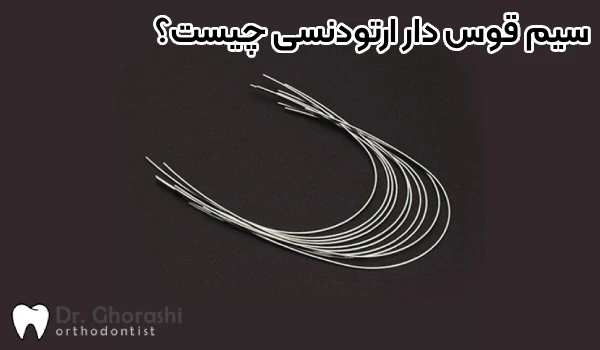
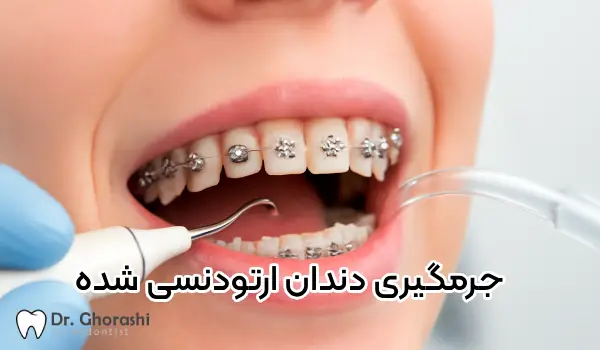
Wire orthodontics is a classic and widely used type of treatment of dental and jaw abnormalities, in which metal brackets and wires are used to move teeth. Due to the high power of controlling the teeth, this method has the ability to correct all kinds of complex dental and jaw problems, and it often gives results in a shorter period of time than invisible orthodontics.
Metal brackets are glued to the tooth surface and connected with orthodontic wires to apply the force necessary to move the teeth. This method allows the orthodontist to control the movement of the teeth more accurately and make more extensive and complex corrections.
Useful article: cost of orthodontics in Tehran
Benefits of wire orthodontics
wired orthodontics has several advantages that make it a safe and efficient option for many patients:
- The ability to treat complex deformities: Metal brackets and wires provide the possibility of correcting severe dental and jaw problems that invisible orthodontics cannot solve in many cases.
- Higher treatment speed: Due to the precise control of tooth movement, the time required to achieve desired results is usually shorter.
- Precise adjustability: The orthodontist can move the teeth with high precision by making slight changes in the wires.
- Reliable results: The long experience of using wire orthodontics has shown that the treatment results are stable and successful in most patients.
- Suitable for all ages: This method can be used for children, teenagers and adults and has no specific age limit.
Disadvantages of wire orthodontics
Despite many advantages, wire orthodontics also has disadvantages that should be considered before choosing a treatment method:
- Visible appearance: Metal brackets and wires are usually visible and may be uncomfortable for people who are sensitive to their appearance.
- Possibility of gum and lip irritation: The contact of wires and brackets with the soft tissue of the mouth can cause minor sores or irritation, especially in the first days of installation.
- Need more care: It is more difficult to clean the teeth and around the brackets and the possibility of plaque and decay increases.
- Food restriction: Patients should avoid eating hard, sticky or chewy foods so as not to damage the wire and bracket.
- Possibility of Pain or Discomfort: After each wire adjustment, pressure on the teeth may cause temporary pain or sensitivity.
Useful article: What is fixed appliances?
To choose between wire and invisible orthodontics, the severity of the deformity and your goals should be known. If the teeth require complex and drastic corrections, wire orthodontics is a safer option because it has the ability to accurately move the teeth in a shorter period of time. But if the deformity is minor and the appearance of the treatment is important to you, invisible orthodontics can be a good choice.
Another point is that wire orthodontics usually offer lower cost and more reliable results in correcting complex tooth movements, while invisible orthodontics are designed for comfort and aesthetics.
Concluding remarks
Choosing between wire and invisible orthodontics depends entirely on your dental conditions and individual preferences. Both methods have their advantages and limitations, and the best results are obtained when the type of treatment is chosen carefully and based on the real needs of your mouth and teeth.
Consultation with the the best orthodontist in West Tehran can clarify the decision-making path and help you choose a treatment that will bring you the most satisfaction both in terms of appearance and functionality. The goal is to have a healthy, harmonious and lasting smile at the end of the treatment.