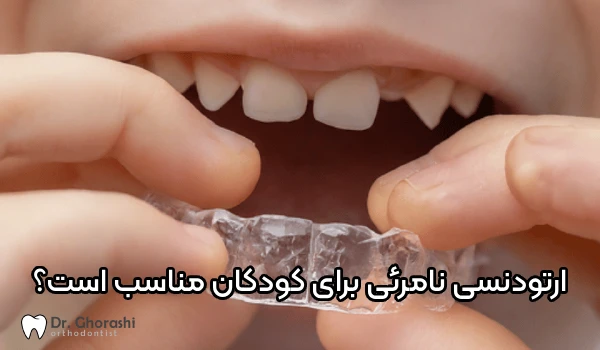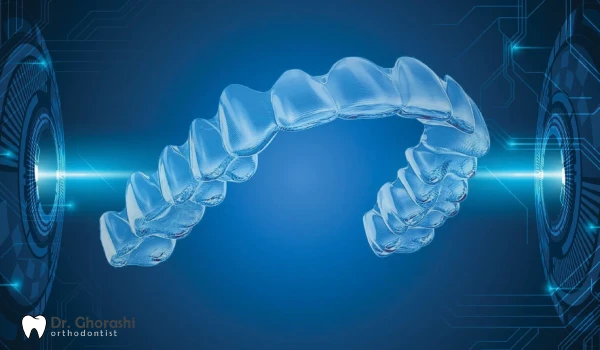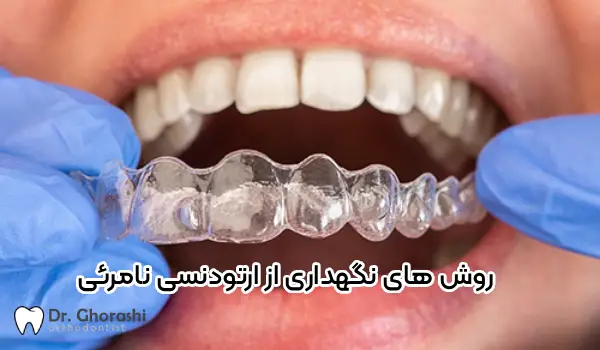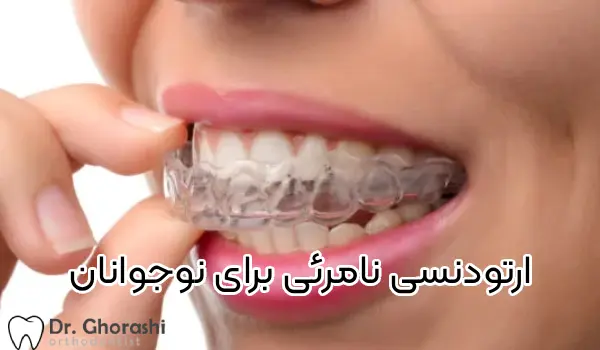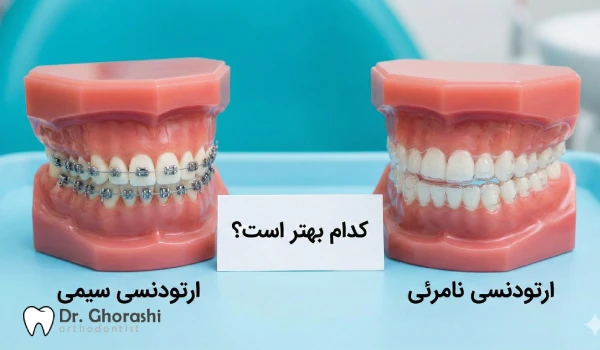
Invisible orthodontics, such as Invisalign, have become very popular thanks to the transparency of plaques. But accurate movement of teeth is not possible without the help of special tools. Invisible orthodontic attachments are small and tooth-colored parts that are attached to the surface of the tooth and help the orthodontic plate to apply the necessary pressure to the teeth and move them accurately.
Using attachment in invisible orthodontics, even the most complex movements of the teeth can be done, without the need for traditional wires and brackets. In the following, we will discuss the types of attachments, their use and points that parents or patients should know.
From attachment in invisible orthodontics
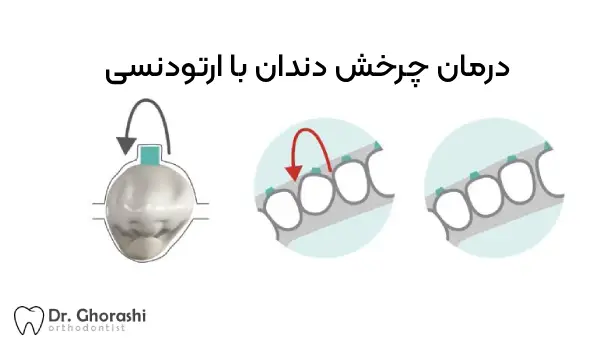
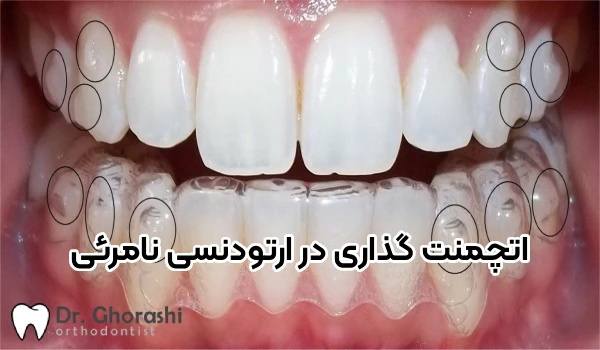
Attachments are small tooth-colored pieces that are attached to the tooth surface and help the clear orthodontic plaque to move the teeth accurately and effectively. The main purpose of attachments includes the following:
- Helping precise tooth movements: some tooth movements, such as turning, moving forward or retracting, are difficult or impossible without attachments.
- Plaque Pressure Control: Attachments transfer plaque pressure to a precise point on the tooth for controlled movement.
- Possibility of performing complex movements: To correct teeth that need to change the angle or strong rotation, attachments are essential tools.
- Preserving the appearance of invisible orthodontics: without the need for metal brackets, teeth move carefully and the plaque remains transparent and almost invisible.
Simply put, attachments are like little hands that tell the plaque where to push or rotate the tooth, so that the invisible orthodontics treatment is done the best way.
Does attachment in orthodontics hurt?
No, attachment in invisible orthodontics is usually not painful, but it feels a little different. When the orthodontist attaches the attachments to the teeth, he uses special adhesive materials, and this work is similar to placing a small adhesive on the tooth. Some patients may feel mild pressure or short-term discomfort, but this usually goes away very quickly.
In the first days when the plaque is placed on the tooth, you may feel a slight pull or gentle pressure, because the plaque now moves the teeth with the help of attachments. This state is normal and is a sign of correct orthodontic function.
In general, attachments do not cause pain, and it is mostly a feeling of slight pressure or a different sensation on the teeth, which decreases over time and as the teeth get used to it.
Useful article: Invisible orthodontics for teenagers
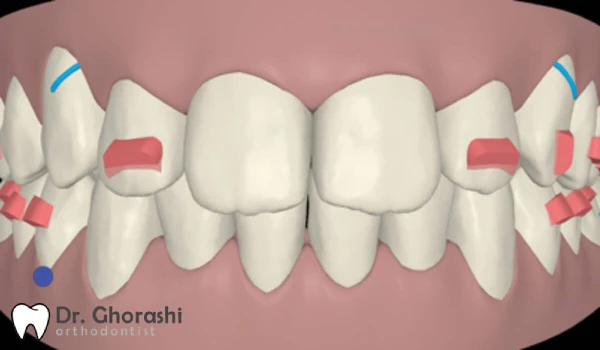
Attachment in invisible orthodontics
Attachments are small, tooth-colored pieces that are attached to the surface of the tooth so that the clear orthodontic plates can move the teeth accurately. The type of attachment and its location depends on the need for tooth movement.
1. Button Attachment (Button Attachment)
This attachment is small and round and is usually used for teeth that require precise rotation or movement. The push-button attachment makes the plate apply pressure to the desired point and the tooth moves smoothly and with control. Using this attachment for certain teeth makes the movement simpler and more accurate.
2. Elliptical / Conical Attachment
This type of attachment has a conical or oval shape and is mostly used to correct the angle and rotation of the teeth. When the tooth needs to rotate or move at a certain angle, the conical attachment helps the plaque to apply pressure in the right way and the tooth moves in the right direction. This type of attachment is very effective for delicate and precise tooth movements.
3. Rectangular or square attachment (Rectangular / Square Attachment)
Rectangular or square attachment is used to move teeth forward or backward, create space between teeth and align teeth. The rectangular shape allows the plaque to apply pressure evenly and the teeth to move accurately. This type of attachment is very useful for correcting alignment and distances between teeth.
4. Attachment for intense movement (Optimized / Power Ridge Attachment)
This attachment has a special design and is used for complex tooth movements, such as strong rotation or simultaneous movement of several teeth. It is usually placed on the front and back teeth. The special attachment for intense movement makes complex treatments with invisible orthodontics possible and the teeth move in a precise and controlled manner.
5. Small transparent attachment (Composite Attachment)
This attachment is small and the same color as the tooth and is suitable for patients who care about the appearance of transparent plaque. The transparent attachment has the same movement function as other attachments but is less visible. In this way, the patient can continue his treatment without worrying about the appearance of the plaque and the teeth can move optimally.
Useful article: invisible orthodontics for children
Is orthodontic attachment visible?
In most cases, invisible orthodontic attachments are very inconspicuous or almost invisible. These small pieces are usually made of tooth-colored materials (composite), and for this reason, when they are attached to the tooth, the eye hardly recognizes them. Of course, depending on the shape of the teeth and the location of the attachment, sometimes they may be seen a little near the front teeth, but in general they are not noticeable to others and the appearance of the transparent orthodontic plaque remains invisible.
Concluding remarks
Attachment in invisible orthodontics is one of the key parts of the treatment, which helps the teeth to move in a precise and controlled manner, even in complex movements. These small, tooth-colored pieces improve the performance of clear plaque without affecting the appearance of teeth or plaque.
The good news is that attachments are usually not painful and only cause a slight or slightly different feeling of pressure on the tooth, which is normal and will decrease as the teeth get used to it. Also, because they are the same color, they are hard to see and the beauty of invisible orthodontics is maintained.