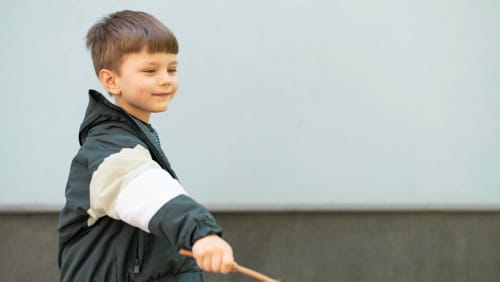


Stubborn children They have their own characteristics that make parents and teachers face challenges. Stubbornness in children is often caused by the need for independence, testing boundaries, or reacting to failures and environmental pressures. To effectively deal with these behaviors, parents need strategies and scientific methods that help improve behavior and strengthen family relationships. In this article, effective methods for dealing with a stubborn child will be investigated, and reliable scientific sources will be mentioned at the end of the article.
If you don't have time to read, you can listen to the audio version. But if you prefer to read the text, the full content is available below. This content is with you in whatever form is most convenient for you.

1. Understanding Stubbornness in Children: Roots and Reasons
Before you try to deal with a stubborn child, it is important to understand the reasons for stubborn behavior. Stubbornness in children can originate from several factors:
- Striving for independence: Children at different stages of their development, especially between the ages of 2 and 5, want to prove their independence and resist parental orders.
- Dealing with failure: Some children, when they feel that they cannot achieve their wishes or are facing challenges, They turn to stubbornness.
- Imitating the behavior of adults: If a child grows up in an environment where adults are constantly stubborn and disagree, it is likely that he will imitate this behavior.
Studies have shown that stubbornness can be a sign of the development of autonomy and decision-making ability in children, especially in preschool age. During this period, the child is trying to get out of the control of the parents and find his individuality.
2. Use of punishment and encouragement in a balanced way
One of the effective methods for managing stubborn behavior in children is to use balanced methods of punishment and encouragement. Parents should avoid excessive use of punishment and instead, focus on encouraging positive behaviors and strengthening the good aspects of the child's personality.

How Can punishment be used correctly?
- Mild and clear punishment: Instead of severe punishment, you can confront the child with a simple message such as “this behavior is not appropriate”.
- Remove advantages: If the child uses stubborn behavior to achieve something, instead of physical punishment, you can deprive him of these things (for example, cutting off viewing time TV).
How can you use encouragement?
- Encourage positive behaviors: When the child shows positive behavior, you should immediately praise him and get his attention.
- Apply small rewards: To reinforce positive behaviors, you can use small rewards such as star stickers, more attention or doing special activities.
Research has shown that positive behaviors in children improve through continuous reinforcement and encouraging rewards, while negative punishments can lead to anxiety and long-term behavioral problems if not managed properly.
3. Using relaxation techniques and deep breathing
One of the effective ways to deal with a stubborn child is to teach him how to keep calm in stressful situations. These skills can be especially useful when the child is showing stubborn behavior.
Calmation methods:
- Deep breathing: One of the main ways to reduce stress in children is deep breathing training. This technique helps the child to calm down when they feel angry or upset.
- Physical exercises: Physical activities such as simple stretching or walking can help the child to reduce physical tension.
Studies in the field of child psychology show that relaxation and breathing techniques can reduce stubborn behavior and anxiety in children because it allows them to better manage their emotions.

4. Managing parents' expectations
Sometimes a child's stubbornness is caused by parents' unrealistic or excessive expectations. If parents expect their child to always behave according to their wishes, the child may react with stubborn behavior. In this situation, setting expectations and accepting some defects in the child's behavior is necessary.
How can expectations be set?
- Realism in expectations: Parents should understand that some behaviors, such as resistance to commands, are a natural part of the child's development.
- Set small and achievable goals: Instead of having big and unattainable expectations, set small goals. and set it attainable for the child.
Psychological research shows that when parents adapt their expectations to the child's developmental stage, the probability of stubbornness in the child will decrease and the child will feel less pressure.
5. Creating regular routines and clear structures
Stubborn children sometimes resist changes or unpredictability of behavior due to the need to control their surroundings. Therefore, creating regular routines and clear structures can help reduce a child's stubbornness.
How to create regular routines?
- Daily planning: Having a regular schedule for a child's daily activities, such as bedtime, mealtime, and playtime, can help the child feel more stable.
- Clear expectations: Explain to the child that What behaviors are expected from him and why should he observe these behaviors?
Psychological studies show that fixed and specific routines in a child's life create a sense of security and reduce his anxiety, which will ultimately lead to a decrease in stubbornness.

6. Strengthening problem-solving skills in children
Teaching problem-solving skills can help children to find solutions in challenging situations, instead of being stubborn. These skills help the child learn how to deal with problems without resorting to stubborn behavior.
How to strengthen problem-solving skills?
- Encourage logical thinking: When a child is faced with a problem, encourage him to think about different solutions.
- Provide options: Allow the child to have choices to make decisions. This helps the child feel more in control.
Research has shown that when children develop the ability to solve problems and make decisions, stubborn behaviors decrease and their self-confidence increases.
Conclusion
Dealing with a stubborn child can be challenging, but using scientific and practical methods such as understanding behavior, using Balancing punishment and encouragement, teaching calming and problem-solving skills, parents can help children control their behaviors and grow. Creating regular routines, setting expectations and paying attention to the child's mental condition are other effective ways to reduce stubbornness. Considering the individual needs of each child, these methods can lead to the strengthening of parent-child relationships and the improvement of his social behaviors. href="https://www.journals.sagepub.com/home/jab" target="_blank" rel="noopener">Journal of Applied Behavior Analysis