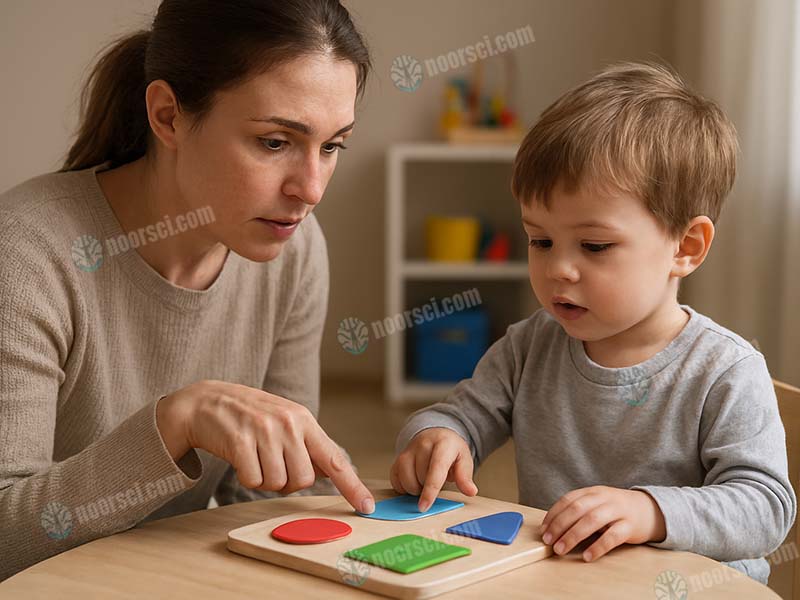

مداخله زودهنگام در اختلال طیف اوتیسم
تعریف مداخله زودهنگام
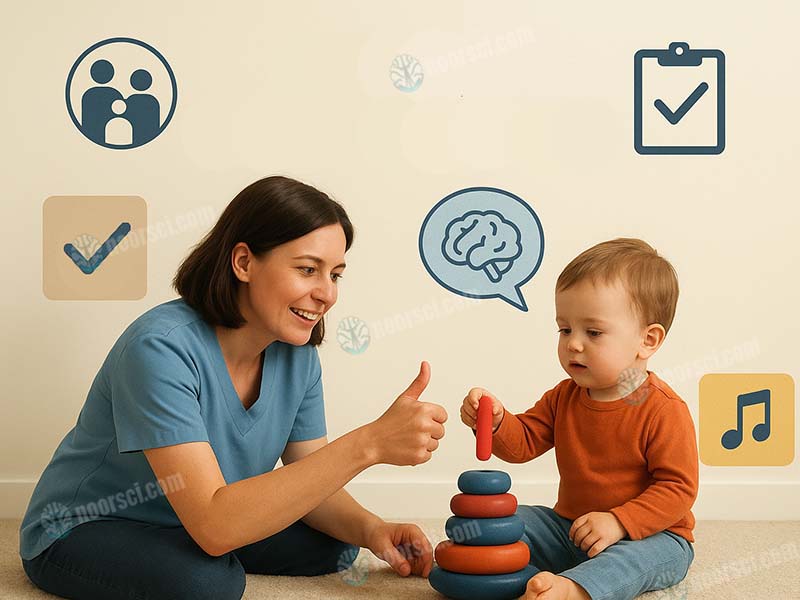
مداخله زودهنگام به مجموعهای از خدمات درمانی و حمایتی گفته میشود که در سالهای ابتدایی زندگی کودک، معمولاً قبل از ۵ سالگی، آغاز میشود. This time period is one of the most sensitive stages of a child's brain development; Because the brain has the most flexibility in these years and shows a high readiness to learn and change.
What is autism and what are its symptoms?
Autism or Autism Spectrum Disorder (ASD) is a type of neurodevelopmental disorder that usually appears at a young age. We have explained all the necessary explanations about autism in the related article. You can get all the information by reading the article Autism Spectrum Disorder.
The importance of early diagnosis and treatment of autism and why early intervention in autism is important?
Early diagnosis of autism and starting treatment in the early years of a child's life play a key role in improving symptoms and developing communication skills. Children's brain is more flexible at a young age and shows a higher readiness to learn and change. For this reason, early intervention can significantly improve a child's development path.
For children with autism spectrum disorder (ASD) or speech and language problems, early intervention can:
- Reduce autism symptoms
- Strengthen speech and communication skills
- Improve social interactions
- Prevent behavioral problems in the future Slow
- and …
What types of treatments are used in early intervention?
Early intervention usually includes a combination of the following treatments:
- Speech therapy to improve language and communication skills
- Occupational therapy to strengthen mental and physical skills and daily functions
- Sensory integration therapy to help better process sensory information
- Counseling for parents to educate their families and reduce their stress
- Refer to psychiatrist or neurologist children
- prescribing medication to control symptoms and …
Scientific benefits of early intervention and why younger age is more effective?
At a young age, the child's brain is forming and organizing. Treatments such as speech therapy, occupational therapy, behavioral therapy, and parent training can have a deeper impact on the nervous system related to communication and behavior during this critical period. This means that the child can better learn new skills and show more appropriate behaviors, and the speed of progress is much higher. The sooner the better.
Research has shown that children who start treatment at a younger age have more progress in the following areas:
- Reduced repetitive behaviors
- Increased eye and verbal contact
- Better social and emotional development
- More preparedness to enter schools
Final conclusion and Recommendations
Research shows that the phrase "the sooner, the better" is not just a slogan, but really an important principle in the treatment of autism. That is, if the child's treatment starts earlier—for example, when he is three years old instead of four—the results will be much better.
Even in the first years of life, the age of the child can affect the outcome of the treatment. Children who start treatment earlier usually:
- have fewer repetitive behaviors (such as hand waving or spinning objects)
- communicate better with others
- have stronger social interactions
- develop better emotionally and socially
Of course, research shows that in some specific areas of speech and language—such as forming sentences or understanding words—even A few months and a few weeks have small and important effects.