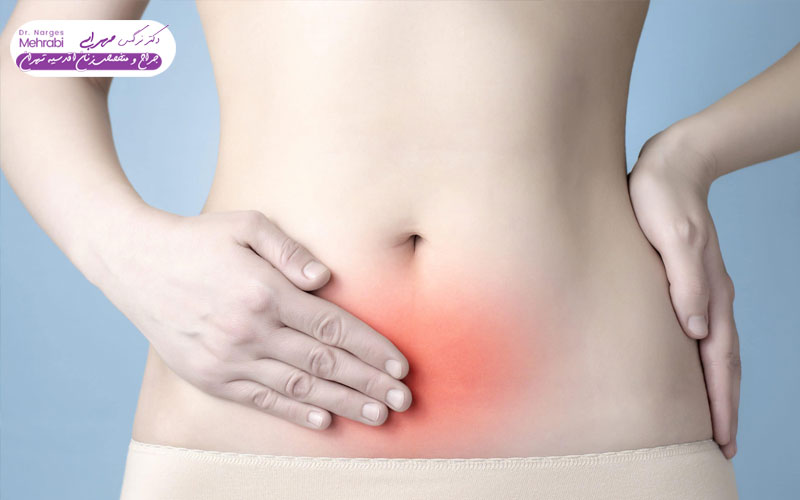
effect The size and number of polyps affect complications after uterine polyp removal. The most common side effects include pain at the site of incisions, fatigue and general discomfort. This pain can usually be controlled with painkillers and gradually decreases over a few days to a week. Abdominal pain or cramping is also caused by the manipulation of internal organs during surgery and is usually temporary. To deal with these pains during uterine laparoscopic complications , it is recommended to take painkillers on time and get enough rest.Another common side effect is feeling pain in the shoulder. This pain is caused by the gas that is used to inflate the abdomen (to create a better viewing space). Carbon dioxide gas can irritate the diaphragm and due to the similarity of nerve signals, the brain interprets it wrongly as shoulder pain. This pain usually disappears within a few days after the gas is completely removed from the body. Slow and short walking can help to pass the gas faster and reduce this pain, which is one of the important strategies in the management of complications of uterine laparoscopy .
other effects such as nausea and vomiting caused by anesthesia, abdominal swelling and changes in bowel movements may also occur. These symptoms usually appear in the first days after surgery and improve with time. Nausea can be controlled with anti-nausea medications, and eating light and high-fiber foods is recommended to improve bowel function. By properly managing these symptoms, complications of laparoscopy of the uterus will be minimized and you will have a more comfortable recovery.
Complications of laparoscopy of the uterus are rare but serious Although the complications of laparoscopy of the uterus are generally mild, some risks are serious and There are also rare ones that you should be aware of. One of the most serious complications is damage to internal organs such as intestines, bladder or blood vessels. These injuries usually occur in the early stages of surgery and when inserting instruments into the abdomen. Doctors with high care and experience prevent these risks from occurring, but if they occur, immediate open surgery may be needed to repair the damage.
There is also a risk of severe bleeding during or after surgery. Although laparoscopy has less bleeding than open surgery because of the small incisions, bleeding may occur at the incision site or from blood vessels within the abdomen. In case of uncontrolled bleeding, the doctor is forced to convert laparoscopic surgery to open surgery. This is one of the most important reasons to take the side effects of hysteroscopy seriously. Another rare but very serious risk is blood clots in the legs or lungs (pulmonary embolism). This complication is more common in people who are less active or have a history of blood clots. To prevent this complication, doctors usually advise patients to start walking quickly after surgery and may also prescribe blood thinners. With awareness and care, these complications of laparoscopy of the uterus can be minimized.
General anesthesia used for laparoscopy of the uterus can also have its own complications. Nausea and vomiting after awakening from anesthesia is the most common complication and is usually controlled with anti-nausea drugs. Some people may also feel confused for a few days after the operation, which will disappear over time. These hysteroscopy side effects are usually short-term and manageable.
In very rare cases, more serious complications such as allergic reactions to anesthetics or breathing problems may occur. The anesthesia team is always ready to manage these conditions. Before surgery, your doctor will carefully review your medical history and drug sensitivities to minimize the risk of these complications. href="https://drmehraabi.com/%D8%B1%D8%A7%D9%87%D9%86%D9%85%D8%A7%DB%8C-%D8%AC%D8%A7%D9%85 %D8%B9-%D8%AC%D8%B1%D8%A7%D8%AD%DB%8C-%D9%87%D8%A7%DB%8C-%D8%B2%D9%86%D8%A7%D9%86/>Guide Comprehensive gynecological surgeries Learn more about laparoscopy, hysteroscopy, and hysterectomy.
Also, during general anesthesia, your throat may be slightly sore or irritated due to the breathing tube. This complication also usually improves within a day or two. Complications of uterine laparoscopy related to anesthesia are usually carefully controlled by the anesthesiologist and are not much to worry about.
complications caused by abdominal swelling with carbon dioxide gas During laparoscopy, the doctor uses carbon dioxide gas to inflate Stomach and create enough visual space to work with tools. Although this process is necessary to perform surgery, it can have its own uterine laparoscopic complications . The most common complication is shoulder and neck pain that occurs due to irritation of the diaphragm.
A small amount of this gas may remain in the abdomen after surgery, which causes a feeling of bloating and pressure. This gas is gradually absorbed by the body and expelled through breathing. Gentle walking and light movement can help the gas pass more quickly and reduce these complications of laparoscopic uterus .
In very rare cases, gas may leak under the skin and cause swelling and crackling under the skin (subcutaneous emphysema). This complication is usually not serious and resolves over time. To avoid these complications of uterine laparoscopy , the surgical team works carefully and skillfully to control the amount of gas used and its pressure.
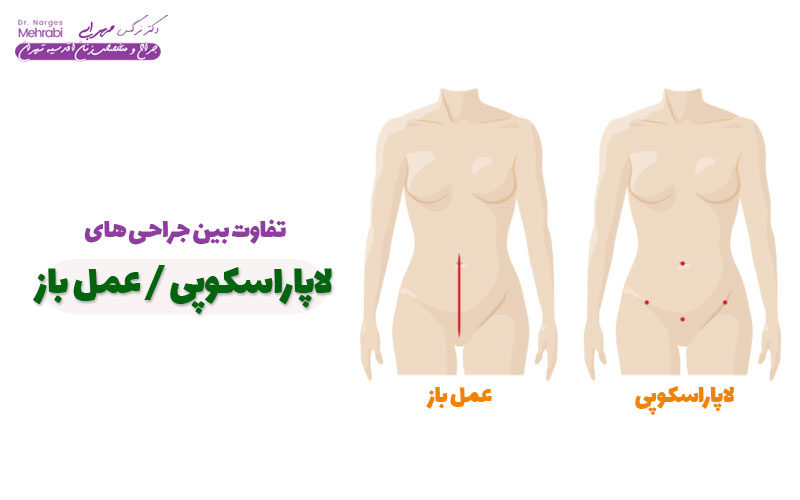
Laparoscopy of the uterus by making small incisions (usually less than one centimeter) is done, but these incisions may also have complications. Pain, redness, swelling, and bruising around the incision site are completely normal. These symptoms usually improve within a few days. Complications of hysteroscopy at the site of the incisions are generally mild.
In some cases, infection may occur at the site of the incisions. Signs of infection include increased redness, swelling, pain, purulent discharge, and fever. If you see these symptoms, you should see a doctor immediately. Proper care of incision sites, such as keeping them dry and clean, can greatly reduce the risk of infection.
effects After removing the uterine polyp a small scar may also remain at the incision site. Some people may also have a hernia at the site of the incisions, which requires reconstructive surgery. By using appropriate surgical techniques, the doctor tries to minimize the side effects of laparoscopy of the uterus at the incision site.
Effect of laparoscopy on adjacent organs During laparoscopy of the uterus, the instruments are near vital organs such as the bladder, The intestines, ureters, and large blood vessels move. Although surgeons operate with high precision, there is a possibility of accidental damage to these organs. For example, there may be damage to the bladder or bowel wall that, if left undiagnosed, can lead to serious complications such as severe infection. This is one of the most serious complications of hysteroscopy .
Damage to nearby nerves may also occur, leading to temporary numbness or pain in the groin or legs. This condition usually improves with time. Your doctor should inform you of these complications of laparoscopy of the uterus so that you can be prepared if it occurs.
Fortunately, the statistics of damage to internal organs in laparoscopy are very low, and highly experienced surgeons minimize this risk. Although these risks exist, the benefits of laparoscopy usually outweigh the risks, making it a viable treatment option.
Infection is one of the complications of uterine laparoscopy that can occur after any surgery. Infection may occur at the incision site, in the abdomen (peritonitis), or in the urinary tract. Symptoms of infection include fever, severe pain, purulent discharge, and foul odor. Your doctor may prescribe antibiotics before surgery to prevent infection.
Bleeding may also occur after surgery. Although light bleeding at the site of cuts is normal, heavy bleeding or internal bleeding can be dangerous and require immediate medical intervention. Symptoms of internal bleeding include severe abdominal pain, low blood pressure, rapid heart rate, and cold skin.
To avoid these complications of uterine laparoscopy , it is very important to maintain good hygiene after surgery and follow the doctor's instructions regarding permitted activities. Any strenuous activity or lifting can increase the risk of bleeding. If you notice any signs of infection or unusual bleeding, contact your doctor immediately.
Myomectomy test Pap smear Labiaplasty With laser Vaginal fat Prinoraph Dr. Mehrabi's serviceswarning-symptoms-and-time-to-see-a-doctor Awareness of warning signs is very vital for the successful management of complications of uterine laparoscopy . You should see your doctor immediately if you have any of the following symptoms:
Fever above 38°C Severe and uncontrollable pain in the abdomen that is not relieved by pain medication Heavy bleeding from the vagina or incision site Persistent nausea and vomiting that you cannot keep fluids down Swelling, redness, or severe pain in one of the legs (which could be a sign of a blood clot) These symptoms may be a sign of an infection, internal bleeding, or a blood clot that requires immediate medical treatment. Never ignore the warning signs and do not self-medicate. Considering these symptoms, you can get medical help quickly and prevent more serious complications.
The effect of the size and number of polyps on the complications after removal of the uterine polyp The size and number of uterine polyps play an important role in the possibility of complications later. He has a uterine polyp removed. Larger and more numerous polyps usually require more complicated and invasive procedures to remove, which can increase the risk of complications.
For example, removing larger polyps may require the use of special instruments or a longer hysteroscopy, which can increase the risk of damage to the uterus or bleeding. Also, removing multiple polyps can cause more scarring inside the uterus, which increases the risk of infection and adhesions. In addition, larger polyps may cause more severe symptoms such as abnormal bleeding or pelvic pain, which can affect the recovery process after surgery. Therefore, the size and number of polyps are important factors in determining the probability of complications after uterine polyp removal. Your doctor chooses the best treatment method according to the size and number of polyps and takes the necessary measures to reduce the risk of complications after uterine polyp removal.
Your medical history and specific conditions can have a significant impact on the likelihood of complications after uterine polyp removal. Certain medical conditions, such as bleeding disorders, can increase the risk of bleeding during and after surgery. Also, some drugs, such as blood thinners, can increase this risk.
Conclusion Uterine laparoscopy is a very effective surgical procedure with many advantages, which is widely used in the treatment of gynecological diseases. However, as with any surgery, knowing complications of uterine laparoscopic surgery is essential for full preparation and proper recovery management. Although most side effects are common and temporary, being aware of rare and serious risks can help you to see a doctor in time if a problem occurs. Proper management of uterine laparoscopic side effects, including controlling pain and nausea and following hygiene tips, can make the recovery period easier and faster. Strictly following your doctor's instructions regarding permitted activities, medications, and incision site care is the key to a successful and complication-free recovery.
Ultimately, despite the potential risks, hysteroscopy remains a safe and effective treatment option for many women's problems. By consulting a doctor and fully understanding the advantages and disadvantages, you can make a decision with confidence and benefit from the positive results of this surgery.
FAQ Is laparoscopy of the uterus painful? Yes, it is completely normal to feel pain in the incisions and abdomen after surgery. This pain is controlled with pain medication and usually improves within a few days to a week.
Does laparoscopy cause infertility? No, on the contrary, laparoscopy is often used to diagnose And it is used to treat infertility causes such as endometriosis, fibroids, and pelvic adhesions and can increase the chances of pregnancy. Most patients can return to their light and occupational activities after one to two weeks. For heavier activities such as sports, you should wait at least 4-6 weeks and consult your doctor.
Is there a possibility of infection after laparoscopy? Yes, infection is one of the complications of laparoscopy of the uterus. but by observing hygiene and taking prescribed antibiotics, its risk is greatly reduced. Symptoms of infection include fever and purulent discharge.
Why do I have shoulder pain after laparoscopic surgery? Shoulder pain is due to stimulation of the diaphragm by carbon dioxide gas, which is used for B
What foods should I eat during recovery? It is recommended to consume light foods, high fiber and enough water. Avoid consuming heavy, fatty and flatulent foods to prevent digestive problems and help the body to heal.
Complications of uterine laparoscopy.
This article is being updated and expanded to meet SEO standards.
177