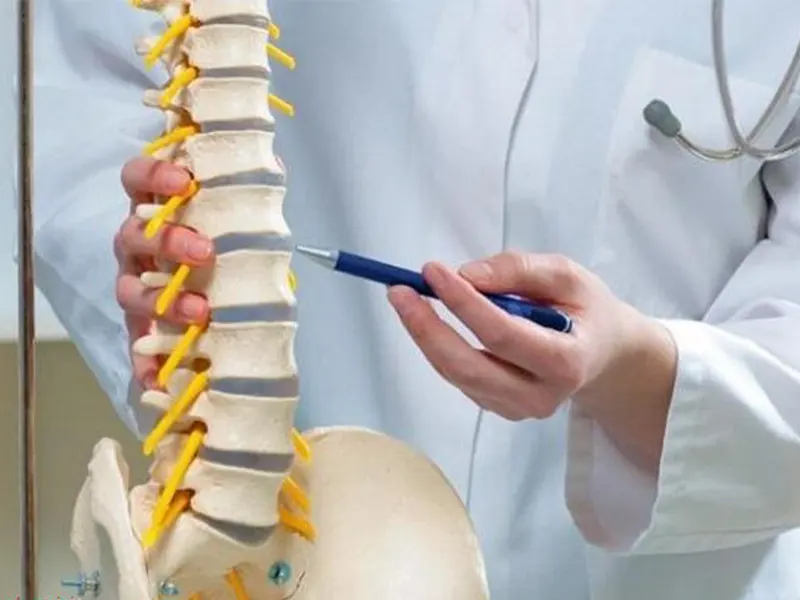


درد گردن و گزگز دستها گاهی فقط یک خستگی ساده نیست؛ It may be a sign of the pressure of the cervical discs on the nerves. When drug and physical therapy treatments do not work and weakness or numbness progresses, neck disc surgery can be a lifesaver. In this procedure, the surgeon removes the damaged part of the disc and frees the nerve, reducing pain and restoring movement. The goal of surgery is to preserve nerve function and prevent permanent damage. But here's the important thing: how do we know when it's time for surgery and which technique is less risky and more productive for your disc type? Read the rest of the article to get to know the exact decision criteria and the main surgical methods.

What is it?
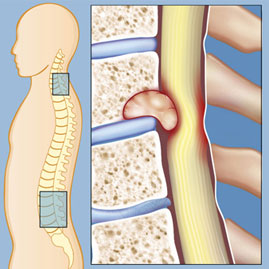
Cervical disc operation is a surgical procedure to treat the protrusion or destruction of the intervertebral discs of the neck; It is done when severe pain, numbness, tingling, or weakness of the hand and arm does not improve with non-surgical treatments. In this surgery, the surgeon removes the damaged part of the disc that is pressing on the nerve or spinal cord and then replaces the space between the vertebrae with a bone graft or artificial disc to stabilize the spine again. The main goal of the operation is to reduce pain, prevent nerve damage and restore the normal function of the neck and hands.
Descriptions of neck-disc surgeon about neck-disc surgery
Cervical disc surgery
Advantages of cervical disc surgery
This surgery helps to reduce pain and restore mobility by removing pressure from nerve roots or spinal cord. After the operation, many patients experience a significant improvement in their life and occupational and physical performance.
- Rapid reduction of neck pain and shooting hand pains
- Eliminating numbness, tingling and muscle weakness
- Preventing the progression of nerve damage
- Increasing range of motion of the neck
- Improving hand and arm performance
- Quicker return to daily activities and work
- Reducing the need for strong painkillers
- correction of pressure on the spinal cord in cases of canal stenosis
- Preventing worsening of problems such as balance disorder or severe weakness
- More stability of the spine in case of fusion
- Preserving the natural movement of the vertebrae when using an artificial disc
- Improving sleep quality and reducing headaches related to cervical disc
Fill out the form to receive expert advice and a personalized treatment plan.
Types of neck disc surgery
Cervical disc surgery can be performed in different ways depending on the location and severity of the disc damage and the patient's condition. The choice of the appropriate method is determined by the surgeon based on the examination, radiological images and the need to preserve the movement of the vertebrae. There are different types of cervical disc surgery, which we will discuss below.
- Cervical disc surgery from the front
- Cervical disc surgery from the back
- Simultaneous or 360 degree neck disc surgery
Type of surgery Short description Advantages Disadvantages / risks Anterior disc surgery Neck (ACDF) Disc removal from the front and vertebral fixation with screws and plates Severe pain reduction, nerve damage prevention, spinal stabilization Slight reduction in neck range of motion, need for fusion, recovery period of several weeks Discectomy without fusion Part removal Disc protrusion with minimal incision Less invasive, maintaining normal movement of the vertebrae, faster recovery Possibility of the disc returning or protruding again Artificial disc surgery Replacing the damaged disc with an artificial disc Maintaining the normal movement of the neck, reducing the pressure on the adjacent vertebrae Requires a surgeon Specialist, higher cost, risk of artificial disc displacement Minimally invasive surgery Use of small instruments and camera to remove the disc Less tissue damage, less postoperative pain, short recovery time Limited to large or complex discs, need for advanced equipment Posterior surgery Neck Remove the pressure from the back of the neck on the nerve root Preserve movement of the vertebrae, reduce nerve pain without fusion Limited access to some discs, risk of injury to the muscles of the back of the neck When is cervical disc surgery necessary?
Cervical disc surgery is necessary when the pressure on the nerve or spinal cord reaches such a level that it can no longer be controlled with non-surgical treatments. The patient has been experiencing pain, numbness or weakness for a long time and these symptoms have interfered with his work and life. Also, when there is a risk of permanent nerve damage, surgery is considered the best and safest way. Cases in which cervical disc surgery is necessary include:
- Severe and persistent neck pain or shooting pain in the hand that has not improved with non-surgical treatments for more than 6 to 12 weeks Numbness, tingling, or progressive weakness in the hand, arm, or fingers
- Significant pressure on the spinal cord (myelopathy) with symptoms such as impaired balance, unsteadiness of walking, or severe weakness
- Decreasing hand strength and functional decline in doing daily tasks
- Pains that get worse at night and severely disturb the quality of sleep
- Severe narrowing of the spinal canal or the presence of bone spurs that narrow the nerve space
- a ruptured or protruding disc that interferes with hand or arm control
- Rare emergencies such as incontinence of urine or stool due to severe pressure on the spinal cord
Satisfaction of one of patients from neck disc surgery by Dr. Mehran Moradi

Satisfaction with cervical disc surgery
Who should have cervical disc surgery?
Cervical disc surgery is not necessary for everyone; But a group of patients are considered the best candidates for surgery based on the severity of symptoms and the amount of nerve damage. After a period of non-surgical treatment such as physical therapy, medication or injection, these people still have serious pain and limitation, or their neurological symptoms are progressing. The purpose of surgery is to prevent permanent nerve damage and restore the normal function of the neck and hands.
- People who have had more than 6 to 12 weeks of non-surgical treatment but severe pain persists
- Patients who have radiating neck pain accompanied by numbness, tingling or weakness
- Those whose hand and arm strength gradually decreases
- People who have pressure on the spinal cord (myelopathy) and have symptoms such as balance disorder or severe weakness
- Those who have significant disc protrusion or rupture on MRI
- Patients whose pain is so severe that it interferes with sleep, work and daily activities
- People who have severe stenosis of the spinal canal and the risk of nerve damage is high in them
- Those who have urinary or fecal incontinence due to severe nervous pressure (emergency and need for quick action)

For whom is cervical disc surgery not suitable?
Cervical disc surgery is not a suitable option for all patients and in some situations, surgery can be useless or even dangerous. People whose pain can be controlled with simpler methods, or those with severe underlying problems, should not undergo the procedure. The final decision is always made based on the examination, MRI and opinion of the spine surgeon. Cervical disc surgery for people who have the following conditions:
- People who have mild symptoms and get better with rest, medication, or physical therapy
- Those who have a bulging disc but no neurological symptoms (numbness, weakness, balance disorder)
- Patients whose pain is fluctuating and controllable and does not interfere with daily functioning
- People with uncontrolled diseases such as severe diabetes, heart failure or lung problems that increase the risk of anesthesia
- Those who have an active infection in the body (surgery should be postponed until complete healing)
- Persons with severe osteoporosis, in whom it is less possible to stabilize the vertebrae
- Patients whose pain is "muscular" and has nothing to do with disc or nerve pressure
- Those who have unrealistic expectations and think that surgery will solve all their old and chronic pains one hundred percent
Dr. Mehran Moradi, neurosurgeon and spine surgery specialist, has extensive experience in cervical disc treatment, spine and minimally invasive surgery. Using modern methods such as neuroendoscopy and disc laser, they help to reduce pain and restore the normal functioning of patients.
Dr. Moradi graduated from Tehran University of Medical Sciences in 2014, and in 2020, he completed the advanced spine surgery course, including correction of deformities and minimally invasive techniques, at the University of Nottingham, England. He has been a member of the International Society of Spine Surgeons since 2011, and with his experience and skill in cervical disc surgery, he is a reliable option for patients.

Necessary preparations before neck disc surgery
Preparations for cervical disc surgery are similar to other surgeries and have a great impact on the outcome of the surgery. Some of these actions may be difficult and complex, while others may be simple. Here we have described the permitted and unauthorized actions at different times before the operation.
About one to two weeks before surgery
During this time, the doctor may give you instructions that are necessary to follow for a faster and successful recovery from the operation. These instructions include the following:
- Performing necessary tests such as blood test, X-ray or electrocardiogram.
- Complete the consent form and provide your medical history.
- Informing the doctor about any underlying diseases and medications you take.
- Quit smoking (preferably 6 months before the operation), because smoking has a negative impact on the healing process.
- Avoidance of alcohol consumption.
- Not taking blood thinners such as ibuprofen and non-steroidal anti-inflammatory drugs such as warfarin at least one week before cervical disc surgery.
On the day of cervical disc surgery
On the day of the operation, the doctor will give you specific instructions that you must follow. Some of these items include:
- Fast at least 8 hours before surgery (do not consume any food or drink).
- Due to the restrictions that will exist for bathing after the operation, it is better to take a shower before the surgery.
- Do not take any gold or jewelry with you to the hospital.
- Try to go to the hospital a little earlier than the appointed time so that the admission process can be done faster.
- If you are taking a special medicine, be sure to inform your doctor about it.
These measures can have a great impact on the success of your surgery and recovery, and it is essential to follow them.
Cervical disc surgery from the front
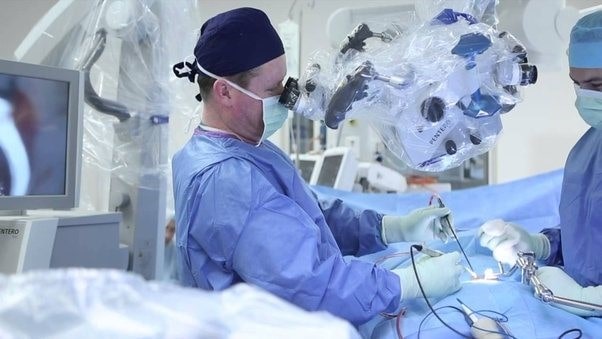
Cervical disc surgery from the front is a surgical procedure that is performed from the front of the neck and is used when the disc has put a lot of pressure on the nerve root or spinal cord. In this procedure, the surgeon accesses the spine by making a small incision and, using precise instruments and a microscope, removes the damaged disc and additional components that cause pressure. In some cases, the empty disk space is filled with a synthetic disk.
After the surgery, the pain caused by disc pressure is significantly reduced and the function of the neck and hands improves. This surgery usually requires a short hospital stay and the patient can resume their daily activities after a day, although some mild pain may remain for the first few days.
Cervical disc surgery from the back
Cervical disc surgery from the back is another cervical disc surgery method that is used for patients who have cervical canal stenosis or OPLL disease in addition to cervical disc problems.
In this method, first the patient is placed lying on the stomach and after anesthesia, a 10 cm incision is made in the back of the neck. In the next step, the muscles, vertebrae, and bones that are putting pressure on the spinal cord and nerve roots are completely removed to completely free the spinal cord and take the pressure off it. Then, the cartilage fluid that has leaked out is collected and, if necessary, the torn disc piece that causes pressure on the spinal cord is also removed. In such a situation, synthetic discs are used instead of a ruptured disc.
In some cases and according to the patient's condition, to reduce the pressure on the spinal cord and completely improve the condition, methods such as fusion, screw and bone grafting, or bone grafting behind the neck vertebra are used. After the surgery, the patient is admitted to the hospital for one to two days to check his condition and after this period he can go about his daily activities. This method is for people who want to is very suitable.
Simultaneous or 360 degree cervical disc surgery
There is another type of cervical disc surgery that is used in very acute and emergency situations. In this method, surgery is performed simultaneously from the back and front of the neck, and that is why it is called 360 degree surgery.
This method is used for patients who have severe cervical disc stenosis and the cervical discs put a lot of pressure on the spinal cord. In these cases, the pressure on the spinal cord and nerve roots is very high and creates very dangerous conditions.
Therefore, the surgeon decides to drain the discs from the front in addition to performing surgery from the back of the neck. The patient's recovery and hospitalization period after this type of surgery is one to two days, after which the patient can be discharged with the doctor's approval.
Cervical disc surgery with laser
One of the effective methods of treating cervical disc, Read more: What is the cause of cervical disc?
Steps of cervical disc surgery with laser
First, the patient is placed in the right position for surgery, and the desired area is numbed and disinfected with anesthetic drugs so that the operation can be performed with minimal pain and risk of infection. Then, using a fluoroscope, the damaged area of the disc is accurately identified.
After determining the exact location, a small needle is inserted into the disc and using laser energy, the damaged tissue is vaporized without damaging the surrounding healthy tissues. All procedures are performed under the supervision of live imaging so that the surgeon can carry out the operation with high precision and minimal complications, and the patient's recovery time can be shortened.
Anterior cervical discectomy and fusion (ACDF)
Cervical discectomy and fusion (ACDF) involves removing the damaged disc to relieve spinal cord or nerve root compression and reduce associated pain, arm weakness, numbness, and tingling.
This surgery is performed through a small incision in the front of the neck. The disc between the two vertebral bones is removed, and the herniated disc or bone spur that is causing the spinal cord or nerve root compression is also removed. Fusion surgery is performed simultaneously with discectomy in order to stabilize the cervical part. Fusion involves placing bone grafts or implants in the original disc location to stabilize the area. Most anterior cervical discectomy and fusion operations can be performed on an outpatient basis, and patients return home the same day or after an overnight stay in the hospital.
The advantages of ACDF operation are:
- Direct access to the disc and spinal cord: the anterior method allows direct observation of the cervical discs that are involved in creating the spinal cord or nerve compression and symptoms. Disc removal causes the direct destruction of the damaged nerve or spinal cord.
- Less pain after surgery. Patients with this method have less incisional pain than posterior surgery.
Neck disc replacement
Cervical disc replacement is an alternative to anterior cervical discectomy and fusion in selected patients. The purpose of cervical disc replacement is to remove the spinal cord or nerve root compression while maintaining neck movement. Artificial discs are designed to mimic the form and function of a natural spinal disc. This procedure is performed on younger patients without neck osteoarthritis who have a herniated cervical disc that causes severe neck or arm pain that does not respond to non-surgical treatment options.
The most important benefit of cervical disc replacement is maintaining the normal movement of the neck. This in turn removes additional demand on other discs in the cervical spine and is believed to reduce the likelihood of future disc failure in otherwise healthy discs. Also, neck disc replacement, possible problems related to the need for bone grafting for It is important to remember that disc replacement is a method of maintaining motion and not a method of creating motion. This means that a disc joint that did not move before the disc replacement will probably not move after the disc replacement. In fact, for patients with severe neck arthritis and neck pain in addition to arm pain, anterior neck discectomy and fusion are probably more appropriate surgical options.
Most cervical disc replacements can be performed on an outpatient basis, and patients go home the same day or after an overnight stay in the hospital.
Posterior neck-opening laminoplasty
Laminoplasty is a surgery that enlarges the spinal canal. For patients with severe spinal cord compression at various levels who also have normal neck alignment and minimal neck pain, laminoplasty offers a movement technique to decompress the jawbone. Similar to the lumbar spine, it creates a rigid "roof" over the spinal canal. During laminoplasty, a hinge is created on one side of the sheet and the other side is opened with the help of a small metal plate. This creates more space for the spinal cord without the need for fusion. Most patients notice immediate relief of arm pain and improvement in hand numbness. A one or two night stay in the hospital is required before going home. It is very important to work on strengthening the muscles of the back of the neck after laminoplasty, and as soon as it is tolerated, isometric cervical extensor strengthening begins.
Posterior neck foraminotomy
Posterior cervical foraminotomy is a minimally invasive procedure that involves removing bone spurs or herniated discs from the nerve root passage through a hole. The procedure is performed under general anesthesia through an approximately 1-inch incision in the back of the neck. Precision instruments are used to remove a small amount of bone that forms the outer wall of the cavity. When the hole is opened, the nerve root can be seen. The offending disc material or bone spurs are then carefully removed under magnification and the incision is closed with sutures. Most patients notice immediate and almost complete relief of arm pain after surgery. There is no fusion involved in this method, and most patients can undergo hysterectomy on an outpatient basis.

neck-opening laminectomy and fusion
The aim of laminectomy and posterior cervical fusion is to remove spinal cord compression and achieve spinal stability. This procedure is reserved for patients with multilevel spinal cord compression and severe cervical arthritis or instability of the cervical vertebrae, in whom surgery with an anterior (or anterior) approach is undesirable or not possible. Cervical fusion alone can be performed for people who have previously had an anterior cervical fusion with no sutures (no improvement).
This procedure involves a 3-5 inch incision in the back of the neck. The bony lining or roof of the spinal canal is removed using precise instruments to destroy the spinal cord. Small screws are then inserted into the vertebrae and connected with rods to stabilize the spine in the correct anatomical alignment. The bone graft is placed on the bony surfaces so that it can connect and complete the operation. Most patients notice immediate relief of arm pain and improvement of hand numbness immediately after surgery. With fusion healing in the first few months after surgery, most patients also notice a significant reduction in their neck pain.
Most patients need to stay in the hospital for two to three nights after this operation, and they need a neck brace for about 6 weeks after surgery.
What should we do after cervical disc surgery?
After cervical disc surgery, it is very important to follow medical care and instructions so that the healing process goes faster and without complications. In the following, the most important care points are given case by case with explanation:
Enough Rest
After surgery, the body needs time to repair the tissues. Limiting heavy activities and avoiding sudden neck movements will reduce the pressure on the operated vertebrae and discs.
use of medical necklace
If prescribed by the doctor, the medical collar helps stabilize the neck and prevents sudden movements. This will reduce the pain.
Care of the surgical incision site
The surgical site should be kept clean and dry, and pressure or rubbing on it should be avoided. This point helps to prevent infection and better healing of the wound.
use of prescription drugs
Painkillers, anti-inflammatories and other drugs prescribed by the doctor should be taken as directed. This helps control pain and reduce inflammation.Do light physical therapy exercises
After the doctor's approval, gentle neck stretching and strengthening exercises restore movement and strengthen muscles and prevent dryness and spasms.
Regular references
Post-operative visits are necessary to check the healing process and ensure that there are no complications. These references help to detect possible problems early.
avoidance of smoking and alcohol
Smoking and drinking alcohol slow down the tissue repair process and can prolong the recovery period.
Pay attention to warning signs
Fever, bleeding, severe pain or weakness in the hands are symptoms that require immediate medical attention. Paying attention to these symptoms prevents serious problems.
Concluding remarks
Cervical disc surgery is performed to solve problems such as disc rupture, its erosion, or the formation of bone spurs, and it is recommended when the complications of disc herniation are severe and dangerous or when other treatments have not been effective. This surgery can be done from the front or back of the neck, which is called anterior or posterior discectomy. Post-surgery care is very important and all the doctor's instructions must be followed to achieve the desired result.