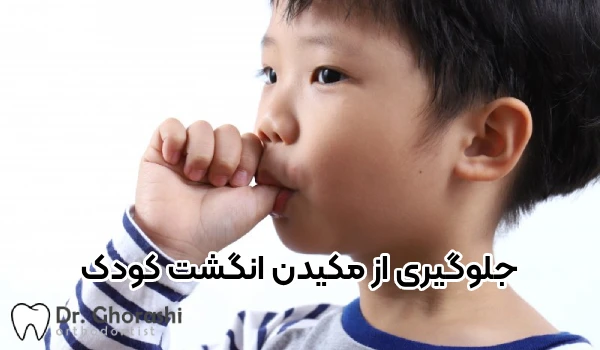
Finger sucking in children is a natural and instinctive behavior that usually starts from infancy and plays an important role in calming the child and creating a sense of security and comfort. has This habit acts as a soothing mechanism, especially when the child is anxious, worried or even happy. Studies show that between 20 and 40 percent of children between 2 and 6 years of age do this behavior.
However, the continuation of this habit in the long term can have negative effects on the growth of the jaw and the order of the teeth and bring about orthodontic problems including disordered teeth or disturbance in the development of the jaw arch. Therefore, parents' awareness of the consequences of this behavior and ways to stop it are of particular importance.
In the following, you will get to know the complications of finger sucking and specialized solutions to stop this habit in children, with Dr. Saeed Qureshi, the best pediatric orthodontic specialist in Tehran.
8 of the most common side effects of finger sucking
In this section, we learn about the common side effects of finger sucking in children.
Continuing this habit causes the front teeth of the upper jaw to be gradually placed further than normal and the growth pattern of the jaw does not proceed correctly; Especially if the child continues to suck his finger after the age of two.
Actually, the continuous presence of the finger between the teeth creates a slight but continuous pressure, which eventually changes the shape of the dental arch and even the roof of the mouth.
Useful article: What is an overbite?
class="ez-toc-section-end">
When the baby sucks his finger, his tongue keeps going back and forth. This repetitive movement gradually affects his speaking. For example, he may not say "S" and "Z" clearly, and the words may be heard a little slurred and drawn out.
Open Byte
When the finger is constantly placed between the teeth, the teeth do not get a chance to sit properly when the mouth is closed. Little by little, a fixed distance remains between the upper and lower teeth and open bite is created, so that even when the mouth is completely closed, the teeth still do not meet.
Sensitivity of the roof of the mouth
When the finger continuously presses on the roof of the mouth, the tissue of this area becomes sensitive and irritable. The result may be mild pain, discomfort when eating or even sensitivity to touching the roof of the mouth.
Respiratory problems
As the shape of the jaw changes and the roof of the mouth rises, the nasal passages and sinuses are affected, and the child's breathing pattern may change.
>
Continuous pressure of the finger and positioning of the tongue lower than normal, makes the upper jaw narrower and the roof of the mouth grow taller than usual. The result is that the jaw does not grow completely and the structure of the mouth and dental arch does not form correctly.
Facial structure changes
When the jaw and teeth change due to prolonged finger sucking, the natural shape of the face is also affected. These changes can cause the jaw to move forward or backward, change the shape of the lips, and even change the appearance of the smile, and the child's face becomes unnatural.
Infections Bacterial
Sucking the finger, even if the hand is clean, increases the possibility of bacteria entering and causing an infection in the child's mouth or body.
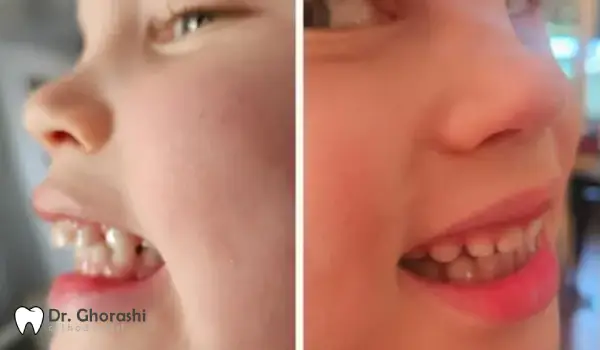
Finger sucking is a common habit in children and is usually not a concern until 2-3 years old. But if this habit continues, it can cause protruding teeth, jaw deformity and speech problems. To quit this habit, it is better not to use force or punishment, because the result will be the opposite.
Effective methods include encouraging the child when he has spent hours or days without sucking, using soothing alternatives such as toys or pacifiers, entertaining the child with games and manual activities, and explaining the consequences of this habit to him. Patience, consistency and parental support are the keys to success in quitting this habit.
Don't be late for treatment!
If the finger sucking habit is not stopped or the treatment is not done in time, the child's dental and jaw problems will worsen. This means that the teeth move forward, the upper jaw narrows and the appearance of the smile and the way of chewing are disturbed.
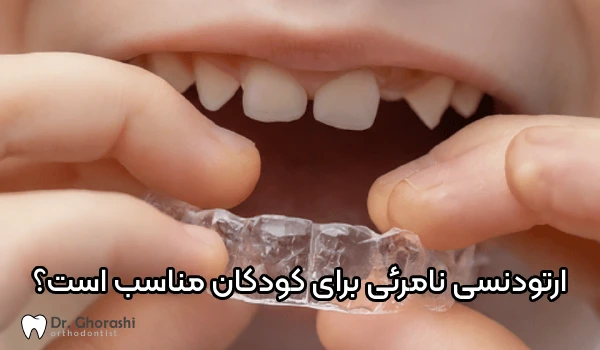
In this case, finger sucking complications will occur and the child will have to use fixed or removable orthodontics for a longer time to correct these changes. If your child is over 4 years old and you feel that complications are developing, visit an orthodontist for evaluation and treatment as soon as possible so that the treatment process is shorter and the result is better.
Concluding remarks
In this article, the complications of thumb sucking in children and its methods and treatment were discussed. If your child still has this habit, you can take the first steps to quit this habit by using the introduced methods and prevent dental and jaw problems.
If these methods are not effective, be sure to see a doctor so that the main reason for the habit is identified and the appropriate solution is provided. It is also very important to cooperate with an orthodontist so that in case of any changes in the teeth or jaw, proper and timely treatment can be carried out and the health of the child's mouth and smile can be maintained.