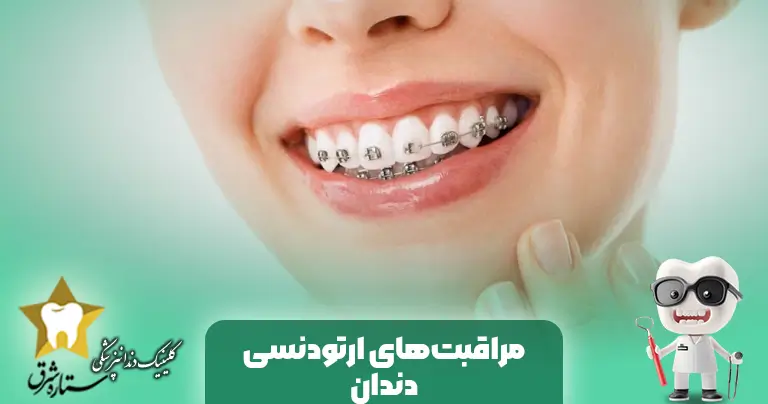
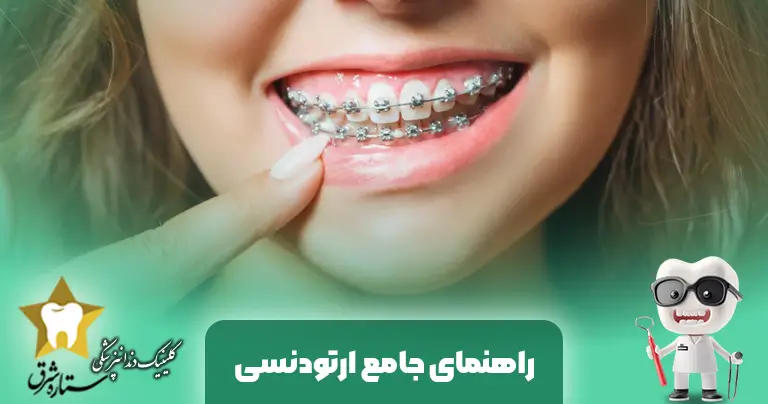
مراقبت های بعد از ارتودنسی دندان بسیار مهم است؛ Because these cares not only help to prevent dental problems; But they also play a role in the success of orthodontic treatment and maintaining its results. Neglecting these cares can lead to tooth decay, gum disease and the need for additional treatments. This article describes the different stages of care for orthodontic teeth from the time brackets are installed until the treatment is completed.
Before starting orthodontic treatment, you must make sure that the mouth and teeth are in a good condition to start the treatment. This includes any necessary dental treatment such as scaling, restoration of damaged teeth, dental nerve extractions or extraction of unsalvageable teeth. These actions should be done before starting orthodontics so that the treatment can proceed properly.
From the moment the brackets are placed on the teeth, oral care enters a sensitive and precise stage. During this period, the patient plays the main role in maintaining health, controlling pain and preventing damage to orthodontic components.
day First after orthodontic teeth
On the first day after installing brackets, it is completely normal to feel pressure or pain in the teeth. The brackets have just been attached to the teeth and the teeth are experiencing a force that forces them to move for the first time. This discomfort may be accompanied by gum sensitivity or irritation in the inner areas of the lips and cheeks.
day What should be eaten before orthodontics?
At this stage, the diet should be completely soft and without the need to chew a lot. Foods such as puree, strained soup, yogurt, pudding, and ice cream are good choices. Eating hot foods is not recommended because it can damage the composites that hold the brackets. You should also avoid biting food directly to avoid sudden separation of brackets.
Three The first day after orthodontics
The first three days after orthodontics are associated with mild to moderate pain. The teeth are still not used to the applied forces and the applied pressure irritates the nerve fibers around the roots. The use of simple pain relievers such as acetaminophen can help reduce this discomfort. If the patient feels cramping or stiffness in the jaw during this time, do not worry; This is a natural reaction to the beginning of teeth movement.
If necessary and with the doctor's advice, chewing sugar-free gums can also help reduce pressure; Because this increases blood flow in the jaw area and relieves pain.
week First after dental orthodontics
in the first week, the patient enters a stage where he has to deal with the permanent presence of brackets in his mouth. The lips, cheeks, and tongue may experience minor abrasions or sores from contact with the brackets. Using orthodontic wax to cover the sharp points of the brackets can reduce this problem to a great extent.
During this week, the mouth muscles gradually adjust to the new position, and most patients get over the initial discomfort after a few days. It is important to be patient and calm during this period and follow the orthodontic specialist's recommendations completely.
Habit Brackets and adaptation of oral muscles
Brackets are external components whose presence in the mouth requires time to get used to. The muscles of the face, lips and cheeks gradually adapt to the new structure. In the first few weeks, talking, eating, or even closing your lips over your teeth may feel a little different; But these changes are temporary and over time, mouth movements return to normal.
Brackets are delicate components that must remain healthy and stable until the end of treatment. If one of them is separated, not only will the treatment time be longer; Rather, the movement of the teeth may happen in an uncoordinated manner and it is necessary to correct their position again. For this reason, it is recommended to avoid any pressure that may damage the brackets.
Some foods, especially if they are hard or sticky, can easily cause brackets to come off. Foods such as:
apples and carrots (if bitten)
nuts and nuts
green tomatoes
olives with seeds
pomegranates
sticky chocolates
sugar gums
all are among the things that should be avoided during the period of orthodontics. If you need to eat such foods, cut them into very small pieces and chew with your back teeth or find softer alternatives.
Following dental orthodontic care can play a big role in easing orthodontic pain. Painkillers such as acetaminophen are often enough to reduce orthodontic pain. In cases where the patient feels too much pressure or stiffness in the early hours, a cold compress can be used on the face to reduce the inflammation. id="gform_wrapper_4">
Also, many experts recommend that chewing sugar-free gum helps relax muscles. This action increases the blood flow in the jaw area and reduces the feeling of pain, provided that the gum is soft and non-sticky and does not put excessive pressure on the brackets.
Notes Orthodontic tooth care
During the treatment period, taking care of oral hygiene becomes more important than ever. Since the wires and brackets limit the access to the tooth surfaces, it is necessary to follow the strict care after orthodontics to prevent decay and calculus formation.
About the interdental brush and its importance
The interdental brush is one of the most important hygiene tools in the orthodontic era. These narrow toothbrushes with a special design easily pass under the orthodontic wire and provide the possibility of cleaning around the brackets and the spaces between the teeth; Where a regular toothbrush cannot clean. From the first day of treatment, patients are advised to make this toothbrush a priority and use it daily.
About superfloss dental floss during orthodontics
During orthodontics, it is difficult to use ordinary dental floss due to the presence of wires. Superfloss dental floss with a special design allows cleaning the space between the teeth and under the wire. Daily use of this dental floss reduces the accumulation of plaque and food residue and prevents decay in hidden areas.
From mouthwash during orthodontics
Fluoride-containing mouthwashes can create a protective layer for tooth enamel along with toothbrush and dental floss. These mouthwashes should be used daily or weekly according to the opinion of the doctor or pharmacist. Their regular use helps reduce the risk of caries and keep the mouth fresh during treatment.
A special brand is not necessary for orthodontic toothpaste; But the most important point is the presence of fluoride in its composition. Toothpaste that has enough fluoride protects tooth enamel from decay and plays a role in maintaining oral health. The choice of toothpaste should be according to the recommendation of an orthodontic specialist; But there is no need for a special or expensive product.
Referral to an orthodontic specialist during treatment
One of the key foundations of post-orthodontic dental care is regular referral to an orthodontist. Usually, these visits are done monthly to check the state of teeth movement, fix detached brackets and monitor oral hygiene.
Nutrition during orthodontic
The diet during orthodontic treatment should not only be nutritious and balanced; Rather, it should be adjusted with the aim of protecting the brackets and teeth. Part of the post orthodontic care is related to avoiding foods that can damage the orthodontic components or make cleaning the teeth more difficult.
What should we eat from orthodontics?
In the first weeks and months after the installation of brackets, it is better to choose foods that are soft and require less chewing. Things like soup, soft rice, mashed potatoes, yogurt, pasta, nimru, boiled eggs, porridge and steamed foods are good choices. Besides this, you should try to eat enough vitamins and minerals to maintain the health of the gums and tissues around the teeth.
Some foods during orthodontics cause the brackets to separate, the wires to bend or get stuck between the orthodontic components. These prohibited foods include the following:
Hard fruits and vegetables such as apples, carrots, turnips (unless cooked or chopped)
Nuts and nuts
Sticky gums
Stretchy or hard chocolates
Popcorn
Olives with core
green tomato
pomegranate
During this period, it is recommended to include these foods in the daily diet:
Mild and warm soups (not hot)
Soft rice with light stews
Pasta with simple sauces
Yogurt and buttermilk
Boiled eggs or Nimro
Vegetable or potato puree
Pancakes and soft cakes
Smoothies and thick drinks
One of the most important principles in post-orthodontic dental care is complete oral and dental hygiene. If the teeth are not brushed correctly and the dental floss or interdental brush is not used, plaque will form around the brackets and will lead to decay in a short period of time. The decay of orthodontic teeth not only affects the treatment process; Rather, it may be necessary to stop the treatment, remove the brackets, restore the tooth and start the orthodontic procedures again.
In addition, gum inflammation and bleeding, bad breath, and discoloration of the tooth enamel (white spots around the brackets) are other consequences of lack of hygiene. In some cases, even gingival erosion and receding may occur, which will be time-consuming and expensive to repair.
After removing orthodontics and using a retainer
The end of orthodontics does not mean the end of care. After the brackets are removed, the teeth tend to move back to their original position. For this reason, correct and regular use of retainer is considered an inseparable part of care after dental orthodontics. Retainers are usually used in two types, fixed and mobile, and their role is to stabilize the new position of the teeth.
Fixing the fixed retainer and preventing the formation of plaque
The fixed retainer is attached to the back of the front teeth with the help of composite and may remain in the mouth for years. Due to the presence of metal wire, this part is a suitable place for mass and plaque accumulation. To prevent decay, the patient should regularly clean this area with small toothbrushes or interdental brushes. Superfloss dental floss also helps to clean the space between the teeth and under the wire. It is recommended to use fluoride toothpaste and visit regularly for scaling.
Use Proper use of dental floss in the area of the wire behind the teeth
In post-orthodontic dental care, maintaining the hygiene of the area where the fixed retainer wire is attached to the back of the teeth is very important. These wires prevent the direct passage of ordinary dental floss, so the only suitable solution is to use superfloss dental floss.
For proper use, first pass the initial hard part of the superfloss floss under the wire so that you can move the spongy (wool) part of the floss between two teeth. Then, gently pull the floss along the sides of each tooth to remove the plaque. The last step is to use the regular thread section to pull the thread up and out. This should be repeated for each distance between the teeth.
Regular scaling after orthodontics
Fixed retainers, especially in the back area of the teeth, are where plaque builds up very quickly. To prevent gingivitis, tissue breakdown and bad breath, specialized scaling should be done at least once a year. In clinics like East Tehran Orthodontics Center these services are provided continuously after orthodontics with regular reminders.
Orthodontic Removable Plates
Patients who use a retainer or removable plate should clean it daily. These plaques are in direct contact with saliva, bacteria and food, and if they are not cleaned properly, they themselves become a source of contamination.
method Correct washing and disinfection of mobile plates
to clean mobile plates, toothpaste should never be used; Because toothpaste scratches the surface of the plaque and creates a suitable environment for the accumulation of bacteria. It is better to use a separate toothbrush with lukewarm water and a small amount of dishwashing liquid. You can also use a solution of water and vinegar for mild disinfection.
In the Invisalign or clear orthodontics method, removable plates are periodically placed on the teeth to gradually move them. Although this method is favorable for many patients in terms of appearance and comfort, its success is completely dependent on the strict adherence to care after dental orthodontics. The first point is the regular and continuous use of plaques. Patients should use Invisalign for 20 to 22 hours a day and remove it only when eating or drinking colored liquids. Each time removing the plate should be accompanied by washing. Cleaning these plaques is also very important. Contrary to popular belief, using toothpaste to wash Invisalign is not recommended. It is better to wash them with lukewarm water and dishwashing liquid or special disinfectant solutions.
Moving plates are not limited only to the period after orthodontics; In some jaw and tooth growth treatments, they are also used for children or teenagers. In these cases, it is doubly important to pay attention to care after dental orthodontics, especially in young patients.
Movable plates should be cleaned every day with a soft toothbrush and dishwashing liquid. After every meal, it is necessary to remove the plaque and wash the mouth and teeth. Also, when not in use, the plate should be stored in a special box and avoid placing it in a hot environment or near a heat source, because it may change shape. Most importantly, the use of the plate should be according to the order of the orthodontic specialist; Any reduction in the time of use can reduce the effect of the treatment.
In this type of orthodontics, brushing should be done more carefully, because the brackets are not easily accessible. Using an electric toothbrush or toothbrushes with a small series helps to clean the back areas well. Regular use of superfloss and mouthwash is also necessary to reduce the risk of decay and gum inflammation.
Summary
Orthodontic treatment is not limited to installing brackets or using plaque; A large part of its success depends on careful and daily patient care. From the first day to after removing the brackets, following orthodontic dental care plays a key role in oral health, durability of treatment results, and prevention of problems such as caries, gingivitis, or the return of the position of the teeth. If you are looking to start basic treatment, getting advice from Best Orthodontics Center in East Tehran can make your decision more certain.
FAQ
Is Do we still need to floss after orthodontics?
Yes; Flossing is especially necessary in areas with fixed retainers or teeth that are close together. Superfloss dental floss is the best option for the period after orthodontics.
How long is the retainer after orthodontics?
The duration of use is different depending on the dental conditions of each person; But usually the first few years after orthodontics, the use of a permanent or night retainer is recommended.
Do brackets cause tooth decay?
The brackets themselves are not the cause of decay; However, if oral hygiene is not observed, the area around the brackets will become a suitable place for the accumulation of plaque and decay.
Best What is the type of toothbrush for orthodontic teeth?
V-shaped orthodontic toothbrush or interdental toothbrush is the best choice for cleaning around the brackets. Using an electric toothbrush can also help.
Is scaling necessary after orthodontics?
Yes; Especially in fixed retainer areas. Plaque formation occurs faster in these areas and regular scaling is necessary to prevent gum diseases.
What should be done if an orthodontic bracket or wire breaks?
You should go to an orthodontic specialist as soon as possible to fix the bracket or wire.
This article has been reviewed by a specialist doctor and the scientific accuracy of its information has been approved. You can use this content with confidence.