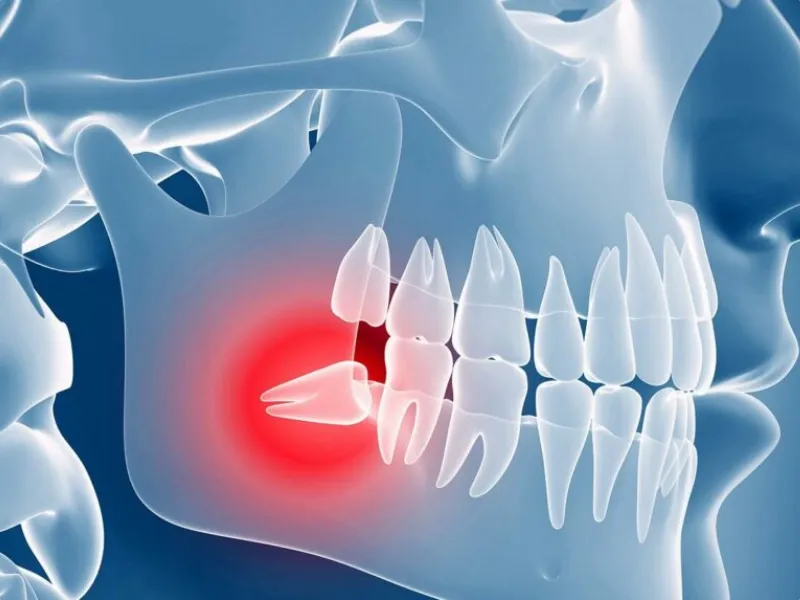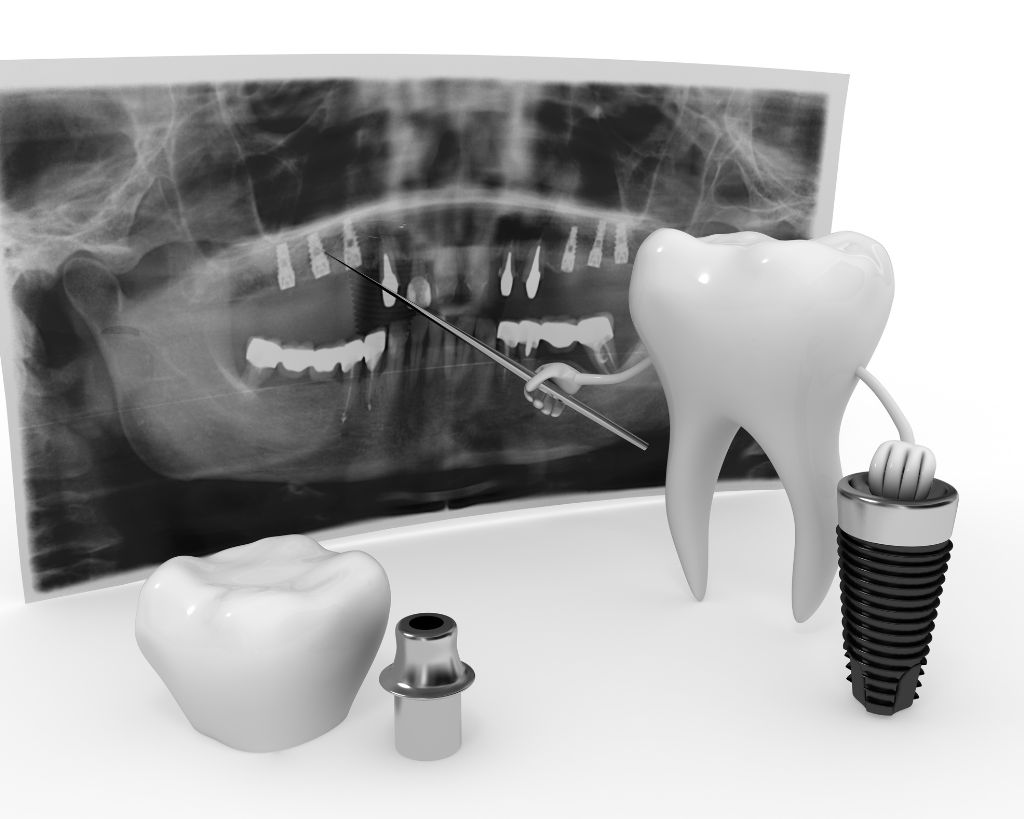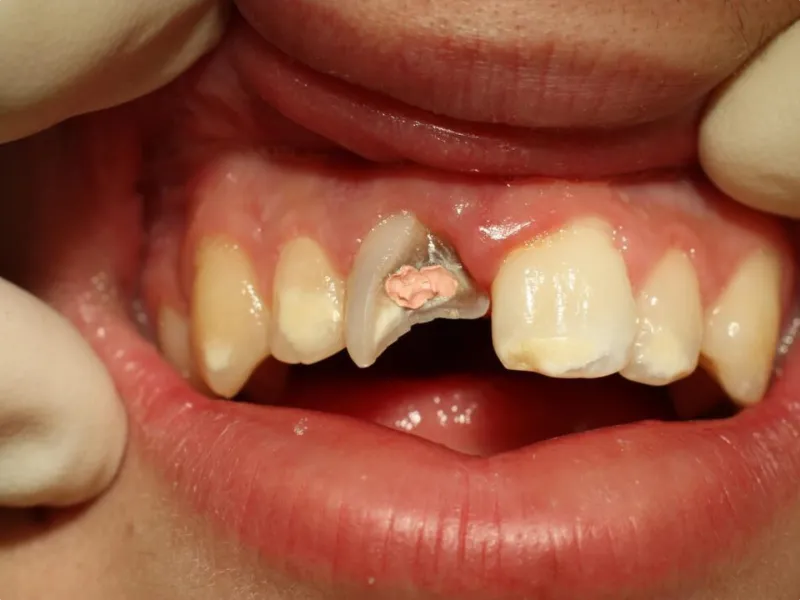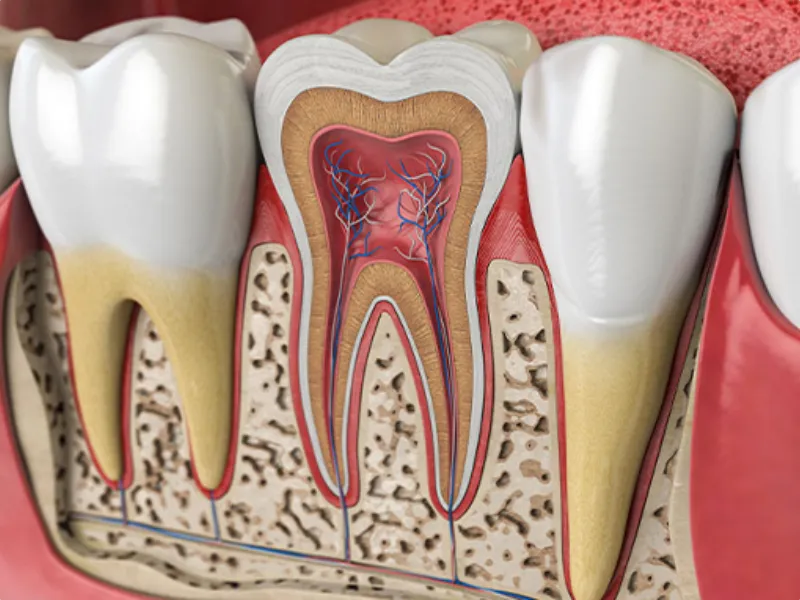


جراحی ریشه دندان زمانی برای بیماران باید انجام شود که درمانهایی مانند عصبکشی یا ترمیمهای روتین دیگر پاسخگو نبوده و ریشه دندان دچار آسیب، عفونت، ضایعه استخوانی یا شکستگی شده باشد؛ A condition that, if not treated, can cause tooth loss or even spread the infection to other areas of the mouth. In fact, in tooth root surgery, which is also known as Apicoectomy, the tip of the tooth root (apex) is removed along with the infected tissue around it, and the area is completely cleaned and repaired. Apicectomy is very important in the sense that it is done to save the tooth; That is, in situations where the possibility of tooth extraction is high, this surgery can increase the chance of saving the tooth.
In addition, surgery for the root of the tooth is placed in the category of dental surgery, along with techniques such as surgery for a hidden or broken tooth. and is usually performed by endodontists or oral and maxillofacial surgeons.
When do you need root canal surgery?
If any of the following situations occur, root canal surgery will be necessary for the patient:
- Resistance of infection after denervation
- The existence of a lesion or cyst around the root
- Small fractures at the end of the root
- Existence of additional channels that were not seen in denervation
- Unsuccessful repair or bacterial penetration from the end of the root
Reasons for root canal surgery
As we mentioned in the previous section, there are various reasons why a tooth remains painful, sensitive or infected despite previous treatments. In this section, we examine the most important reasons that we mentioned earlier and which lead the specialist to perform an apicectomy:
Resistance of infection after denervation
Sometimes there are additional or complicated canals in the root of the tooth that cannot be seen in normal denervation; These hidden canals can cause germs and inflammation to remain and require direct root canal surgery.
Apical cyst or lesion
Root infection can cause cysts or granulomas. These lesions usually do not disappear with simple debridement and require surgery.Fracture or crack at the end of the root
The tiny cracks at the end of the root are not visible with a normal photo, but they become a frequent source of pain and infection. Root surgery is the only way to identify and treat these cracks.
Unsuccessful debridement or bacterial infiltration
If the seal of the canal was not complete in the previous restoration or bacteria penetrated from the end of the root, the root becomes inflamed and requires surgery.
need to preserve teeth and prevent extraction
When it is valuable to keep the tooth (for example, molars or front teeth that affect the beauty), the surgeon makes every effort to preserve it through apicectomy. In fact, this procedure is considered a step before tooth extraction.
Types of tooth root surgery techniques
Apical surgery or root tip surgery may be performed in different ways depending on the severity of the infection, the shape of the root, the amount of bone damage and the patient's condition. Today, the techniques used are much more advanced than in the past and are performed with the help of a surgical microscope, precise tools and restorative materials.
Standard Apicoectomy: Standard Apicoectomy is the most common root surgery technique. In this method, the surgeon pulls the gum aside, cuts the tip of the root and cleans the infected area. Then the end of the root canal is filled with special materials such as MTA to reduce the possibility of the infection returning.
Microsurgical root surgery (Microsurgical Apicoectomy): Using a microscope allows the dentist to diagnose and treat the smallest root fractures, side canals and dead or pathological tissue with multiple precision. This technique is for patients who are looking for the best result and the least amount of error.
Root surgery with the help of laser: In some clinics, laser is used to disinfect and reduce bleeding. This method complements the main techniques of endodontic surgery. Due to its high accuracy, laser can reduce inflammation and pain after surgery.
If your tooth is chronically infected or hurts when you chew, the best thing is to go for a specialist evaluation now; at Dr. Bahare Sepahrian's clinic, all treatment steps, from complex nerve extractions to endodontic surgery, are performed with advanced equipment, minimally invasive techniques and under the supervision of experienced specialists. href="tel:02122095852" target="_blank" rel="nofollow noopener">Book a visit at Dr. Sepahrian's clinic Click here. A simple visit can save your tooth from being pulled.
Steps of tooth root surgery - apicectomy in 8 steps
The steps of performing root canal surgery are completely specialized and are performed by skilled surgeons or the best dental surgeon in Tehran. This process usually takes between 30 and 60 minutes and depending on the severity of the injury, it may be longer. Next, we will examine the surgical procedure:
- Complete examination and specialized photography: Before starting the treatment, the surgeon checks the exact condition of the root, the degree of infection, the thickness of the bone and the position of the canals with digital radiography and sometimes CBCT.
- Local anesthesia and surgical site preparation: Contrary to popular belief, almost all patients who experience this surgery report it as painless. Strong anesthesia and modern techniques make the patient feel only a little pressure and have no pain.
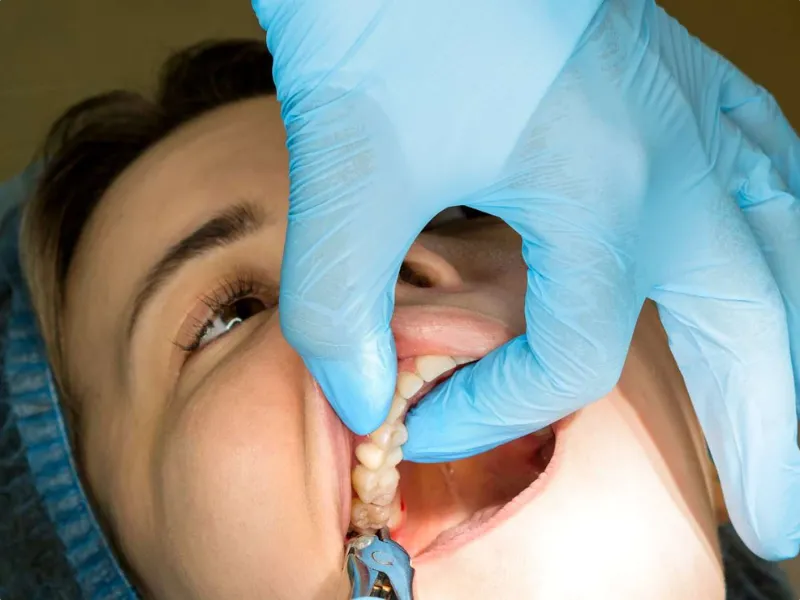
- Putting aside the gum and creating access to the root: the surgeon makes a small incision on the gum and gently pushes it aside to reach the end of the root. Cutting a small part of the gum to reach the root of the tooth in other surgeries such as Dental surgery Latent is also done. Apical Resection: About 2 to 3 mm from the end of the infected root is removed with precise tools. The goal is to remove all infected tissue and resistant microorganisms.
- Cleaning and disinfecting the site: the surgeon cleans the surgical site from infection with microscopic tools and washes it with special solutions. In new techniques, laser may be used to reduce bacteria.
- Filling the end of the root (Retrograde Filling): After removing the infected tissue, the end of the root is sealed with special materials such as MTA so that no bacteria can enter the tooth from this part.
- Bone repair (if needed): If extensive infection has caused bone destruction, bone powder or regenerative membranes are used to repair the area.
- Suture and end of surgery: Finally, the gum is placed in its place and closed with a fine suture. At this stage, the patient receives instructions for post-surgery care, which we will discuss in the next sections of the article.
Does root canal surgery hurt?
Whether root canal surgery is painful and to what extent the pain is tolerable is one of the most common concerns of patients, and fortunately the answer is short and clear: root canal surgery is completely painless and during the surgery, strong local anesthesia is used, so the patient only feels a little pressure or vibration of the instrument and there is no real pain.
But the experience of pain after the operation can be different depending on the condition of the tooth. Things that usually happen:
- Mild to moderate pain in the first 24 to 48 hours
- Feeling of heaviness or sensitivity in the teeth for several days
- Slight swelling in the surgical area
These symptoms are completely manageable with painkillers prescribed by the doctor and usually subside after 3 to 5 days. If the patient follows the instructions after the surgery, the recovery period will be very short.
When is pain considered abnormal?
- If the pain becomes more severe after the fourth day.
- If swelling is felt along with fever or bad smell.
- If the numbness continues for a long time.
- Difference between denervation and tooth root surgery
Many patients think that when a tooth is damaged or infected, there is only one treatment; But in fact, denervation and root canal surgery are two completely different stages from specialized root treatments.
Root canal treatment is the first step to treat inflammation and internal infection of the tooth, in which the root canals are cleaned, disinfected and filled from the inside to completely remove bacteria from the interior of the tooth. If everything goes as expected, this treatment is sufficient and the tooth will return to a healthy state. In simple words, if denervation is the treatment inside the tooth, root surgery is the treatment of the end of the tooth and the bone around it.
The cost of root canal surgery in the fall of 1404
The cost of root canal surgery depends on various factors and cannot be given a fixed number for all patients. The most accurate cost is determined after the in-person examination and CBCT photo review. Factors affecting the cost depend on the type of tooth, the severity of the infection, the doctor's expertise and the equipment used. But in general, the cost of root canal surgery is in the category of moderate to expensive treatments and is usually higher than the cost of a simple nerve extraction. For more detailed information, it is recommended to visit the dental surgery cost article.
Care after root canal surgery
The recovery period of root canal surgery is usually short; But it is necessary to observe post-operative care to prevent infection and speed up recovery. These cares are exactly the same as the instructions described in the article on care after dental surgery.
Final summary of the dental root surgery article
Dental root surgery is one of the most effective and advanced methods to save teeth that are involved with deep and persistent infections. When conventional debridement does not respond well or the infection remains at the end of the root, this surgery helps to save the tooth from the extraction stage and still remain in the mouth. By choosing an experienced surgeon, using microscopic techniques and following the principles of post-operative care, the success rate of this treatment is very high and the patient can experience the normal function of the teeth in their mouth again without pain and inflammation. Let's not forget that no prosthesis can replace the feeling of a natural tooth; For this reason, root surgery is considered the last chance to save the tooth.
Frequently asked questions about root canal surgery!
- How long is the recovery period after root canal surgery? The recovery period usually lasts 3 to 7 days.
- How long does root canal surgery take? This usually takes between 30 and 90 minutes. Is root canal surgery necessary for all patients? no It is usually done when the treatment of denervation or root canal therapy has not been successful. Is it possible for pain to return after root canal surgery? Yes, but it is normal. Mild pain or tenderness for the first few days is usually due to inflammation of the surrounding tissues and will decrease over time. If severe and throbbing pain continues for more than 3-4 days, you should contact a dentist.
- What food can I eat after root canal surgery? Avoid eating hot foods for the first few hours. In the first 24 hours, soft foods such as puree, lukewarm soup, yogurt, eggs and pasta are suitable. Hard or sticky foods should not be consumed so that the pressure on the surgical site is low. Is root canal surgery dangerous? no This method is a minimally invasive and safe surgery performed by an endodontist. The use of modern equipment and atraumatic methods minimizes the risks. How many days after root canal surgery is swelling normal? Mild to moderate swelling is normal for 2 to 3 days. Using a cold compress in the first 24 hours can reduce the swelling. If the swelling increases after the third day, it may be necessary to check with a doctor.