
What is an ovarian cyst
The female reproductive organs, especially the ovaries, are the focus of complex and precise hormonal activities that manage the menstrual cycle each month. In this dynamic process, temporary fluid-filled structures called follicles form to house and release the mature egg. But sometimes, this natural mechanism is disrupted; Instead of bursting and releasing the egg, the follicle continues to grow and become a larger sac. This phenomenon is what is commonly known as ovarian cyst and can be a common yet confusing concern for many women of reproductive age.
Contrary to popular belief, the presence of an ovarian cyst does not necessarily mean a serious illness. In fact, the majority of cysts are classified as "functional cysts" which are a direct and harmless result of the normal process of the monthly cycle. These cysts often develop without any symptoms and disappear on their own within a few cycles. However, there are other types of cysts that are formed due to abnormal tissue growth (such as dermoid cysts or endometrioma) and require attention, follow-up and, in some cases, more serious medical interventions to prevent possible complications.
In this comprehensive article, we intend to fully clarify the various aspects of this common complication. From the exact definition and types of cysts to warning signs, new diagnostic methods, and available treatment options, we'll go over everything in detail. Our goal is to disambiguate by providing correct information so that every woman who encounters the phrase what is an ovarian cyst can manage her condition with full knowledge and without unnecessary worries and consult a specialist at the right time.
Table of Contents
- Scientific definition and structure What is an ovarian cyst and how does it work?
- What are the types of functional cysts and how are they different from ovarian cysts?
- Pathological (non-functional) cysts and the importance of distinguishing them when dealing with What is an ovarian cyst?
- Common symptoms and signs: From pelvic pain to menstrual disorders, in the face of What is an ovarian cyst?
- The main reasons and risk factors that lead to the formation of What is an ovarian cyst?
- Modern diagnostic methods and the importance of ultrasound in identifying What is an ovarian cyst?
- Treatment approaches: from watchful waiting to surgery in the face of ovarian cyst What is?
- Possible side effects and emergency symptoms in case of enlargement What is an ovarian cyst and how should you react?
Scientific definition and structure of What is an ovarian cyst and how does it work?
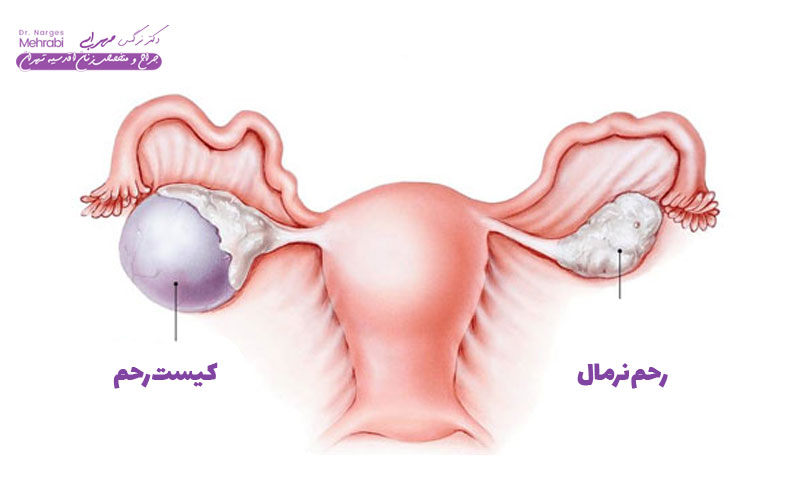
In the simplest definition, Ovarian cyst What is it? A small, fluid-filled or semi-solid sac that grows inside or on the surface of an ovary. Ovaries are almond-shaped organs located on both sides of the uterus, and their main function is to produce eggs (female sex cells) and sex hormones (estrogen and progesterone). These cysts are actually abnormal but usually harmless structures that are the result of fluid accumulation in a limited area in the ovarian tissue.
What is the structure of an ovarian cyst? Its structure consists of a thin or thick wall that traps liquids or other substances such as blood, fat or other tissues. In a normal menstrual cycle, the follicles are responsible for the development of the egg, and if the follicle does not rupture normally and continues to grow, it becomes a follicular cyst. In general, any type of sac mass that forms in the ovary and does not contain solid and abnormal tissue can be called a cyst.

Ovarian cysts can vary in size and The shape is very different. Some are as small as a pea and barely visible on an ultrasound, while others may grow to the size of an orange or larger. What is an ovarian cyst and whether it needs treatment depends on its type, size and nature (simple or complex) and can often be evaluated by a gynecologist using a detailed ultrasound of the pelvis.
The importance of understanding what is an ovarian cyst is to know that many of them are part of the normal physiology of the female body. Almost every woman will experience the formation of these fluid-filled sacs at least once during her reproductive years, but since they are often asymptomatic, one may not notice they are there. Only when these cysts enlarge, rupture or cause torsion of the ovary do they cause symptoms and attract medical attention ( Uterine Polyp).
Types of functional cysts and their difference from what is an ovarian cyst?
To fully understand what is an ovarian cyst, we must know that the most common type is functional cysts. These cysts are not a disease, but a change in the normal course of the menstrual cycle and originate directly from the ovulation process. They are usually benign and temporary and generally disappear on their own within 1 to 3 months and do not require medical or surgical treatment.
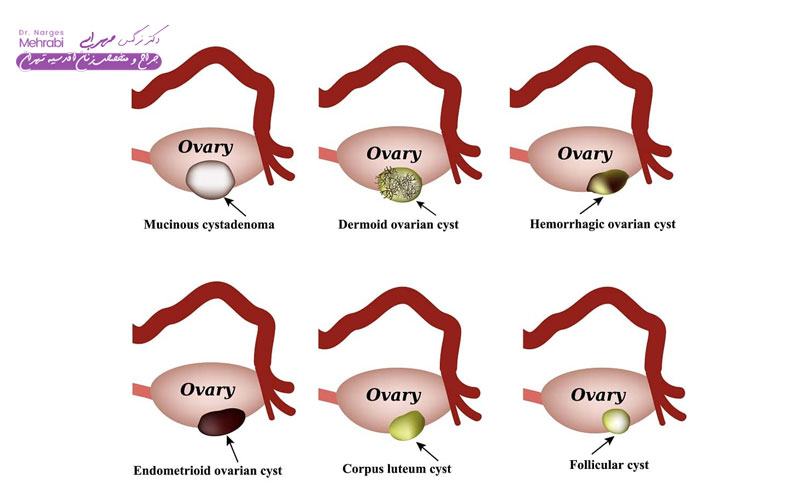
There are two main types of functional cysts, both of which are part of the answer to the question of what is an ovarian cyst: follicular cyst and corpus luteum cyst. A follicular cyst forms when the follicle containing the egg, which should rupture at the time of ovulation, fails to do so and continues to grow and fill with fluid. This is the most common type of cyst and usually remains smaller than 5 cm.
The second type, the corpus luteum cyst, forms after the egg is released. After the egg is released, the empty follicle turns into a structure called corpus luteum or corpus luteum, which is responsible for producing progesterone. Now, if the fluid or blood accumulates inside the corpus luteum instead of collecting and disappearing, it becomes a cyst of the corpus luteum. These cysts may become slightly larger and cause more pain if they bleed.
What is the key difference between these cysts and other types of ovarian cysts? The main difference is in their origin and nature. Functional cysts are hormonal in origin and disappear over time, while other (pathological) cysts arise from abnormal tissue growth, usually do not disappear on their own, and may require surgical removal. Understanding this distinction reduces the patient's anxiety, because the vast majority of cysts are functional and harmless.
Pathological (non-functional) cysts and the importance of their differentiation when dealing with what is an ovarian cyst?
Besides functional cysts, There are other types of cysts, which are called pathological or non-functional cysts, and they form an important part of the answer to the question what is an ovarian cyst. These cysts are caused by pathogenic processes or abnormal growth of cells and are not temporary; In other words, they do not disappear with the passage of the menstrual cycle and often require treatment or at least regular medical follow-up.
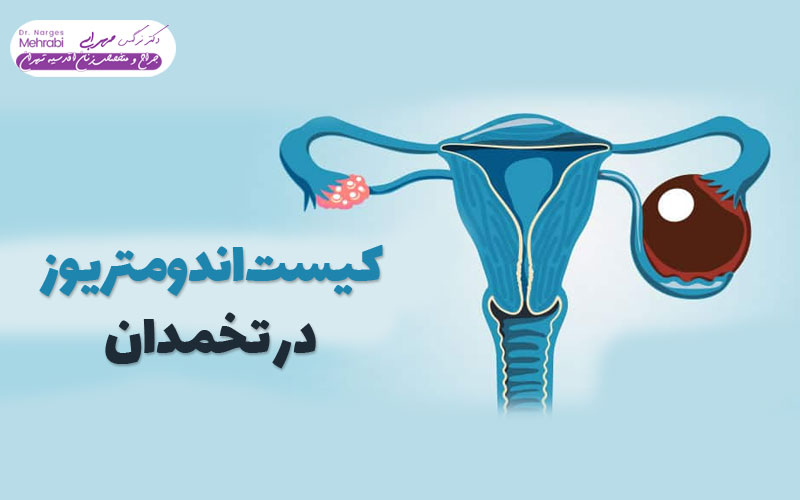
The most important types of pathological cysts that should be recognized in response to the question What is an ovarian cyst include the following: Dermoid cysts (teratoma) which are formed from sex cells (eggs) and may contain tissues such as hair, fat, teeth or cartilage; cystadenomas that originate from cells on the surface of the ovary and are filled with watery fluid or thick mucus; And endometrioma (chocolate cyst) which occurs in women with endometriosis and is full of old and thick blood.
What is the importance of differentiating these cysts compared to functional cysts? In the first place, unlike functional cysts, pathological cysts are not spontaneously absorbed by the body and may continue to grow. Second, dermoid cysts and cystadenomas may become very large and cause severe pain or torsion of the ovary. Third, and most importantly, in rare cases, cystadenomas can be malignant (cancerous) and therefore their accurate evaluation is vital.
Therefore, when a patient is asked what is an ovarian cyst, the doctor must first use ultrasound and, if necessary, blood tests (such as measuring the level of the tumor marker CA-125) to determine the nature of the cyst. Determine who. The presence of solid tissues or thick and irregular walls in the ultrasound indicates that the cyst is pathological and determines whether a treatment approach including surgery to remove the cyst is necessary. What is?
Most ovarian cysts, especially the functional and small types, are asymptomatic and are discovered incidentally during routine examinations or other ultrasounds. However, when the cyst becomes large enough, ruptures, or twists the ovary, it produces symptoms that should be taken as serious warnings and are part of the answer to the question of what is an ovarian cyst and when does it become dangerous.
The most common symptom of ovarian cyst? It is pelvic pain or abdominal pain. This pain is often felt as a dull, pressing and uncomfortable pain in the lower abdomen or pelvis and can be continuous or intermittent. The pain is usually worse on one side of the pelvis (the side where the cyst is located) and may worsen during vigorous physical activity or intercourse (dysparony) due to the pressure of the cyst on adjacent organs.

Ovarian cysts can also affect the menstrual pattern, and this is another important sign in answering the question What is an ovarian cyst. Menstrual disorders can manifest as irregular periods, heavier or lighter bleeding than usual, or even spotting between periods. These changes are often due to the effect of the cyst on the production and balance of the hormones estrogen and progesterone in the body and require a hormonal evaluation.
In examining the causes and risk factors, the answer to the question what is an ovarian cyst is more related to hormonal processes in the body. The main reason for the formation of functional cysts is the disruption of the normal process of ovulation; That is, the follicles are not properly ruptured or the corpus luteum does not disintegrate naturally and is filled with fluid. This process is influenced by the precise balance of hormones in the body.
One of the main risk factors that lead to the formation of what is an ovarian cyst is hormonal problems and hormonal imbalance. For example, women who take ovulation-stimulating drugs (such as clomiphene) are at increased risk for functional cysts. Also, conditions such as Polycystic Ovary Syndrome (PCOS), which is characterized by hormonal imbalance and irregular ovulation, leads to the formation of numerous and small cysts on the ovaries.
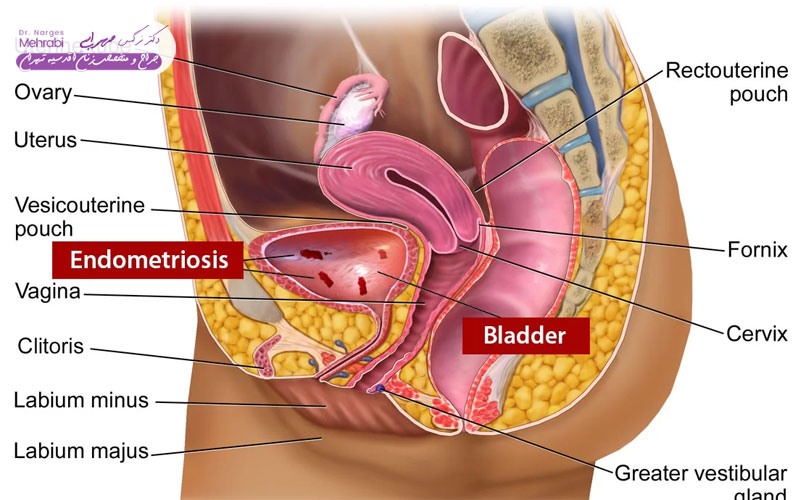
In addition to hormonal disorders, certain underlying diseases can also be another reason for What is an ovarian cyst. For example, endometriosis, where tissue similar to the lining of the uterus (endometrium) grows outside the uterus, can lead to the formation of endometrioma cysts (chocolate cysts). Also, severe pelvic infections that have spread to the ovaries can cause inflammatory cysts and abscesses to form.
Other factors that can increase the risk of developing What is an ovarian cyst include a previous history of ovarian cysts, pregnancy (especially early in pregnancy, where corpus luteum cysts naturally form) ), and using some special drugs. Also, age is also an important factor; Cysts are more common in women of reproductive age, but cysts that form after menopause, although rarer, are more likely to be cancerous and require immediate evaluation.
Modern diagnostic methods and the importance of ultrasound in identifying What is an ovarian cyst?
For Accurate diagnosis and assessment of the nature of the cyst, the use of modern diagnostic methods is necessary to correctly answer what is an ovarian cyst and what kind of treatment it needs. The first and most important step in diagnosing an ovarian cyst is Examination Pelvic is performed by a gynecologist, where the doctor may feel a swelling or lump in the ovarian area.
The golden tool in answering what is an ovarian cyst is undoubtedly a pelvic ultrasound (vaginal or abdominal). Ultrasound is a safe and non-invasive method that uses sound waves to provide a detailed image of the ovaries and the structures inside them. This imaging not only confirms the presence of a cyst, but also gives the doctor vital information about the size, shape, location, and most importantly, the nature of the cyst (simple, fluid-filled, or complex, containing solid tissue).