
لیزر سنگ کلیه یکی از روشهای مدرن و موثر برای درمان سنگهای کلیوی بزرگ است. This method is known as laser lithotripsy, and by using a laser, it turns kidney stones into smaller pieces to be excreted through urine. Nowadays, stone crusher with laser is one of the common methods for treating kidney stones.
kidney stone laser movie
How long does kidney stone laser treatment take?
Kidney stone laser treatment usually takes about 1 to 2 hours. The time of this operation depends on various factors, including the size and number of stones and the position and location of the stone. In general, laser kidney stones usually require less time than open surgery or other methods such as laparoscopy, and usually provide patients with a faster recovery.
What is it like to break kidney stones with a laser?
The laser stone breaker or kidney stone laser is done through a process called laser lithotripsy. A holmium laser device is used in laser kidney stone surgery, which has high precision and power suitable for crushing kidney stones.
First, using a flexible ureteroscope, the surgeon enters the urinary system and accesses the stones. Using the holmium laser, kidney stones are broken into smaller pieces. These pieces can be easily excreted through urine.
Care after laser kidney stone breaker
Care after kidney stone laser is important to achieve a faster recovery. In the following, we will refer to the review of important points:
- Fluid intake: Drinking plenty of fluids is vital to help you urinate more. At least 2 to 3 liters of fluids should be consumed daily.
- Drugs: Painkillers and anti-inflammatory drugs prescribed by the doctor should be taken carefully.
- Rest: during the first days after the operation, have enough rest and avoid heavy activities.
Types of kidney stone treatment methods
The treatment of kidney stones varies depending on the size, location and composition of the stones, patient symptoms and other individual conditions. Below we will review the types of kidney stone treatment methods.
1_ Endoscopic kidney stone surgery (PCNL) or kidney stone laser
Percutaneous endoscopic kidney stone surgery or (PCNL) (kidney stone operation with laser) is an effective and less invasive method for fast stone treatment The kidneys are large. In this method, the surgeon accesses the kidney through a small incision in the skin and uses special tools to break up and remove the stones. In cases where a laser is used to break up the stones, it is called laser PCNL. The patient is placed under general or local anesthesia and lying on his side or back.
The surgeon makes a small incision in the skin of the patient's back. Using a needle and under X-ray or ultrasound guidance, a path is made to the kidney. The path created by using dilators (expanders) is expanded to the extent that surgical instruments can enter.
2_ Extracorporeal Shock Wave Lithotripsy (ESWL)
Extracorporeal Shock Wave Lithotripsy (ESWL) is a non-invasive kidney stone laser method for the treatment of kidney and ureteral stones that uses waves. A shock from outside the body breaks the stones into smaller pieces that can be excreted through the urine.
Depending on the location of the stone and the condition of the patient, local anesthesia or anesthesia may be used. Using imaging (X-ray or ultrasound), the exact location of the stone is identified. The ESWL device directs strong and focused shock waves to the stone.
In kidney stone laser with this method, the waves pass through the skin and tissues of the body and hit the stone. Shock waves break the rock into smaller pieces. These smaller pieces are excreted through urine over time.
Video of kidney stone surgery (extra-organ)
3_ Intra-organ stone crusher (TUL)
Transurethral stone crusher Ureterolithotripsy (TUL) is a minimally invasive laser kidney stone treatment for ureter and kidney stones that is performed through the urethra. In this method, the surgeon, using special tools, crushes the stones and removes the crushed pieces. The surgeon inserts a ureteroscope (a thin and flexible instrument) through the urethra into the ureter and kidney.
When the ureteroscope reaches the stone, various tools such as laser, electrohydraulic or ultrasound are used to break up the stone. In kidney stone laser with this method, the crushed pieces of the stone are removed using special tools such as a basket (small basket). In some cases, a stent (small tube) may be placed in the ureter to help drain urine and facilitate recovery.
4_ Ureteroscopy (RIRS)
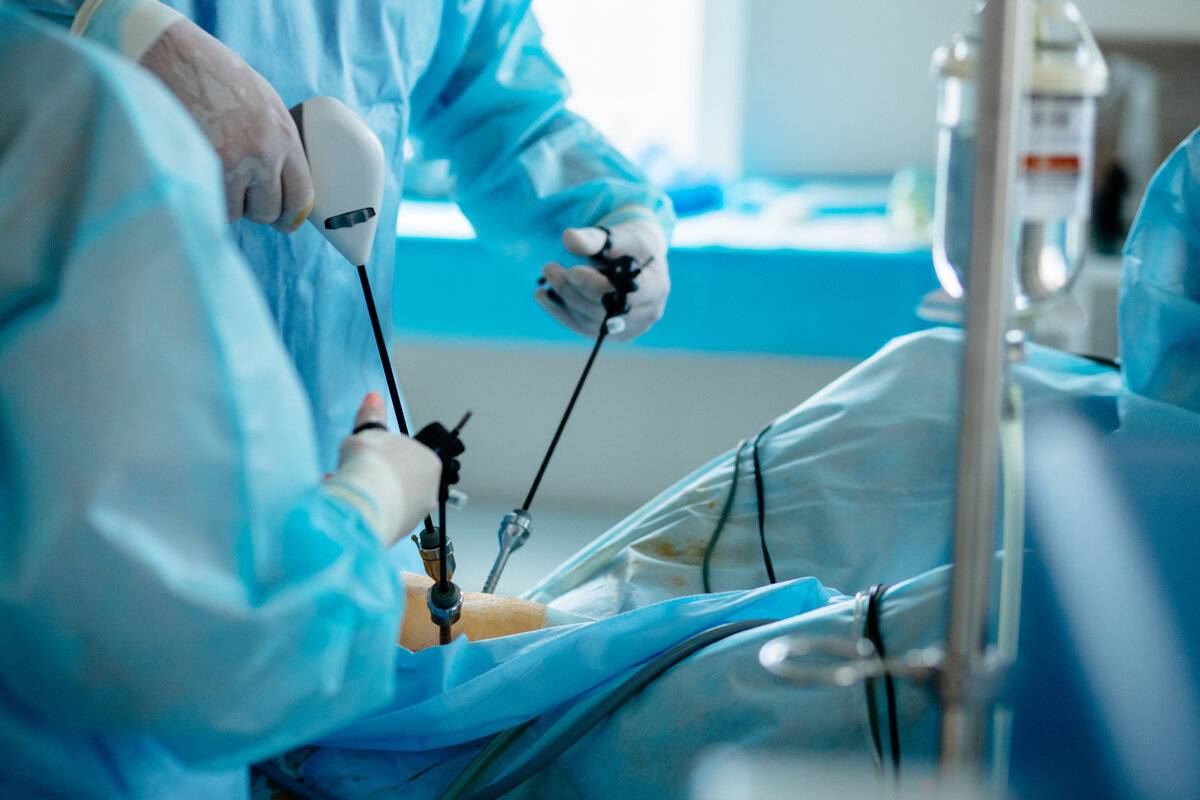
Uteroscopy (RIRS - Retrograde Intrarenal Surgery) is another method of kidney stone laser operation. In kidney stone laser with this method, a flexible ureteroscope enters the bladder and then the ureter and kidney through the urethra. This tool has a camera and a light source that allows the doctor to see the inside of the kidney and ureter. The laser turns stones into much smaller pieces that can be easily excreted through urine. 5. Open and laparoscopic surgery Open and laparoscopic surgery are two invasive methods for treating kidney stones that are usually used in special and complicated cases. These methods are used in situations where other methods such as ESWL, TUL, and RIRS are useless. Open surgery is one of the oldest methods of treating kidney stones and involves making a large incision in the skin to directly access the kidney and remove the stones.
video of ureter stone crushing with pcnl laser
Complications after kidney stone laser surgery
Complications after laser kidney stone surgery may include things like bleeding in the urethra, pain in the kidney area, or urinary tract infection, which are usually transient. In case of any pain or unusual symptoms, be sure to see a doctor.
Cost of laser kidney stone operation, it is not possible to give a definite opinion about the cost of laser kidney stone operation. You should be examined by a specialist doctor and the condition of the stones should be checked. The number of stones and their location will have a significant impact on the procedure and, as a result, the final cost. In some cases, people whose kidney stones are very large or the stone is located in a sensitive place are not suitable for laser surgery. In addition, if the patient has serious systemic problems such as blood supply disorders, heart problems or other special diseases that make surgery dangerous, the doctor may not recommend kidney stone laser. Kidney stone laser is a non-invasive method used to break up and crush kidney stones. In this method, a laser device is used to crush stones. Stones are cut into smaller pieces with a laser and then excreted through urine.