
رژیم غذایی و بیماری التهابی روده
سلام دوست عزیز! If you have Crohn's disease or ulcerative colitis, you may sometimes have problems absorbing nutrients. This can be due to inflammation
Intestine, drug side effects or specific disease conditions.
Why is it important to pay attention to diet?
When your small intestine is inflamed, digestion and absorption problems may occur; And when the large intestine is affected, the absorption of water and electrolytes properly
Can't be done. These issues can cause symptoms such as malnutrition and weight loss.
Here we explain some points in simple and friendly language:
- Severe diarrhea: Frequent excretion of liquids and watery stools may cause dehydration. This means that you may lose fluids, nutrients and electrolytes such as sodium, potassium, magnesium, phosphorus and zinc. This issue can happen along with weight loss.
- Abdominal pain and nausea: These symptoms often cause a decrease in appetite and may interfere with adequate intake of calories and nutrients.
- The need for frequent bowel movements: Sometimes people eat less to avoid diarrhea or frequent trips to the bathroom. This issue can increase the risk of malnutrition.
- Lack of absorption of nutrients: Intestinal inflammations cause disturbances in the absorption of proteins, fats, sugars, vitamins and minerals. This becomes more serious in patients with Crohn's disease, especially when a large part of the small intestine is affected or has been operated on.
- Scar formation and strictures: Frequent inflammations may cause scar tissue and strictures in the intestine. This can make it difficult to pass food, and some fibrous foods such as fruits and vegetables may cause bloating and pain. In these cases, diets low in fiber or consuming more fluids can help; Of course, it is also necessary to use medicine to reduce inflammation.
- Pharmaceutical side effects: Long-term use of corticosteroid drugs such as prednisone may cause growth delay in children, weight gain, risk of developing diabetes, reduction of bone mass and osteoporosis. Also, drugs such as sulfasalazine and methotrexate may interfere with the absorption of folic acid.
How to prevent malnutrition?
If a lack of water and nutrients is diagnosed and not treated, it may put you at risk of malnutrition. Symptoms such as weight loss, fatigue, general weakness or loss
Energizing can indicate this problem. Even if you don't have severe symptoms, it's best to talk to your health care team about testing for nutrient deficiencies.
Each person has unique characteristics; For this reason, there is no one-size-fits-all diet. Our advice is to try to follow a balanced diet rich in nutrients. You should adjust the nutritional recommendations based on individual needs, location of intestinal involvement, symptoms and nutritional status. Always make any changes in your diet with the advice of a doctor and nutritionist.
What foods should I eat?
In order for your body to receive enough water, drink 8 to 10 glasses of water daily; In addition to plain water, you can also use beef broth, tomato juice, and diluted sports drinks. Drink the drinks slowly and do not use a straw, because it may cause gas production.
If you want to have a rich and varied diet:
- Choose foods with more fiber such as oat bran, beans, oats, nuts, grains and legumes, unless you have an ostomy; In this case, your doctor may advise you to follow a low-fiber diet for a while.
- Use proteins such as lean meat, fish, eggs and nuts.
- Try to add more colors such as green, orange and red to your diet by eating a variety of fruits and vegetables (you can remove the skin and seeds if needed).
- Foods containing probiotics such as yogurt, kimchi, miso, cabbage and broccoli can also help improve digestion.
Choosing an anti-inflammatory and balanced diet can really help you reduce symptoms, improve your quality of life, and maintain your gut health. The only diet that has evidence that it may help control the disease is the Mediterranean diet:
This diet is rich in fiber, antioxidants and healthy fats (such as omega-3 and omega-9), as well as its emphasis on eating fresh and less processed foods
Recognized as an effective template. Even international organizations such as ECCO (European Crohn's and Colitis Organization) and ACG and AGA guidelines have approved this method.
Next, I want to explain to you the important and complete points based on the food available in Iran; Especially for those who struggle with Crohn's disease and Ulcerative colitis or even have an ostomy.
Key principles of Mediterranean diet for inflammatory bowel patients
Anti-inflammatory and antioxidant properties
Eating a lot of fresh seasonal fruits and vegetables such as tomatoes, cucumbers, pumpkins, eggplants, spinach, cabbage and greens such as parsley and dill will calm your intestines and reduce inflammation.
Using natural spices such as garlic, turmeric, mint, basil and rosemary instead of salt improves the taste of food and helps reduce inflammation.
Provide fiber and improve digestion
Whole grains such as stone bread, whole grain Berber bread, brown rice and semolina are rich in fiber and make digestion easier.
Of course, in acute periods or for ostomy patients, it may be necessary to avoid raw and peeled vegetables and use cooked and soft vegetables.
Consumption of healthy fats
Virgin olive oil is very important as the main source of healthy fat in this diet. It is recommended to use it in salads, seasonings and even cooking (in small quantities).
Nuts such as almonds, walnuts and pistachios are also recommended for limited consumption as sources of omega-3 and omega-9.
Quality proteins
Oil fatty fish such as salmon, sardine or tuna should be consumed at least twice a week because they are very beneficial for the heart and intestines due to their omega-3 fatty acids.
Low-fat dairy products such as Greek yogurt and light cheese (for example, Levashki cheese or low-fat native cheese) also help provide protein and calcium.
List of useful and harmful foods (according to Iranian market)
Healthy food
Fruits:
Apples (sometimes without skin for ease of digestion), pears, grapes, dates, figs, oranges, cantaloupe and peaches.
In acute periods or for ostomy patients, soft fruits like banana or papaya are recommended.
Vegetables:
Fresh and cooked vegetables such as tomatoes, cucumbers, pumpkins, eggplants, spinach, cabbage, broccoli, carrots and eating greens such as parsley, dill and mint.
For ostomy patients or in acute episodes, use cooked vegetables without skin and seeds.
Whole grains:
Traditional breads made from wholemeal flour such as sengak and whole grain Berber, brown rice and bulghur.
Legs:
lentils, peas, beans and beans; which can be used as the basis of light meals (for example, soup or soft stews).
Fish and seafood:
Oily fish (salmon, sardines, tuna) preferably boiled or grilled with olive oil.
Low-fat dairy:
Greek yogurt, low-fat buttermilk and light cheeses.
Healthy fats:
extra virgin olive oil; Also nuts and seeds without salt (in limited amount).
Spices and aromatic herbs:
Garlic, turmeric, mint, basil, rosemary, cinnamon; which can replace salt.
Harmful or restricted foods:
Processed and sugary foods:
Soft drinks, industrial sweets, ice cream and other products with added sugar.
Refined grains:
White bread, pasta and white rice that do not contain fiber.
Unhealthy fats:
Butter, margarine and industrial oils (containing trans fats).
High-fat and processed red meat:
High-fat red meat such as sausage, sausage and bacon, which can increase inflammation.
Very spicy or hot foods:
In acute episodes or for patients who have a stoma, the use of very spicy spices may be irritating.
Special tips for ostomy patients
Reduce insoluble fiber:
In acute periods or for patients who have a stoma, it is better to avoid raw vegetables, fruit skins and small seeds and use cooked and soft vegetables instead.
Small and frequent meals:
Dividing meals into small portions and frequent consumption throughout the day can reduce the pressure on the intestines and improve digestion.
Easy to digest:
It is recommended to use easily digestible proteins such as boiled eggs or light soups.
Food hygiene:
Preparing homemade food with fresh ingredients and using light cooking methods such as steaming, boiling or grilling, reduces the risk of infections related to inflammatory bowel diseases.
Diet during relapse periods
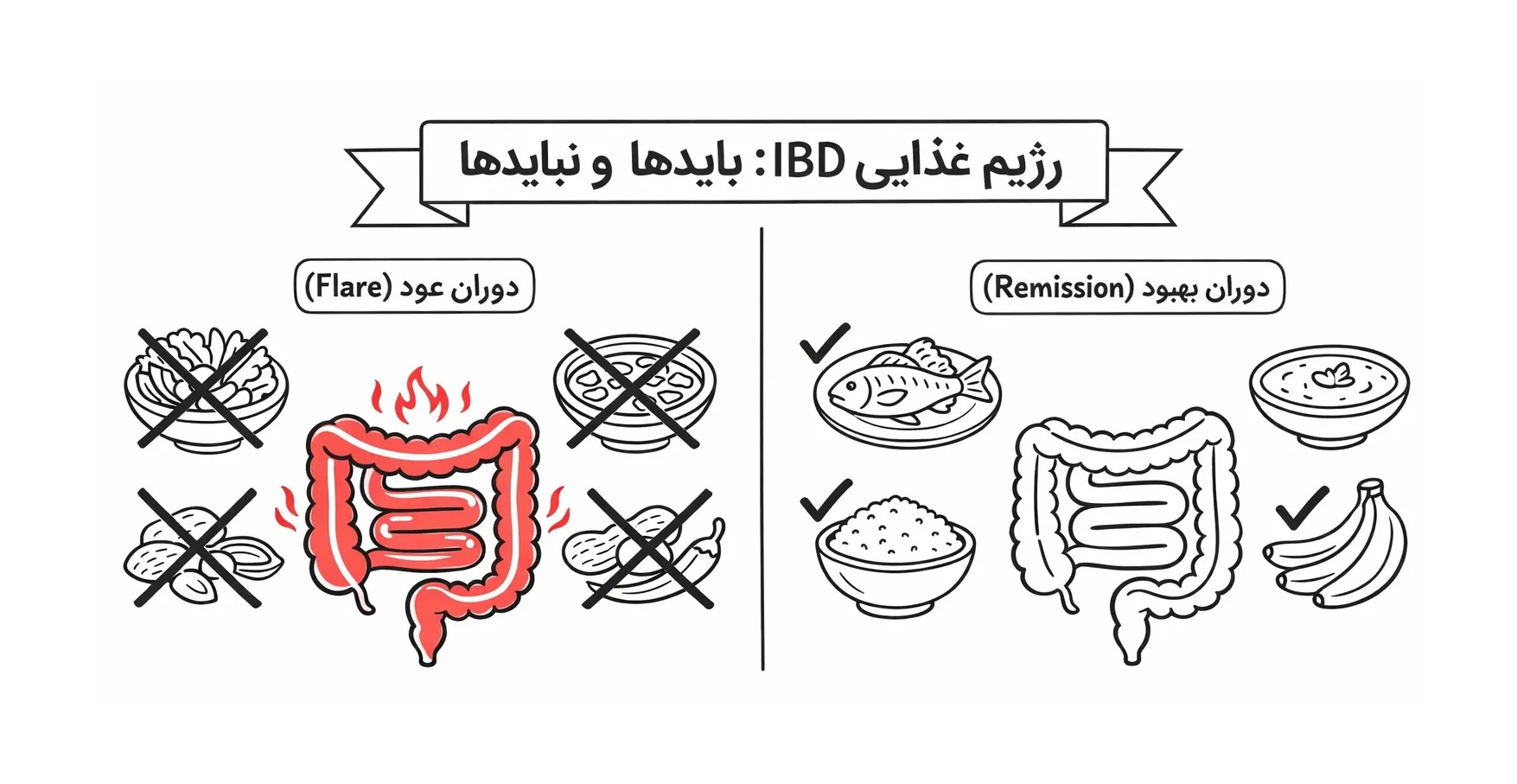
We prepared these diet tips to help reduce symptoms during periods of disease recurrence and ensure adequate intake of nutrients, vitamins and minerals. During this time, some foods or drinks may irritate the digestive system and aggravate the symptoms.
We recommend eliminating trigger foods and replacing them with foods with similar nutrients under the supervision of your healthcare team and a nutritionist. This method will help you cope with your condition better during periods of disease recurrence.
Limiting stimulating foods during the period of disease recurrence
Sometimes you have to stay away from foods that cause heartburn, bloating and diarrhea. These foods include the following:
1. Foods with insoluble fiber: such as fruits with skins (such as the skins of fruits or seeds), raw green vegetables, especially broccoli, cabbage, and cauliflower.
Cabbage, or anything with a shell like nuts and beans.
2. Lactose: sugar found in dairy products such as milk, cream and soft cheese.
3. Non-absorbable sugars: sugar alcohols such as sorbitol and mannitol, which are found in sugar-free gum, candy, ice cream, and certain fruits or juices such as pears, peaches, and aloes.
Found.
4. Sugary foods: including sweets and juice.
5. Foods with high fat: such as butter, coconut, margarine, cream and fatty or fried foods.
6. Alcoholic or caffeinated beverages: such as beer, wine, spirits, soda, and coffee.
7. Spicy foods.
Foods recommended during the period of disease recurrence
To meet the needs of the body, it is better to use these foods:
1. Refined grains: such as breadcrumbs, potatoes or gluten-free bread, white pasta, white rice, and rolled oats.
2. Low-fiber fruits: such as bananas, cantaloupe, honeydew melon, and cooked fruits.
3. Fully cooked, seedless, skinless vegetables: such as asparagus, cucumbers, and squash.
4. Good proteins: fish, white chicken meat, soybeans, eggs.
5. Lactose-free dairy products: skim milk, yogurt and hard cheeses such as cheddar or parmesan.
6. Non-dairy alternatives: soy milk, rice milk or almond milk.
If you consume less of these substances or lose weight, you can use nutritional supplements or homemade proteins. To find the best suitable supplement
For your nutritional needs, be sure to consult your doctor or nutritionist.
Tips for preparing and planning food during the period of relapse
1. Consume four to six meals every day.
2. Drink 8 to 10 glasses of water a day; In addition to plain water, you can use beef broth, tomato juice, or diluted sports drinks. Drink the drinks slowly and do not use a straw, because it may cause gas production.
3. Prepare your food in advance and always have some healthy food at home.
4. Use simple cooking methods such as boiling, steaming, grilling or boiling to have nutritious dishes such as poached eggs, grilled foods, steamed vegetables and boiled potatoes.
5. Make a daily food diary and write down what you eat and the symptoms you experience.
6. Remember, each patient's diet can be different; Therefore, it is better to consult with the medical care team and a nutritionist
To set up a completely personal and suitable program for you.
Summary and final recommendation
Dear friend, if you have inflammatory bowel diseases such as Crohn's disease and Ulcerative colitis (inflammatory bowel disease) or even have an ostomy,
Mediterranean diet can help you reduce symptoms, improve digestion and quality of life as an anti-inflammatory and balanced nutritional pattern
Upgrade. This diet emphasizes the consumption of fruits, vegetables, whole grains, legumes, fatty fish, low-fat dairy products, and extra virgin olive oil, along with limiting foods.
Processed, unhealthy fats and high-fat red meat are a great option for patients.
To take full advantage of this diet, Dr. Sima suggests consulting a nutritionist who is familiar with the Mediterranean diet to provide a personalized meal plan based on your specific conditions!!!
Consider this simple guide as a starting point for healthy lifestyle changes. Always remember that any diet change should be done individually and under the supervision of a doctor. We hope that this content is useful for you and that you spend your days with more health.