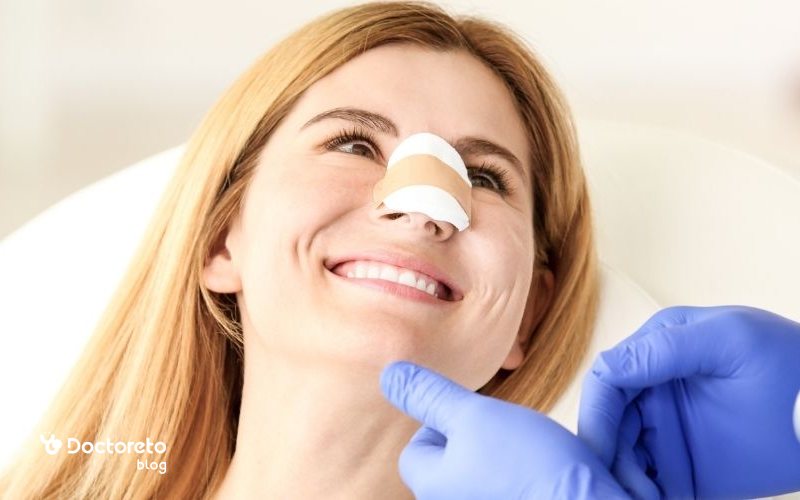
After nose surgery, the appearance of some symptoms such as swelling, bruising or stuffy nose is normal and there is nothing to worry about. But in some cases, symptoms may appear which are known as dangerous symptoms after nose surgery and need immediate attention. Knowing these symptoms helps patients to consult an ear, nose, and throat doctor or a plastic surgeon in time in case of problems and avoid serious complications. In the rest of this article, we will talk about the most important symptoms and ways to deal with them from your doctor.
What symptoms are dangerous after nose surgery?
After nose surgery (rhinoplasty), some symptoms such as swelling, bruising, nasal congestion or a little pain are normal. These symptoms usually improve within a few days to a few weeks and are nothing to worry about. However, some symptoms may be dangerous and require immediate medical attention. Early detection of these symptoms can prevent complications after rhinoplasty. Many problems can be caused by infection, internal bleeding, or a reaction to anesthesia. Here are the warning signs that should not be ignored:
Heavy bleeding
breathing problem
Abnormal swelling or bruising
Severe or increased pain
Fever
infection
Change in skin color
Losing the sense of smell
Neurological problems or severe internal bleeding
sudden shape change
1. Severe bleeding after nose surgery
Heavy bleeding after surgery is one of the warning signs that should not be ignored. A small amount of bleeding or blood discharge is normal in the early days, but if the bleeding is continuous, heavy or accompanied by large clots, it can indicate damage to the blood vessels or disruption of the healing process. In such a situation, it is necessary for the patient to go to the doctor or emergency room immediately to investigate the cause and take the necessary treatment.
2. Respiratory problem after nose surgery
The breathing problem can be caused by various reasons, such as internal swelling of the nose, the presence of a tampon (internal gas or splint) or the accumulation of secretions, which is usually temporary and improves with time. But if severe shortness of breath, a feeling of suffocation or a serious problem with breathing occurs, this can be a dangerous sign and requires an immediate examination by a surgeon or emergency room.
English text: While nasal congestion and a stuffy feeling are normal during rhinoplasty recovery, persistent or worsening difficulty breathing can be a sign of a more serious issue, such as internal nasal obstruction or improper healing. Any breathing difficulties should be promptly evaluated by your surgeon. Persian translation: While nasal congestion and congestion are normal during recovery after rhinoplasty, persistent or worsening breathing problems can be a sign of a more serious problem such as internal nasal obstruction or improper repair. Any breathing problems should be evaluated quickly by a surgeon.
3. Abnormal swelling or bruising
Usually nasal swelling after surgery and bruising around the nose and eyes is seen in the first days of surgery and gradually decreases. But if the swelling intensity suddenly increases, the bruising spreads to unusual areas, or is accompanied by severe pain and redness, it can indicate complications such as infection or internal bleeding. In such situations, self-medication or using home compresses without consulting a doctor may worsen the condition. Therefore, it is necessary to see a doctor quickly for a detailed examination and prevent serious injuries.
4. Severe or increased pain
Naturally, there is a small amount of pain and discomfort in the initial days, which can usually be controlled by taking medications prescribed by the doctor. But if the pain gets worse over time or suddenly increases instead of reducing, it may indicate an infection, blood accumulation in the tissues, or abnormal pressure on the nasal structure. In these cases, arbitrary use of painkillers is not recommended, because it can hide the main symptoms. The best course of action is to see a doctor quickly to check the cause and start the appropriate treatment.
After rhinoplasty, in case of severe, sudden or increasing pain that does not decrease with rest or taking painkillers, you should see a doctor immediately.
5. Fever after nose surgery
Slight fever up to about 37 degrees Celsius usually does not cause any problems and occurs due to the body's reaction to anesthesia, drugs or the surgery itself. This type of fever is short-term and decreases over time. However, if the body temperature rises above 38.5 degrees Celsius or if the fever is persistent and severe, accompanied by symptoms such as chills, severe weakness, purulent discharge, abnormal swelling or severe pain, it can be a sign of infection or a serious complication after surgery. In such cases, it is necessary to see a doctor quickly so that the cause can be investigated and proper treatment can be started. Therefore, mild fever is normal, but severe or prolonged fever should always be taken seriously.
English text: If the thermometer shows above 38°C for several days without improvement, or the fever fluctuates, it's worth taking notice. In such a scenario, the likelihood of an underlying infection becomes stronger, necessitating an assessment by your doctor. Persian translation: If the thermometer shows above 38 degrees Celsius for several days in a row and the situation does not improve, or the fever alternately rises and falls, you should pay attention to it. In such a situation, there is a higher possibility of an underlying infection and it needs to be checked by a doctor immediately.
6. Infection after nose surgery
After surgery, the nose and surrounding tissues are vulnerable, and if hygiene or post-operative care is not followed, microbes can enter the surgical site. Common symptoms of infection include high fever, severe pain, unusual swelling and redness, purulent discharge, and foul smelling nose. If you see any of these symptoms, it is necessary to see a doctor immediately to prevent the spread of infection and the occurrence of more serious complications.
The doctor may start treatment by prescribing antibiotics, cleaning the surgical site or additional measures. Strict adherence to medical recommendations and post-operative hygiene is the best way to prevent infection.
After rhinoplasty, severe or unilateral breathing along with abnormal pain and bruising can be a sign of a dangerous complication.
7. Skin color change after nose surgery
Skin color change after nose surgery usually occurs due to swelling, subcutaneous bleeding and pressure on the tissues and is common. This bruising or redness usually decreases within a few days to two weeks and returns to normal. But if the discoloration is severe, persistent, or accompanied by a lot of pain and abnormal discharge, it may be a sign of infection or a blood supply problem. In this situation, it is necessary to see a doctor immediately.
8. Loss of sense of smell after nose surgery
Loss of the sense of smell is one of the temporary complications of surgery, which usually occurs due to internal swelling of the nose, tissue changes and closing of the respiratory tract. This problem is usually short-term and with the reduction of swelling and improvement of the healing process, the sense of smell will gradually return.
However, if the loss of smell is long-lasting, complete, or accompanied by other symptoms such as bleeding, severe pain, or infection, it is necessary to see a doctor immediately. Observing post-operative care and preventing damage to the nasal passages can help to return the sense of smell faster.
9. Nervous problems or severe internal bleeding after nose surgery
One of the warning signs in these rare cases is a severe headache after nose surgery. Postoperative headache is usually mild; If it is severe and worsening, or accompanied by fever, neck stiffness, confusion, foul-smelling and purulent discharge, or difficulty breathing, immediate evaluation is necessary.
Complication
Immediate action
Heavy bleeding
Immediate visit to doctor or emergency room
Severe breathing problem
Contact the surgeon, refer to Emergency
Abnormal swelling or bruising
Prompt examination by doctor, avoid self-medication
Medical evaluation for infection, treatment Urgent
Infection (purulent discharge, bad smell)
Prompt referral, possible antibiotic prescription by doctor
Severe skin discoloration
Medical evaluation for infection or vascular problem
Persistent decreased sense of smell
Consult doctor, check Complications
Severe headache or dizziness
Urgent referral to check for internal bleeding
Sudden change in the shape of the nose
Quick call to the surgeon, immediate examination
Dangerous symptoms after nose surgery and their appropriate immediate actions are compiled in the table is.
10. Sudden change in the shape of the nose after the operation
Sudden shape change after nose surgery is one of the rare and alarming side effects of surgery that may occur due to sudden trauma, severe swelling, internal bleeding or opening of sutures. These changes are usually accompanied by pain, abnormal swelling or severe bruising and should not be ignored. If you notice any sudden changes in the shape of the nose, it is necessary to see a doctor immediately so that the cause can be investigated and appropriate treatment can be carried out. Quick action can prevent long-term complications.
If nosebleeds are severe, persistent or accompanied by large clots, it is a sign of serious danger and immediate medical attention is necessary.
Urgent measures in case of dangerous symptoms after nose surgery
Immediate actions in case of dangerous symptoms after nose surgery include immediate contact with a doctor or plastic surgeon. In case of heavy bleeding, difficulty breathing or unbearable pain, an emergency visit to the hospital is necessary. Keep your head up and avoid putting pressure on your nose until you reach the treatment center. To reduce pain, use acetaminophen according to the surgeon's advice and avoid taking aspirin, ibuprofen, and herbal supplements until the doctor specifies.
Conclusion
Rhinoplasty is usually safe, but in some cases, it may be associated with serious complications. Being aware of dangerous symptoms after nose surgery such as heavy bleeding, unusual pain, abnormal swelling, sudden change in shape of the nose or high fever will help you to act faster. If you notice any of these symptoms, call your plastic surgeon or go to the emergency room immediately. Observing post-operative care tips and regular follow-up with the doctor is the key to achieving successful results and reducing the risk of complications.
Your doctor takes care of your health!
Frequently Asked Questions
Minor bleeding and light spotting are usually normal for the first 2 to 3 days after nose surgery. If the bleeding is heavy, continuous or with large clots, it is a sign of danger and the need to see a doctor immediately. Also, bleeding accompanied by a lot of pain or abnormal swelling is also a warning.
Swelling and bruising after nose surgery in the first few days to one week is completely normal and usually It gradually decreases. The maximum amount of swelling and bruising is usually observed in the first two to three days after the surgery, and after that it gradually decreases. If the swelling or bruising is severe, one-sided or long-lasting, you should see a doctor to investigate the cause.
Pain after nose surgery is moderate and controllable with prescribed drugs. However, in case of severe, sudden or increasing pain that does not decrease with rest or painkillers, or is accompanied by unusual swelling, fever or heavy bleeding, it is necessary to see a doctor immediately. This type of pain can be a sign of infection, internal bleeding, or other serious complications.
Symptoms of infection after rhinoplasty include fever, severe pain, purulent discharge, swelling, or redness. It is unnatural. If you see these symptoms, you should see a doctor immediately.
Mild breathing problem after nose operation is usually normal and due to internal swelling and bleeding will be But if the breathing is severely disturbed, unilateral, or accompanied by abnormal pain and bruising, this situation is dangerous and requires immediate medical attention.
Skin color change after nose surgery is usually caused by swelling, bruising or temporary disturbance in The blood flow is subcutaneous and usually improves within a few days to a week. But if the color of the skin is dark, deep blue or accompanied by severe pain and abnormal swelling, it may be a sign of blood supply disorder or infection and needs to be checked by a doctor immediately.
I have started my activity in the field of content production and management since 1995 and I am always eager to face new job opportunities. Getting to know a different world in different fields such as medicine and health also encourages me to follow a healthy lifestyle. That's why I started working with your doctor.