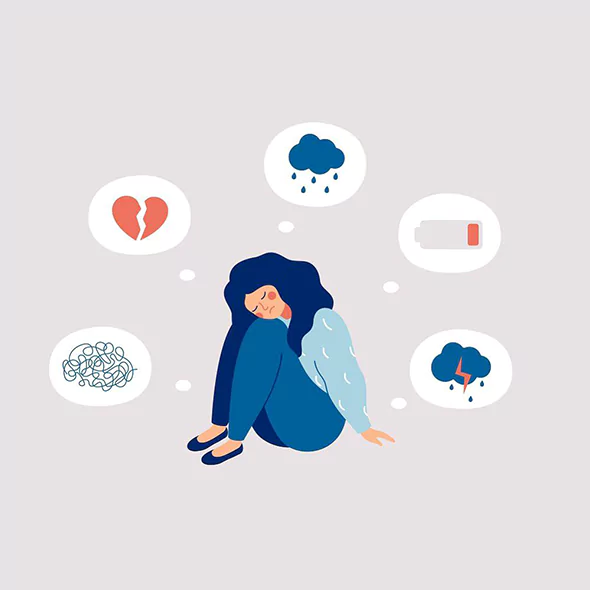


اکثر ما در طول زندگی تغییراتی در خلق و خوی خود احساس کرده ایم و گاهی نیاز به کمک داشته ایم، اما در مواردی این روحیه خیلی افت می کند و نیازمند کمک جدی هستیم. افسردگی علائم متفاوتی دارد؛ مثل بی انرژی بودن، بی علاقگی نسبت به فعالیت ها و زندگی، غمگینی، فقدان اشتها و کاهش وزن، مشکل در تمرکز، خود انتقادگری، احساس ناامیدی، شکایت های جسمانی، دوری گزینی از دیگران، تحریک پذیری، مشکل در تصمیم گیری و افکار خودکشی، بسیاری از افراد افسرده، احساس اضطراب را نیز تجربه می کنند. آنها غالباً نگران هستند؛ سرگیجه، حالت تهوع و گاهی گرگرفتگی، احساس سرما، تاری دید، تپش قلب و تعریق را تجربه می کنند.
شدت افسردگی از لحاظ بالینی از خفیف تا شدید متغیر است. برای مثال، برخی افراد از تعداد اندکی از علائم گاه و بیگاه افسردگی شکایت دارند، در حالیکه افراد دیگر از افسردگی شدید رنج می برند و ممکن است علائم متعددی به صورت متناوب، طولانی مدت و کاملاً آزار دهنده داشته باشند. افسردگی بالینی مشابه سوگ، غم از دست دادن عزیزان، جدایی یا طلاق نیست. احساس غمگینی، تهی بودن، کم انرژی بودن و بی علاقگی در هنگام سوگواری، طبیعی محسوب می شوند؛ خشم و اضطراب نیز ممکن است در فرآیند طبیعی سوگ دیده شود. افسردگی بالینی با سوگواری طبیعی متفاوت است، به طوریکه ممکن است افسردگی بالینی بدون وجود یک فقدان واضح رخ دهد. به علاوه افسردگی می تواند طولانی تر از سوگواری و همراه با احساس خود انتقادگری، ناامیدی و یأس باشد.
بسیار غیرمعمول است که فردی بگوید که هیچگاه احساس افسردگی را تجربه نکرده است. Mood swings are normal and help us realize what is missing in our lives so we can make a change, but clinical depression is worse than simple mood swings. Since there are different degrees of depression, severely depressed patients may need several different treatments at the same time.
Who gets depressed?
Depression is not something that only happens to eccentric or crazy people, but it is possible everywhere and for everyone. Along with anxiety (which is more common than depression), depression is the common cold of emotional problems. Every year, a large number of people are diagnosed with major depression. 25% of women and 12% of men experience periods of major depression during their lifetime. The probability of recurrence of a course of the disease is very high even after the first course. Fortunately, there are many effective treatments to reduce the likelihood of disease recurrence.
Depression is not something that only happens to eccentric or crazy people, but it is possible everywhere and for everyone. Along with anxiety (which is more common than depression), depression is the common cold of emotional problems. Every year, a large number of people are diagnosed with major depression. 25% of women and 12% of men experience periods of major depression during their lifetime. The probability of recurrence of a course of the disease is very high even after the first course. Fortunately, there are many effective treatments to reduce the likelihood of disease recurrence.
What are the causes of depression?
There is no clear and specific reason for depression. We consider depression to be "multifaceted." This means that several factors can be involved in its occurrence. These factors can be biochemical, interpersonal, behavioral or cognitive. Depression can be caused in some people under the influence of a group of these factors, but usually it is caused by a combination of all these factors. Biochemical factors include family genetic predisposition and the current biochemical state of your brain. Conflicts and losses in interpersonal relationships are also factors that can cause depression. Behavioral factors such as increasing stress and decreasing positive and enjoyable experiences are another factor for the occurrence of depression. Cognitive factors effective in depression also include maladaptive and distorted ways of thinking. Let us take a closer look at cognitive and behavioral factors.
How does behavior affect depression?
Below we review the list of behavioral factors involved in depression:
1- Lack of reward: Have you recently experienced a specific loss in your life? For example, losing a job, a friendship or an intimate relationship? Many research evidences show that people who experience a lot of stress in their lives are more prone to depression, especially when they do not have enough and appropriate skills to deal with these issues.
2- Decrease in rewarding behaviors: Are you doing less rewarding activities compared to the past? Depression is characterized by decreased activity and isolation. For example, depressed people spend a lot of time on passive and unrewarding behaviors such as: watching TV, lying in bed, thinking about problems and complaining to friends. They spend less time on challenging and rewarding activities such as social interactions, sports, creative activities, learning and useful work.
3- Lack of self-rewarding: Many depressed people cannot reward their positive behaviors. For example, they rarely praise themselves or spend money on themselves. In most cases they think they are not valuable enough to praise themselves. Others believe that if they praise themselves, they will become lazy and be satisfied with little.
4- Failure to use skills: Do you have social skills or problem solving skills that you are not using? Be aware that depressed people have difficulty expressing themselves boldly, maintaining friendships, or resolving issues with their spouse, friends, or colleagues. Since they do not have these skills or, if they do, do not use them, they have more interpersonal conflicts and provide themselves with fewer opportunities to create rewarding situations.
5- New demands: Are there any new demands that will cause you tension to fulfill them? Moving to a new place, starting a new job, becoming a parent or ending a relationship, and trying to make new friends are examples of things that can be stressful for many people.
6- Being in a situation where you feel helpless: Depression can be caused by your long-term exposure to situations where you cannot control encouragement and punishment. You feel sad or tired, listless and hopeless because you believe you can't make things better. Ended relationships or unrewarding jobs can lead to such feelings.
7- Being in a situation that is constantly punishing: This is a special kind of helplessness; In this situation, you not only cannot receive a reward, but you will be criticized and rejected by others. For example, most depressed people spend a lot of time with people who blame them or hurt them in various ways.
8- Avoidance and passivity: You may avoid unpleasant or problematic experiences or feelings. This leads to less rewards and more helplessness.
Although any of the stress and loss factors described above can predispose you to depression, they do not necessarily lead to depression. For example, a person may experience a loss, but can cope with it by increasing rewarding behaviors, learning new skills, changing the focus of attention, creating new goals, and engaging in bold behaviors. Certain ways of thinking can also increase the likelihood of depression. If you think that you are completely incapable of changing the situation and that you cannot excel at anything, you are more prone to depression. We call your interpretation and perception of stress and loss "cognition". The cognitions or thoughts you have about yourself or your environment determine your perspective on events. Cognitive therapy specifically focuses on identifying, evaluating, challenging and changing these extremely negative attitudes towards life.
How does thinking affect depression?
Specific ways of thinking (your specific cognitions) can cause depression; Some of these are described below:
1- Dysfunctional spontaneous thoughts: These are thoughts that arise spontaneously and seem real; Although they reflect distorted perceptions and are associated with negative emotions such as sadness, anxiety, anger and despair. Some types of these thoughts are:
Mind reading: “She thinks I'm a loser.”
Labeling: "I'm a failure", "He's an idiot."
Prophecy:"I will be rejected", "I will definitely fail in this job."
Catastrophizing: “If I get rejected, it will be very bad”, “If I fail this exam, I will lose everything.”
Double-category thinking (or all-or-nothing thinking): "I'm not successful at anything", "I don't enjoy anything", "Nothing is useful to me".
Ignoring the positives: "It's not worth it because anyone can do it."
2- Dysfunctional assumptions: These are beliefs about what you think and what you should do. Dysfunctional assumptions are rules that depressed people think they must live by. Below are some examples of these inconsistent assumptions:
"I need to be approved by everyone".
"If someone doesn't like me, it means I'm not lovable".
"Even if I do this, I still don't feel happy."
"If I fail at something, I will be a loser".
"I have to blame myself for my failure".
"I've had this problem for a long time, so I can't change myself".
"I shouldn't be depressed".
3- Negative self-concept: Usually depressed people focus on their shortcomings, magnify them and underestimate their positive points. They probably think of themselves as unlovable, ugly, stupid, weak, and even evil.
4- Mental preoccupation with rumination: Most people drown in their negative thoughts and feelings and constantly analyze them, which leads to more passivity and avoidance.
What is cognitive behavioral therapy for depression?
Cognitive behavioral therapy for depression is an effective, practical and organized intervention for patients suffering from depression. This type of treatment treats the patient by identifying those behavioral and thought patterns that cause the emergence and continuation of depression. This therapy focuses on the present and the person's current thoughts and behaviors. Together, you and your therapist will discuss how increased or decreased activities correlate with good or bad feelings. There are activities you can start doing to feel better. You and your therapist will also explore the negative and unrealistic ways of thinking that cause depression. This treatment gives you the tools to think more realistically and feel better.
In cognitive behavioral therapy, you and your therapist first try to identify the symptoms and severity of depression. You may be asked to complete standard worksheets or questionnaires that objectively measure symptoms. These questionnaires usually include: Beck Depression Questionnaire, Rapid Self-Assessment Questionnaire of Depression Symptoms, General Functioning Scale or other questionnaires. At the initial meeting, you will be asked to determine your desired treatment goals, such as increasing self-confidence, improving relationships, reducing shyness, hopelessness, or loneliness. You and your therapist can track your progress in treatment based on the initial assessment of symptoms and moving towards the set goals.
To what extent is cognitive behavioral therapy effective in treating depression?
Several studies conducted at major universities in the world have shown that cognitive behavioral therapy is as effective as antidepressants in the treatment of major depressive disorder. In addition, most patients treated with this method have maintained their recovery for at least two years after treatment. In cognitive behavioral therapy, the goal is not simply to reduce symptoms, but to help you learn how to prevent your symptoms from returning.
Is drug treatment effective?
Several drugs are known to be effective in treating depression. It takes about 2 to 4 weeks for the drug to reach therapeutic levels in your body. Some medications may have adverse side effects. Some of these side effects are temporary and are reduced after some time or are controlled in combination with other drugs.
What is expected of you as a patient?
Cognitive behavioral therapy for depression requires your active participation. In the early stages of treatment, your therapist may ask you to come in twice a week as your depression subsides. You may be asked to complete worksheets or read materials about depression to assess depression, anxiety, and other problems. In addition, the therapist will probably ask you to complete worksheets about depression or other problems that are the focus of treatment at future visits or on a weekly basis. Your therapist may assign you homework to help you modify your behaviors, thoughts, and relationships. Although many depressed patients feel that they will not get better, receiving this treatment gives you a very good chance to gradually reduce your depression.