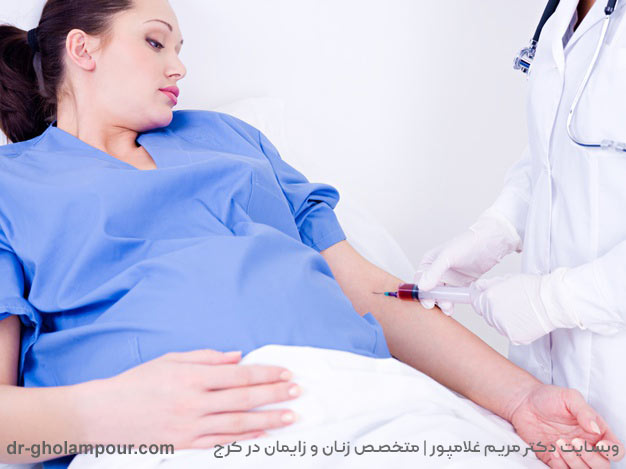

When you are pregnant, prenatal tests will provide useful information about your and your baby's health. They identify some of the most important problems that can affect the fetus. Among them, we can mention birth defects or genetic diseases.
The results of the tests give you the opportunity to make the right decisions about yourself and your baby. Prenatal tests are useful and important, but more important is knowing how to interpret them.
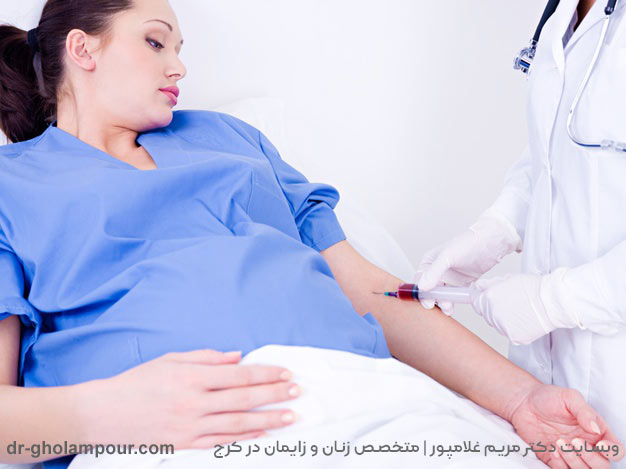
A positive test result does not always mean that your baby will be born with a disorder. In this field, your knowledge is not complete enough.
Therefore, it is better to consult a skilled and compassionate consult. In this way, you can better control the situation. Positive prenatal tests are enough to make parents mentally confused.
Doctors recommend some prenatal tests for all pregnant women. Only a few women will need other screening tests to check for certain genetic problems.

How many categories are prenatal tests divided into?
Prenatal tests are divided into two main types: screening tests and diagnostic tests.
Can prenatal screening tests detect whether a child has a particular birth defect? Many of these disorders are genetic. These tests include a blood test, a special type of sonography and a mother's blood test or DNA screening.
Prenatal screening tests are usually offered in the first or second trimester. You should know that these tests cannot make a definitive diagnosis, and on the other hand, they are not able to detect all defects. By doing this test, you will only be placed in the low-risk and high-risk group.
If the results show an increased risk of having a genetic disorder, further investigations will be done to confirm or reject it.
Another important advantage of these tests is that there will be no risk of abortion for the fetus.

First trimester screening tests
Among the prenatal tests in the field of screening, the following can be mentioned:
Double marker test: This test will be done in the first three months of pregnancy and between the 11th week and the end of the 13th week. But it is said that the best time to do it is in the 21st week of pregnancy. For this purpose, it is necessary to take a blood sample from the mother. Also, be sure to have NT pregnancy ultrasound with you.
During it, HCG Free β hormone and PAPP-A substance will be measured. The results obtained from this test cannot say for sure that the baby will be born with a genetic problem, but it only indicates that the fetus is at greater risk and more investigations should be done by the medical team.
For this test, you don't need to meet special conditions, that is, you don't need to be fasting. During this test, the risk of the fetus developing Down syndrome (Mongolian or 12 syndrome), Edward syndrome (trisomy 18) and Pato syndrome (trisomy 13) will be checked.
Also, in this test, the risk of pregnancy poisoning or pre-eclampsia is predicted to some extent, and at the discretion of the gynecologist and to prevent pre-eclampsia, aspirin is started after seeing the result of this test.
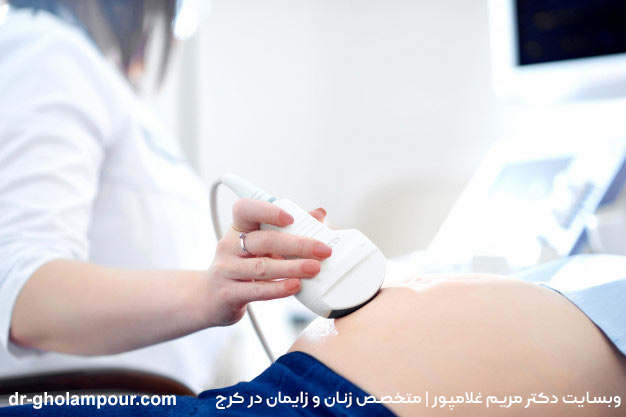
Prenatal tests, ultrasound NT
NT ultrasound is also one of the other first trimester screenings and is performed simultaneously with the double marker, which examines the accumulation of transparency on the back of the fetus's neck.
If the fetus has problems, the amount of this transparency will be higher than normal. In cases where NT is high, in addition to checking for Down syndrome, the fetal heart should also be evaluated for congenital heart defects with echocardiography of the fetal heart in the second trimester.
Trials of screening in the second month
Quad Markers screening test is another prenatal test. This test will be done in the second trimester of pregnancy and between 14 and 22 weeks of pregnancy. But it is said that the best time to do it is in the 15th and 17th week of pregnancy.
To perform this test, a sample of the mother's blood will be taken, and based on that four substances will be examined, and based on the amount of these four substances, the risk of chromosomal disorders or neural tube defects of the fetus will be assessed.
The results of these tests indicate the existence of a fetus that has certain chromosomal conditions such as Down syndrome. This test can also help diagnose neural tube defects, serious abnormalities of the brain or spinal cord.
The accuracy of the quad marker test is lower than the double marker test in the first trimester, and if the first trimester screening is low-risk, there is no need to perform the quad marker and only the ultrasound anomaly scan is performed.

sonography anomaly scan
This ultrasound is also part of the screening of the second trimester, and in this ultrasound the structures and all the organs of the fetus are checked. The best time to do it is 18 to 22 weeks. Even if the result of the first trimester screening is normal, this ultrasound should be done.
Fetal heart echocardiography
Echocardiography of the fetal heart in some cases such as
History of epilepsy, diabetes in mother
the use of some medicines by the mother
Possibility of heart problem in ultrasound scan anomaly
history of congenital disease in mother, father or one of the children
NT high
It is done in the second trimester between 18 and 22 weeks.
Free tuberculosis screening test
Among the other prenatal tests, we can mention the tuberculosis screening test. Using this test, you can check the chromosomal problems of the fetus with high accuracy.
During pregnancy, there is some fetal DNA in the mother's blood. Therefore, to do it, it is enough to take a blood test from the mother in the 10th week of pregnancy. Using it, the following abnormalities can be checked:
- Pato syndrome (trisomy 13)
- Edwards syndrome (trisomy 18)
- Turner syndrome
maternal health assessment tests
Some other prenatal tests are related to the health of the mother. For this purpose, blood and urine samples will be taken from you and checked. During these tests, the following problems will be investigated:
- HIV and other sexually transmitted diseases
- Anemia
- Fasting blood sugar
- Glucose syrup test to check gestational diabetes
- urea and creatinine
- Hepatitis B
- Urinary tract infection
- Protein excretion in urine
- Blood type and RH positive or negative
- vitamin D level
- Indirect Coombs test is performed in mothers who have a negative blood group and their husband has a positive blood group, in the seventh month of pregnancy and before Rogam injection
Maternal health tests are performed in early pregnancy and again in the second trimester between 24 and 28 weeks. Of course, according to the medical conditions of the mother, some tests may be repeated again during pregnancy.