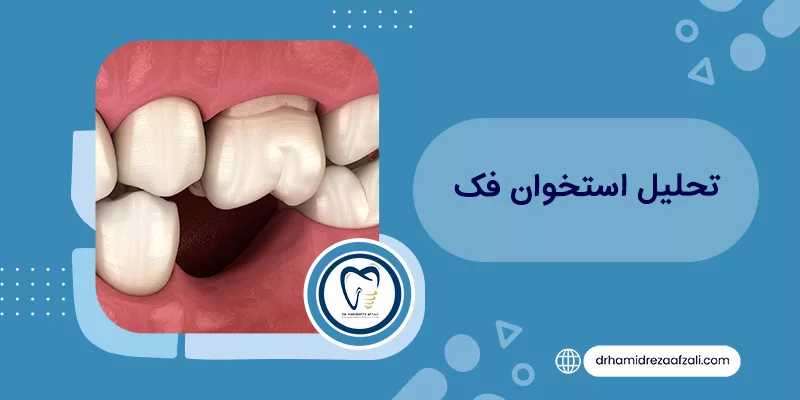

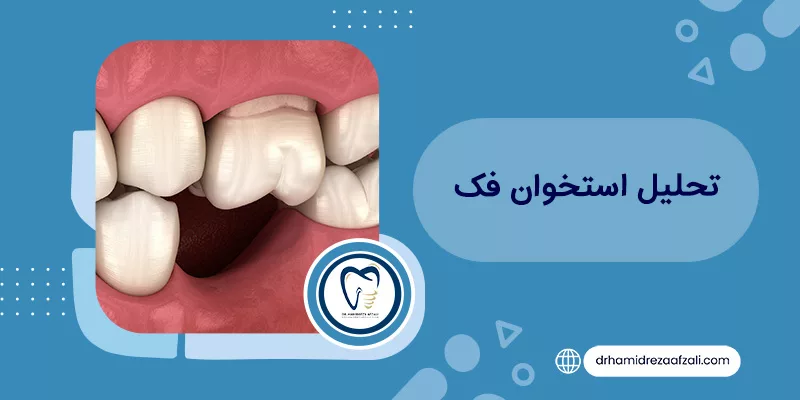
Some time after you pull your tooth, you will notice that the gum and jawbone in that area are a little sunken or a little thinner. We call this mode jaw bone analysis. You probably also want to know what is the cause of jaw bone degeneration? And what are the complications of bone loss? Stay with us to tell you what is the cause of this condition and why its diagnosis and treatment is so important.
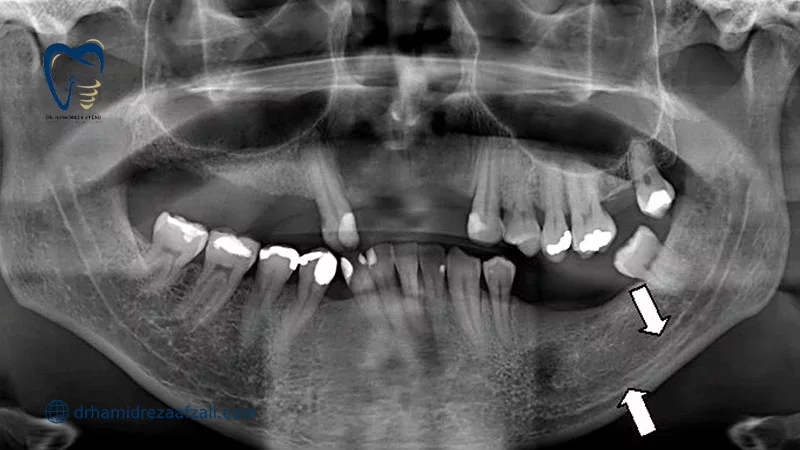
cause of jaw bone degeneration
The jaw bone may undergo degeneration for several different reasons.
Space for missing teeth
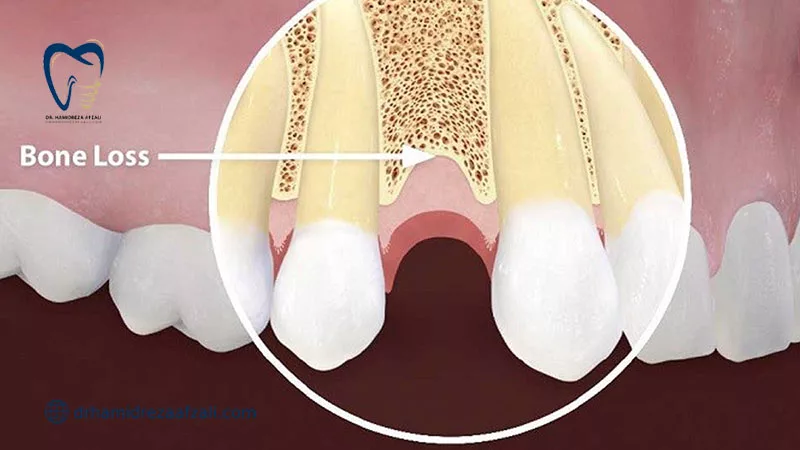
The part of the jaw bone that surrounds the root of the tooth is called alveolar bone. Normally, the roots of the teeth stimulate the alveolar bone and cause calcium and other nutrients to come to this area and continue the growth of the jaw bone. In this way, the teeth maintain the height and natural thickness of the jaw bone. But when a tooth is extracted or lost, there is no longer a tooth root that can send a nerve message to grow and strengthen the jaw bone. As a result, the jawbone slowly degenerates. The more the number of missing teeth, the more tissue is lost.
periodontal disease
Infection and chronic gum diseases, which we call periodontal diseases, in addition to the gums, also affect the tooth-supporting tissues such as alveolar bone and tooth-supporting ligaments. In advanced periodontal diseases, bacteria also damage the bone around the tooth and cause tooth loss and jaw bone degeneration. In some cases, these diseases do not cause pain, as a result, their diagnosis and treatment are often not done on time.
Dentures and dental bridges
Traditional dentures and bridges, although they are a way to replace missing teeth, do not protect your jawbone from decay. Dental implant stimulates the jaw bone and prevents its degeneration; But dentures are placed directly on the gum tissue without implant support. As a result, they cannot protect the jawbone from erosion. Also, denture prostheses move on the gum tissue, which accelerates the loss of bone tissue.
Medical conditions
Some medical conditions such as osteoporosis, Paget's disease of bone (a disease in which bone is weakened; but does not regenerate properly), osteomyelitis (inflammation of the bone due to infection) and tumors are some of the conditions that cause jaw bone loss.


trauma
Injury or impact, which we call trauma, can cause a tooth to break or be lost, thereby disrupting the process of repairing and regenerating the jaw bone. In addition to this, a jawbone fracture or severe impact can cause tissue death and bone loss can occur years after the injury.
Byte anomalies and problems
Bite problems affect how you chew and eat. In this case, the incorrect distribution of force and the lack of opposing force can disrupt the natural stimulation of the jaw bone and lead to bone loss. Crooked and misaligned teeth (malocclusion), wear of teeth and temporomandibular joint disorder (TMJ) are among these problems.
Other causes
Smoking can be effective in jaw bone degeneration. Smokers are more prone to bone loss and jaw bone loss than others. Other conditions such as osteoporosis, congenital absence of teeth, or the use of certain medications can also cause jawbone loss.
symptoms of jaw bone loss
The loss of the jawbone, in addition to affecting the mouth and teeth, can cause other problems and issues. The symptoms of jaw bone degeneration are:
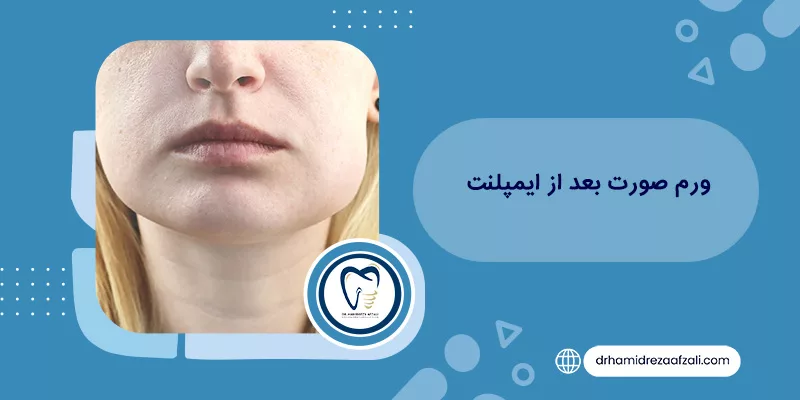
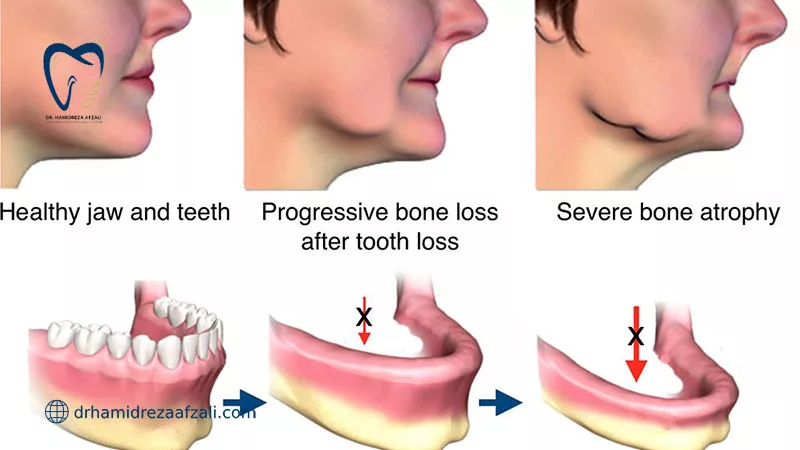
- Change in facial structure such as sharper looking chin
- Gum shrinking
- Formation of deep wrinkles around the mouth
- Lips look thinner and they sink inward Jaw and face pain
- Feeling discomfort when using a prosthesis or denture (denture loosening)
- Displacement or loosening of teeth
- Feeling headache or pain in the face and jaw
- creating a gap between the teeth
- Bad breath
- Pain when chewing food
- Difficulty speaking
Prevention of jaw bone loss
In order to prevent jaw bone loss, you must take certain measures.
- In order to prevent jaw bone loss, you must observe oral and dental hygiene in the first step. Brush your teeth at least twice a day and use dental floss and mouthwash once a day.
- If your tooth is decayed or damaged, repair it and avoid pulling your tooth as much as possible.
- Have foods containing calcium and vitamin D in your diet, and in case of lack of these nutrients, use appropriate supplements after consulting your doctor.
- Consult with a dental surgeon before tooth extraction so that if you need a bone graft, it can be done at the same time.
- As much as possible, use implants to replace your teeth instead of dentures and bridges.
- Quit smoking and tobacco.
Types of jaw bone loss
The jaw bone may undergo analysis from various aspects.
vertical reduction of bone after tooth loss or extraction
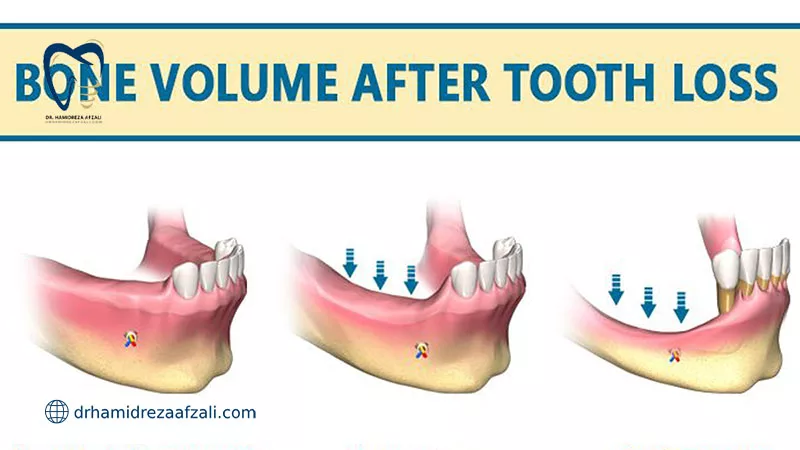
One of the important types of jaw bone loss is the reduction of the vertical height of the bone, which should be addressed quickly. The jaw bone usually degenerates vertically after tooth extraction or loss. By using implants, we can prevent this type of analysis.
Lateral bone reduction after tooth extraction (width reduction)
After a tooth is extracted, its place initially remains as a cavity in the jawbone. Bone loss begins immediately after tooth extraction. Up to six months after tooth extraction, the bone in that area is degraded by about 60%. This decay continues over time and may go to the point where we cannot replace the missing tooth with an implant.
Maximum bone analysis
The maxillary sinuses are located above and behind the maxillary bone. These sinuses are large cavities that enlarge during bone loss and atrophy. As a result, the thickness and quality of the bone of the upper jaw decreases and the implantation of the implant faces problems. These methods can have a direct impact on Dental implant price and affect the final cost.
Mandibular bone analysis
If several teeth are missing in the lower jaw bone, especially if those teeth are close together, this will cause the lower jaw bone and gum tissue to gradually deteriorate.
Analysis of the entire jaw bone of the dental arch
As we explained before, with the loss of teeth, the jawbone also undergoes degeneration. The more the number of missing teeth, the more the jawbone is weakened. Now, if all the teeth of a jaw arch are lost, the patient will suffer severe jaw bone loss in that area. This degeneration and atrophy may progress to such an extent that the deep nerves of the jawbone protrude and are placed on the surface of the bone.
Analysis of the jaw bone of the whole face
Now, if bone loss occurs in both the upper and lower jaws, the height of the upper and lower jaw bones will decrease drastically, making the face look droopy and older.
Treatment of jaw bone loss
The treatment method used to fix this condition depends on the cause of jaw bone degeneration and its severity.
jaw bone graft
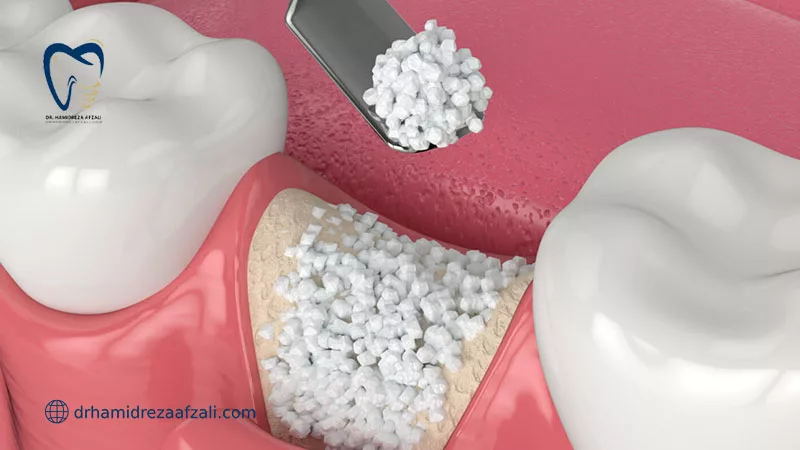
The best and main treatment method for jaw bone loss is bone grafting. Bone grafting can prevent and fix jawbone degeneration. After bone grafting, an implant is implanted on the desired surgical site. In this way, not only osteoporosis is treated; But the growth and repair of the jaw bone also continues.
How is the jaw bone graft done?
The method of bone graft surgery to treat dental bone loss depends on the method of grafting and the severity of bone loss, but some surgical steps are the same in different methods.
For bone grafting, the surgeon first numbs the gum, then makes an incision in the gum tissue and pulls it away from the bone. In the next step, the dentist cleans and disinfects the surgical site and adds bone graft material to the depleted area and places a special tissue over it. Finally, he stitches the gum.
4 types of jaw bone graft materials
According to a 2013 article published in ncbi.nlm.nih.gov, the bone material used in a transplant may be taken from the patient's own body. In this case, it is called autograft. Also, this material may be prepared from a donated body or from an animal tissue, which in the first case is called an allograft, and in the second case, it is called a xenograft.
Finally, with the advancement of science, scientists have developed synthetic materials that are safe and usable for bone grafting. If these materials are used, we call it plum plastic.
4 different methods of jawbone transplant surgery
The method of jaw bone graft surgery depends on the cause and type of bone loss.
- This surgery may be performed immediately after tooth extraction to prevent the tooth socket from sinking and bone loss.
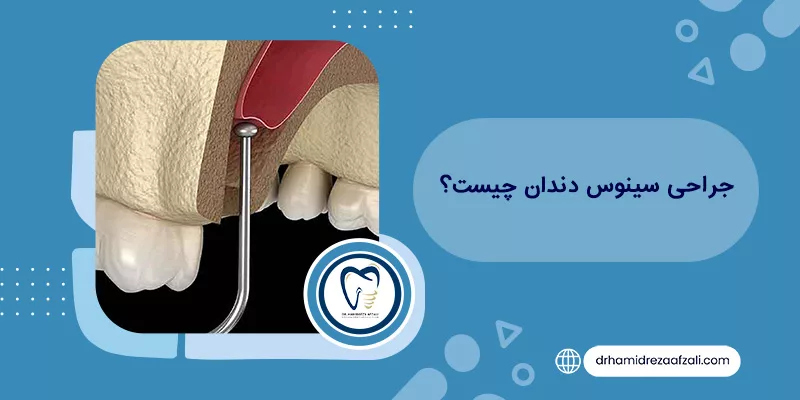
- If the upper jaw bone has weakened and the person wants to implant his missing teeth, this surgery is performed together with a sinus lift. In this way, a part of the sinus tissue is pulled up and the empty space obtained is filled with bone graft material.
- Also, bone grafting may be done to increase the height and width of the bone after the bone has deteriorated.
- Also straw may be the tooth is still alive and healthy; But the surrounding bone is damaged due to periodontal disease. In this case, the graft material is placed around the desired tooth.
Advantages of jawbone transplant
Bone grafting has many advantages. This surgery improves the thickness and quality of your jawbone so that you can perform implant surgery. Also, this surgery restores your jawbone to its original shape after trauma, gum disease, and tooth loss, and prevents damage to your other teeth.
Finally, improving the strength of the jawbone and preventing its degeneration, reducing the risk of periodontal diseases and maintaining bone health are other benefits of this surgery.
Disadvantages of jaw bone grafting
Bone grafting is generally considered safe; But it has complications that you may experience for some time after the surgery. These complications include:
- Feeling throbbing pain or pain when eating and drinking
- Inflammation and swelling
- Tooth sensitivity
- infection
- nerve damage
- Bleeding
drug treatment
If the cause of jaw bone loss is an infection, the dentist will prescribe you medicine to eliminate the infection and prevent the progression of bone loss.
Osteoporosis is also one of the causes of jaw bone degeneration. In this case, osteoporosis drugs may also be prescribed to treat jaw bone loss.
Finally, you should know that the complication of jaw bone atrophy may also cause pain, that's why painkillers are usually prescribed for patients.
useful drugs for osteoporosis
Drugs useful for osteoporosis are anti-resorptive and slow or stop this process. Some of these drugs are: risedronate, zoledronic acid, ibandronate, alendronate, romosuzumab.
Possible side effects of taking drugs to treat jaw bone loss
Of course, the use of these drugs is accompanied by a series of side effects.
- Digestive problems (stomach ache, nausea, diarrhea)
- Decreased consciousness
- Heartbeat Dry mouth
- Sleep disorders
- Skin sensitivity
- Feeling anxious
Some of these complications are.
Gingival curettage
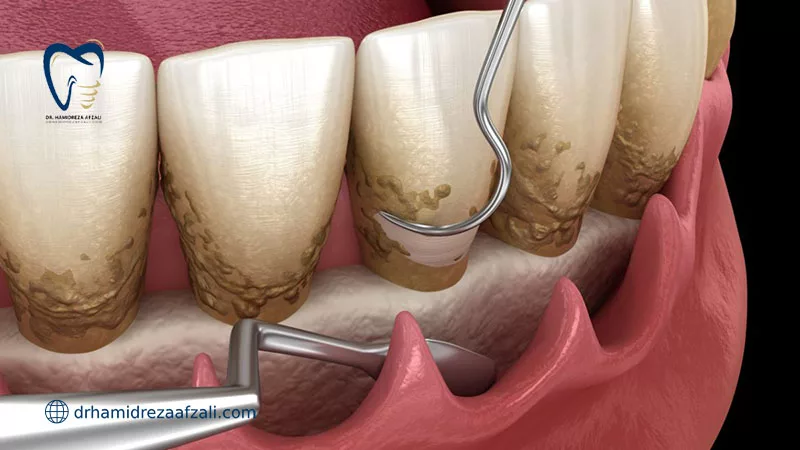
Gum curettage is one of the dental treatments that is performed to clean the gums and tooth roots from bacteria. In this method, the gum is slightly shaved or scratched.
3 different methods of gum curettage treatment
- Gingival curettage: If the gum infection is mild and the penetration depth is low, gum curettage is performed to eliminate and remove part of the gum tissue.
- Subgingival curettage: It is done to remove tissues around the tooth root and connective tissue.
- Unintentional curettage: If part of the gum tissue is accidentally removed during scaling, it is called unintentional curettage.
Benefits of gum curettage treatment
gum curettage has the following benefits:
- Duration of treatment and short recovery period
- Low pain and bleeding
- High success
- A suitable method to stop the progress and treatment of periodontal diseases
- low side effects
Complications of jaw bone loss
Gum and jaw bone analysis can cause
- Teeth sensitivity
- Change byte
- Breaking or losing a tooth
- Loose teeth
- Wrinkling of the skin around the mouth and looking old
- Creating a disturbance in the implantation process
- Creating swelling and feeling pain
- thinning of the lips
- Bad curling of the chin and drooping of the face
- Gum tissue damage
s ñ YeES � ��������������t.
�ff �� � � �d � � � �בּ (�t�t�t�����p. fteni This V. 0,ah.
��������t�ççç çughs ê ê 11. 11. sweepings ��� ������ � Å. In this case, the bone does not repair over time and becomes thinner and shorter. This analysis not only affects your beauty, but can also disrupt the process of treatment and implant placement. As we have reviewed in this article, there are various methods of treating jawbone loss that can make you a good candidate for Kash implants. However, timely diagnosis and treatment of this complication is very important and you should not ignore it.
Dr. Hamidreza Afzali
Frequently Asked Questions
How is jawbone loss treated?
When bone loss has occurred in the jaw, dental bone grafting is necessary. This procedure is usually done before dental implants are placed or when bone loss negatively affects adjacent teeth.
Does degenerated jaw bone grow back?
Yes, it is possible with bone grafting. For most patients, the jaw bone will regenerate in 4 to 6 months, but in some cases it may take longer.