Diabetes is one of the most common metabolic disorders that can significantly affect oral health. This disease is associated with a decrease in tissue repair capacity, an increase in the risk of gum inflammation and infections, and a change in the body's response to dental treatments. For this reason, people who have diabetes face different conditions when starting orthodontic treatment and must be under more careful care.
Knowing the impact of diabetes on orthodontics helps patients to start the treatment path with more knowledge and the orthodontic specialist can provide a safe, controlled and compatible program with the patient's health condition. In the rest of this article, we will discuss the most important challenges and points that diabetic patients must follow during orthodontics.
Effect Diabetes on the course of orthodontic treatment
Diabetes can play an important role in the speed and quality of orthodontic treatment. One of the most important problems of diabetic patients is blood sugar fluctuations. An issue that affects the body's ability to repair the soft and hard tissues of the mouth. When blood sugar is high, the healing process becomes slower and the possibility of gingivitis, oral infections and even delayed teeth movement increases.
On the other hand, diabetic patients should be more sensitive to their daily care. Strict adherence to oral and dental hygiene, medication control and regular blood sugar monitoring are all factors that directly affect the final result of orthodontic treatment. For this reason, it is necessary for the patient to be under the supervision of an experienced orthodontist in full coordination with a diabetes doctor in order to reduce possible complications and achieve the best treatment results.
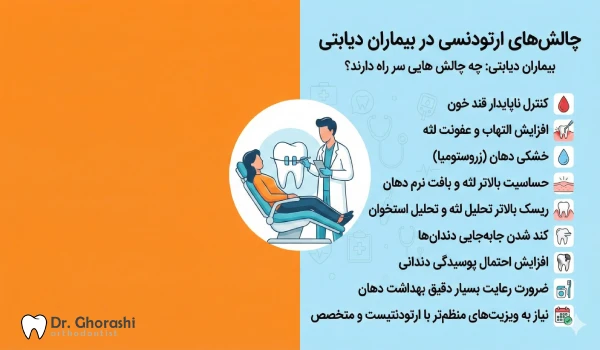
What challenges do diabetic patients face during orthodontic treatment?
- Unstable blood sugar control
- increasing gum inflammation and infection Dry mouth (xerostomia)
- higher sensitivity of the gums and soft tissues of the mouth
- Higher risk of gingivitis and bone loss
- Slowing down of teeth movement
- increasing the possibility of tooth decay
- The necessity of very strict oral hygiene
- need for more regular visits with the orthodontist and diabetes specialist
Useful article: orthodontics for heart patients
Can diabetic patients do orthodontics?
Yes, orthodontics is possible for diabetic patients. But these people should be treated more carefully. The main condition for starting orthodontics is stable blood sugar, because fluctuating or increasing blood sugar can slow down the tissue repair process and increase the possibility of gum inflammation or infection.
Diabetes patients should observe oral and dental hygiene much more regularly during the treatment period and be under the supervision of their orthodontist. Also, coordination between the orthodontist and the diabetes doctor is necessary for the treatment to go smoothly.
If blood sugar is controlled and care is taken properly, diabetic patients can benefit from successful and safe orthodontic results like others.
Useful article: orthodontics for osteoporosis patients
Diabetic patients should pay special attention to their oral and dental hygiene. It is very important to use special toothbrushes for brackets, because these toothbrushes, with their thin, round and conical design and soft bristles, allow complete cleaning around the brackets and the spaces between the teeth, and prevent the accumulation of plaque and food residue. It is recommended that diabetic patients brush their teeth at least 2-3 times a day and use mouthwash at least once a day to disinfect the mouth to reduce the growth of bacteria and plaque.
Also, after every meal, the mouth and teeth should be rinsed with water to completely remove the food from between the teeth. Drinking water while eating also helps to wash away small particles of food. Due to the high sensitivity of diabetic patients undergoing orthodontic treatment, it is recommended that they visit the dentist regularly for gum and teeth health examinations and avoid smoking, especially cigarettes.
Useful article: What is an orthodontic toothbrush

in orthodontic treatment for diabetic patients
Fortunately, diabetes should not be an obstacle to smile correction using orthodontics. Here are some effective tips to increase the chances of orthodontic treatment success in diabetics:
Diabetes control
Keeping blood sugar in the right range significantly reduces the risk of gum infection and other complications that can affect orthodontic treatment. Follow your doctor's instructions about medication, exercise, and diet carefully to control your diabetes.
Oral hygiene
Whether you have diabetes or not, regular brushing and flossing help a lot to maintain the health of your teeth and gums and allow successful orthodontic treatment without problems.
Proper diet class="ez-toc-section-end">
Since orthodontic treatment and diabetes can cause sensitive gums, your diet is important. Use healthy and soft foods and drinks and limit or avoid sugar, sugary drinks, salt, acids and hot spices. This will help you to proceed with the orthodontic treatment smoothly and without problems.
Avoiding smoking class="ez-toc-section-end">If you are a smoker and have diabetes, your risk of gum disease and oral problems is very high and can affect orthodontic treatment. Quitting or reducing the use of tobacco products is essential for success in orthodontics.
Regular dental examinations and cleanings will help you quickly diagnose and fix possible problems. With professional cleanings, the risk of oral problems is reduced and you can perform orthodontic treatment successfully and without complications.
Concluding remarks
Orthodontics is completely possible for diabetic patients, but its success depends on accurate blood sugar control, oral and dental hygiene and regular follow-up with an orthodontist and doctor. With special care, diet modification and smoking cessation, diabetic patients can benefit from the successful and safe results of orthodontic treatment like others. Careful planning and close cooperation between the patient, orthodontist and diabetes doctor are the keys to achieving a healthy and beautiful smile.