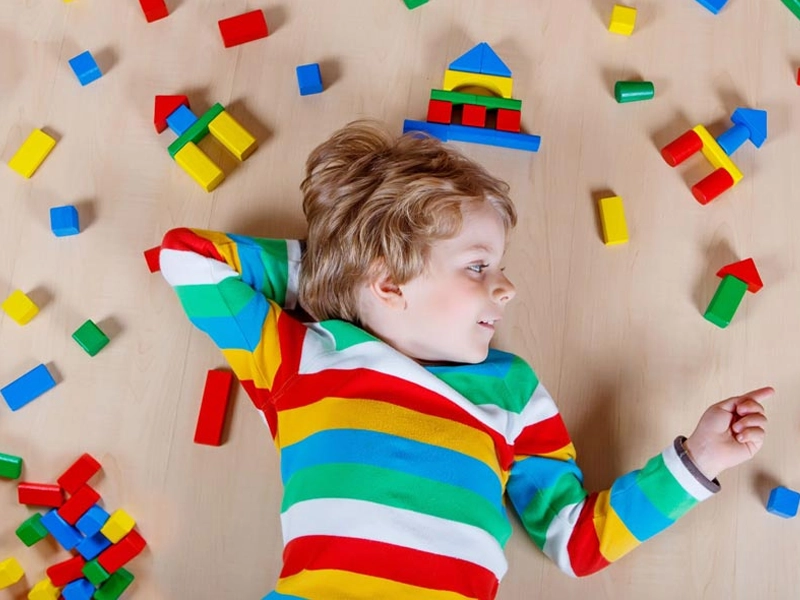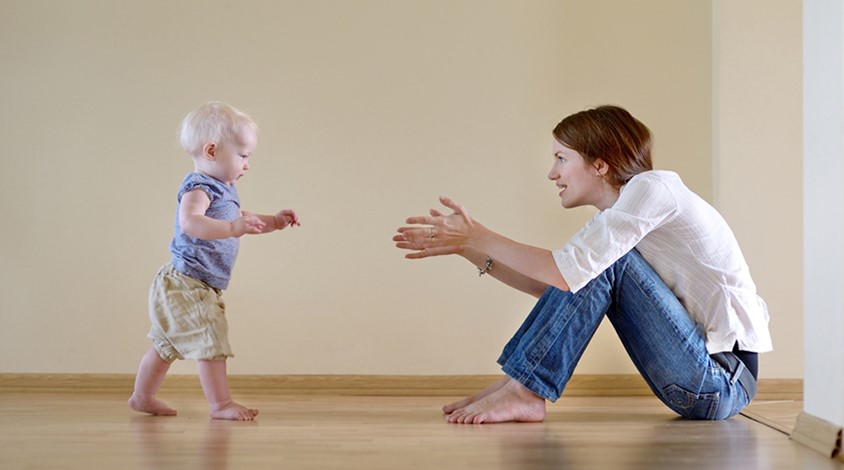


رشد حرکتی کودکان یکی از مهمترین جنبههای تکامل در سالهای اولیه زندگی آنهاست که شامل بهبود مهارتهای حرکتی درشت و ظریف میشود. This development not only affects the child's physical abilities, but also plays an important role in his learning, social interactions and self-confidence. For this reason, knowing the stages of motor development helps parents and teachers to provide a suitable environment for the child's development.

Stages of motor development of a baby
Generally, the development of children depends on several factors such as genetics, family environment, problems or diseases of the child during the embryonic period and after birth. Therefore, each child grows at its own pace according to environmental and hereditary conditions.
For example, there are children who will be able to take a step at 12 months, while another child will take his first step at 16 months. Therefore, the difference in growth speed and motor skills will not be a sign of growth delay. But it is very necessary to pay attention to the duration of the delay in growth, so that long-term motor retardation can indicate more serious problems.
motor growth from birth to three months
At birth, the baby has limited mobility until the first few weeks and is often asleep, but after the end of one month, when he lies on his back, he will have the ability to turn his head towards the light or colored objects. Also, when he is lying on his stomach, he can separate his head from the ground, but he is not ready to hold his head yet. At the age of 8-10 weeks, the baby is awake for a longer time and looks for objects, light and sound with his eyes.
While lying on his back, he has the ability to kick both legs and move both arms equally. In three months, the baby's motor development is such that it is possible to hold its head and neck, and it can lift its head in line with the trunk with help to sit. When he is lying on his stomach, he can push his forearms up and raise his head higher than before.
motor growth at four months
The child learns to turn from the stomach to the side with the help of the strong muscles of his trunk at about four months. He can also turn from side to back in a short period of time (often by accident). Although some babies first learn to roll in the opposite direction (ie from back to stomach), most children first roll from stomach to back. Over the next few weeks, the baby will be able to do this in both directions (i.e. stomach to back and vice versa) and he may roll across the room.
motor growth five-to-seven months
The child may be able to sit with your help for the first time, but he is not strong enough to keep his body straight. So if you let him go, there's a chance he'll tilt. As the child approaches six months, he can maintain his balance better, he may put his hands in front of him so that he can sit more firmly with their help. When he can sit better, he can do other things while sitting, for example, reach out to pick up his toy. Eventually, he learns how to pull himself up from a supine position to a sitting position and then to a lying position.
Read more: In children and its effects
motor growth six-to-eight months
As he lies on his stomach, he tries different methods (such as rocking, pulling, and kicking) to move forward. He tries to pull himself forward with the help of his hands. His efforts to move are accompanied by ups and downs. Also, while the child is lying on his stomach, he spreads his arms and legs, swings back and forth and moves forward.
motor growth of seven to ten months
From the time your baby learns to bear weight on his hands and knees and swing forward and backward, he is ready to walk on all fours. It may seem like he wants to fast forward. He even stretches his hands forward, but still can't go anywhere, then one day he starts moving, although it may take a long time before he can move quickly.
Some children, as soon as they learn how to use their arms and legs together, move backwards before moving forward on all fours. Other children may not crawl at all, or experience a different type of crawling instead of the normal crawling motion where the hands move forward first and then the knees. In this position, your baby may move by dragging one leg (while appearing to be behind the other leg), pull himself forward on his stomach, jump forward (throwing his arms together and then knees together) or crawl on his arms and legs.
motor development nine to twelve months
Movement development of children around nine months is such that they probably try to lift themselves up by grabbing surrounding objects such as furniture and stand up so that if they lean on the sofa or the wall, they can maintain their balance while standing. But the important thing here is that what goes up must also come down, and the child may not know how to sit again on the verge of walking. If he starts to cry, help him by bending his knees so he can learn to sit back on the floor without falling.
When the child has completely learned how to stand, he begins to explore the environment. He holds his hand on the sofa and moves along the sofa, or he holds his hand on the wall and walks. Also, when you hold his hands, he can stand up and tatti-tati.
motor growth twelve to fourteen months
As your child's balance improves, he may sometimes let go of your hands or the sofa he is holding and walk on his own. But for fear of falling, he will hold your hands again. At first, the child may only be able to take a step or two and immediately lose balance. But soon you will not be able to reach his feet.
In order to take care of the child's feet, do not insist on wearing shoes. In fact, wearing shoes makes it harder for him to walk. Use only outside the house and be sure to choose a shoe that is flexible and the sole is not slippery in order to keep the child safe.
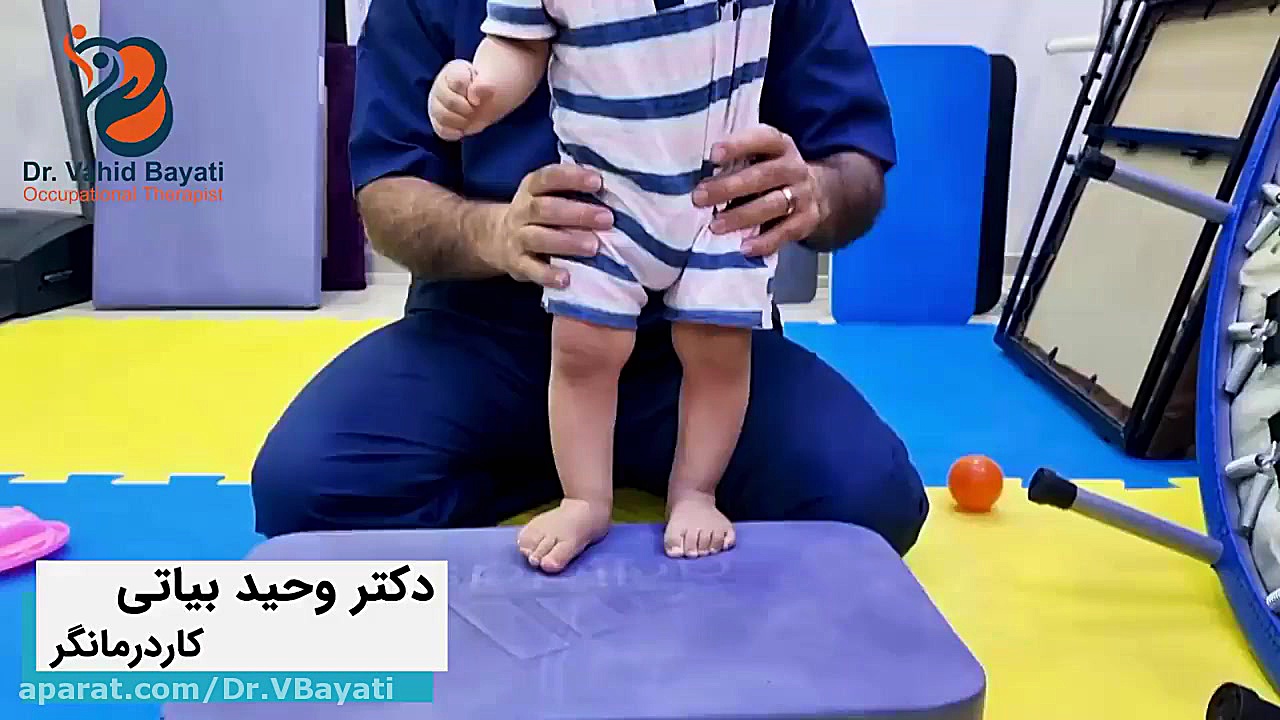
Good exercise for baby movement
Symptoms of slow physical and motor growth of children
Symptoms and signs of slow physical and motor development of children at different ages appear in different ways. Some of the most common symptoms are as follows:
- Delay in rolling over, sitting up, crawling or walking
- Inability to grasp or hold objects with hands
- Muscle weakness or abnormal muscle stiffness
- Lack of balance or frequent falls while walking
- Difficulty performing fine movements such as buttoning, drawing or using a spoon
- Using more of one side of the body (for example, only one hand)
- Slow or abnormal motor responses to stimuli
📍 Note: If these symptoms are observed, the timely evaluation and intervention of the occupational therapist is very necessary and effective.
how to measure motor growth
Motor development can be evaluated through standard tools and tests. These methods include direct observation of the child's motor behavior, the use of developmental tests such as the Denver Developmental Screening Test, the Bruinink Motor Development Test (BOT) or the Piaget Motor Development Scale. Also, occupational therapists evaluate the child's motor development by examining fine motor skills (such as holding a pencil) and gross movements (such as walking or jumping). They do.For this reason, if you are concerned about your child's motor development, refer to The best occupational therapy center in Ahvaz, i.e. Dr. Vahid Bayati's occupational therapy can be an effective step towards timely diagnosis and treatment. To get an appointment, call 09918292254 and 09389414395.
Enhancement of motor development of children
Various and effective methods can be used to strengthen children's motor development. Daily activities such as movement games (running, jumping, playing), drawing, play dough, cutting with children's scissors and making puzzles help develop gross and fine motor skills.Also, providing a safe and stimulating environment, encouraging movement, and creating opportunities for free play play an important role. In cases where delay or difficulty in growth is observed, Occupational therapy for movement delay under the supervision of Dr. Vahid Bayati can accelerate the child's progress and prevent future problems.
FAQ
If the child does not sit until 9 months, does not walk until 18 months, or is weak in using his hands, it is necessary to See an occupational therapist.
Genetic factors, neuromuscular problems, difficult delivery, prematurity or deprivation of appropriate motor stimulation can cause slow motor development.
Yes, motor games play a key role in strengthening muscles, body coordination and learning new movements.
Finally…
The motor development in children is not the same and the motor skills in children under one year will be different from each other, but knowing the motor abilities from birth to fourteen months can reduce the effects of delayed motor development. You, dear parents, will play an essential role in teaching motor skills, it is enough to help increase their motor development by playing simple games. Note that playing with children is not only to entertain them, but its purpose is to strengthen children's motor skills.