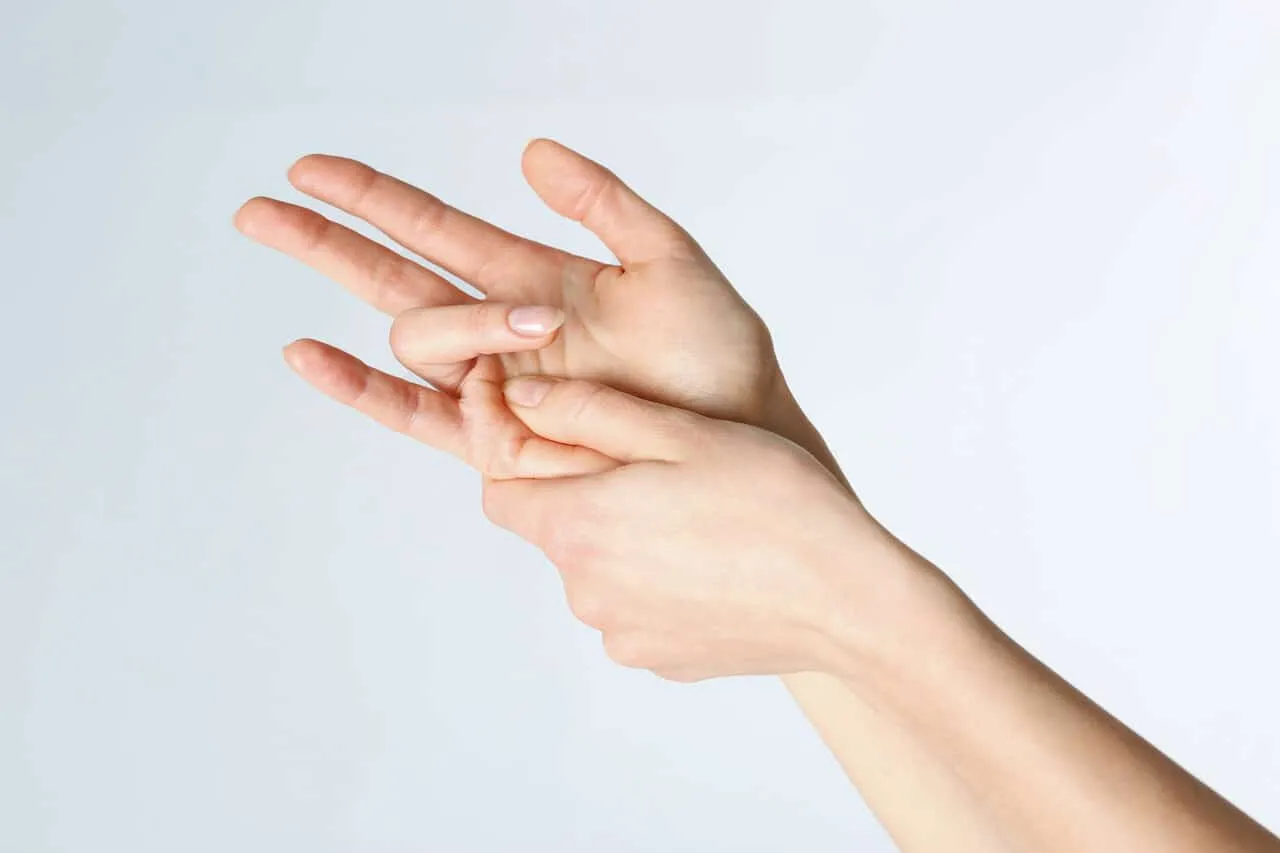


انگشت ماشهای وضعیتی است که در آن انگشت هنگام خم و راست شدن گیر میکند یا با صدای تق باز میشود و میتواند انجام فعالیتهای روزمره را دشوار کند. This problem is usually caused by inflammation or thickening of the finger tendons and can be cured with early treatment.
What is trigger finger?
Trigger Finger or Trigger Finger is one of the most common movement problems of the fingers, in which one of the fingers gets "stuck" when bending and straightening or is released with a clicking sound; Just like a gun trigger, that's why it's called a trigger finger. This disease is usually seen in people who do repetitive activities with their hands, such as typing a lot, sewing, working with hand tools, or playing music.
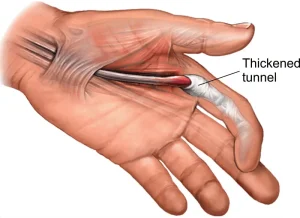
In the normal state, the tendons of the fingers move in sliding sheaths and cause the flexion and straightening of the finger. But in trigger finger, due to inflammation or thickening of the tendon, its movement inside the sheath is difficult and sometimes the tendon gets stuck in the narrowed area. This causes a sudden and loud movement when opening the finger.
The severity of this condition varies from a mild dryness in the morning to a complete numbness of the finger. In advanced stages, the finger may be locked in a bent position and require the help of the other hand to open. In most cases, the thumb, middle finger, or ring finger are involved, but any finger can be affected.
Learn more:Treatment of apraxia in Karaj
What is a trigger finger?
Trigger Finger is actually the same as "trigger finger" and has no difference in concept. The English term Trigger Finger is derived from the sudden movement of the finger when opening. This problem usually occurs at the base of the finger, where the tendon from the palm enters the finger.
Normally, the finger tendon passes under a sheath called A1 Pulley when flexing. When this part becomes inflamed or the tendon becomes thicker than usual, it becomes difficult for it to pass through this sheath. The same thing causes a jam in the movement of the finger.
If in the morning when you wake up, you notice that one of your fingers is difficult to open or you feel a clicking sound when you bend, there is a high possibility that you have a trigger finger.
Trigger finger disease can be seen in both men and women, but women over 40 years old, people with diabetes, rheumatoid arthritis, or those who use their hands a lot in pressure work are at greater risk for trigger finger.
What is the cause of trigger finger
The cause of trigger finger mainly refers to the inflammation and thickening of the flexor tendons of the finger and the narrowing of the tendon sheath (Pulley). These tendons are strong and flexible fibers that extend from the forearm muscles to the fingertips and are responsible for bending and straightening the fingers. In a normal state, these tendons move easily within their sheath and allow the fingers to bend and straighten without pain and with complete fluency.
In trigger finger disease, for various reasons, the tendon thickens or the tendon sheath becomes inflamed. These changes cause the tendon to get stuck when passing through the sheath and the movement of the finger is accompanied by a sudden jump or even locking. This is the reason why affected people sometimes feel that their finger is "stuck" or stuck in one position and they need the help of the other hand to open it.
Several factors can cause trigger finger disease:
-
Repetitive hand movements: Prolonged use of hand tools, typing, writing a lot, working with a mobile phone or doing activities that bend and straighten the fingers, puts a lot of pressure on the tendons and eventually causes them to become inflamed and thickened.
-
Underlying diseases: People who have diabetes or articular rheumatism are more exposed to this disease. are located Diabetes can cause inflammation of tendons by disrupting blood circulation and increasing tissue inflammation. Rheumatism also causes swelling and inflammation of the joints and tissues around the tendon, which disrupts the smooth movement of the finger.
-
Injuries and previous injuries: Any previous trauma or injury to the finger or palm can cause chronic inflammation of the tendon or create scar tissue, making it difficult for it to pass through the sheath.
-
Age and gender factors: Women over 40 are more likely to suffer from trigger finger than men, and aging reduces the flexibility of tendons and connective tissues.
Knowing these causes is very important, because the development of trigger finger disease can be prevented by controlling underlying factors and modifying daily behaviors. For example, reducing repetitive activities, resting the hand, using a splint, and doing stretching exercises will help reduce stress on the tendons and prevent finger impingement. Also, in people with underlying diseases, controlling blood sugar levels and managing systemic inflammation plays an important role in preventing and improving trigger finger.
Finally, early detection of the cause and initiation of timely treatment can prevent permanent locking of the finger, decrease in hand function and chronic pain, and help the return of normal finger movement.
Cause of trigger finger
The cause of trigger finger is usually due to the body's inflammatory response to pressure or injury. At the place where the tendon passes, there is a sheath that acts like a tunnel. When this sheath becomes inflamed or thickened, the passage space of the tendon becomes narrower. The tendon may also develop a small bump (nodule) due to high friction.
When the thickened tendon tries to pass through the tight spot, it gets stuck, causing a "pop" or popping sound. In the early stages, there is only a feeling of dryness or pain in the palm, but in the later stages, finger locking occurs.
Aggravating factors of trigger finger are:
- Continuous work with hands in a bent position
- Prolonged use of tools such as scissors or drill Suffering from metabolic diseases such as diabetes
- Arthritis or old injuries of the hand
If this problem is ignored, the inflammation increases and finger movements are gradually limited. Timely treatment can prevent the progress of this disease and restore the normal function of the hand.
Learn more:Symptoms of trigger finger
Symptoms of trigger finger usually appear gradually and in the early stages may be mild and easily overlooked. The first symptoms often include mild pain or morning dryness in the palm or base of the fingers. At first, many people think this problem is temporary and will go away with some rest, but over time, the symptoms become more obvious and severe. The most common symptom of trigger finger is a feeling of locking or jumping when bending and straightening it. This condition is sometimes accompanied by a clicking or clicking sound and can be felt when performing simple daily activities such as holding a cup, writing, typing, or picking up objects. In the early stages, the finger may relax after a few times of bending and straightening, but in more advanced stages of trigger finger, the locking of the finger may become severe and painful. Feeling a small bump or nodule at the base of the finger: This bump is usually easily palpable under the skin and indicates thickening of the tendon. Pain when gripping hard objects or pressing the hand: Even normal activities can cause pain. Locking of the finger in a bent position: In the severe stages of the disease, the finger may remain in a bent position and the person needs the help of another hand or a sudden movement to open it. Worsening of symptoms in the morning or after a lot of activity: Many patients notice that the finger is dry and stiff when they wake up in the morning, and it gets a little better when the hand warms up and makes gentle movements, but after prolonged activity, the symptoms worsen again. Early detection of trigger finger symptoms is critical. In the early stages, non-surgical treatments such as splints, anti-inflammatory drugs, corticosteroid injections and stretching exercises can effectively improve the condition of the finger and prevent the progression of the disease. But if the symptoms are ignored, the inflammation of the tendon increases and the finger may be locked and its movement restricted. In this situation, the need for surgery and post-surgery rehabilitation will increase. If you experience any of these symptoms, it is recommended to see an orthopedic doctor or physiotherapist. Timely investigation and diagnosis makes the treatment faster and easier, and the risk of complications such as reduced range of motion of the finger, chronic pain or deformation of the finger is reduced. About the syndrome Baby Digital Learn more Treatment for trigger finger varies depending on the severity of the symptoms and the duration of the disease. In the early stages, the goal of treatment is to reduce inflammation, restore normal finger movement, and prevent disease progression. Usually, the doctor recommends non-surgical methods first, and if there is no improvement, surgery is proposed. The best occupational therapy in KarajOther important signs and symptoms are:
The importance of early diagnosis
Trigger finger treatment
Non-surgical treatments for trigger finger include the following:
Surgical treatment
In cases where non-surgical treatments are not effective and the finger remains locked, surgery is performed. In this procedure, the tendon sheath is opened so that the tendon can move freely. Surgery is usually performed on an outpatient basis, and after a few days the patient can resume light daily activities. After the operation, rehabilitation and occupational therapy help to quickly restore the normal movement of the finger and prevent future adhesions.
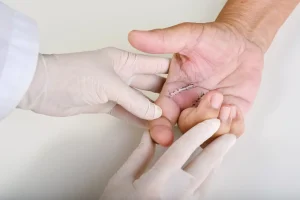
Trigger finger action
When non-surgical treatments such as splints, medication or physical therapy are not effective, trigger finger surgery is the best option for complete recovery. The purpose of this surgery is to release the tendon that is stuck in its sheath so that it can move freely.
This operation is usually performed on an outpatient basis with local anesthesia, and the patient can go home the same day. During the procedure, the doctor makes a small incision on the palm and opens the tendon sheath (usually the A1 pulley area) to provide more space for the tendon to pass through.
The entire surgery takes less than half an hour and usually does not require many stitches or heavy dressings. After the operation, the patient should rest his hand for a few days and then restore the range of motion with gentle movements of the finger.
The main advantage of the trigger finger operation is that its results are usually permanent and the probability of disease recurrence is very low.
Of course, there is a possibility of re-inflammation in diabetic patients or those suffering from joint rheumatism. Post-operative care, including keeping the wound clean, doing light exercises and avoiding too much pressure on the hand, play an important role in the healing process.
Trigger finger operation cost
Cost of trigger finger operation varies depending on the type of surgery, the surgeon's salary, the location of the operation and the hospital's facilities. In Iran, if the operation is performed in a private hospital, the cost usually includes several parts:
- Operating room fee
- surgeon and anesthesiologist salary (in case of complete anesthesia)
- Cost of medicine and dressing
- and the cost of consultation and physiotherapy after the operation
In government centers or specialized clinics, this cost is usually lower. Health insurances often cover part of the cost of trigger finger surgery, especially if it is prescribed by an orthopedic specialist.
If the surgery is performed with local anesthesia, the cost is lower and the patient is discharged on the same day.
But the cost should not be the only decision criterion; It is much more important to choose an experienced surgeon and follow the post-operative care, because if the surgery is not performed carefully, there is a possibility of recurrence of the disease.
Trigger finger home treatment
If the symptoms of trigger finger are mild, a few simple home remedies can help improve it. home treatment for trigger finger is mostly to reduce inflammation and prevent the progression of the disease.
✅ Reduce repetitive activities: Avoid bending and straightening your finger as much as possible.
✅ warming and cooling the hand: Using a warm compress is useful to reduce dryness and a cold compress to reduce inflammation.
✅ Gentle palm massage: With gentle circular movements, blood flow increases in the tendon area.
✅ Simple stretching exercises: For example, gradually opening and closing the fingers or keeping the palm open for a few seconds.
✅ Using a soft splint while sleeping: This prevents the finger from locking during the night.
Home remedies for trigger finger are usually effective when the condition is in its early stages. If the pain or sticking of the finger becomes more severe, it is necessary to see a doctor to prevent the progression of damage to the trigger finger.
Trigger finger exercise
Exercise for trigger finger is one of the effective ways to strengthen muscles and increase flexibility of tendons. Performing these exercises correctly helps reduce pain, reduce inflammation and prevent recurrence.
Some simple and useful trigger finger exercises are:
- Palm stretch: Place the palm on the table and slowly straighten the fingers, then return to the normal position.
- Grab a towel: Grab a soft towel and squeeze gently, then release. Repeat this exercise several times a day.
- Untie the finger with a rubber band: Put a rubber band around the fingers and try to spread them apart. This exercise helps to strengthen the extensor muscles.
- Foam ball exercise: By holding and squeezing a soft foam ball, natural hand movements are maintained.
Note that the exercises should be done without pain. If you experience stiffness or pain during exercise, stop the activity and consult your doctor or physical therapist. Regular exercises bring back the flexibility and normal function of the finger.
Exercise to treat trigger finger
The difference between this section and the previous one is that it focuses on therapeutic and more targeted sports under the supervision of a physiotherapist. In this case, exercises are designed to directly affect the damaged tendon and reduce inflammation.
For example:
- Active hamstring stretch: With one hand, gently hold the trigger finger straight and hold for a few seconds.
- Tendon gliding movement: Keep the hand straight, then slowly bend the affected finger halfway and open it again. This movement makes the tendon pass through the sheath more smoothly.
- Water exercises: Placing your hands in warm water and doing soft movements is one of the popular methods of physical therapy.
Doing these exercises daily for a few weeks can significantly reduce symptoms. Exercise, especially in the early stages of the disease, is a good alternative to aggressive treatments.
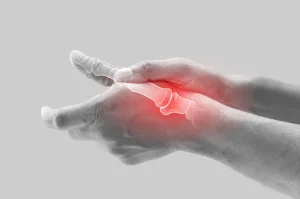
Treatment of thumb trigger finger
Trigger Thumb is one of the most common types of this disease. The thumb plays an important role in grasping and holding things, so when this finger becomes locked, everyday life becomes more difficult.
Symptoms of this type include pain at the base of the thumb, a clicking sound when moving, and sometimes locking in a bent position. Its treatment is very similar to other fingers, but due to the importance of the function of the thumb, it should be done more carefully.
The main treatments are:
- Using a thumb splint to rest the tendon
- Injection of anti-inflammatory drugs in the tendon sheath
- softening exercises for the thumb to maintain flexibility
- And if there is no improvement, surgery to release the thumb tendon sheath
In many patients, an injection or a night splint causes complete recovery. If treatment is delayed, permanent locking of the thumb may occur, requiring surgery.
Consequences of not treating trigger finger
Leaving trigger finger treatment can cause more serious problems over time. In the early stages, there may only be stiffness or a clicking sound when moving, but if this continues, inflammation of the tendon will increase and the finger may become completely locked in flexion.
The most important complications of not treating are:
- permanent locking of the finger in a certain position
- Chronic pain in the palm
- Severe inflammation and swelling of the joint of the base of the finger
- Decreasing the power of grabbing objects
- Changing the appearance of the finger
In cases where the disease becomes chronic, even surgical treatment may be difficult because the tissues around the tendon become adherent. Therefore, going to the doctor early and starting proper treatment can prevent these complications.
In general, the longer treatment is delayed, the more likely surgery will be needed. If you feel locked or have pain in your finger when you wake up, don't wait and go for an examination.
Trigger finger disease
Trigger finger disease is an inflammatory tendon disorder that is usually caused by repetitive motions or underlying diseases such as diabetes and arthritis. This disease may be mild and transient at first, but if it is ignored, it can disrupt the normal function of the hand.
In this condition, the person may feel that the finger "jumps" or "gets stuck" when working with the hand. Sometimes pain and swelling are also felt in the palm.
Diagnosing trigger finger disease is often done through a physical examination and does not require special photos or tests.
Its treatment varies from rest and medicine to surgery depending on the severity of the symptoms. Fortunately, in most patients, simple and early treatments lead to complete recovery.
This disease is directly related to lifestyle; People who work a lot with their hands or use mobile phones and laptops for a long time should be more careful.
Learn more: What should we do with a stubborn child?
What does trigger finger mean
?In short, what does trigger finger mean? This term refers to a condition in which the finger sticks, jumps, or makes a clicking sound when bending and straightening. This condition is caused by inflammation or thickening of the tendon and its getting stuck in the sheath.
Trigger finger can affect any finger, but the thumb and middle finger are more common. If left untreated, it can cause pain, finger locking, and reduced hand function. Early treatment, whether non-surgical or surgical, helps to return the normal function of the finger.