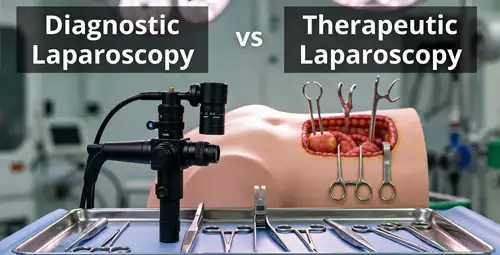

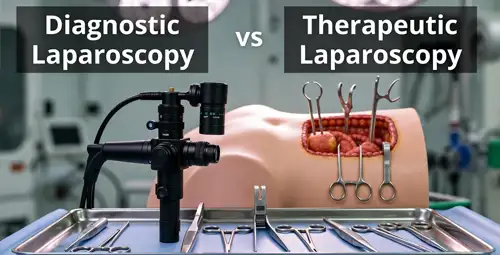
The difference between diagnostic laparoscopy and Therapeutic laparoscopy in women
The difference between diagnostic and therapeutic laparoscopy in women is one of the important issues in medical decision-making and patient awareness. As a minimally invasive procedure, laparoscopy plays a key role in the investigation and management of many women's diseases, but its purpose and application can be different. In general, diagnostic laparoscopy is used when imaging methods do not provide a clear and accurate answer to diagnose the disease.
In diagnostic laparoscopy, the main focus is on identifying the cause of problems such as infertility, chronic pelvic pain, or unknown pelvic disorders. In contrast, laparoscopic treatment is performed after diagnosis and aims to directly treat the problem, such as removing an ovarian cyst or treating endometriosis. Accurately understanding the difference between diagnostic and therapeutic laparoscopy in women helps patients to understand their treatment process with a more open view and have more realistic expectations from surgery. color: #000000; font-weight: 600;">
What is diagnostic laparoscopy?
Diagnostic laparoscopy is a minimally invasive surgical procedure in women that is performed to investigate and identify pelvic and abdominal problems. When non-invasive tests and imaging such as ultrasound or MRI do not provide a definitive answer, the doctor uses this method to exactly diagnose the cause of the disease. A proper understanding of this method and its applications will clarify an important part of the difference between diagnostic and therapeutic laparoscopy in women and help the patient make an informed decision.
Diagnostic laparoscopy process
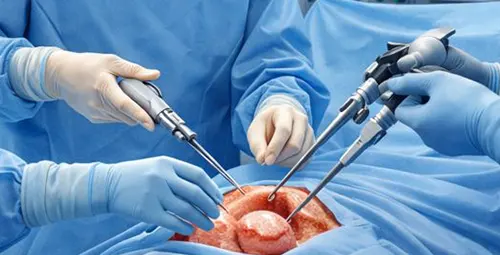
During a diagnostic laparoscopy, the surgeon makes several small incisions in the abdomen and inserts a camera called a laparoscope to directly view internal pelvic organs such as the uterus, ovaries, and fallopian tubes. Unlike therapeutic laparoscopy, the focus of this method is on diagnosing and examining the problem and usually extensive therapeutic intervention is not performed.
Goals of performing diagnostic laparoscopy in women
The main goal of laparoscopy Diagnosis is the diagnosis of diseases that cannot be diagnosed by conventional methods. These goals include checking for infertility, chronic pelvic pain, abnormal bleeding, and undiagnosed pelvic problems. This step helps the doctor design an appropriate and accurate treatment plan for the patient and provides a clear understanding of the internal state of the organs.
The most common uses of diagnostic laparoscopy
The most important uses of diagnostic laparoscopy can be mentioned as follows:
Evaluation of endometriosis and its severity
Diagnosis of adhesions Pelvic pain caused by surgery or inflammation
Investigation of uterine tube blockage and infertility problems
Identification of cysts and masses Suspicious in ovary and pelvis
Limitations and advantages of diagnostic laparoscopy
The advantages of diagnostic laparoscopy include high accuracy, small incisions, less pain and short recovery period. However, it also has limitations; including the need for general anesthesia, relatively higher cost compared to imaging methods, and limited therapeutic role. In some cases, if the doctor finds a treatable problem during a diagnostic laparoscopy, he can convert the operation to a therapeutic laparoscopy.
What is a therapeutic laparoscopy?
A therapeutic laparoscopy is a minimally invasive method that, in addition to observation, for Direct treatment of women's diseases is done. In other words, laparoscopy is a type of surgery. This method is performed to treat the disease after accurate diagnosis by the surgeon. The definition of this process will clarify the difference between diagnostic and therapeutic laparoscopy in women.
In therapeutic laparoscopy, the surgeon corrects or removes abnormalities using special tools through small incisions; such as removing an ovarian cyst or releasing pelvic adhesions.
Goals of performing therapeutic laparoscopy in women
The main goal is definite treatment or reduction of disease symptoms and improvement of the patient's quality of life, as opposed to the type of diagnosis that only Examination and identification of the problem is limited.
The most common uses of therapeutic laparoscopy
The most common uses include:
Removal of cysts and fibroids
Treatment of endometriosis
Fix Pelvic adhesions
Treatment of ectopic pregnancy
Benefits and risks of laparoscopic treatment
Benefits include Shorter recovery period than open surgery, less pain and smaller incisions. Risks include bleeding, damage to nearby organs, and the need for general anesthesia.
For detailed information, you can read Laparoscopy in women.
The difference between diagnostic and therapeutic laparoscopy from a medical point of view
Knowing the difference between diagnostic and therapeutic laparoscopy in women from a medical point of view helps patients to choose a more appropriate approach to diagnosis and treatment. Both methods are performed with a minimally invasive technique, but in terms of the goal, the amount of intervention, the duration of the surgery and the recovery period, there are important differences, the awareness of which plays an important role in treatment decision-making. Treatment in women is related to the purpose of surgery. Diagnostic laparoscopy is performed with the aim of investigating and identifying the cause of the disease; Especially in situations where imaging methods have not been able to provide a definitive diagnosis. On the other hand, therapeutic laparoscopy, as its name suggests, is not performed to diagnose the problem, but to solve the problem and treat it.
The difference in terms of the amount of therapeutic intervention
In diagnostic laparoscopy, the amount of surgical intervention is minimal and the focus is on the careful observation of the internal organs of the pelvis. Usually, in this method, no action is taken to remove or modify the tissues. But in laparoscopy treatment, active intervention takes place; such as removing a cyst, treating endometriosis or releasing adhesions. This difference is considered one of the most significant aspects of the difference between diagnostic and therapeutic laparoscopy in women.
Difference in terms of duration of surgery
Duration of surgery in diagnostic laparoscopy is usually shorter, because the process is limited only to examination and evaluation. But in laparoscopic therapy, due to the treatment approach, the duration of the operation will be longer. Of course, this time depends on factors such as the type of disease and the difficulty level of the problem.
The difference in terms of recovery period and post-operative care
The recovery period after diagnostic laparoscopy is usually shorter and the patient returns to daily activities faster. But in therapeutic laparoscopy, due to more intervention, the recovery period may be longer and require more careful care such as activity restriction or medical follow-ups. This is also an important part of the difference between diagnostic and therapeutic laparoscopy in women.
Choosing between diagnostic and therapeutic laparoscopy
Choosing between diagnostic and therapeutic laparoscopy in women requires accurate assessment of the patient's condition and correct diagnosis by the doctor. Both methods are minimally invasive, but their purpose, complexity and degree of intervention are different. Understanding the difference between diagnostic and therapeutic laparoscopy in women helps the patient to have more realistic expectations of the surgical process and the recovery period and to make a better decision in cooperation with the doctor. It takes to perform a diagnostic laparoscopy first or to go directly to the treatment method. If the problem requires emergency action, the doctor will perform laparoscopy treatment. The doctor's correct decision-making increases the probability of surgery success and reducing complications.
Patient conditions and its effect on decision-making
Patient conditions such as age, previous surgical history, general health status, pain level and disease severity are also effective in choosing the type of laparoscopy. Patients with simple problems without severe symptoms may choose to be diagnostic first, while patients with a definite diagnosis of disease require laparoscopic treatment. This comprehensive assessment is part of the treatment personalization process.
Frequently Asked Questions
What is the difference between diagnostic and therapeutic laparoscopy in women?
Can diagnostic laparoscopy help to treat the disease?
How long is the recovery period after diagnostic and therapeutic laparoscopy?
What factors are influential in choosing the type of laparoscopy?
Summary
Knowing the difference between diagnostic and therapeutic laparoscopy in women helps patients and doctors make better decisions in the field Diagnose and treat pelvic diseases. Diagnostic laparoscopy is used to identify the cause of problems such as infertility, chronic pelvic pain, and pelvic abnormalities, and usually does not involve direct therapeutic intervention. On the other hand, laparoscopic therapy is performed to correct and treat specific diseases such as endometriosis, ovarian cyst or uterine fibroids and requires active surgical intervention. Choosing the right method depends on the patient's condition, the doctor's diagnosis and the complexity of the disease. Being aware of the benefits, limitations, recovery period and risks of each method helps the patient to have more realistic expectations and participate more confidently in the treatment process. Finally, the combination of medical knowledge and individual consultation is the key to success in using both types of laparoscopy. elementor-element elementor-element-02f7b5a elementor-section-boxed elementor-section-height-default elementor-section-height-default" data-id="02f7b5a" data-element_type="section">
The difference between diagnostic laparoscopy and therapeutic laparoscopy in women The difference between diagnostic and therapeutic laparoscopy in women is one of the important topics in...
A complete review of types, complications and post-operative care
What is hysterectomy? What are the types, uses, complications and care after hysterectomy? Hysterectomy is a surgery that...











A reply