
The birth of a child is one of the happiest and at the same time transformative events in life. When it comes to postpartum challenges, the eyes unconsciously turn towards the mother; A mother who went through 9 months of pregnancy and difficult childbirth. But in the meantime, one person often remains in the shadows: Father. Did you know that men can also be caught in a vortex of conflicting emotions and sadness after the birth of their child?
Paternal depression is a fact that is often ignored due to gender stereotypes and social pressures. Society expects men to be the rock under the mill and the unconditional support of their wives during this time, unaware that they are also dealing with a storm of hormonal, psychological and financial changes.
In this article, by knowing the symptoms, reasons and solutions, we help fathers to be not only a better parent, but also a happier person. If you or your wife feel that the joy of the birth of a baby is covered with a cloud of sadness, this article is for you.
"Preventing postpartum depression: How should we control it?"
What are the symptoms of father's depression after childbirth?
Contrary to the popular belief that postpartum depression is only for women, research shows that about 10% of new fathers also experience this condition. Father's depression after childbirth is not a character weakness or irresponsibility; Rather, it is a serious mood disorder that can have a profound effect on the quality of the marital relationship, bonding with the baby, and the child's future.
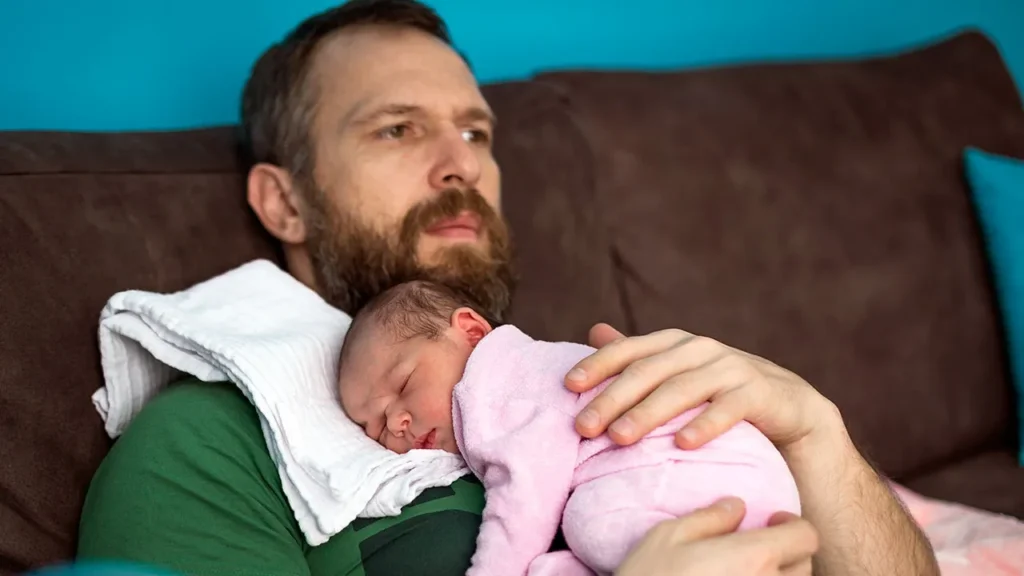
This type of depression is usually a combination of intense anxiety, feelings of helplessness, and sadness, exacerbated by the pressures of the new role of fatherhood. The symptoms of postpartum depression in fathers may appear a little differently from mothers. While women are more likely to express sadness and cry, men may hide their depression behind a mask of anger or overwork.
1. Anger and unusual irritability
If a father who used to be calm now goes into a frenzy at the slightest provocation, yells at other children or becomes aggressive towards his wife, this could be a sign of postpartum depression.
2. Escaping to work or entertainment
Some men increase their working hours for no reason or spend a lot of time playing computer games and going out with friends to escape the feeling of helplessness at home and the sound of the baby crying. This avoidance is a defense mechanism against depression.
3. Feeling of indifference towards the baby
Not establishing an emotional connection with the baby, reluctance to hug him and feeling that "I don't love this child", are painful symptoms of postpartum depression in the father, which causes a strong sense of guilt in the father.
4. Physical symptoms without a medical reason
Chronic headaches, digestive problems, muscle pains and extreme changes in appetite and sleep are body language to express the suffering that words cannot express.
Why do fathers get depressed after childbirth?
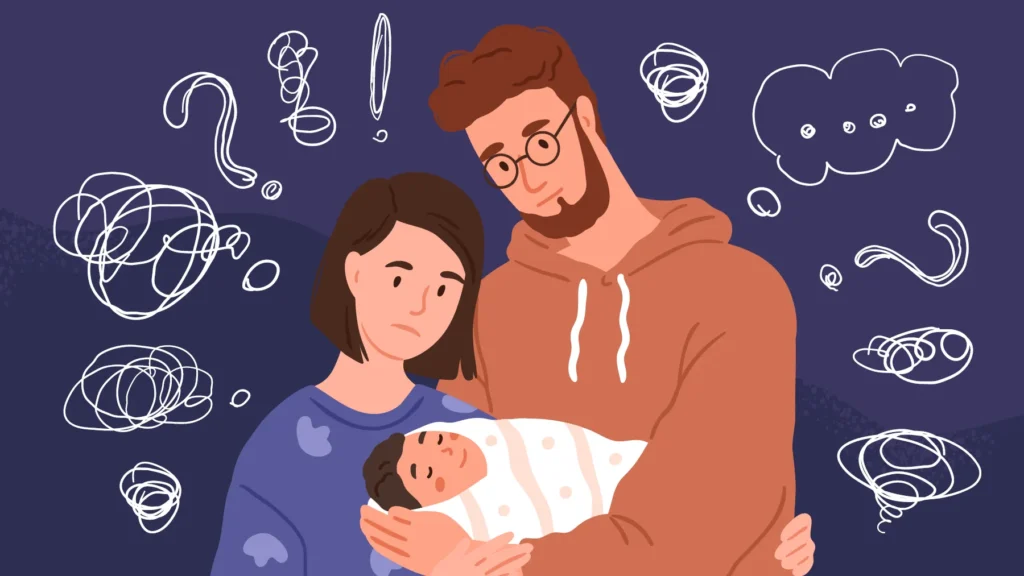
- Hormonal changes: Yes, men's testosterone levels also drop after having a baby, which can affect mood.
- Financial pressure: Worrying about paying for the new family member is a heavy burden on the father.
- Feeling of rejection: The wife's attention is directed to the baby, and the father may feel that he is no longer his wife's priority and has been abandoned.
- Spouse's history of depression: If the mother suffers from postpartum depression, the probability of the father suffering from postpartum depression increases by 50%.
Time of onset and types of postpartum depression
To understand better, we need to know when does postpartum depression start? In mothers, it usually appears in the first month, but in fathers, the process may be more gradual, peaking between 3 and 6 months of age.Another important point is that this disorder is not specific to the first child. Depression after the second delivery is also very common; Because the pressure of taking care of two children and dividing the attention puts additional stress on parents. Also, the type of delivery of the wife can also have an effect. Research has shown that the difficulties of depression after natural delivery or high-risk cesarean sections that lead to a long recovery period for the mother, impose more mental and care pressure on the father and increase his risk of depression.
The effect of father's depression on child development
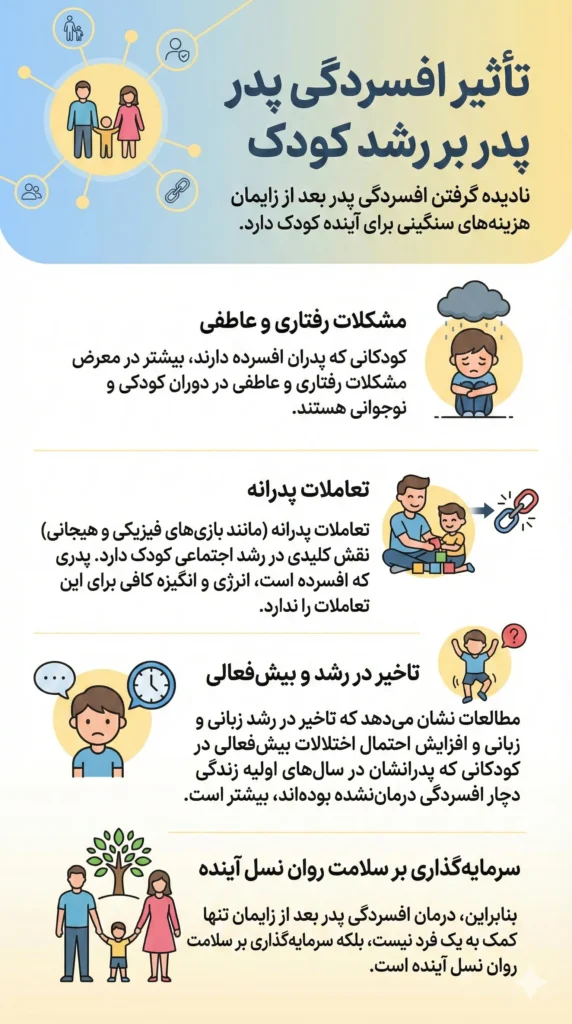
Methods to deal with and treat father's depression after childbirth
The good news is that postpartum depression in fathers is completely treatable. The first step is accepting the problem.1. Speaking and breaking the silence
Talk to your spouse, friends or a counselor. Expressing feelings like "I'm tired" or "I feel like I'm not a good father" is not a sign of weakness, but a sign of courage and awareness.
2. Giving priority to sleep and exercise
Lack of sleep is the main trigger of depression. Try to arrange sleeping shifts with your partner. Also, even a small amount of exercise increases endorphins and makes you feel better.
3. Creating exclusive times with the baby
Even if it's hard, set aside some time to take care of the baby alone. Skin-to-skin contact and direct care causes the release of oxytocin and helps to reduce the father's postpartum depression and create attachment.
This chart will help you understand the subtle differences between the parenting experience: Spousal support plays a vital role in treating father's postpartum depression. Mothers can restore the home environment by encouraging the father to participate in the baby's affairs (without constant criticism), making time for the father to rest, and listening to his concerns without judgment. Remember, parents are a team and the mental health of both is essential for the team to win. Becoming a father is a challenging but beautiful journey. Feeling sad or anxious along the way doesn't make you a bad father, it just shows that you're a human being adjusting to a big change. Paternal depression is not a wall that cannot be crossed, but an obstacle that can be removed with knowledge and professional help. If you feel the weight of these feelings weighing on your shoulders, remember that asking for help is a sign of your strength. The specialists of the clear path are ready to be with you on this path so that you can feel the joy of being a father again with all your heart. In mild cases, it may improve with time and adapting to the conditions, but in moderate to severe cases, without therapeutic intervention (counseling or medication), it can become chronic and continue for years, affecting the mental health of the entire family. No, financial pressure is an important factor, but identity change, feeling of emotional rejection, lack of sleep and history of mental problems also play a very prominent role in postpartum father depression. Even wealthy fathers suffer from this disorder. A combination of psychotherapy (especially cognitive-behavioral therapy) and lifestyle modification. In more severe cases, medication may be needed under the supervision of a psychiatrist. Fathers' support groups are also very helpful.Comparison of postpartum depression of parents
attribute
Mother's depression
Father's depression
start time
usually 2 weeks to 1 month after delivery
Gradually, 3 to 6 months old baby
Behavior
crying, visible sadness, anxiety
anger, irritability, overwork, isolation
main driving factor
severe hormonal changes and pregnancy
Environmental, financial pressure and role change
Search for help
Most would like to receive help
They often deny (because of stereotypes)
Wife's role in father's recovery
Last word: happy father, healthy family
FAQ
1. Does the father's depression get better by itself after childbirth?
2. Are financial problems the only reason for fathers' depression after childbirth?
3. What is the best treatment for depression in fathers?