
کمبود محبت در کودکی؛ How to love ourselves and our family in adulthood?
The beginning of the way
Many adults today say that they did not receive enough love from their parents as children. Fortunately, it is possible to repair the lack of parental love in adulthood, and with daily practice, you can strengthen your love for yourself and your family. If you say to yourself, "We didn't get love from our parents, then we don't know how to love ourselves or our family." Know that this sentence is rooted in childhood experiences and attachment style.
Not having the experience of love and security in the early years makes a person face two basic problems in adulthood:
- Inability to receive affection
- Inability to express affection
But the good news is that love is not just an innate feeling; Rather, it is a skill that can be learned and practiced, and we can build this skill from scratch.
Scientific roots and their role in repairing the lack of parental affection
-
Attachment Theory (Attachment Theory)
John Balby and Mary Ainsworth believed that the relationship between parents and children in the first years of life is like the foundation of a building. If this relationship is accompanied by love and security, the child will learn to trust others and experience love and intimacy more easily in the future. But if a child experiences neglect or coldness, he may fear intimacy or feel unlovable as an adult (Bowlby, 1988; Ainsworth, 1982).
Everyday example: Imagine a child who cries and is comforted by his mother. This experience teaches him that the world is a safe place and that others are trustworthy.
-
Neurobiology of affection
Neuroscience has shown that love is not just a psychological feeling, but actually causes changes in the body. When someone receives caress or affection, a hormone called "oxytocin" is released, which is called the bonding and relaxation hormone. This hormone tells the brain that "it's safe here," which induces relaxation and reduces anxiety (Heinrichs et al., 2009).
Everyday example: When someone holds your hand or hugs you after a hard day, you suddenly feel relieved. This feeling is not only psychological, but a chemical change has occurred in your brain and body.
-
Positive psychology
Martin Seligman and his colleagues in positive psychology have shown that skills such as gratitude, kindness and self-care can be learned. This means that if we did not experience them in childhood, we can still practice them in adulthood. For example, writing down three small things we are grateful for, or doing something kind for ourselves or someone else, can improve our mood and the quality of our relationships (Seligman, 2011).
Everyday example: if you write down every night before going to sleep, "I was happy today because my friend asked how I was doing" or "I gave myself a break", your mind will gradually focus on more positive things and it will be easier for you to be affectionate.

Consequences of lack of parental affection in adulthood
- Difficulty in establishing intimate relationships
- Feeling worthless and severe self-criticism
- Anxiety when receiving affection from others
- Coldness or inability to express affection to wife and children
These consequences are not just a series of inner feelings, but affect the quality of life as a whole. A person may experience tension and insecurity in choosing a romantic partner, in relation to children or even in the workplace. A lack of affection, like a hidden ring, can reduce happiness, self-confidence, and a sense of belonging in everyday life. But the good news is that this cycle can be changed; With awareness, small daily exercises and learning ways to express affection, you can gradually heal the wounds of the past and build healthier relationships.
Learning to love yourself and family in adulthood
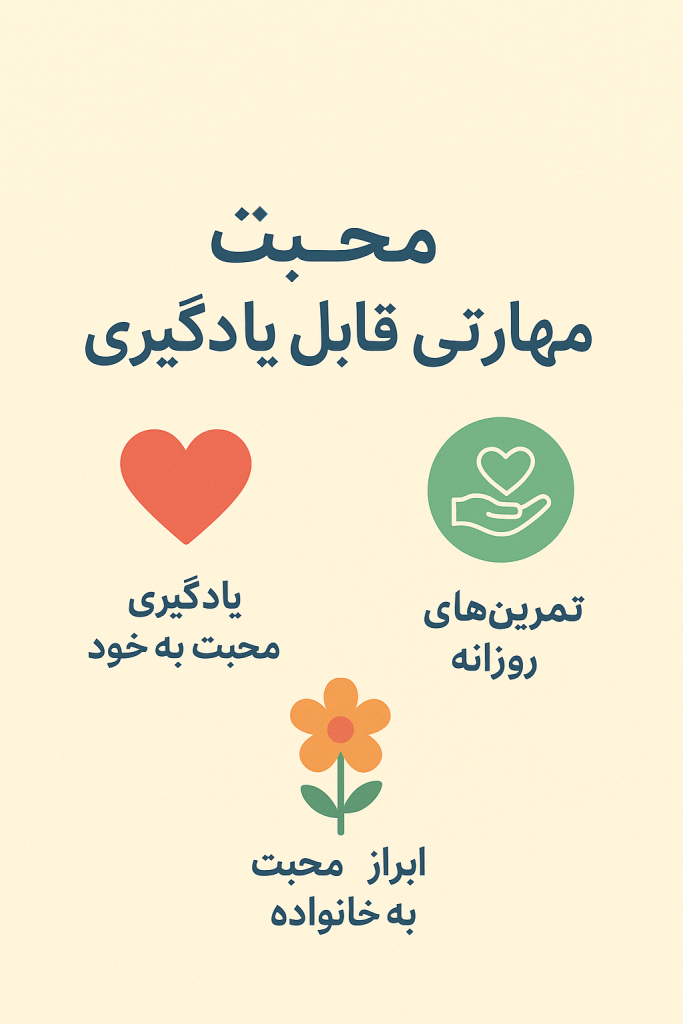
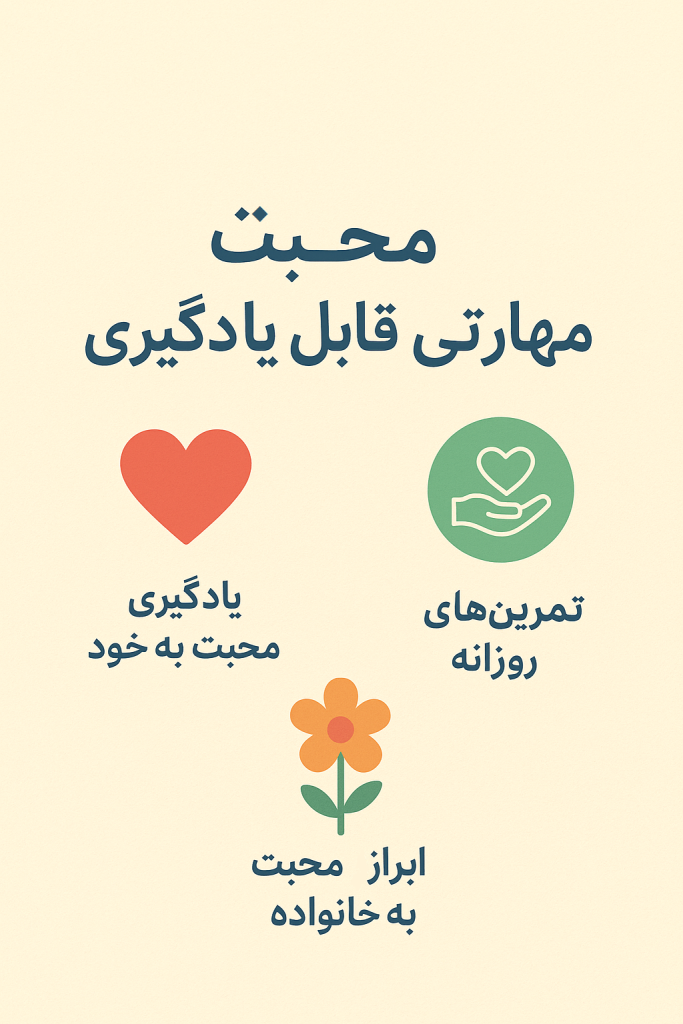
Like learning a second language or a musical instrument, love is an "acquired and gradual ability". Even if we did not receive a good model of love from our parents as children, we can still learn to love as adults. Our brain has the ability to create new habits with new experiences. When we repeat small actions every day like saying a kind word to ourselves, or a short hug to family members, little by little these behaviors become natural and comfortable. Love does not need big and complicated tasks; Sometimes a loving look, bringing a glass of water for another or listening for a few minutes without a cell phone can be the beginning of change. The main thing is to do small but continuous exercises. Over time, love becomes a part of everyday life, and both we and our families feel it more deeply.
Daily exercises for repairing lack of parental love through self-love
How each small practice helps to remove the consequences of lack of affection and paves the way for restoration.
- Self-loving sentence to repair the lack of parental love: Say in the mirror every morning, "I am valuable and worthy of love."
This exercise helps to reduce self-criticism and strengthen the feeling of worth.
- Small physical care: drink a glass of healthy water, rest for 10 minutes or take a short walk.
By taking care of the body, the message of security and self-care is sent to the brain and anxiety is reduced.
- Writing Gratitude: Each night write down three small things you are grateful for.
This work focuses the mind on the positive and valuable points of life and increases the feeling of satisfaction and happiness.
- Safe Touch: Place your hand over your heart and take a few deep breaths.
This exercise increases the level of oxytocin and strengthens the sense of security and comfort in receiving the affection of others. href="https://www.verywellmind.com/what-is-attachment-theory-2795337#:~:text=Attachment%20is%20an%20emotional%20bond,the%20child's%20chances%20of%20survival.">Heinrichs et al., 2009)
These exercises may seem simple at first glance, but their daily repetition acts like watering a plant and gradually strengthens the roots of love in us. Every kind word to yourself, every little break or safe touch sends a new message to the brain that "I deserve attention and security." As these things continue, a person's view of himself changes and a sense of worth replaces internal criticism. In this way, a person not only finds a better relationship with himself, but also becomes more ready to express love in relation to others.
Daily exercises for repairing the lack of parental love by expressing love to the family
How each small practice helps to remove the consequences of lack of affection and paves the way for restoration.
- Positive sentence to family members: say once a day a sentence like "I'm glad to be with you" or "Thank you for the card".
This practice makes family members feel valued and relationships become more intimate.
- Short physical contact: a 5-second hug or holding hands of spouse and child.
Brief physical contact increases the level of oxytocin and strengthens the sense of security and closeness.
- Dedicated time: Talk to your family for 10 minutes a day without a cell phone or play a simple game.
This exercise creates a deeper connection and a sense of caring and giving importance to each other.
- Express gratitude: At night, say out loud one positive characteristic of each family member.
Expressing gratitude strengthens relationships, increases trust and reduces coldness or indifference in the family.
For therapists: You can give these exercises to clients as homework. It is suggested to start with a simple exercise (for example saying one positive sentence a day) and gradually add other exercises. Also, reviewing the client's experience in the next session gives more depth to the treatment process.
These simple exercises every day are like investing in our relationships with loved ones. Every kind word, every short call or dedicated time sends the message "I love you and I value you" to the minds and hearts of family members. With the continuation of these behaviors, family relationships become warmer, more intimate, and safer, and each family member gains a sense of value and belonging. Over time, love becomes a natural habit and the cycle of past lovelessness is broken.
A few last words
Although not having the experience of love from parents can be a deep wound, but this fate is not inevitable. With awareness, daily practice, and brain retraining, we can learn to love as a skill. This path not only improves the quality of the relationship with ourselves, but also frees the next generation of the family from the cycle of lovelessness. Love can be learned and each generation can transmit it stronger. When parents learn to love themselves and their family, their children grow up with a safe pattern from the beginning and they no longer have to spend years trying to repair this void.
Resources
Ainsworth, M. D. S. (1982). Attachment: Retrospect and prospect. In C. M. Parkes & J. Stevenson-Hinde (Eds.), The Place of Attachment in Human Behavior (pp. 3–30)
Bowlby, J. (1988). A Secure Base: Parent-Child Attachment and Healthy Human Development. Basic Books
Heinrichs, M., von Dawans, B., & Domes, G. (2009). Oxytocin, vasopressin, and human social behavior. Frontiers in Neuroendocrinology, 30 (4), 548-557
Seligman, M. E. P. (2011). Flourish: A Visionary New Understanding of Happiness and Well-being. Free Press
Verywell Mind. (2023). Attachment Theory: Bowlby and Ainsworth
نویسنده مقاله: محسن درخشاننسب – روانشناس بالینی، پژوهشگر، هیپنوتیزمدرمانگر، نویسنده و رواندرمانگر در شهریار و تهران.
در صورت داشتن هرگونه ابهام و یا سوالی درباره مقاله “ ترمیم کمبود محبت والدین” در انتهای همین صفحه ( بخش دیدگاه ) سوالتان را مطرح نمایید. They will answer your questions as soon as possible