
Cardiovascular diseases are one of the most common and at the same time the most important issues in the health field, and correct knowledge about them plays a significant role in prevention, early diagnosis and effective treatment. Many patients and even healthy people face daily questions and concerns about heart health, warning signs, diagnostic methods and new cardiovascular treatments; But the correct answer to common cardiovascular questions requires an expert's opinion based on modern medical science.
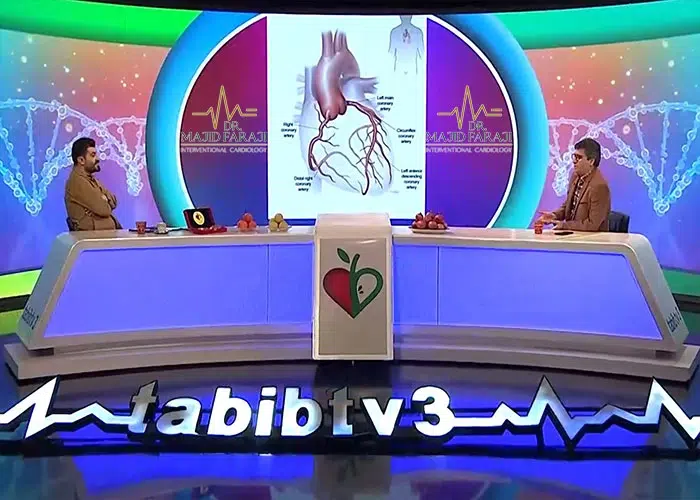
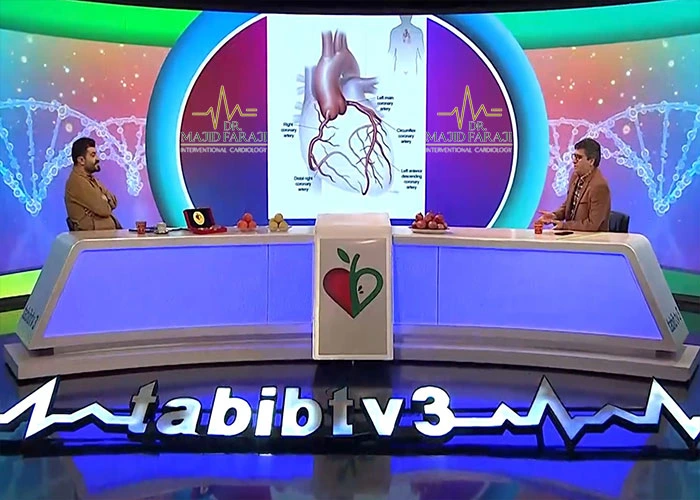
In this regard, Dr. Majid Faraji, cardiologist and general medicine graduate from Iran University - cardiology graduate from Shiraz University of Medical Sciences - international cardiology fellowship (interventional cardiovascular procedures) from Tehran University - faculty member of Tehran University and responsible The angiography department of Gandhi Hospital, by participating in the "Doctor" television program, investigated and answered some of the common and frequent questions of heart and blood vessels. The content presented in this program is the result of clinical experience and specialized knowledge in the field of diagnosis, prevention and treatment of heart diseases and can be a reliable guide for the general public and heart patients.
In the rest of this article, the most important questions raised in the doctor program are presented along with Dr. Majid Faraji's scientific and practical answers so that you can make more informed decisions with a clearer view of your heart health.
Check Some of the common questions of cardiology with the presence of Dr. Majid Faraji in the doctor program
In this section, we will examine some common and frequently asked questions in the field of cardiology, which were raised by the viewers of the doctor program. In this program, Dr. Majid Faraji, a cardiologist, answered these questions in a simple and scientific manner and provided important points about the diagnosis, prevention and treatment of heart diseases. In the following, you can read the explanation of these questions and specialized answers.
This case is one of the complications of angiography that occurs due to the injection of contrast material. During angiography, a contrast material is injected and a radiograph is taken at the same time. The contrast material causes an allergic reaction in some people. In a large percentage of patients, this problem is solved at the same moment in bed, but in a few people, delayed hypersensitivity reactions may also be seen. In this case, the swelling of the person's face is probably due to this reason, which is not worrying at all. This complication is usually solved with corticosteroid injections and anti-allergic drugs.
Usually, during the first and second injection, these sensitivities appear at the same time as the angiography, when these anti-allergic drugs are injected at the same moment, and the symptoms improve.
Does the need for angiography happen after a stroke?
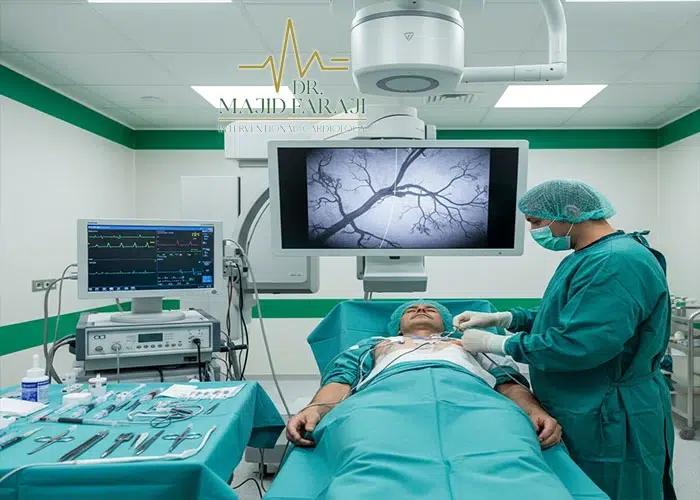
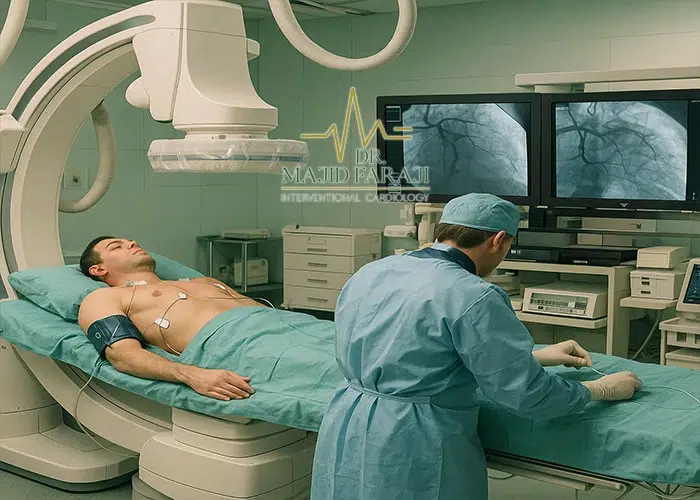
Actually, "angio" means "vessel" and "graph" means image and photo (or film). In general, the term angiography means seeing a vessel anywhere in the body. There are types of angiography of hand, leg, brain, kidney vessels, etc., but since heart angiography is a little more common, more vital and sensitive, it is heard more about it. In the event that every vein of the body can be angiographed.
Actually, heart angiography is of two types. One is an emergency procedure that is performed when a stroke occurs and we have to open the closed heart vessel in a short period of time. When a stroke occurs, time is of the essence. When a vessel is closed, all the cells supplied and nourished by that vessel are so-called suffocated. If this vein is opened in a suitable period of time, the cells will remain and the feeling of pressure and heaviness for the patient will be removed. This is because the blood supply to the cells is done properly. If this process happens with a delay, the cells die and the function of the heart decreases, which makes it difficult for the heart to pump.
For example, if angiography is performed after 24 hours, all the cells related to the vessel may be dead and the heart function will decrease. In other words, if the heart function or EF (Ejection Fraction) is 60% in a normal person, it becomes 20% in this person, which results in heart failure. This complication will cause problems such as shortness of breath during physical activity. In the heart and brain, after the cells die, complications occur that are irreversible.
next batch of Patients who are candidates for angiography are patients who have not had a stroke but have narrowed heart vessels. Symptoms begin when more than 70% of the vessel becomes blocked and narrowed. In this case, the person cannot easily do physical activity, fast walking, climbing the stairs, etc. In the case of these patients, a scan and CT angio (CTA) are performed, and after the narrowing of the arteries is determined, the person is a candidate for angiography.
The reason for the heaviness and pressure of the chest must be the blockage of the heart vessel?
in