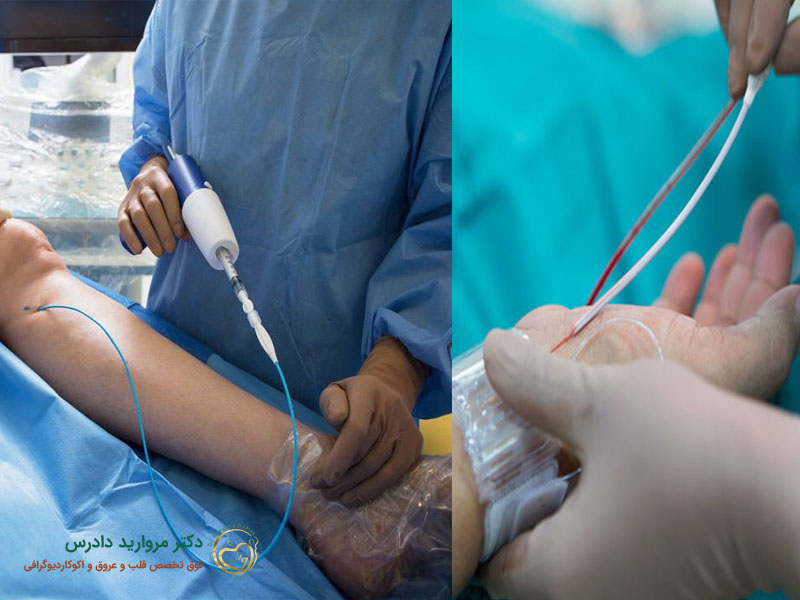

وقتی صحبت از بررسی دقیق رگ های قلب یا عروق کرونری به میان می آید، یکی از رایج ترین روش های تشخیص بیماری های قلبی، آنژیوگرافی است. این روش که به صورت تهاجمی انجام می شود، با تزریق ماده حاجب و تصویربرداری دقیق از رگ ها، به پزشکان امکان می دهد تا تنگی، انسداد یا آسیب در عروق را مشاهده کنند. با این حال، یکی از پرسش های بسیار مهم بیماران و حتی برخی پزشکان عمومی این است که آنژیوگرافی از دست بهتر است یا پا؟
در واقع، امروزه آنژیوگرافی می تواند از طریق دو مسیر اصلی انجام شود: شریان فمورال (در ناحیه پا و کشاله ران) یا شریان رادیال (در ناحیه مچ دست). هرکدام از این روش ها مزایا و معایب خاص خود را دارند و انتخاب بین آن ها به عوامل گوناگونی مانند شرایط بیمار، تجربه پزشک و وضعیت عروق بستگی دارد.
در این مقاله بررسی می کنیم که تفاوت آنژیوگرافی از دست با پا چیست، مزایا و خطرات هر روش کدام است، و در نهایت برای چه بیمارانی انجام هر یک توصیه می شود. Also, in the final section, safer and non-invasive alternatives such as Echo Stress Test We introduce that it can be a suitable alternative to angiography in many cases.
Getting to know the difference between angiography of hand or foot
Angiography, meaning "imaging of vessels", is a method of observing blood vessels and vital arteries of the body. In this method, a special contrast agent is injected into the vein through a narrow catheter to determine the path of blood flow in X-ray images. By analyzing these images, the doctor can identify the location of blockage, narrowing or damage.
Angiography is usually performed to check the condition of the heart (coronary) arteries, but it is also used in other parts of the body such as the brain, kidney or legs. Its most important purpose is to decide on the method of treatment — whether the patient should undergo drug therapy, angioplasty (opening the vessel with a balloon) or bypass surgery or not.
With the advancement of medical technology, it is possible to perform angiography from different routes. In the past, almost all angiograms were performed through the femoral (leg) artery, but today the arm (radial) method is more popular due to the reduced risk of bleeding and shorter recovery time. This is the reason why angiography is better than arm or leg? to be discussed among patients.
Angiography through the leg (femoral method)

Angiography through the leg is one of the oldest and at the same time the most common methods in hospitals. In this method, the doctor uses the femoral artery located in the groin. This artery is large and straight and leads directly to the aorta and then the coronary arteries. During femoral angiography, the patient is usually placed in a supine position.
The groin area is disinfected and numbed and a fine needle is inserted into the femoral artery. Then a narrow catheter is directed to the heart through this path to inject the contrast agent. The main advantage of this method is easy access to large arteries and the possibility of performing more complex interventions such as angioplasty or stenting.
But on the other hand, there is a possibility of complications such as bleeding, hematoma (accumulation of blood under the skin), damage to the groin nerves and the need for longer rest after the operation. In the past, the femoral approach was the only available option, but with the development of smaller and more precise instruments, doctors have moved towards less invasive methods, such as hand-held angiography. It is more popular in the world and Iran in recent years. In this procedure, the doctor uses the radial artery in the wrist to access the vascular system of the heart. After local anesthesia, the needle enters the radial artery and the catheter is guided through this path to the heart. The great advantage of this method compared to the femoral method is the reduction of the risk of bleeding and the short recovery period.
The patient can sit immediately after the angiography is finished and can be discharged even a few hours later, while in the leg method he must stay in a lying position for at least 6 hours. Also, in terms of comfort, the hand method is an ideal option for elderly or obese people who find it difficult to lie down for a long time. The possibility of infection is also less in this method.
Its only limitation is the smaller diameter of the radial artery, which may prevent the passage of thick catheters in some patients (especially short-limbed or diabetic women). In general, despite the technical limitations, the radial method is recognized as the first choice in most modern heart centers.
Complete comparison of angiography from hand and foot
In this section, we examine the difference between angiography from hand and foot from a scientific and practical point of view in order to get an accurate answer to the question, is angiography from hand or foot better? be given By reading this table, you can better understand hand angiography and leg angiography, and you will get to know more about the characteristics and specifications of each of them.
| Features | Angiography of the hand (radial) | Angiography of the leg (femoral) |
|---|---|---|
| catheter entry site | wrist | groin |
| possibility of bleeding | high Low | Relatively high |
| Rest time after the operation | 1 to 2 hours | 6 to 8 Hour |
| Probability of infection | Very low | Higher |
| Suitable for obese patients or Elderly | Yes | No |
| Possibility of complex interventions | Limited | Most |
| Patient Comfort | Very High | Medium |
| 400;">Risk of artery occlusion | May occur if care is poor | Rare but more severe |
| Hospital discharge time | Shorter | Longer |
| Doctor Experience Required | Higher | General As the table shows, the radial method is superior in terms of safety and comfort. But if more complex interventions are to be performed, such as multiple stenting or examination of several vessels at the same time, the doctor may still prefer the femoral method.The difference between hand and foot angiography in terms of possible complications
Although angiography is a vital method for diagnosing heart diseases, no invasive procedure is without risk. In both types of angiography, whether through the hand or through the leg, there is a possibility of complications. In the leg method, the most common complication is bleeding at the catheter insertion site, which may lead to hematoma, pressure drop, or severe pain. Sometimes, damage to the femoral artery requires reconstructive surgery. The risk of infection at the needle entry site is also higher in this method, because the groin area has poorer ventilation than the hand. In the hand method, the most common complication is spasm or narrowing of the radial artery due to nerve stimulation. This problem can usually be fixed with medication, but in rare cases it can lead to permanent blockage of the artery. However, compared to the leg procedure, the overall complication rate in radial angiography is much lower. Other common risks include an allergic reaction to the contrast material, renal failure caused by the dye, or the development of cardiac arrhythmia He pointed while passing the catheter. Of course, these cases are rare and rarely happen in well-equipped centers with a professional team. Angiography is better than hand or leg; Which method is right for you?
Answer to this question that Is angiography better from hand or foot? It depends on the clinical conditions of each person. In young patients, without vascular problems or severe diabetes, the radial (arm) approach is usually an ideal option. On the other hand, in patients who have narrow or damaged wrist arteries, or who have already undergone bypass surgery, the doctor may choose the femoral method. Also, in cases where there is a need for angioplasty at the same time, some specialists prefer to use the leg route, because it is easier to pass the intervention equipment. Ultimately, the final decision rests with the cardiologist who chooses the best method based on the type of problem, the patient's vascular structure and his experience. Safer alternatives for hand or leg angiography
Despite the high accuracy of angiography, one should not forget that This method is an invasive procedure and has some risks. For this reason, in cases where early diagnosis of coronary artery disease is considered and there is no immediate risk, more non-invasive methods can be used. In this method, the function of the heart is checked during physical activity or after the injection of stimulating drugs. Using live ultrasound images, the doctor observes the changes in the contraction of the heart muscles and diagnoses it if there is a blood supply disorder. The echo stress test does not require the injection of a contrast material, and there is no risk of bleeding or infection. This test is especially suitable for patients with low or moderate risk of heart disease. Therefore, if the doctor determines that your condition is not an emergency, it is suggested that you consult with him about doing an echo stress test before deciding on angiography. Concluding remarks In the end, it should be said that the answer to the question "Is angiography better than the arm or the leg?" It is not absolute, but depends on the individual conditions of the patient. However, based on new studies and the clinical experience of large heart centers, the radial method (from the hand) is safer, more comfortable and with a shorter recovery period in most cases. However, angiography of both methods is still an invasive process and should not be performed unnecessarily. In many cases, the echo stress test can provide sufficient diagnostic information and prevent the possible complications of angiography. Therefore, it is recommended to consult with a cardiologist before making any decision so that the most appropriate method can be selected based on your specific conditions, including age, condition of the vessels, history of diabetes and blood pressure. Frequently asked questions about the difference between hand angiography and Pa
|





