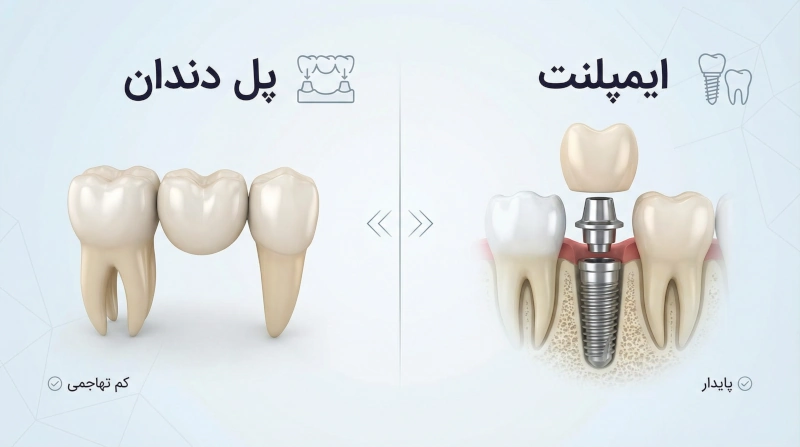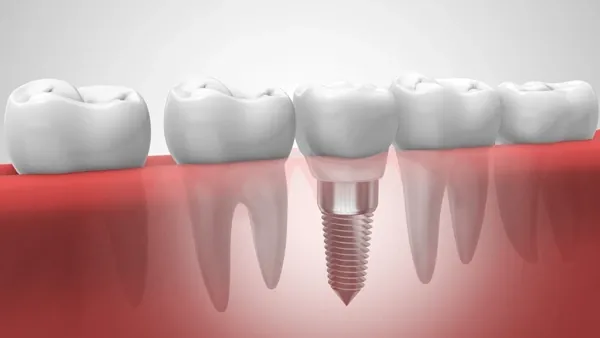
When should a tooth be implanted? | Important points - Center for Gum and Implant Surgery, Dr. Affir and Dr. Shanae

Dr. Mohammad Hossein confirmed
KarajSpecialist in gum surgery - implant
Article index
If you want to use this device, put your hand on it and let it go The time when the phone needs to be displayed, you must select an appropriate time for an important message in the future. With the help of a car, after the start of the dance, there is a different design for a complete recording of the recording; This excessive delay may cause the analysis of the jaw test to be removed and removed from the camera. If there is a scratch on your feet, there is a possibility of a successful outcome and a natural restoration after that.
In this article you will find out what you need to know about the appropriate time for the installation of the device and the details of the factors used to design the final effect of the project.
A lot of jokes that you have experience with in Balinese and Danish, especially in the language of insults, with different designs and something you need to take away. This is an article about the glasses of Dr. Muhammad Hussein Tayed and Dr. Fareshteh Shana Ay, specialists in periodontal and implant surgery. Its purpose is to increase the awareness of patients and it is not a substitute for a specialist doctor's visit.
Why is implant planting time important?
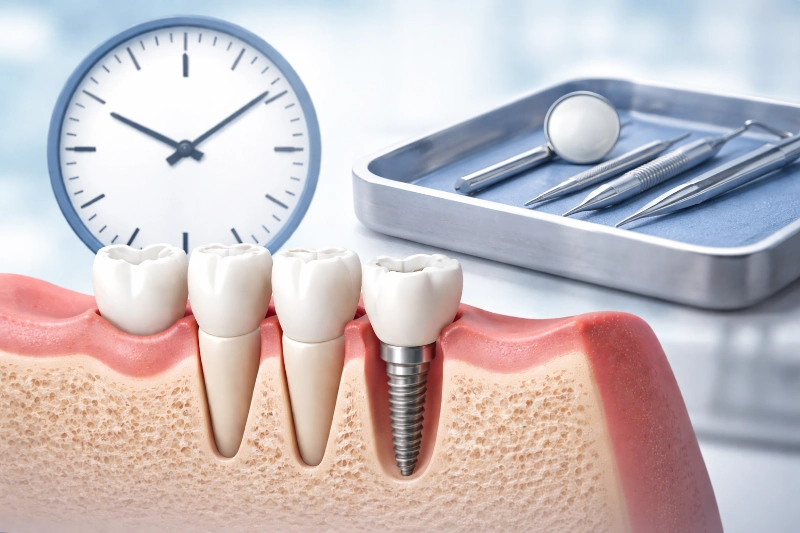
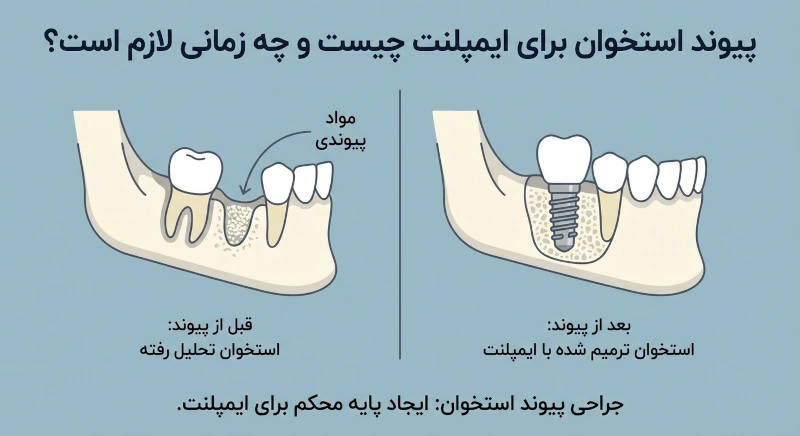
Determining the right time for dental implant is one of the key factors in the success of the treatment. If you wait a long time after tooth extraction, the jawbone starts to erode in the empty area, and this makes implant placement more difficult and expensive.
For example, consider a patient who did not apply for an implant for more than a year after having his molars extracted. At the time of visit, the bone volume had decreased so much that he needed a bone graft and several months of additional treatment. This example shows how important implantation is on time.
If you act early:
- The need for bone grafting decreases.
- The repair process goes faster.
- The natural shape of the jaw and gums is preserved.
- The result of the treatment will be much better in terms of beauty and durability.
When should a tooth be implanted?
The best time for implant placement is usually 2 to 3 months after tooth extraction; However, depending on the condition of the bones and gums, the doctor may recommend taking action sooner or later. If there is an active infection, gingivitis, or bone loss in the area of the missing tooth, the doctor will first perform basic treatments and then determine the exact time for the implant.
In the elderly or patients who are at higher risk due to systemic diseases such as uncontrolled diabetes, the treatment plan is usually more carefully tailored. Also, in some cases, the doctor can perform an immediate implant to prevent bone loss.
If you are concerned about the costs or insurance coverage of this procedure, we suggest you read the following article for details Get to know dental implant with supplementary insurance and the terms of using the insurance.
For whom is the implant suitable?
Dental implant is one of the most effective ways to replace a missing tooth, but not everyone has the same conditions to do it. Implants are usually suitable for those who have good general and oral health and can properly care for the new tooth after surgery. In the following, you can see the most important characteristics of people suitable for implant placement:
- People who have good general health and do not suffer from uncontrolled chronic diseases.
- Those who do not smoke or have limited their use.
- Patients who have enough jawbone to maintain the implant base.
- People who want to restore their natural and beautiful smile.
- Those who observe oral and dental hygiene and go for periodical checkups.
Having these conditions, the probability of successful implant treatment is very high and the patient can enjoy his smile for years with confidence.
For whom implant is not suitable?
Just as not everyone is suitable for implants, some medical or behavioral conditions can reduce the likelihood of this treatment being successful. In general, implants are not suitable for those who have one of the following conditions:
- People with uncontrolled diabetes whose wound healing process is slow.
- Patients with severe osteoporosis who do not have enough jaw bone density to maintain the implant.
- Those who take certain medications such as corticosteroids or anticoagulants and need a more detailed evaluation.
- People who do not observe oral and dental hygiene and the possibility of infection is high in them.
- Heavy smokers whose blood supply to the oral tissues is disturbed.
In these cases, the general condition and oral health of the patient should be checked by a specialist first, so that, if possible, additional treatments can be performed before implant placement.
What factors determine the time of implant?

In deciding when to implant, there are several key factors that greatly influence the right timing. Studies have shown that not only the local health of the teeth and jaw is important, but the general condition of the patient's body also plays a decisive role. (PMC)
In summary, the factors affecting the implant time are:
- Age of the patient: In younger people, the process of bone healing is faster and the waiting time may be shorter.
- Jawbone condition (quality and volume): if there is enough bone and proper density, an implant can be placed sooner; Otherwise, it requires bone grafting, which takes more time. (MDPI)
- Existence of infection or inflammation at the tooth extraction site: If the gum or bone tissue is still infected, the doctor must first treat it before placing the implant.
- General health: chronic diseases such as diabetes, taking drugs that weaken the immune system or thyroid conditions can slow down the healing process.
- Type of selected treatment: immediate implant, early implant, delayed implant
Each of these methods has its own conditions and requires different timing. (PMC)
Summary table of positive and negative factors in determining the right time for implant
| Factor | Positive status (earlier time is possible) | Negative status (must be delayed had) |
| Bone quality and volume | Good density, no need for graft | Bone analysis, need for graft |
| Presence of infection | Site without active infection | Presence of active infection or inflammation |
| Age and ability to repair | Younger repair, Faster | Old age or reduced repair power |
| General health | Controlled diseases, strong immune system | Controlled chronic disease not done, use of debilitating drugs |
| choice of treatment method | immediate or early method (if conditions are ready) | complex conditions that force delay |
Recommendation of gum and implant surgery specialists
Determining the right time for an implant is not something that can be done based on public opinion, this time can only be obtained through a detailed clinical evaluation including intra-oral examinations, examination of the condition of bones, gums, general health and the patient's medical history.
At the international level, many prominent professors emphasize the need for expert advice:
Professor Tomas Albrektsson, one of the pioneers of implantology, is one of those who in analyzing the success criteria of the implant emphasizes that the timing should be based on the bone condition, initial stability, and biological conditions of the patient.
https://en.wikipedia.org/wiki/Tomas_Albrektsson
Professor Jocelyne Feine, in research related to implant loading and different times of implant placement, points out that the choice between immediate, early or delayed methods should be based on the specific conditions of the patient.
https://en.wikipedia.org/wiki/Jocelyne_Feine
Therefore, expert consultation with an accredited gum surgeon or implantologist is not only an optional recommendation, but one of the vital pillars to ensure the desired result in implant treatment.
Frequently asked questions about the right time for dental implants
When is the best time to implant a dental implant?
Usually 2 to 3 months after tooth extraction is the right time for implants; Of course, it may be done sooner or later depending on the condition of the bones and gums.
What if I don't get an implant after tooth extraction?
A long delay causes jawbone degeneration and makes implant placement more difficult in the future.
For whom is the implant not suitable?
People with uncontrolled diabetes, severe osteoporosis or those who do not follow good oral hygiene are not good candidates.
Can dental implants be done with supplementary insurance?
Yes, in some insurances, part of the dental implant cost is covered by supplementary insurance.
last-letter
To sum up, the answer to the question of when a tooth should be implanted depends on several factors, including the condition of the jaw bone, the general health of the body, and the presence or absence of infection. The faster the decision is made at the right time, the more likely the treatment will be successful and the implant will last longer.
Consultation with a gum and implant surgery specialist can prevent many subsequent problems such as bone loss or the need for additional treatments and make the treatment path shorter and safer.
If you are planning to do implants and are looking for an experienced and reliable team, we recommend visiting the clinic of Dr. Fereshte Shanae and Dr. Mohammad Hossein Affir. Using digital technologies and many years of experience in the field of gum and implant surgery, this center is considered one of the most reliable implant centers in Karaj.
Telephone: 026-34001968
Address: Karaj, Beheshti St., between Shahada Square and Taleghani Crossroads, 7th Floor, Unit 23, Qaim Doctors Tower
For a free consultation and to check your conditions, call today or fill out the form below:
This article was prepared under the supervision of Dr. Mohammad Hossein Affir and Dr. Fareshte Shane'i and it is only to increase your awareness.