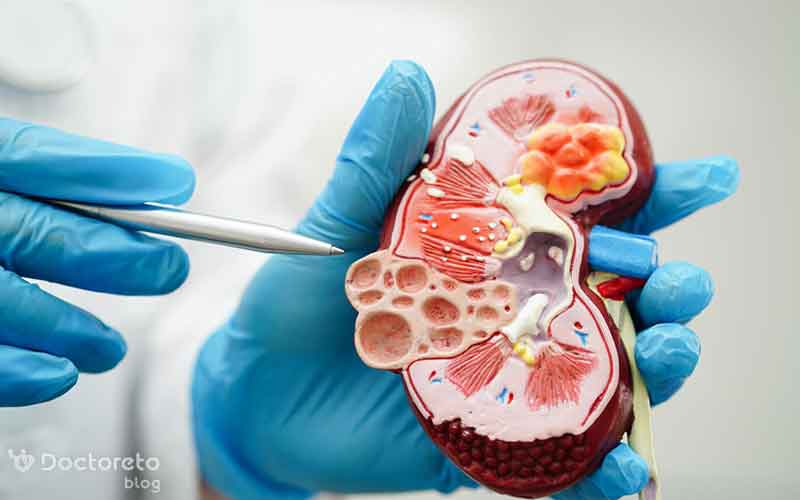
Kidney diseases and diabetes are related. Diabetes occurs when your body either does not produce enough insulin or is unable to use insulin properly. Insulin is a hormone that controls blood sugar levels. High blood sugar can cause problems in many parts of the body, including the heart, kidneys, eyes, and brain. Over time, this condition can lead to kidney disease and eventually kidney failure. To evaluate the exact relationship and impact of diabetes and kidney diseases, ask your doctor for the rest of this article.
Types of kidney diseases related to diabetes
In Diabetes, the most common kidney involvement is usually due to diabetic nephropathy, which starts with a slight leakage of albumin in the urine and gradually leads to a decrease in kidney function, chronic kidney disease, and in the final stages of end-stage renal failure (needing dialysis or transplantation). Diabetes also increases the risk of kidney infections such as pyelonephritis, kidney stone formation, and renal papilla necrosis, and these problems can cause acute damage or exacerbate chronic failure. The main focus of preventing and slowing down this process is careful control of blood sugar and blood pressure and regular follow-up of tests.
Some types of kidney diseases in diabetes include:
Diabetic nephropathy
Kidney enlargement due to diabetes
Kidney failure
Chronic kidney disease
Glomerulosclerosis
Flank pain due to kidney
1. Diabetic nephropathy
Diabetic nephropathy or Nephrotic syndrome kidney is one of the serious complications of diabetes type 1 and diabetes type 2. It is also called diabetic kidney disease. In the United States, 1 in 3 people with diabetes develop diabetic nephropathy. Diabetic nephropathy affects the kidneys' ability to remove waste products and excess fluids from the body. The best way to prevent or delay diabetic nephropathy is to have a healthy lifestyle and control diabetes and high blood pressure.
Diabetic nephropathy slowly damages the filter system of the kidneys over the years. Early treatment may prevent this condition, slow it down, and reduce the likelihood of complications. Diabetic kidney disease can lead to kidney failure.
There are different methods for treating kidney disease in diabetics.
2. Kidney enlargement due to diabetes
People with uncontrolled diabetes may experience problems such as enlarged kidneys. This condition is caused by high pressure on the blood vessels and kidney filtration. Enlargement of the kidney directly leads to damage to the kidney tissues.
English text: When diabetes is not well controlled, the sugar level in your blood goes up. This is called hyperglycemia. Hyperglycemia (high blood sugar) can cause damage to many parts of your body, especially the kidneys, heart, blood vessels, eyes, feet, nerves. Persian translation: When diabetes is not well controlled, your blood sugar level rises. This condition is called hyperglycemia. Hyperglycemia (high blood sugar) can damage many parts of your body, especially your kidneys, heart, blood vessels, eyes, legs, and nerves.
3. Diabetes and kidney failure
Kidney failure is one of the serious complications of diabetes. This condition occurs when the kidneys are no longer able to perform their functions. At this stage of the disease, the patient may need dialysis or a kidney transplant. Diabetes is one of the main causes of kidney failure worldwide.
diabetic ketoacidosis
Diabetic ketoacidosis is an acute and life-threatening complication of diabetes, especially type 1 diabetes, which occurs due to severe insulin deficiency, hyperglycemia, high ketone production, and metabolic acidosis. Severe dehydration and frequent urination can cause a drop in GFR and acute kidney damage. In patients with diabetes and kidney disease, the excretion of ketones is impaired, and the risk and severity of diabetic ketoacidosis is higher and requires prompt hospital treatment.
Diabetic ketoacidosis is not an independent kidney disease in diabetes, but it can lead to acute kidney failure and requires immediate hospital treatment.
4. Chronic kidney disease
Chronic kidney disease (CKD) refers to a condition in which kidney function gradually decreases. It can be caused by uncontrolled diabetes or high blood pressure. Chronic kidney disease can lead to kidney failure, which requires complex treatments such as dialysis.
5. Glomerulosclerosis
Glomerulosclerosis is a type of disease in which fibrous tissue develops in the glomeruli of the kidney. This condition leads to kidney failure and is usually seen in people who have had diabetes for a long time.
6. Diabetes and flank pain due to kidney
Kidney pain Most often occurs when diabetes leads to kidney stones, recurrent urinary tract infections, or pyelonephritis. Fever, heartburn, nausea, or blood in the urine along with flank pain require immediate medical evaluation.
symptoms of kidney failure in diabetics
In diabetic people, kidney failure (kidney failure) usually progresses gradually and may not have any special symptoms at first. As the problem progresses, symptoms such as extreme fatigue, weakness, loss of appetite, nausea, swelling of the legs and around the eyes, shortness of breath, decrease or vice versa, abnormal increase in the volume of urine, widespread body itching and nightly muscle cramps are seen. Dark or foamy urine, high blood pressure, and a feeling of heaviness or vague pain in the side can also be a warning.
Symptom
Description
Swelling in the legs and wrists
One of the clear signs of kidney failure is the accumulation of fluids in the body, which causes swelling in different areas, especially the legs and wrists.
Increased pressure Blood
Damaged kidneys are unable to regulate blood pressure effectively. This can lead to high blood pressure.
Changes in urination pattern
The patient may feel that the need to urinate is unusually high or low. Also, the urine can be foamy or contain blood.
Extreme fatigue and general weakness of the body
Decreased kidney function can lead to the accumulation of waste materials in the body, which increases the feeling of fatigue and general weakness.
Lack of appetite and nausea
Due to the accumulation of toxins in the blood, patients may feel loss of appetite and nausea. have.
Symptoms of kidney failure in diabetics
Diagnosis of kidney disease in diabetics
Diagnosis of kidney disease in people with types of diabetes is usually done using urine tests such as urinary albumin (which indicates damage to the kidney filters) and blood tests to check the level of creatinine and blood urea nitrogen. Also, doctors use imaging tests such as ultrasound or CT scan to check the condition of the kidneys and check for any possible changes.
English text: The main job of the kidneys is to filter wastes and extra water out of your blood to make urine. Your kidneys also help control blood pressure and make hormones that your body needs to stay healthy. Farsi translation: The main function of the kidneys is to filter waste materials and excess water from the blood to produce urine. Your kidneys also help control blood pressure and produce hormones your body needs to stay healthy.
The first step in the treatment of diabetic nephropathy is to control diabetes and high blood pressure. This usually involves following a proper diet, lifestyle changes, exercise, and using prescription medications. Careful management of blood sugar and blood pressure can prevent or delay kidney problems and other complications.
Treatment of high blood pressure using ACE inhibitors or angiotensin receptor blockers (ARBs) is particularly effective in slowing the progression of diabetic kidney disease. In advanced stages of the disease, ESRD treatment often begins with dialysis to purify the blood, and eventually a kidney transplant is considered as a treatment option.
The specific treatment of diabetic nephropathy is determined by the doctor based on various factors. Including:
Age, general health and medical history
Severity of the disease
Patient tolerance to receive certain drugs, methods or treatments
The patient's expectations of the disease process
Patient opinion or preference
complications of diabetic kidney disease
complications of diabetes related to kidney disease can include kidney failure, increased risk of cardiovascular disease, and the need for complex treatments such as dialysis. In advanced cases, the patient may need a kidney transplant. Also, diabetic kidney disease causes neurological problems and other systemic complications, such as increasing the amount of uric acid in the blood and causing skin problems.
effects of insulin on the kidneys - is insulin harmful for the kidneys?
Insulin itself is not harmful to the kidneys and on the contrary, it prevents the development of diabetic nephropathy and kidney failure by controlling blood sugar. Most kidney damage in diabetes is due to untreated high blood sugar, not insulin. Only in advanced kidney failure, insulin excretion decreases and the risk of hypoglycemia increases; Therefore, it is necessary to adjust the dose of insulin with the opinion of an endocrinologist or nephrologist so that both blood sugar remains stable and the kidneys are protected.
There is a direct relationship between diabetes and kidney diseases.
Refer to a specialist to prevent kidney damage in diabetes
Uncontrolled diabetes can gradually damage the kidneys and eventually lead to kidney failure. To prevent this process, it is necessary to carefully evaluate and adjust the treatment under the supervision of the best endocrinologist in Iran.
You can make an appointment in person or online at your doctor and check your blood sugar and kidney health with a specialist before symptoms develop.
In the following, you can see a list of the most prominent endocrinologists in different cities of Iran.
Diabetes and kidney diseases resulting from it is one of the serious and potentially dangerous complications that can lead to kidney failure and the need for dialysis or a kidney transplant. This damage usually begins gradually and without obvious symptoms, but over time it can cause severe symptoms such as swelling, high blood pressure, changes in urination patterns, and feeling tired. To prevent these problems, careful control of blood sugar levels, blood pressure monitoring, following a healthy diet and regular visits to the doctor to check kidney function are of great importance. With preventive measures and timely treatment, the progression of kidney disease can be prevented and the patient's quality of life can be improved.
Your doctor takes care of your health!
Frequently Asked Questions
Low blood sugar can cause metabolic problems in the body. This condition increases the risk of kidney damage in diabetic patients.
Dialysis in diabetics may have risks due to cardiovascular problems associated with diabetes be But it is necessary in case of kidney failure.
blood sugar control drugs can be effective in improving kidney function. Especially drugs like SGLT2 inhibitors that are said to prevent the progression of kidney disease.
Kidney strengthening in diabetes is primarily done by careful control of blood sugar, blood pressure and blood lipids. will be Maintaining HbA1c in the target range, relative restriction of salt and protein, smoking cessation, weight loss and regular physical activity may reduce the rate of progression of diabetic nephropathy.
Kidney damage in diabetic patients usually occurs years before clinical symptoms appear. It starts and can be detected first as mild albuminuria in the urine test.
The duration of kidney failure in diabetic patients is not constant and depends on sugar control Blood, blood pressure, smoking, genetics and other related diseases are related. Diabetic nephropathy usually progresses gradually over years from mild albuminuria to end-stage renal failure.