
What is the cruciate ligament? / Types of cruciate ligaments / Treatment and healing of cruciate ligament tears
What is the cruciate ligament?
- Dr. Majid Ghorbanzadeh
- November 15, 1403
The cruciate ligament maintains the stability of the knee and prevents excessive movement or abnormal rotation of the leg. The knee consists of four main and important ligaments, which include internal, external, anterior and posterior lateral ligaments. The cruciate ligaments are placed obliquely inside the knee joint. Anterior cruciate ligament with lateral ligament [...]


The cruciate ligament maintains the stability of the knee and prevents excessive movement or abnormal rotation of the leg.
The knee consists of four main and important ligaments, which include internal, external, anterior and posterior lateral ligaments.
The cruciate ligaments are placed obliquely inside the knee joint.
The anterior cruciate ligament is aligned with the medial lateral ligament and its task is to control the movement of the knee inward and the movement of the leg forward.
The posterior cruciate ligament is aligned with the external lateral ligament and limits the movement of the leg backwards.
Quick access
ToggleTypes of knee ligaments
There are different types of cruciate ligaments, which we have explained in full in this section:
Anterior cruciate ligament (ACL)
The function of the anterior cruciate ligament is to control and direct the movement and rotation of the tibia and tibia forward.
This ligament is located in the most central part of the knee.
Posterior cruciate ligament (PCL)
The task of the posterior cruciate ligament is to control and direct the backward movement in the knee and leg. This ligament is also located in the central area of the knee.
Medial collateral ligament (MCL)
The internal tafi ligament is a strong ligament in the inner part, which is located between the femur and the tibia.
This ligament maintains the joint capsule of the knee.
Lateral collateral ligament (LCL)
The external tafi ligament is a strong and string-shaped ligament that is located behind the knee.
LCL is one of the main ligaments and stabilizes the knee joint.
Injuries caused by twisting of the external taffy ligament are the most common injuries of the knee ligaments.
What is a torn cruciate ligament of the knee?
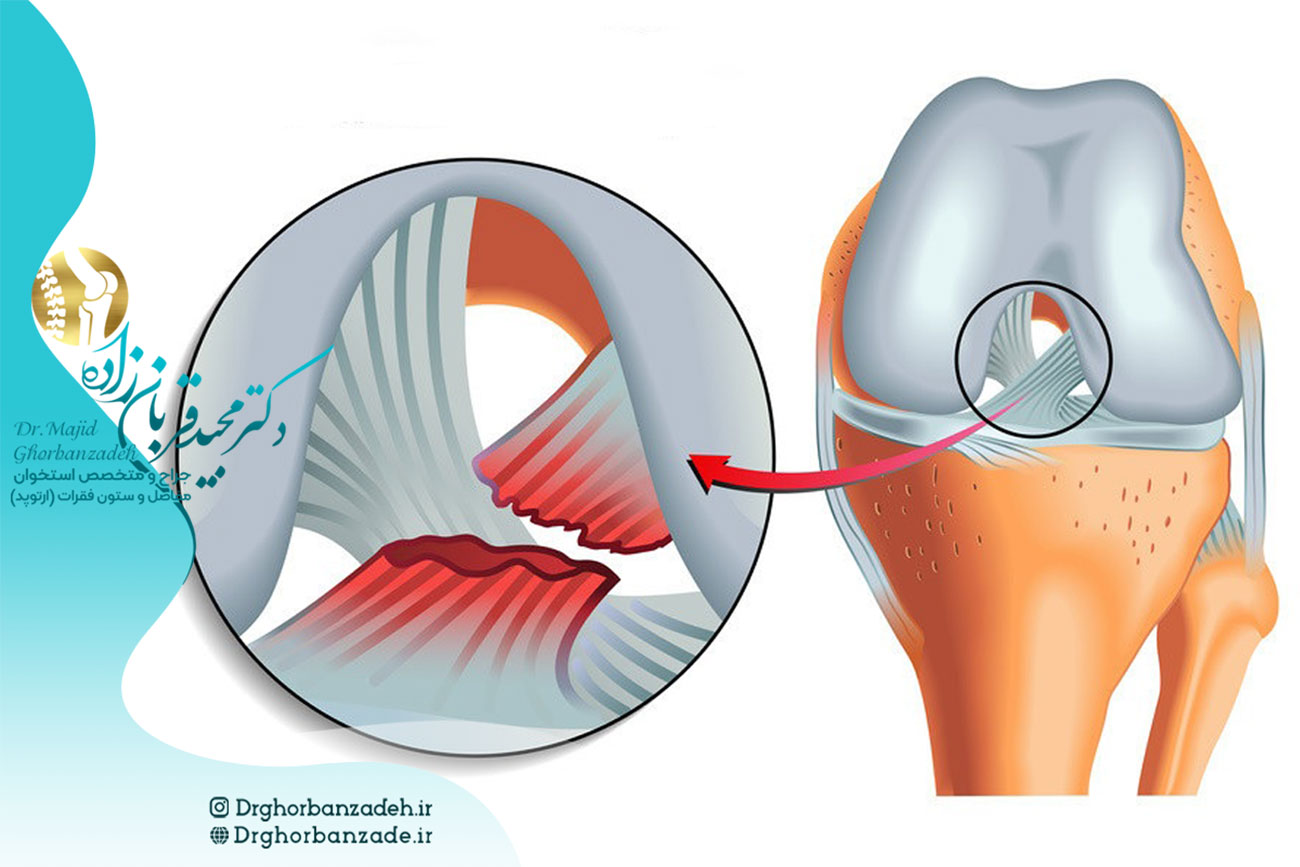 What is knee cruciate ligament tear?
 torn Anterior cruciate ligament usually occurs during sports, rotational movements of the knee, sudden injuries and shocks to the knee, or severe impact to the knee and knee jump.
The same thing causes injury and rupture of the cruciate ligament in a person.
The collagen fibers present in the cruciate ligaments can withstand tensile forces.
If this tensile force puts too much pressure on the ligaments, those ligaments will be torn.
Different degrees of cruciate ligament rupture
cruciate ligament rupture is classified into different degrees, which we discuss in this section.
First class stretch
- The ligament is not torn and only stretched.
- There is little swelling and sensitivity.
- The knee does not feel unstable during the activity. In such a case, the patient does not feel severe pain, but medical treatment must be done. If left untreated, this minor injury increases the risk of re-injury.
Quadratic stretch
- To some extent, the ligament tissue is torn, but this tear is incomplete and has a little bleeding.
- There is little swelling and sensitivity.
- You lose performance.
- The feeling of pain increases during examination and touch.
- The joint may feel unstable during the activity or you may not be able to use the knee.
 Common situations of cruciate ligament tears
 ACL injuries are most common during the following activities:
- Suddenly stopping while running
- Decelerating while running Running
- Rapid change of direction while running
- Misjumping or landing
- Contact injuries, such as football tackles
- Overuse of the leg due to repetitive impact activity – such as martial arts
Diagnosis of a cruciate ligament tear
Diagnosis of a cruciate ligament tear requires careful evaluation by a medical professional.
Physical examination
The doctor asks the patient about the symptoms and how the injury occurred.
The knee is checked for swelling, tenderness and range of motion.
Special tests such as the Lachman test, the anterior drawer test, and the pivot shift test may also be performed to check the stability and function of the anterior cruciate ligament.
Imaging techniques
Imaging can be done with different techniques, these techniques include:
MRI (Magnetic Resonance Imaging)
Imaging with this method is very accurate and can fully show the rupture of the cruciate ligament.
MRI also provides information about the condition of other knee structures, such as the meniscus and cartilage.
Radiography (X-ray)
Although X-rays do not directly show the ligaments, they can help diagnose associated injuries such as bone fractures.
Arthroscopy
In cases where the diagnosis is not clear with non-invasive methods, the doctor may suggest arthroscopy.
A small camera is inserted into the joint. The knee is bent so that the condition of the ligaments and other structures of the knee can be directly examined.
Early and accurate diagnosis of cruciate ligament rupture is very important and helps to plan the proper treatment and rehabilitation and can prevent long-term complications such as chronic knee instability and damage to other knee structures.
Cruciate ligament rupture treatment methods
To treat ligament rupture You should pay attention to the amount and severity of injuries that occur to them during exercise or stretching and shock.
Non-surgical treatments
Non-surgical treatments include:
Rest and de-icing
In case of a simple strain, rest and using ice can reduce swelling and pain.
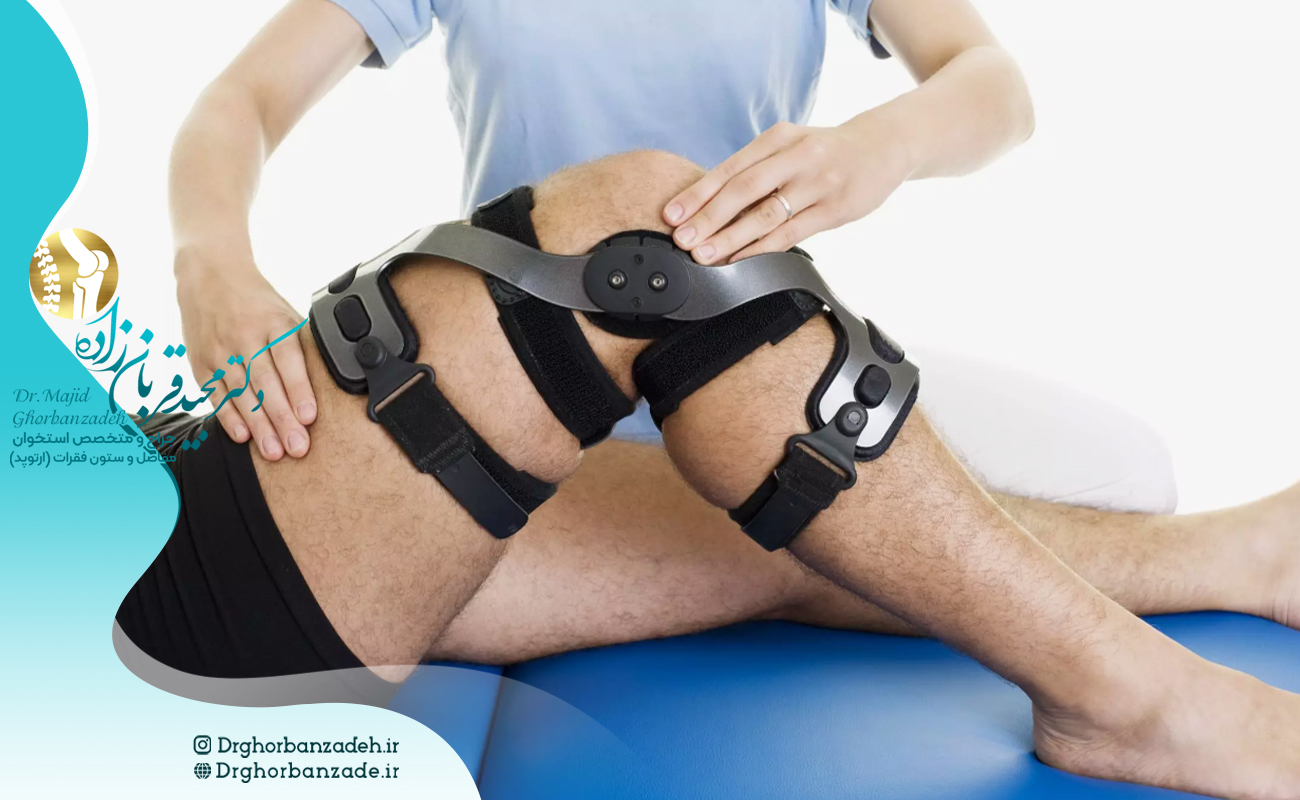
Knee brace (Brace)
Some people with an injured ACL can continue to be active while running or exercising with a knee brace.
Physical therapy and rehabilitation
It may be a few days a week to You will need physical therapy exercises to get your knee back to normal.
During the sessions, you will do exercises to strengthen the muscles around the knee and help you regain full range of motion.
Your doctor may ask you to do leg exercises at home to continue treating the cruciate ligament tear.
Anti-inflammatory drugs
Anti-inflammatory drugs They can help reduce swelling and pain in the knee.
Rebuild Cruciate ligaments is an allograft in which tissues donated by a cadaver or brain-dead patients are used.The advantages of using allograft tissue is reducing the number and length of surgical incisions.
Its side effects include the risk of transmitting some infectious diseases and a higher chance of re-rupturing the cruciate ligaments.
Ortokin
Another new treatment method is Ertokine, in which anti-inflammatory agents are extracted from the patient's blood, manipulated and then injected into the painful areas.
This treatment is suitable for people who want to be treated in a minimally invasive and quick way without surgery.
Symptoms of cruciate ligament re-rupture after surgery
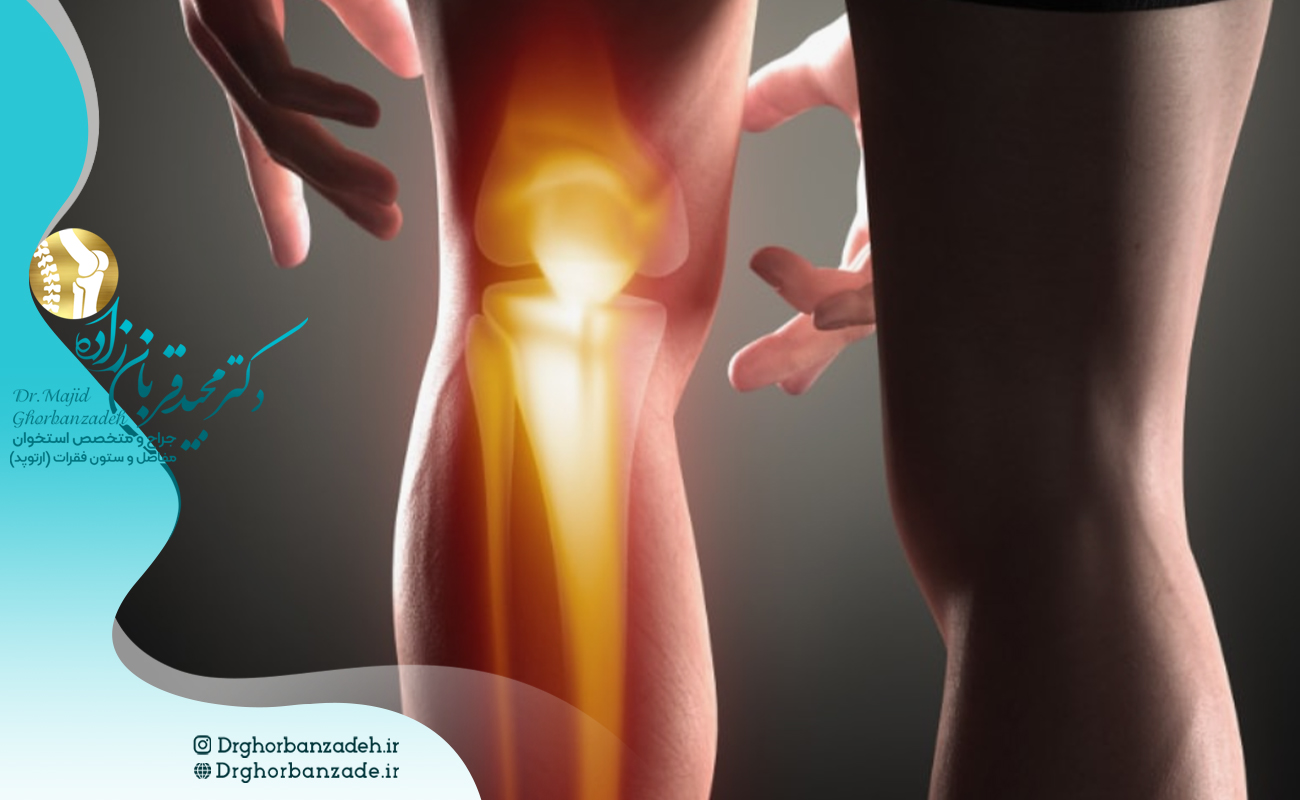
One of the dangers that exist after surgery to repair the cruciate ligament of the knee joint is its re-rupture.
Symptoms of a re-tear include:
- Feeling the same joint sound as before or even a little lighter
- joint swelling
- Feeling of instability in the joint
- More movement of the joint during diagnostic and clinical tests, it is recommended for patients to improve their physical activity according to the established protocols and guidelines in order to provide re-tear injury with minimal risk.
Who are at risk of cruciate ligament rupture?
- Women: Women are five to eight times more likely to suffer a cruciate ligament tear than men due to having weaker hamstring muscles than the front of the thigh muscles and incorrect positioning of the muscles.
- Teenagers: Teenagers are more likely to rupture the cruciate ligament due to their high activity.
Activities that lead to a cruciate ligament tear
The cruciate ligament of the knee may be damaged or torn for various reasons and activities. As mentioned, this often happens to athletes.
Cruciate ligament injuries are common in sports such as football, basketball, tennis, skiing, and martial arts such as taekwondo and boxing.In these sports, due to the high speed of each movement, the athlete rotates his knees at an inappropriate angle and stretches or tears his ACL ligament.
The cruciate ligament may also be torn due to other activities such as certain jobs or activities of daily living and even car accidents.
Read more Rheumatoid Arthritis What is (joint rheumatism)?At the time of injury, sometimes the sound of something bursting reaches the person's ears and the pain is also felt.
Usually, after an injury, a person is not able to continue playing or doing activities.
Comparison of surgical and non-surgical methods for the treatment of cruciate ligament rupture
The choice between surgical and non-surgical methods for the treatment of cruciate ligament rupture depends on the severity of the injury, the patient's age, activity level and treatment goals.
Non-surgical methods such as physical therapy, use of knee braces and anti-inflammatory drugs are suitable for first or second degree sprains and help reduce pain and swelling.
These methods are a minimally invasive option for people who do not do heavy sports activities or do not want to undergo surgery.
However, in these methods there is a possibility of chronic instability of the knee, especially in severe tears.
In contrast, surgical procedures such as arthroscopy and reconstruction with autograft or allograft are more suitable for complete tears (3rd degree) and professional athletes because they restore knee stability and allow return to heavy activities.
Surgeries carry risks such as infection or re-rupture and require a longer recovery period (6 to 9 months).
Choosing the right method requires consultation with an orthopedic specialist so that the best decision can be made according to the patient's condition.
This comparison helps patients to choose the right treatment with full knowledge.
Patients' experiences of cruciate ligament rupture treatment
I am Ali, 28 years old, and due to an injury while playing soccer, I tore the anterior cruciate ligament in my knee.
After referring to Dr. Majid Gurbanzadeh in Marzdaran, a detailed examination was performed and he suggested arthroscopy.
Before the surgery, I was very worried, but the doctor put my mind at ease with complete and professional explanations.
The operation was done well and after a few weeks of physiotherapy, I felt that my knee has regained its stability.
Now after 7 months, I am almost back to my sports activities, but with caution.
Swelling and initial pain after the surgery were completely normal and with the care recommended by Dr. Ghorbanzadeh, it decreased quickly.
My experience was that it is very important to choose a good specialist and follow the rehabilitation program.
Another friend of mine, who had a first-degree strain, recovered with physiotherapy and a knee brace under the doctor's supervision and did not need surgery.
I am really satisfied with Dr. Ghorbanzadeh's patience and accuracy and I feel that I made the right decision to visit him. Now with strengthening exercises, my knee is stronger than before.
The best orthopedic specialist for the treatment of cruciate ligament rupture
Dr. Majid Gurbanzadeh, an orthopedic specialist, works in the west of Tehran (Marzdaran area).
He helps patients recover faster with specialized examinations and the time they dedicate to their patients.
To get an appointment and visit his office You can visit the official website of Dr. Majid Gurbanzadeh and make an appointment online through the available contact numbers.
When should you see a doctor?
If you notice the symptoms mentioned when you injure your knee, be sure to see a doctor.
The knee joint is a complex structure of bones, ligaments, tendons and other tissues that work together.
Injury at any point can be very dangerous for the entire body structure.
Quick and accurate diagnosis is very important to determine the severity of the injury and receive appropriate treatment.
Prevention of cruciate ligament tears
Exercises to strengthen the muscles around the knee and improve balance can reduce the risk of cruciate ligament tears.
Frequently asked questions about cruciate ligament tears
in In this section, we have answered the questions that may have occurred to you:
Is it possible to walk with a torn cruciate ligament?
It is possible to walk with a torn cruciate ligament, but it is painful.
Many people may be able to walk straight, but they cannot change the different directions that are needed in daily activities.
Is the ligament Is the cruciate ligament capable of repair?
The cruciate ligament does not have the ability to repair itself due to the lack of development of the blood supply structure.
Usually, complete ruptures of the cruciate ligament require surgery.
How long is the treatment period for the cruciate ligament injury?
When the cruciate ligament injury occurs, it takes between 8 and 9 months, but it can take up to 6 May the month decrease.
Can you bend the knee in a cruciate ligament tear?
In most cruciate ligament tears, the ability to fully bend the knee or full flexion is not possible.
How can you help the cruciate ligament heal faster?
Various physiotherapy techniques and exercises to strengthen the muscles around the knee joint and improve balance and control. Stability in the knee joint can play a role in the faster recovery of the cruciate ligament. href="https://www.aparat.com/drghorbanzade">Aparat Dr. Majid Ghorbanzadeh
Channel Namasha Dr. Majid Ghorbanzadeh
——————————————————–

Dr. Majid Ghorbanzadeh
Surgeon and specialist in bones and joints and spine (orthopedic), knee and hip surgery, arthroscopy, arthroplasty, member of orthopedic society America has a specialized board and a member of the Association of Orthopedic Surgeons.
What will be the effects of a ten-year delay in the treatment of a cruciate ligament tear?
Answer-
In many people, the process of arthritis and articular cartilage destruction begins with a cruciate ligament tear, so after ten years, you will most likely have arthritis, but for a more accurate diagnosis, it is necessary to undergo the necessary examinations and tests.
Answer
When can golf be played after ACL reconstruction?
Answer-
In general, we want patients to have good strength and stability before playing golf. In most cases, golf can be resumed about 4 months after ACL reconstruction.
Reply
ACL reconstruction is performed as an outpatient surgery?
Reply-
ACL reconstruction surgeries are now usually performed on an outpatient basis, meaning patients can go home the same day.
Reply
When should we go to the physiotherapy clinic after knee cruciate ligament surgery?
Reply-
Hello, dear friend, from the first week after knee cruciate ligament surgery, we have to go to physiotherapy.
Reply
How many days after knee cruciate ligament surgery is discharged?
Reply-
Hello, dear friend, one day after the cruciate ligament surgery, you can be discharged from the hospital with the visit of the surgeon and if things like infection, pain, swelling and vital signs are OK.
Reply
- When can you drive after knee cruciate ligament surgery?
Reply-
Hello, dear friend, you can drive six weeks after knee cruciate ligament surgery.
Reply





